REVIEW · PHOTOGRAPHY TOURS
Omo Valley Tribes Photography Tour by Locals
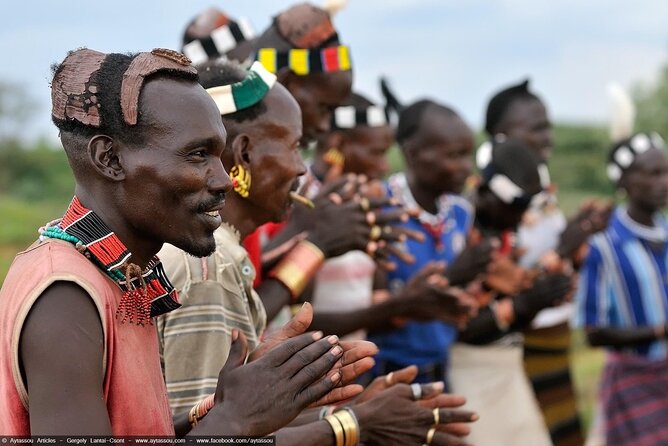
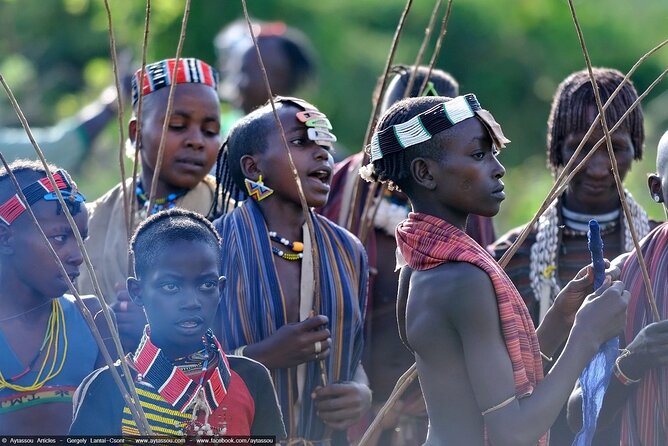
The heart of this seven-day journey is portrait photography among Omo Valley communities, reached by long road trips through southern Ethiopia. You will meet Mursi, Hamer, Karo, Bena, Ari, Dasenech, Konso, Dorze, and Tsemai people, with time for markets, village visits, and local guides.
I like the small maximum group of eight, which should make it easier to stop, ask questions, and position yourself for photographs. I also like that the route includes more than portraits: Dorze weaving, Lake Chamo’s crocodiles and hippos, Konso terraces and waka statues, and a boat crossing on the Omo River.
The main drawback is the pace. This is a road-heavy trip with several four-hour drives and a full-day return to Addis Ababa, and the itinerary contains a few timing and overnight inconsistencies. You should confirm the final route, hotels, and market days before departure.
Key points before you book
- Photograph nine southern Ethiopian communities: The route includes Dorze, Konso, Tsemai, Bena, Hamer, Karo, Dasenech, Mursi, and Ari villages or markets.
- Market days shape the experience: Dimeka is busiest on Tuesdays and Saturdays, Key Afar on Thursdays, Konso on Mondays and Thursdays, and Weyto on Saturdays.
- A maximum of eight people: This is a useful group size for a photography trip, especially when visiting villages and markets.
- Expect serious driving time: The trip covers the long road from Addis Ababa to the Omo Valley and back, with several days listing about four hours of driving.
- Meals are included: The price covers seven lunches, six breakfasts, and seven dinners, along with bottled water and an air-conditioned vehicle.
- The price is $1,250 per person: That is a substantial package, but it includes transport, guide service, meals, entry costs, and seven days of touring.
Why the Omo Valley is the focus
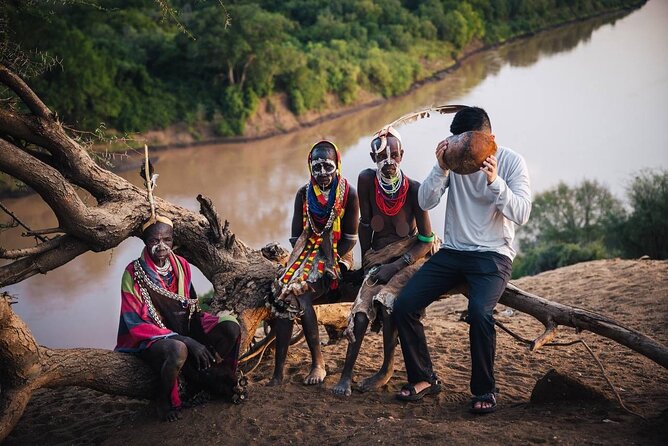
This tour is built around access to southern Ethiopia’s cultural groups, not around a single museum or famous monument. You move from the highland village of Dorze toward the warmer Omo Valley, stopping at markets and communities where different groups gather to trade.
For a photographer, that variety matters. The trip is not limited to one type of portrait. You may photograph cotton weaving in Dorze country, market activity around Dimeka and Key Afar, village life among the Mursi and Ari, and Hamer evening dancing if the timing works.
I would approach the people you meet as hosts, not as props. The tour promises close contact and portrait opportunities, but you should use your guide to manage introductions and understand local expectations. Ask before taking a portrait, and ask about any customary payment or permission process rather than assuming the camera gives you automatic access.
The small group helps here. With no more than eight people, you are less likely to crowd a doorway, market stall, or village path than you would be in a large coach party. That also gives the guide more room to explain what you are seeing.
More Photography Tours in the world:
- Tromso: Northern Lights Photography Tour
★ 4.2 · 843 reviews - Barcelona E-Bike Photography Tour
★ 5.0 · 843 reviews - Tromsø: Northern Lights Photography Tour
★ 4.8 · 788 reviews
Day 1: Dorze houses, weaving, and kocho
The trip begins at the Hyatt Regency Addis Ababa near Meskel Square, then heads south through the Great Rift Valley. Lunch is planned in Sodo before the road continues to Chencha, the mountain home of the Dorze people.
Dorze culture gives the opening day a strong sense of place. You will see tall, beehive-shaped houses made from woven thatch, along with cotton weaving and the production of shamma cloth. The visit also covers the false banana plant, which is used to make kocho, a traditional bread.
The hands-on element is useful for photographers because it gives you more than posed faces. You can watch how the huts, textiles, and food are made, and you may be able to try making kocho yourself. These activities create photographs with a clear story behind them.
The day is listed at about five hours, but the overall drive from Addis Ababa makes this a demanding start. Your overnight may be in Dorze or Arba Minch, so confirm which one applies. An optional goat dinner and bonfire with local people is also offered. This could be a memorable cultural evening, but it is optional and should be treated with respect for local customs and personal comfort.
Day 2: Lake Chamo, Konso, and the road to Turmi
Day 2 begins around Arba Minch with a visit to Lake Chamo in Nechisar National Park. The area is known for its crocodiles, which explains the nickname crocodile market. Hippos also live in the lake and might be seen.
This is a welcome change from the village visits. You can put away the portrait lens for a while and watch for wildlife and birdlife around the water. Sightings are not guaranteed, so think of Lake Chamo as a chance to observe rather than a promise of a close animal encounter.
The road then runs toward Turmi through several culturally important places. Konso is associated with wooden waka statues and carefully built agricultural terraces. Weyto is connected with the Tsemai people, Key Afar with the Bena, and Dimeka with Hamer and Karo markets.
Market timing is critical. Weyto market day is Saturday. Key Afar is listed for Thursday, while Dimeka operates on Tuesdays and Saturdays. If your dates line up, you may see Hamer, Bena, and Karo people trading in the same area. If they do not, the stops can still offer local context, but they may feel quieter.
You finish in Turmi, home of the Hamer people. At night, you might see evangadi, a traditional Hamer dance. The word might matters here. It depends on timing and local activity, so do not book this day solely for a guaranteed evening performance.
Day 3: Dimeka markets and the Omo River crossing
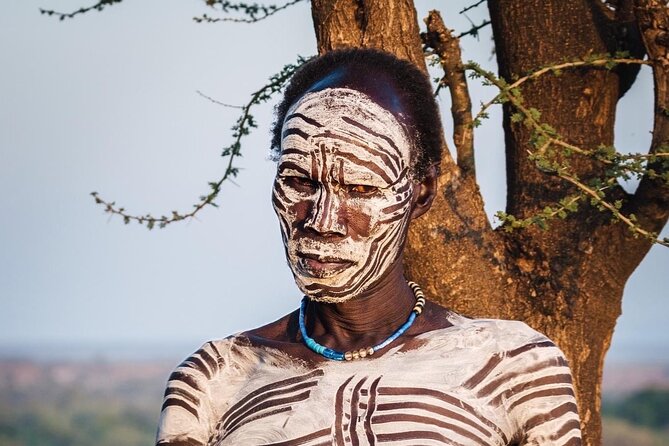
The schedule for Day 3 includes Dimeka and Key Afar again before continuing toward Jinka, although the overnight is listed at Turmi Lodge. That repetition is one reason I would ask the operator for a day-by-day version with confirmed driving directions.
If you are in Dimeka on a Tuesday or Saturday, the market can be one of the best photography opportunities of the week. Hamer, Bena, and Karo people gather there, giving you a chance to see clothing, trade, and movement from several communities in one place. Markets also give your camera work more context than isolated portraits.
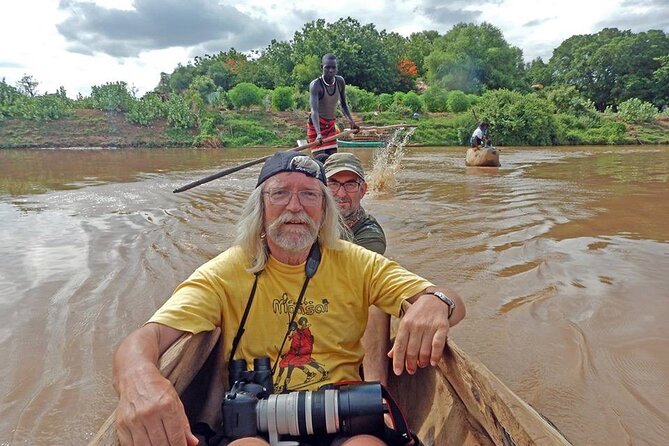
The second main stop is Omo Rate, an isolated village in the Omo delta associated with the Dasenech people. You cross the Omo River in a locally made boat. That crossing is a distinct part of the trip and brings you into a setting far removed from the main road.
The visit is listed at about two hours, while the driving portion is about four hours. Roads in this part of the country make the journey as important as the destination, so bring patience. You will want spare batteries, memory cards, water, and a way to protect your camera from dust.
A few more photo experiences around the world worth a look
- Bali: Full-Day Instagram Highlights Tour
★ 4.8 · 7,817 reviews - ️ Bali Instagram Tour: The Most Famous Spots (Private & All-Inclusive)
★ 5.0 · 2,857 reviews - Paris: Private Photoshoot at the Eiffel Tower
★ 4.7 · 2,636 reviews - The ‘OG’ Manatee Snorkel Tour with In-Water Guide/Photographer
★ 5.0 · 2,539 reviews
Day 4: Dimeka, Alduba, and the Bena people
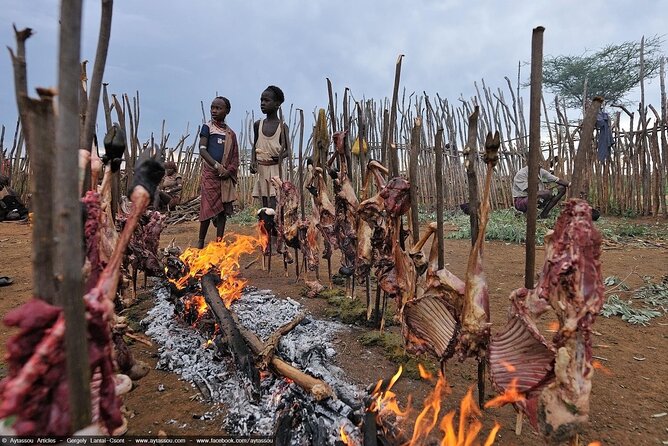
Day 4 is centered on Jinka, Dimeka Town, and the Bena community. The schedule again mentions travel through Dimeka and Key Afar, followed by an overnight at Nasa Hotel in Jinka. Because the itinerary repeats some places across Days 3 and 4, confirm whether the final plan changes the route according to the calendar.
If it is Tuesday, you may visit the colorful Alduba market. This is another reason to choose your dates carefully. A market day can change the feel of the entire trip, bringing together people from surrounding communities and giving you more varied scenes to photograph.
The Bena visit adds a quieter village element after the market. I like this combination because you get both public activity and a closer look at local daily life. The market offers movement and variety. The village offers time to notice domestic work, clothing, tools, and the setting around individual households.
The day lists around four hours of driving and two hours at Dimeka. That is manageable on paper, but the route is not a quick city excursion. You should be prepared for basic accommodation and changing road conditions, even though the vehicle is air-conditioned.
Day 5: Mursi villages in Mago National Park
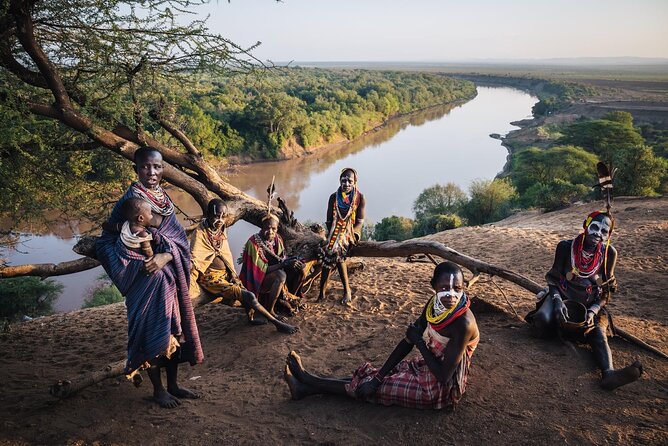
Day 5 is the tour’s clearest Mursi-focused day. You drive through Mago National Park to a local Mursi village, then return to Jinka in the afternoon.
Mursi women are widely associated with lower-lip and earlobe plates. The tour explains that the size of a lip plate has traditionally been linked to bride price. This is a detail many people recognize from photographs, but the visit should not be reduced to a single visual feature. Your guide can help place the practice within local culture and explain how to approach portraits properly.
The afternoon adds useful context at the South Omo Museum and Research Center. I consider this an important balance to the village visit. A museum stop can help you understand the groups you are photographing instead of collecting images without much background.
You may also hike in the hills near Jinka to visit an Ari village. The planned activities include seeing blacksmith work and the distillation of local gin called areki. This is one of the more varied days, combining park roads, a village, a museum, and a walk.
The tour requires moderate physical fitness. The hike may be modest, but the combination of heat, uneven ground, long drives, and repeated stops can wear you down. Comfortable shoes and a realistic attitude toward the pace will help.
Day 6: Konso terraces and waka statues
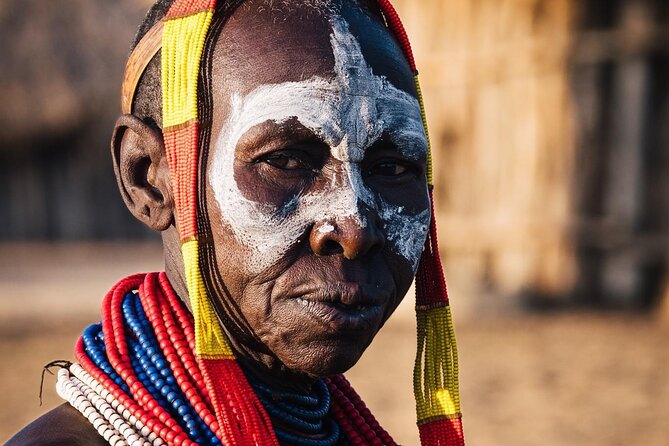
The route turns back toward Konso via Key Afar. If the calendar brings you to Key Afar on a Thursday, you can see the Bena and Tsemai market. Konso market days are Monday and Thursday.
Konso is valuable for more than portraits. The people are known for agricultural terraces and wooden waka statues placed in honor of dead heroes. A village visit and cultural museum display help explain both traditions.
This is also the day for the so-called natural New York Village, where tall sand formations resemble city skyscrapers. The stop is time permitting, so keep your expectations flexible. The main Konso visit is the stronger reason to be here.
The overnight is listed at Mora Height Lodge in Arba Minch. The drive is about three hours, making this one of the less punishing road days. Still, it comes after several early starts and long routes, so you may value the chance to slow down and review your photographs.
Day 7: The long return to Addis Ababa
The final day is an early departure from Arba Minch for the full drive back to Addis Ababa. A stop at Lake Langano provides a break for refreshments and lunch, with about two hours listed there.
The return drive is the least glamorous part of the tour, but it is unavoidable if you want to reach the Omo Valley by road from the capital. The schedule says five hours for the Addis section, though the wording also calls it a full day’s drive. I would not plan an important evening flight without confirming the expected arrival time.
Depending on your departure schedule, the evening may include optional shopping and a folkloric dinner. The dinner includes national dishes, dances from several Ethiopian ethnic groups, and a traditional coffee ceremony. Airport transfer is also planned according to your flight timing.
What the $1,250 price covers
At $1,250 per person, this is not a budget add-on. The value comes from the amount bundled into seven days: an air-conditioned vehicle, shared guide, bottled water, entry fees and taxes, seven lunches, six breakfasts, and seven dinners.
A camera can be provided if requested, which is useful if you do not want to travel with your own equipment. Still, ask what type of camera is available and whether you need to bring memory cards or accessories.
The price does not include a visa, tips, laundry, or alcoholic drinks. The stated minimum drinking age for alcohol in Ethiopia is 21. These are small items beside the main cost, but they belong in your budget.
I see the price as reasonable for someone who wants one organized route through several remote areas and does not want to arrange vehicles, meals, hotels, local visits, and market timing alone. It is less attractive if you prefer independent travel, dislike long road days, or want a slower stay in each community.
Who will get the most from this trip
I would choose this tour if you want a concentrated introduction to southern Ethiopia and care more about access and variety than luxury. It suits photographers who can work quickly, handle changing light, and accept that some encounters will be arranged around travel time.
It also works for people interested in food, craft, wildlife, markets, and cultural traditions. The Dorze weaving visit, kocho preparation, Lake Chamo, Ari blacksmith work, Konso statues, and Omo River crossing give the trip more range than a portrait-only itinerary.
I would hesitate if you need high-end hotels, short transfers, or a carefully polished schedule. The accommodation names change across the plan, and some days repeat the same towns. Before paying, ask for confirmed hotels, the exact overnight location on Day 1, and the final order of Jinka, Dimeka, Key Afar, and Turmi.
The group cap of eight is a real advantage. It is small enough to keep the vehicle manageable but large enough to share the cost of a private regional route. You should still expect shared guiding rather than a dedicated personal photography coach.
Practical details that matter
Pickup is offered from the Hyatt Regency Addis Ababa at Meskel Square. Confirmation is provided at booking, and the tour is listed with a mobile ticket.
Free cancellation is available up to 24 hours before the local start time. Inside that window, the payment is not refunded and changes are not accepted.
The tour averages six days of advance booking, so I would not leave arrangements until the last moment, especially if you need specific market days. Tuesday and Saturday are important for Dimeka, Thursday for Key Afar, and Monday or Thursday for Konso.
Bring clothing suited to warm days, comfortable walking shoes, camera protection, and extra storage if you plan to photograph heavily. Because meals and bottled water are included, you need less daily planning, but you should still tell the operator about any dietary needs before departure.
Should you book the Omo Valley photography tour?
Book it if you want a tightly packed seven-day route through southern Ethiopia with portrait photography, markets, villages, wildlife, and cultural stops in one package. The strongest features are the range of communities, the maximum group size of eight, and the chance to reach places that are difficult to connect on your own.
Think twice if you want a relaxed holiday or guaranteed ceremonies and wildlife sightings. Confirm the schedule before booking, especially the duplicated Dimeka and Key Afar visits, the Day 1 overnight, and the expected return time to Addis Ababa.
For the right person, the $1,250 cost buys far more than transport. It buys access to a demanding but unusually varied journey, with time to photograph people, places, and everyday skills rather than only ticking off famous names.
FAQ
Where does the tour start?
The meeting point is the Hyatt Regency Addis Ababa at Meskel Square in Addis Ababa, Ethiopia. Pickup is offered.
How long does the tour last?
The experience lasts approximately seven days, beginning in Addis Ababa and returning there on Day 7.
How many people can join the tour?
The maximum group size is eight people.
Which tribes and communities can I visit?
The route includes Dorze, Konso, Tsemai, Bena, Hamer, Karo, Dasenech, Mursi, and Ari communities or villages.
Is food included?
Yes. The package includes seven lunches, six breakfasts, and seven dinners, as well as bottled water.
What is the cancellation policy?
You can cancel at least 24 hours before the local start time for a full refund. Cancellations or changes made within 24 hours are not accepted for a refund.
Just added around the world
- Private Vacation Photoshoot with Photographer in Myrtle Beach★ 4.0 · 9 reviews
- Traditional Japanese Costumes “Kimono”, “Yukata”, “Ryuso”, “Photograph Course “Hair Set & Lipstick & Kimono & Photography”★ 5.0 · 17 reviews
- Marco Island Photography Experience★ 5.0 · 7 reviews
- Capture Unforgettable Moments: Private Holiday Photography★ 5.0 · 52 reviews
- Hire Photographer, Professional Photo Shoot – Myrtle Beach★ 5.0 · 4 reviews
- Proposal Photoshoot Mykonos★ 5.0 · 2 reviews
- Private Instagram Tour | Mykonos Most Photogenic Spots★ 5.0 · 4 reviews
- Photographer, Professional Photo shoot – Mykonos★ 3.0 · 2 reviews
Photography Tours, compared.

Rhodes: E-bike Highlights Sunset or Morning Photo Tour
Read our review →