
REVIEW · BERLIN
Romantic Berlin Rickshaw City and Photo Tour – incl. pick-up
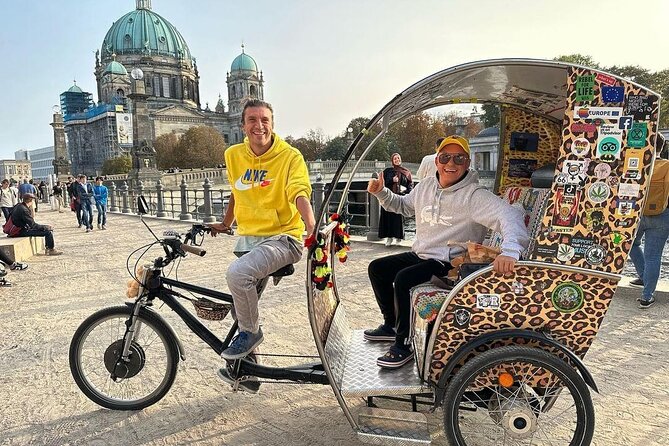
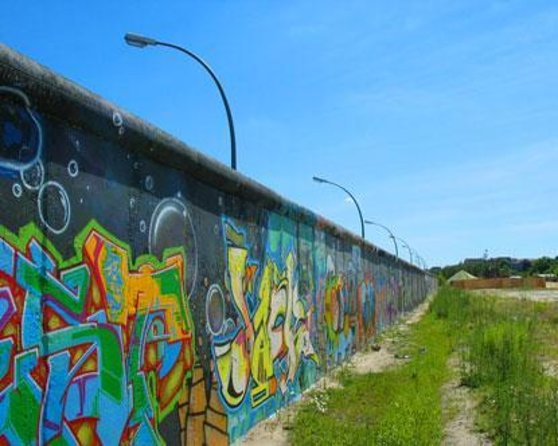
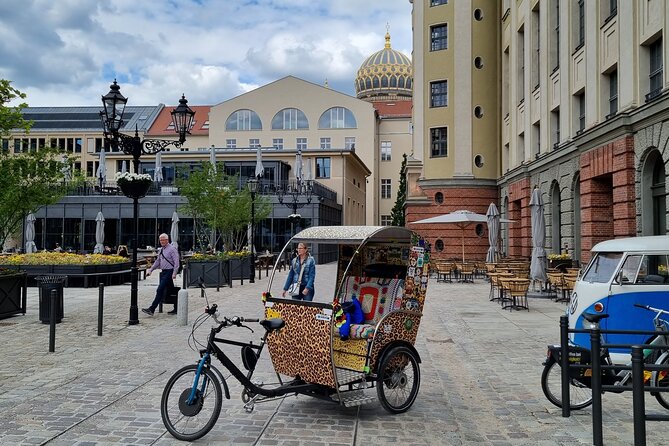
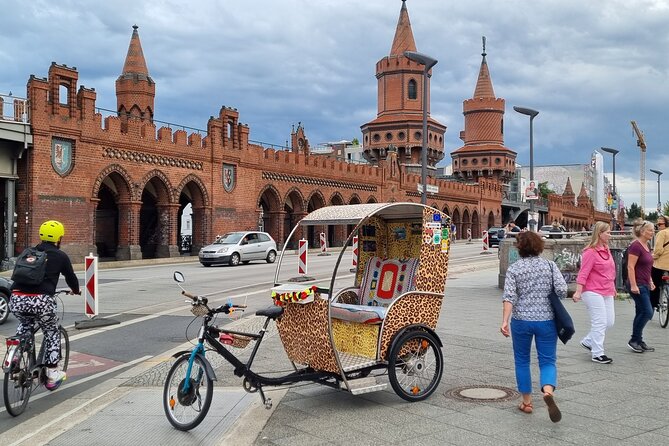
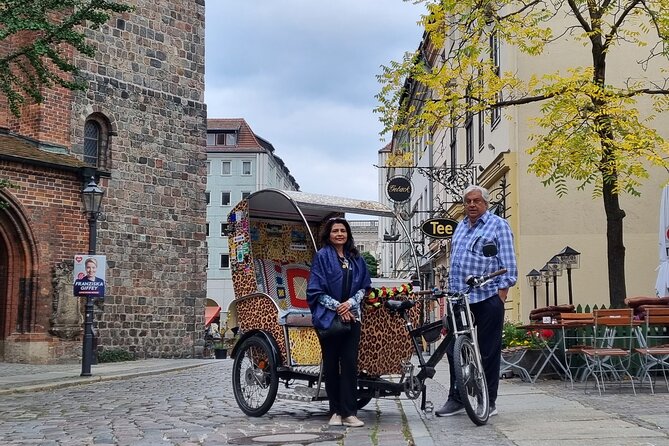
Berlin is a city best understood in layers, and this private rickshaw ride links many of them in one compact outing. You roll from Brandenburg Gate and the Reichstag through former Wall sites, Nazi-era landmarks, grand squares, Museum Island, and Alexanderplatz without wrestling with public transport.
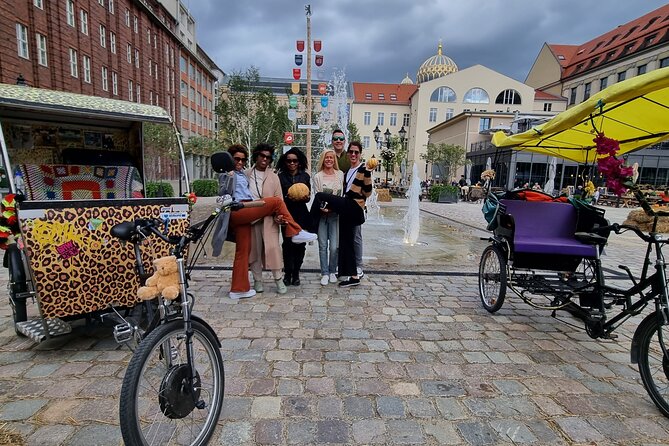
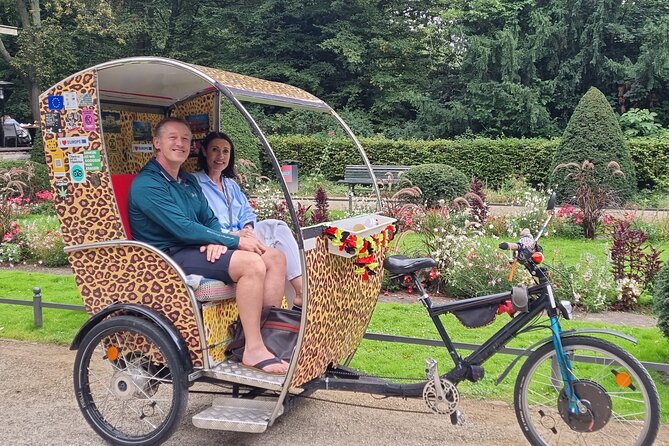
I like the door-to-door pickup near Brandenburg Gate, especially if you are staying nearby, and I like the intimate format: one rickshaw, two people, a guide, and room to shape the route. The photographer, warm blanket, WiFi, music on request, and included alcoholic drinks add a playful touch.
The main caution is value. At $183.35 per group, this is an expensive hour or two, and one stop may feel rushed. The ride is also weather-dependent, and one review noted that the guide was flexible but light on historical detail. Consider it a private Berlin sampler, not a full museum tour.
Key points to know before booking
- Pickup within 2 kilometers of Brandenburg Gate: Farther pickup costs €10 per kilometer, paid locally.
- Private ride for up to two people: You share the rickshaw only with your own companion.
- A long list of central Berlin sights: The route can include Potsdamer Platz, Checkpoint Charlie, Gendarmenmarkt, Museum Island, and Alexanderplatz.
- Photography is part of the package: A photographer is included, along with a travel guide.
- Comfort extras are built in: You get private transport, WiFi, a warm blanket, music on request, and alcoholic beverages.
- Allow for a quick-moving tour: The stated duration is about one to two hours, so most places are viewed from the rickshaw or given only a short stop.
Why a rickshaw works well for Berlin’s center
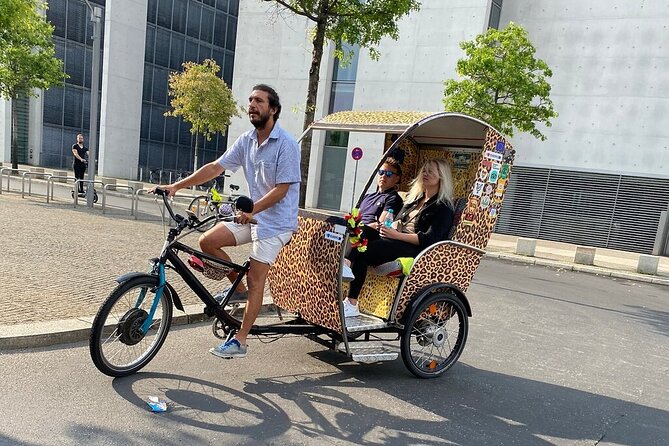
A rickshaw gives you a useful middle ground between walking and a large sightseeing bus. You sit close to the street, move easily through central districts, and avoid spending your whole outing on foot. You also get a private guide rather than a recorded commentary shared with a crowd.
That format matters in Berlin because the main sights are spread across several neighborhoods. Brandenburg Gate, Checkpoint Charlie, Gendarmenmarkt, Museum Island, and Alexanderplatz are not one tidy monument zone. A rickshaw can connect them in a short time, though you should not expect long visits at every stop.
The private setup is especially suited to a couple celebrating a birthday, anniversary, proposal, or simply a first evening in the city. The name of the experience promises a romantic outing, and the blanket, music, drinks, and photo service support that mood. It is less suited to someone who wants long lectures, indoor admissions, or time to read every memorial panel.
The listed rating is 4 out of 5 from nine reviews, which gives you a useful sense of the experience: strong enjoyment overall, with some limits around historical depth, route length, and presentation of the drinks. One highly positive account described the guide as fun and a good driver, even on a very cold day. Another praised the smooth organization and the ability to shape the tour to personal wishes.
More Photography Tours in Germany
- BERLIN PHOTO TOUR with a professional Photographer from Berlin
★ 5.0 · 44 reviews - Berlin U Bahn Cinematic Photography Tour
★ 4.9 · 9 reviews - Berlin: Private Photo Walk with Professional Photographer
★ 4.5 · 2 reviews
Starting at Brandenburg Gate and the Reichstag
The meeting point is Pariser Platz 4A, beside Brandenburg Gate. Pickup is included within a 2-kilometer radius of the gate, so check your hotel location before booking. If you are farther away, the added charge is €10 per kilometer, paid on the spot.
Brandenburg Gate is a strong opening scene. Built between 1788 and 1791 from sandstone, it was commissioned by King Friedrich Wilhelm II as a grand finish for Unter den Linden. Its design drew heavily on the Propylaea of Athens, which explains the classical columns and formal scale.
This is not simply a pretty photo stop. The gate once marked the edge of Berlin and later became a symbol of division, reunification, and the modern German capital. A rickshaw gives you an easy view of the monument before moving toward the Reichstag.
The Reichstag connects architecture with some of Germany’s sharpest political turns. Philipp Scheidemann proclaimed the republic from its west portal balcony on November 9, 1918. The building was badly damaged by the Reichstag fire in 1933, and a Soviet flag raised there in April 1945 came to represent the defeat of Nazi Germany.
You get about two minutes at the Reichstag, with admission not included. That timing tells you how to use the tour: take in the building, listen to the guide’s key points, and save the dome or interior for another visit if you want to go inside.
Soviet memorials and the open space of Tiergarten
The route can continue to the Soviet War Memorial, where a bronze Red Army soldier holds a rifle on his shoulder between two T-34 tanks. Pillars list the names of fallen Soviet soldiers, and around 2,500 soldiers are buried at the rear of the memorial.
It is a sober counterpoint to the nearby government buildings. You can pause for photographs, but give the site the respect it deserves. The memorial is not just military decoration. It marks the human cost of the final battle for Berlin.
The rickshaw also passes through Tiergarten, the city’s large central park. Its origins reach back to the former hunting grounds of the Electors of Brandenburg. In the nineteenth century, garden designer Peter Joseph Lenné reshaped it as an English-style public park.
Tiergarten covers roughly 200 hectares and contains monuments, bridges, the Victory Column, the Federal President’s Office, the House of World Cultures, and the English Garden around a pond. From a rickshaw, you get the broad feel of Berlin’s green center rather than a detailed park walk.
That is a good trade if you have limited time. If you want to explore the English Garden or walk to the Victory Column, plan a separate visit. The rickshaw route gives you a scenic transition between formal monuments and quieter streets.
Potsdamer Platz and the Topography of Terror
Potsdamer Platz offers a very different Berlin. It was rebuilt as a planned district with modern towers, cafés, cinemas, shops, and a large shopping arcade. The area covers 6.8 hectares between Potsdamer Platz and Reichpietschufer, and its futuristic character makes it a clear example of post-reunification Berlin.
I like this contrast in the itinerary. Within a few minutes, you move from imperial architecture and wartime memorials to a modern commercial district. The change helps explain how Berlin has repeatedly rebuilt itself.
The next major stop is the Topography of Terror. Between 1933 and 1945, this area housed key institutions of the Nazi SS and police system, including the Secret State Police Office, the Reich Leadership of the SS, and the Reich Security Main Office.
You receive about two minutes here, and admission is free. That is enough to identify the site, but not enough for a full visit to the documentation center. If Nazi Germany’s history is a major reason for your Berlin trip, return later and allow proper time for the exhibits.
The nearby Martin-Gropius-Bau is dedicated to cultural history, contemporary art, and photography. It is another place best treated as a passing landmark during this ride. The building adds an artistic note to a section of the city shaped by political violence and reconstruction.
More Photography Tours in Berlin:
- Barcelona E-Bike Photography Tour
★ 5.0 · 843 reviews - Tromso: Northern Lights Photography Tour
★ 4.2 · 843 reviews - Tromsø: Northern Lights Photography Tour
★ 4.8 · 788 reviews - Rovaniemi: Aurora Hunting Photography Tour with Barbeque
★ 4.4 · 433 reviews
Checkpoint Charlie and the former Wall zone
Checkpoint Charlie was once the best-known American-controlled crossing between East and West Berlin. During the division of the city, it was reserved for foreigners, employees of the West German permanent representation in East Germany, and East German officials.
The checkpoint is now a compact, heavily photographed reminder of the Cold War. The replica guardhouse and surrounding signs can feel theatrical, but the location itself mattered. This was a real border crossing in a city where a wrong turn could have serious consequences.
You get about two minutes here, and admission is free. I would use the stop for a quick look and a photo, then visit a museum or Wall memorial separately if you want more substance.
The route can continue along Friedrichstrasse, one of Berlin’s main north-south axes. After the Wall fell, the stretch between Checkpoint Charlie and Friedrichstrasse station became a popular shopping area. It gives you a direct look at how a former border zone became ordinary city space again.
Gendarmenmarkt, Bebelplatz, and the Neue Wache
Gendarmenmarkt is one of central Berlin’s grandest squares. Its origins go back to the late seventeenth century, when French Protestant immigrants settled in the area. The square passed through several names before becoming Gendarmenmarkt in 1799, after the guard and stables of the Gens d’Armes regiment.
The square is framed by the German Cathedral, French Cathedral, and concert hall. The German Cathedral contains the permanent exhibition Ways, Detours, Dead Ends, which follows the development of liberal parliamentary democracy in Germany across five floors.
The concert hall was designed by Karl Friedrich Schinkel and is one of his main works. A small comedy theater opened here in 1776 under Frederick the Great, and the building later became the Royal National Theater.
Again, the stop is brief. You can appreciate the composition of the square from the seat, but the interiors need a separate visit. The advantage is that you see several major buildings at once without spending energy navigating between them.
Bebelplatz, near the museum district, carries a darker memory. On May 10, 1933, the Nazis burned more than 20,000 books there, targeting works they labeled as having an un-German spirit. The memorial below the square commemorates the destruction, and Heinrich Heine’s warning about burning books and eventually burning people gives the site lasting force.
The Neue Wache, beside the former armory, is another small but serious memorial. Karl Friedrich Schinkel designed it between 1816 and 1818. Since 1993, it has served as Germany’s central memorial to victims of war and tyranny.
These are places where a good guide matters. One of the tour’s weaker points, according to the available feedback, was limited historical background. If you want detailed explanations at every memorial, ask before setting off how much time the guide can devote to history.
Museum Island, Berlin Cathedral, and Nikolaiviertel
Museum Island is one of Europe’s major museum centers and a UNESCO World Heritage Site. From the rickshaw, you can take in the cluster of monumental buildings without committing half a day to museum interiors.
Berlin Cathedral is the visual anchor. Its large dome and distinctive design make it one of the city’s most recognizable churches. Nearby, the Lustgarten was once part of the Berlin City Palace and is now a popular open square.
The route also includes the New Synagogue on Oranienburger Strasse. It was once the largest and most important synagogue in Germany. What remains today points to the scale and importance of the original building, as well as the damage caused by the twentieth century.
Nikolaiviertel gives you a different kind of city view. It is Berlin’s oldest residential area, centered on Nikolaikirche and filled with historic-style houses, restaurants, and cafés. Compared with the wide ceremonial avenues and modern towers elsewhere on the route, this district feels smaller and more intimate.
These stops are valuable because they show Berlin beyond the standard political landmarks. You get religion, museums, old residential streets, and public squares in the same stretch of the city.
Ending at Alexanderplatz
Alexanderplatz has been one of Berlin’s liveliest public squares for generations. Its identity has shifted through the 1920s, the East German period, and the present day, but it remains a major city center.
The tour ends back at the meeting point rather than at Alexanderplatz, so the route is not a one-way transfer. That matters when planning your day. You can continue sightseeing after the ride, but allow time to return to the starting area.
Because the complete route contains so many major sights, the exact balance may depend on your guide and your requests. The experience can be adjusted to your wishes, which is one of its strongest practical features. Tell the guide early if you care most about Cold War history, imperial architecture, Nazi sites, photography, or a romantic atmosphere.
What the $183.35 price really buys you
The cost is $183.35 per group of up to two people, not per person. For a couple, that works out to about $91.68 each before any extra pickup fee. That is high for a one-hour outing, but easier to justify if you receive close to two hours and make use of the private format.
You are paying for more than transport. The package includes private transportation, a guide, photographer, WiFi, a warm blanket, music on request, and alcoholic beverages. The ability to set the mood and adjust the route gives it a celebratory feel that a standard city bus cannot match.
Still, the price makes the limitations important. Most stops are short, admission tickets are not included, and the route cannot provide a full visit to the Reichstag, museums, Topography of Terror, or German Cathedral. One piece of feedback also described the drinks as less polished than expected, so treat them as a casual extra rather than a premium service.
The best value comes when you want privacy, photos, and a gentle overview of central Berlin. If your priority is serious historical instruction or maximum sightseeing time per euro, walking tours and public transport will likely serve you better.
Weather, comfort, and the practical details
The tour requires good weather. If poor conditions force cancellation, you can choose another date or receive a full refund. You may cancel up to 24 hours before the start time for a full refund; cancellations or changes inside 24 hours are not refunded or accepted.
Berlin can be cold, and the warm blanket is more than decoration in the cooler months. One rider continued despite very cold weather and still found the guide entertaining and a good driver. That said, you should dress for an open-air ride rather than rely entirely on the blanket.
The experience is offered in English. Confirmation arrives when you book, service animals are allowed, and most people can participate. Since the activity is private, only your own group joins the rickshaw.
Music on request and alcoholic beverages add to the romantic angle, while WiFi may be useful for checking maps or sharing photos. The photographer is a notable extra, but ask how and when photos will be delivered if that is central to your decision, since the available details do not specify the process.
Who should book this Berlin rickshaw ride?
I would choose this for a couple with limited time, a special occasion, or a preference for private sightseeing. It is also a sensible first look at Berlin if you want to see the city’s major districts before choosing where to return on foot.
You will probably enjoy it most if you like flexible plans, quick photo stops, and a light social atmosphere. The fun guide and easy driving were major strengths, and the ability to shape the tour can make the ride feel personal.
I would hesitate if you want detailed historical teaching at every stop, long visits inside museums, or the lowest possible sightseeing cost. The tour covers a lot, but it does so at a brisk pace. The long list of sights should be read as a city overview, not a promise of extended time at each one.
Should you book it?
Book it if you want a private, romantic way to connect Berlin’s major sights, especially with pickup near Brandenburg Gate and a photographer, blanket, drinks, and music included. The route gives you a useful first impression of the city’s imperial, Nazi, Cold War, modern, and cultural layers.
Skip it if the $183.35 price feels steep for a one-to-two-hour ride, or if you need a guide with extensive historical commentary. Before booking, ask for the likely route length, confirm your pickup distance, and explain which subjects matter most to you. With realistic expectations, this can be a memorable Berlin sampler and a good occasion ride.
FAQ
Where does the tour start?
The meeting point is Pariser Platz 4A, 10117 Berlin, Germany, beside Brandenburg Gate.
Is pickup included?
Pickup is included within a 2-kilometer radius of Brandenburg Gate. Pickup farther than 2 kilometers costs €10 per kilometer, paid on the spot.
Where does the tour end?
The activity ends back at the meeting point.
How long does the experience last?
The listed duration is approximately one to two hours.
How many people can join?
The price covers one private group of up to two people.
Is the tour offered in English?
Yes. The experience is offered in English.
What is included in the price?
Private transportation, WiFi on board, a warm blanket, music on request, a travel guide, a photographer, and alcoholic beverages are included.
Are admission tickets included?
Admission tickets are not included for the Reichstag. Several other listed stops, including Potsdamer Platz, Topography of Terror, Checkpoint Charlie, Gendarmenmarkt, and Neue Wache, are marked as free stops.
Is the tour accessible with a service animal?
Yes. Service animals are allowed.
What happens if the weather is poor?
The experience requires good weather. If it is canceled because of poor weather, you can choose another date or receive a full refund. Free cancellation is available up to 24 hours before the start time.
Just added around Berlin
- Instagram Tour in Berlin★ 5.0 · 2 reviews
- Discover Berlin Underground through Mobile Photography★ 5.0 · 5 reviews
- Berlin: Private Photo Walk with Professional Photographer★ 4.5 · 2 reviews
- Berlin: Premium 60-Minute Photoshoot at Iconic Landmarks★ 5.0 · 2 reviews
- Berlin: Ticket for Photography Exhibitions at C/O Berlin★ 4.5 · 39 reviews
- Berlin: Instagram Tour of the most visited spots★ 4.7 · 6 reviews
- Berlin: Hands-On Mobile Photography Workshop★ 5.0 · 4 reviews
- Berlin: Your Personal Vacation Photographer★ 4.2 · 6 reviews
Photography Tours, compared.

Rhodes: E-bike Highlights Sunset or Morning Photo Tour
Read our review →
Browse the lists this tour appears in