
REVIEW · BRUGES
Photo Tour “Jan van Eyck”
Bruges is easy to photograph, but the best pictures often come from knowing exactly where to stand. This guided walk leads you from the busy center to Jan van Eyck Square, quiet canals, old market spaces, and the famous Rosary Quay, with photo advice along the way.
I like the small group limit of 12, which leaves room for questions and personal help. I also like the local touch: guide Ivan adds stories about Bruges, including the city’s swans, and has been praised for his humor and affection for the place he has lived in for decades. The possible drawback is pace. Seven stops in about two hours can feel fairly full, especially if you want time to set up every shot.
Key points
- A practical photo walk: Learn where to stand, how to frame canals, and how to find less obvious viewpoints.
- Seven historic stops: The route covers Burghers’ Lodge, Jan van Eyck Square, Groenerei, Vismarkt, Huidenvettersplein, Rosary Quay, and Nepomucenus Bridge.
- A quieter side of Bruges: You leave the crowded central streets and head toward old harbor areas and canal lanes.
- Local guide Ivan: His stories, humor, and personal connection to Bruges add more than a simple sightseeing route.
- Short and manageable: The walk lasts about two hours and ends only 200 meters from its starting point.
- Weather matters: The experience requires good weather, so keep the cancellation terms in mind when planning.
What this Bruges photo walk actually offers
This is not a technical photography class with a long lesson on camera settings. It is a guided walk through Bruges that uses the city itself as your classroom.
You move between historic buildings, canals, bridges, and old market squares. At each place, the guide points out a useful angle or a special position for your camera. One stop at Groenerei includes a surprise connected to where you stand, and the final image at Nepomucenus Bridge is presented as a view often missed by casual sightseers.
That makes the tour useful for several kinds of photographers. If you use a phone, you can still benefit from advice on composition and viewpoint. If you carry a camera, you may appreciate a quicker way to find strong scenes without spending half a day reading a map or wandering in circles.
The route also gives you a quick orientation to Bruges. You see how the old harbor district connects with the canals and central squares, then finish near Dijver. Since the ending point is only about 200 meters from the start, you can easily continue sightseeing afterward.
More Photography Tours in the world:
- Tromso: Northern Lights Photography Tour
★ 4.2 · 843 reviews - Barcelona E-Bike Photography Tour
★ 5.0 · 843 reviews - Tromsø: Northern Lights Photography Tour
★ 4.8 · 788 reviews
Meeting at Historium Bruges at 1:30 pm
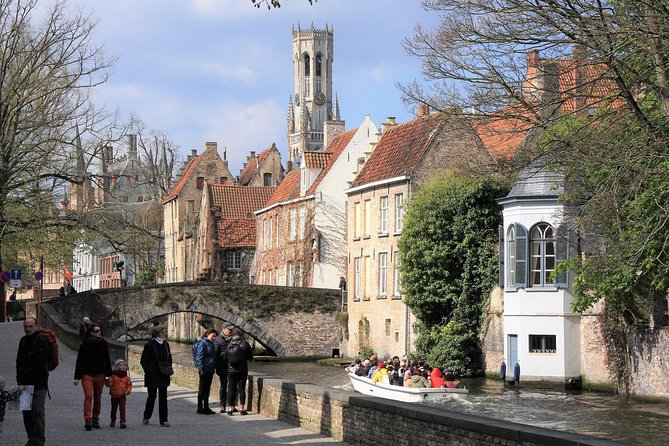
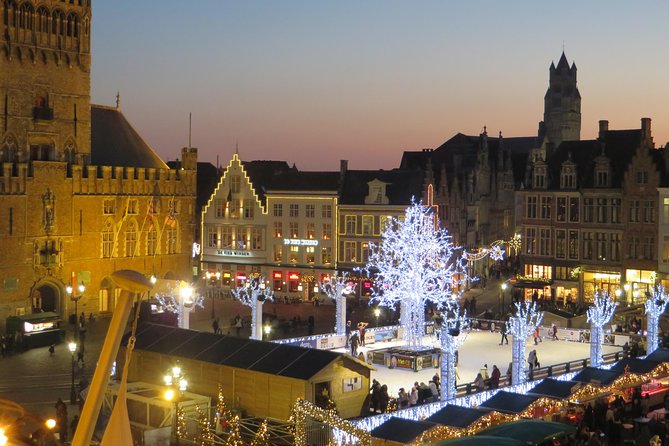
The walk begins at Historium Bruges on Markt, the large central square. This is a convenient meeting place because it is easy to locate in the historic center and puts you close to some of Bruges’ best-known streets.
The scheduled start is 1:30 pm, so consider the light before booking. The tour does not offer an early morning departure in the supplied schedule. Afternoon light can still work well for canals and old brick buildings, but the exact mood will depend on the season and weather.
You begin by leaving the busiest part of the center. That transition is part of the appeal. Instead of spending the whole walk among the most crowded postcard locations, you move toward older harbor quarters and quieter waterside streets.
Bring a charged phone or camera, and make sure you have enough storage. The route includes several obvious photo stops, plus smaller details that may tempt you to keep shooting. The walk is only two hours, so you will get more from it if you arrive ready rather than sorting out equipment at the first stop.
Burghers’ Lodge and the old harbor route
The first formal stop is the Burghers’ Lodge, or Poorters Loge. It is described as the first office building in the world, a detail that gives the opening stop a clear historical hook.
You spend about three minutes here, so do not expect a long architectural lecture or a full interior visit. The value is in getting your first sense of the building and learning how the guide wants you to look at Bruges. The stop also helps shift your attention from the large central square to the smaller structures and streets nearby.
For photography, this is a short warm-up. You can practice taking a quick architectural frame before the route becomes more focused on water, reflections, and canal views.
Jan van Eyck Square, where Bruges once met the sea trade
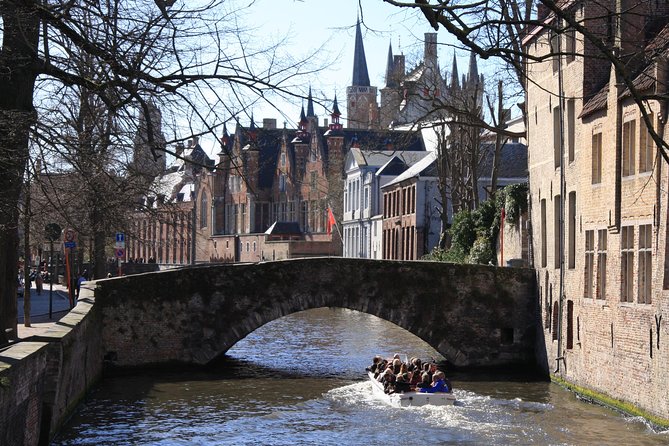
Jan van Eyck Square receives about 15 minutes, making it one of the main stops. In the Middle Ages, this was a busy harbor area, and the square still gives you a useful sense of Bruges as a trading city rather than only a pretty canal town.
This is a good place to listen to the historical explanation. The square’s importance comes from its former activity, and the guide’s commentary helps connect the buildings and open space with the city’s working past.
It is also a strong photography stop because you have time to compose more than one image. Try different orientations rather than taking only the obvious square view. Look for relationships between façades, open space, and people moving through the scene. The guide’s role is especially helpful here because you do not need to guess which direction deserves your attention.
The stop may feel brief if you enjoy architectural photography. Fifteen minutes is enough for a few deliberate pictures, but not enough to document every building in detail.
A few more photo experiences around the world worth a look
- Bali: Full-Day Instagram Highlights Tour
★ 4.8 · 7,817 reviews - ️ Bali Instagram Tour: The Most Famous Spots (Private & All-Inclusive)
★ 5.0 · 2,857 reviews - Paris: Private Photoshoot at the Eiffel Tower
★ 4.7 · 2,636 reviews - The ‘OG’ Manatee Snorkel Tour with In-Water Guide/Photographer
★ 5.0 · 2,539 reviews
Groenerei and the surprise viewpoint
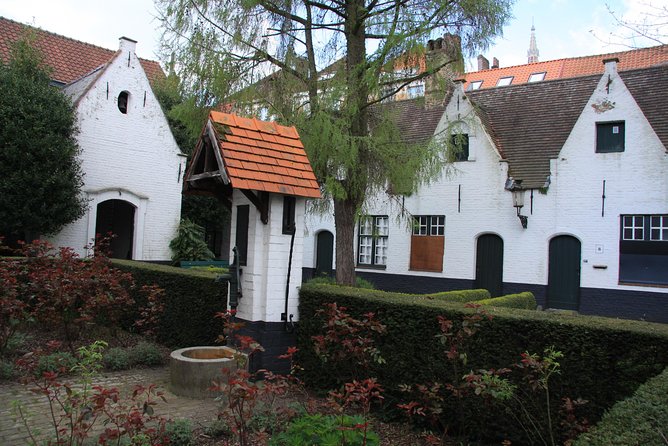
Groenerei is another 15-minute stop and one of the more distinctive parts of the route. You are asked to stand in a particular spot, then the guide provides a surprise. The information does not spell out exactly what happens, so you should arrive ready to follow instructions rather than expecting a standard photo lesson.
The canal setting is important. Bruges photographs well because water creates distance, reflections, and layered views of old buildings. A small change in position can alter the entire picture, especially along a narrow canal. This is the kind of practical instruction that can improve your results more than a general lecture about exposure or lenses.
You may find this stop most useful if you tend to take pictures from the first place that looks attractive. The guide encourages you to move, test a viewpoint, and see how a scene changes. That lesson applies throughout the city.
Vismarkt and Huidenvettersplein
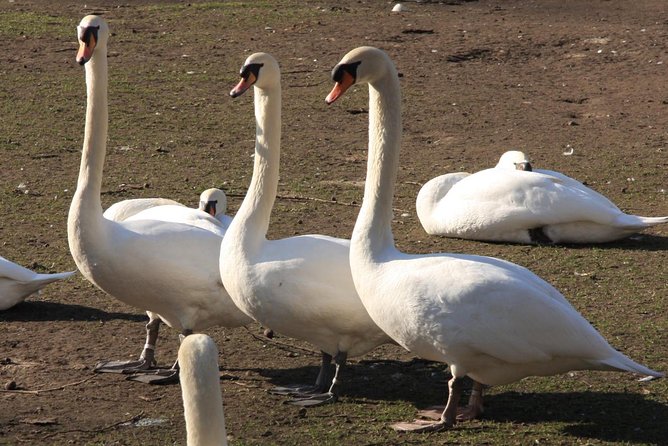
The walk then reaches Vismarkt, the old fish market, for about five minutes. This is a short stop, but it adds another layer to Bruges. The city was not built only for romantic canal views. Its squares also served ordinary trade and daily work.
The five-minute timing tells you how to approach this part of the tour. Listen for the historical detail, take a few frames, and keep moving. If you want a long photo session in every square, the route may feel hurried. If you want a compact introduction to several parts of Bruges, the pace makes sense.
Huidenvettersplein, or Tanners Place, follows for another five minutes. The name points to the trades that once used this area. Together, these two stops add texture to the walk. You see places shaped by commerce and craft, not only by picturesque scenery.
Photographically, the smaller squares can be useful between the major canal scenes. You might find stronger images in details such as signs, façades, narrow passages, or the way the square opens and closes around you. The guide’s commentary helps you understand why these places look the way they do.
Rosary Quay, the classic Bruges view
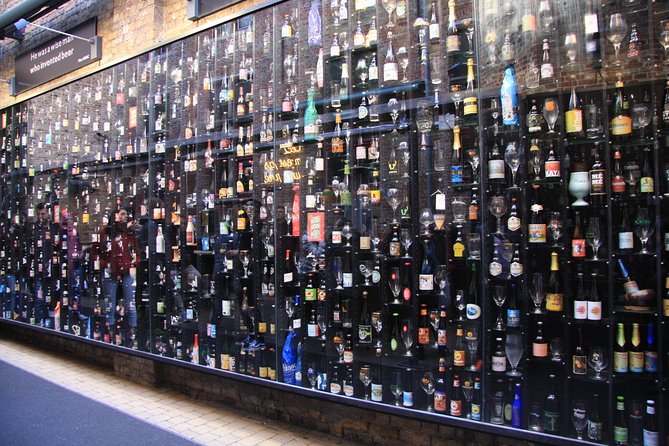
Quai du Rosaire, also called Rozenhoedkaai or Rosary Quay, is described as the city’s most photographed view. You have about five minutes here.
This is the stop most likely to match the picture you already associate with Bruges: canal water, historic buildings, and a clean view that works well from a number of angles. Its popularity is also the drawback. You are not being shown an unknown corner of town, and you may share the viewpoint with other people.
Still, a famous view earns its fame for a reason. The guide can help you avoid a flat snapshot by pointing out the best position and framing. Use the short stop to make one strong image rather than a dozen nearly identical ones.
If you are using a phone, try holding it level and checking the edges of the frame. Canal views can look crooked quickly. If you have a camera, this is a sensible place to compare a wider frame with a tighter composition of the buildings and water.
Nepomucenus Bridge and the final professional angle
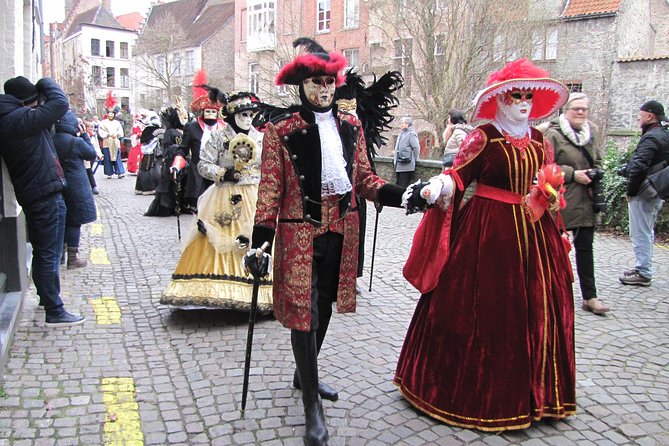
The route ends at Nepomucenus Bridge, with about five minutes devoted to the final picture. This stop is presented as an angle that only professionals tend to notice, which gives the walk a fitting finish.
The bridge is also practical as an endpoint. It is on Dijver and only about 200 meters from the starting point. You are not left at a distant edge of the city, so you can easily return to Markt, visit another attraction, or continue along the canals.
The final stop may be especially useful because it reinforces the main lesson of the tour: good photography often depends on position. You do not need a rare subject if you find a better angle, wait for a cleaner frame, or notice a view that most people pass without considering.
Ivan’s role and the value of a small group
The guide matters a great deal on a walk like this. Ivan is specifically named in the experience information, and his role goes beyond pointing out landmarks. He has been praised for being funny, well informed, and deeply attached to Bruges. He has lived in the city with his wife for 43 years, which gives his commentary a personal tone.
One particularly memorable local story concerns the swans of Bruges. The details of the story are not provided, but it is the sort of small piece of local tradition that can make a walk feel connected to the place rather than like a checklist of sights.
The group limit is 12 people. That is large enough to keep the tour social, but small enough for questions and occasional one-to-one conversation. Ivan has also taken pictures of participants and offered to email a city guidebook, though you should not treat those extras as guaranteed unless confirmed when booking.
A small group does not guarantee a private tour. You may still need to wait while others take pictures, and the route follows a set schedule. But it is a better setup for personal photo advice than a large coach-style outing.
Price, timing, and who gets good value
The price is $47.50 per person for roughly two hours. That is not the cheapest way to walk around Bruges, since you can visit these public areas without a ticket. You are paying for the route, the guide’s local knowledge, the photo tips, and the time saved by not having to find the best viewpoints yourself.
I see the price as fair if you are new to Bruges, want better pictures, or prefer a guided introduction on your first afternoon. It is less compelling if you already know the city well, are comfortable planning your own photo route, or want a slow architectural study with plenty of time at each stop.
The tour is booked about 41 days ahead on average, which suggests planning early if your dates are fixed. Confirmation is provided at booking, and the experience accepts mobile tickets. Service animals are allowed, public transportation is nearby, and most people can participate.
The walk requires good weather. You can cancel for a full refund up to 24 hours before the start time. If poor weather cancels the tour, you are offered another date or a full refund. That policy is useful, but remember that changes or cancellations inside the 24-hour window are not accepted.
The main limitation: a brisk two-hour pace
The strongest practical caution is time. The route covers seven stops, with two 15-minute visits and several five-minute stops. One person found the walk fairly exhaustive and a bit tiring, which is worth taking seriously even though the total duration is short.
You are moving through the city while listening, framing pictures, and keeping up with the group. That is not a problem for most people, but it is different from a relaxed stroll where you can stop whenever you like.
The pace also means you should decide what matters most. If you want historical context and a range of photo locations, follow the route as planned. If your main goal is one perfect canal photograph, you may wish the guide allowed more time at Rosary Quay or Groenerei.
Should you book the Jan van Eyck photo tour?
Book it if you want a friendly local introduction to Bruges and would like practical help finding strong photo positions. It suits first-time visitors, couples, families, and phone photographers who want more than a map-based walk. Ivan’s stories and personal connection with the city add warmth, while the small group makes questions easier.
Think twice if you dislike fixed schedules, need a great deal of time at each location, or want advanced camera instruction. This is a guided photo walk, not a full technical workshop.
For most people, the best reason to book is simple: in two hours, you see several historic corners, learn the story behind them, and leave with a better sense of how to photograph Bruges. The famous views are included, but the real benefit is learning to look for the position just beside the obvious one.
FAQ
Where does the photo tour start?
It starts at Historium Bruges, Markt 1, 8000 Brugge, Belgium.
What time does the tour begin?
The scheduled start time is 1:30 pm.
How long does the experience last?
The tour lasts approximately two hours.
Where does the tour end?
It ends at Nepomucenus Bridge on Dijver, 8000 Brugge. The endpoint is about 200 meters from the starting point.
How many people can join the tour?
The maximum group size is 12 travelers.
Which Bruges sights are included?
The route includes Burghers’ Lodge, Jan van Eyck Square, Groenerei, Vismarkt, Huidenvettersplein, Rosary Quay, and Nepomucenus Bridge.
Is the ticket available on a mobile phone?
Yes. The experience includes a mobile ticket.
What happens if the weather is poor?
The experience requires good weather. If it is canceled because of poor weather, you are offered a different date or a full refund. You can also cancel up to 24 hours before the start time for a full refund.
Just added around the world
- Private Vacation Photoshoot with Photographer in Myrtle Beach★ 4.0 · 9 reviews
- Traditional Japanese Costumes “Kimono”, “Yukata”, “Ryuso”, “Photograph Course “Hair Set & Lipstick & Kimono & Photography”★ 5.0 · 17 reviews
- Marco Island Photography Experience★ 5.0 · 7 reviews
- Capture Unforgettable Moments: Private Holiday Photography★ 5.0 · 52 reviews
- Hire Photographer, Professional Photo Shoot – Myrtle Beach★ 5.0 · 4 reviews
- Proposal Photoshoot Mykonos★ 5.0 · 2 reviews
- Private Instagram Tour | Mykonos Most Photogenic Spots★ 5.0 · 4 reviews
- Photographer, Professional Photo shoot – Mykonos★ 3.0 · 2 reviews
Photography Tours, compared.
Rhodes: E-bike Highlights Sunset or Morning Photo Tour
Read our review →
Browse the lists this tour appears in