
REVIEW · PHOTOGRAPHY TOURS
Evening Photography Tour of Kathmandu
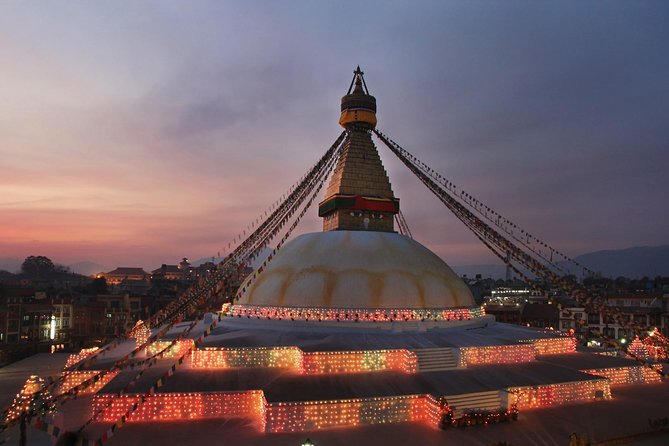
At dusk, Kathmandu shifts from busy city to sacred theater. At Boudhanath, monks and worshippers circle the glowing stupa with butter lamps. Later, at Pashupatinath, chanting, fire, and movement fill the evening aarti ceremony beside the Bagmati River. This private outing gives you access to both scenes without asking you to find your way through Kathmandu after dark.
I like the private format, which lets you spend more time on a subject instead of keeping pace with a large group. I also like the practical help from guides such as Bikash and Deepa, who explain the religious setting and point out useful places to photograph. The main consideration is that this is a short evening visit, not a full photography workshop, so serious photographers may want more time at each location.
Key points to know before booking
- Boudhanath after sunset: Photograph the white stupa, circling devotees, monks, and butter lamps during evening prayers.
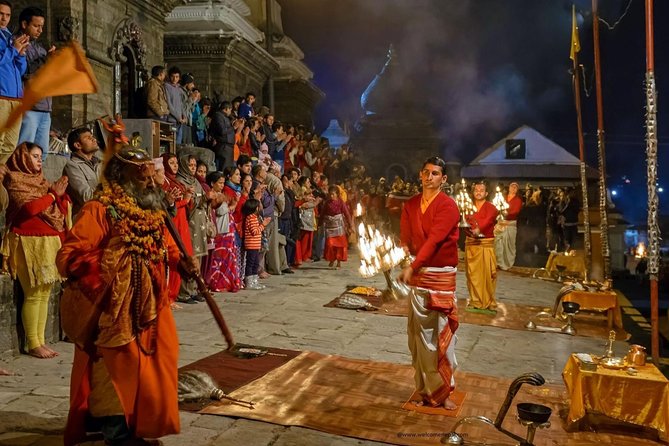
- Pashupatinath aarti: Watch a Hindu fire ceremony with chanting, singing, and sacred hymns beside the Bagmati River.
- Private transport included: Pickup is offered from central Kathmandu, with transportation between the two sites.
- English-speaking licensed guide: Guides such as Bikash and Deepa provide cultural context and help you locate good viewpoints.
- Three to four hours: Each main stop receives about one hour, with the remaining time used for driving.
- Best for adaptable photographers: You should be comfortable working around worshippers and changing light rather than expecting a formal studio-style lesson.
Two sacred sites, one carefully timed evening
This tour is built around a simple idea: Kathmandu is especially photogenic when religious life moves outdoors after sunset. You visit two important places in one evening, but the scenes are quite different.
Boudhanath belongs to the Tibetan Buddhist tradition. Pashupatinath is one of the most important Hindu shrines dedicated to Lord Shiva. Seeing both on the same evening gives you a useful look at Nepal’s religious life without reducing either place to a quick photo stop.
Your guide’s role matters here. These are active places of worship, not staged attractions. A guide can help you understand what is happening, where you can stand, and when it is better to lower your camera. The best photographs usually come with a bit of patience and respect.
The outing lasts about three to four hours. Roughly one hour is set aside at each religious site, while the rest goes to pickup and the ride between them. Since the experience is private, your group can work at a comfortable pace, though the schedule still leaves limited time for each location.
More Photography Tours in the world:
- Tromso: Northern Lights Photography Tour
★ 4.2 · 843 reviews - Barcelona E-Bike Photography Tour
★ 5.0 · 843 reviews - Tromsø: Northern Lights Photography Tour
★ 4.8 · 788 reviews
Boudhanath after dark
Your first stop is Boudhanath Stupa, one of Kathmandu’s major Buddhist pilgrimage centers. The white dome is lit in the evening, and the stupa’s broad circular path becomes the setting for parikrama, the ritual act of walking around a sacred object.
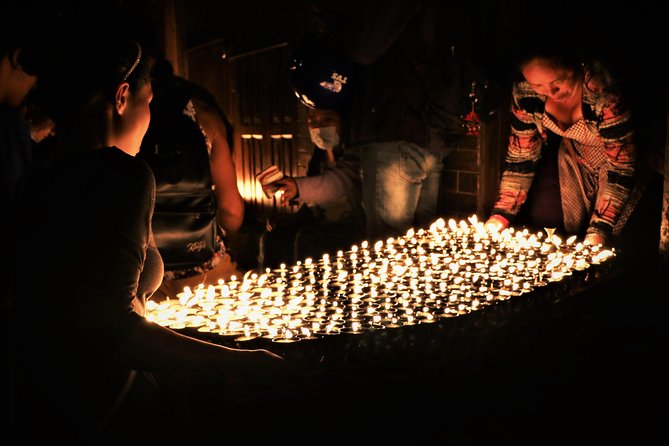
This is a strong place to practice photographs built around repetition and movement. Devotees circle the stupa. Monks and worshippers light butter lamps. Hands, prayer gestures, warm points of light, and the pale dome give you several layers to work with.
You may find the best results by watching for small moments rather than trying to capture everything in one frame. A line of lamps can create a foreground. A person walking around the stupa can give scale to the architecture. The white structure and evening lighting also offer a clear contrast, even if your camera struggles with the darker surroundings.
The spiritual purpose is important. People light the lamps and pray for the well-being of all sentient beings and for world peace. You are not simply photographing a pretty building at night. You are working near an ongoing act of devotion, so keep your manner quiet and avoid turning worshippers into unwitting props.
The visit is listed at about one hour, with admission included. That is enough to get a feel for the setting and make a set of photographs, but it may feel brief if you enjoy careful composition or low-light work. If you bring a camera with manual controls, this is a good place to use them. Still, you only need to bring your camera. The tour does not require special photography equipment.
One practical advantage of having a guide is knowing where to go inside a large religious complex. The guide can help you find worthwhile settings instead of spending half the visit simply orienting yourself. That help is especially useful at night, when signs and familiar daytime reference points are less helpful.
Pashupatinath and the evening aarti
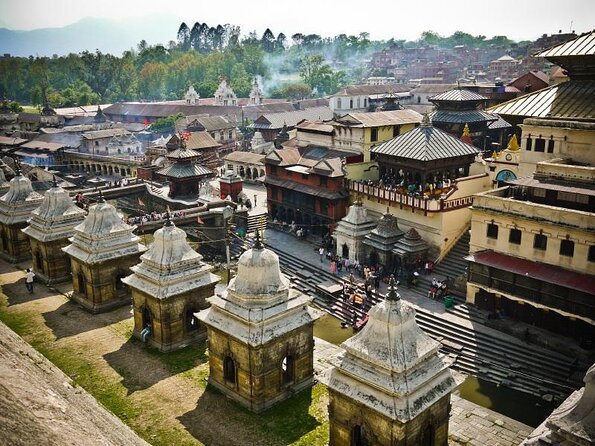
The second stop is Pashupatinath Temple, an ancient Hindu shrine devoted to Lord Shiva. The name Pashupatinath means protector of all living beings, a fitting title for a place with such importance in Hindu worship.
The evening focus here is aarti, a sacred ceremony in which light from a flame is offered to the gods. Chanting, singing, and Vedic hymns shape the sound of the ritual. Priests perform the fire offering, while devotees gather nearby. The scene is more dynamic than Boudhanath, with movement, flame, music, and a strong sense of public participation.
This is likely the most dramatic part of the evening for photography. Fire provides a natural point of focus, while the surrounding darkness can simplify the frame. You may also find expressive moments among the devotees, who are described as dancing in a trance-like state during the ceremony.
The religious context adds depth to the photographs. Lord Pashupatinath is associated with Shiva’s Tandav, a celestial dance, so movement and dance are not incidental details here. Your guide can explain these connections while you watch, helping you see the ceremony as more than a sequence of attractive images.
The tour places you near the sacred Bagmati River, where the fire devotion takes place at night. This setting gives the photographs a strong sense of place. It also means you should remain aware of where you are standing and how close you are getting to the ceremony. Ask your guide if you are unsure about photography at any moment.
Admission is included, and the visit is planned for about one hour. The timing should allow you to see the main ceremony, but you will not have unlimited time to wait for perfect light or a particular gesture. If your priority is a long, slow photo session at one site, this two-stop plan may feel too compressed.
What the private format changes
A private tour is more than a comfortable car ride. It changes how the evening works.
You are not sharing the schedule with a large group, so it is easier to ask questions about Buddhism, Hindu worship, Kathmandu, or Nepalese customs. If you need a moment to adjust your camera, you do not have to hold up a coach full of people. If the light is better from one permitted position, your guide can help you make the most of it.
The guide also acts as a cultural interpreter. The experience includes an English-speaking licensed city guide, and the strongest praise has focused on the guide’s local knowledge, polite manner, and ability to explain Kathmandu during the drives. That time in the vehicle is not wasted. It gives you a chance to connect the two sites and hear about the city beyond the viewfinder.
Guides named Bikash and Deepa have been associated with especially strong experiences on this outing. Guide assignments can change, so you should not book on the assumption that one particular person will lead your group. The useful point is that the guide is expected to do more than drive you from one entrance to another.
Transportation from central Kathmandu is included. That matters in the evening, when arranging separate taxis between two major sites can add time and uncertainty. Private transport also makes it easier to carry a camera without repeatedly negotiating rides or checking directions.
More Evening Experiences in the world:
- Rhodes: E-bike Highlights Sunset or Morning Photo Tour
★ 4.9 · 351 reviews - Cappadocia Sunrise & Sunset Horse Tour with Photography
★ 4.9 · 348 reviews - Mediaeval Rhodes E-bike Highlights Photo Tour Morning/Sunset
★ 5.0 · 164 reviews - Tokyo by Night Photography Tour (Private Option Available)
★ 5.0 · 151 reviews
Is $102 a fair price?
The price is $102 per person. That is not a budget sightseeing ride, especially if you are traveling alone. The value depends on how much you want help with timing, transport, religious context, and finding suitable places to photograph.
For a private group, the calculation becomes more favorable. You are paying for a private vehicle, an English-speaking licensed guide, entrance fees, and a focused evening route. Group discounts are offered, so people traveling together should check the final rate before deciding.
This price makes the most sense if you would otherwise hire transport and a local guide separately. It also makes sense if visiting both sites at night feels difficult on your own. The tour saves you from building the route, arranging the transfer, and trying to understand two ceremonies while also handling your camera.
It is less compelling if you have already visited both sites, know Kathmandu well, and mainly want unrestricted time for photography. One person who had seen the places during the day still found the evening different, but the tour will not reveal entirely new monuments at either stop. Its value lies in the timing, the ceremonies, and the guidance.
Dinner, bottled water, and alcoholic drinks are not included. Plan to eat before or after the tour, and bring your own water. The outing is short enough that food is not a major issue, but it is worth remembering when planning your evening.
Photography advice for this particular route
You do not need to be a professional photographer. The tour is designed to help you reach worthwhile settings and moments, not to provide a technical class.
The light will change quickly. Boudhanath offers illuminated architecture and small flames. Pashupatinath brings brighter fire against a darker setting. A camera that performs reasonably well in low light will help, but the supplied information does not promise special equipment or instruction.
Keep your setup simple. You may need to react quickly as people move around the stupa or as the aarti ceremony progresses. A camera that is ready to use is more useful than a complicated arrangement that keeps you looking down.
You should also treat the religious setting as part of the experience, not merely as a backdrop. Ask before photographing people directly if the situation calls for it. Avoid blocking worshippers or moving into restricted areas for a better angle. A good guide can help you judge these moments.
The strongest images may not be the grandest ones. Look for a line of lamps, the curve of the stupa, a priest holding a flame, or the contrast between a moving worshipper and the still architecture. You will get more from the evening if you allow time to watch before pressing the shutter.
Who will get the most from this tour?
I would recommend this outing to someone visiting Kathmandu for the first time who wants to see religious life at night without arranging the logistics alone. It also suits photographers who enjoy people, architecture, and ceremony more than long technical instruction.
It is a good match for couples, families, and small private groups. Group discounts may improve the value, and the private setting allows different members of your group to ask questions or take breaks without affecting strangers.
The tour may also suit you if you have already visited Boudhanath or Pashupatinath in daylight. The evening prayers and aarti ceremony create a different atmosphere. Still, you should not expect a completely new sightseeing route. The appeal is the hour, the ritual, and the guide’s interpretation.
I would be more cautious if your main goal is a highly specialized night photography workshop. The schedule gives you about one hour at each stop, and there is no stated promise of tripod instruction, camera coaching, or extended time at a single location.
Most people can participate, and the tour is near public transportation. Pickup is offered, but the included transport is described as being from central Kathmandu, so confirm the pickup area if you are staying farther out. The activity requires good weather, and a minimum number of participants may apply even though the tour itself is private.
Booking and cancellation details
Confirmation is received at the time of booking. This experience is often reserved about 12 days ahead, so planning early is sensible if your Kathmandu dates are fixed.
Free cancellation is available when you cancel at least 24 hours before the local start time. Changes or cancellations inside that window are not accepted for a refund. If poor weather prevents the tour from operating, you can choose another date or receive a full refund. The same choice applies if the minimum number of participants is not met.
FAQ
How long does the Evening Photography Tour of Kathmandu last?
The tour lasts approximately three to four hours, including transportation between the two sites.
Which places are visited?
The tour visits Boudhanath Stupa and Pashupatinath Temple.
What can I photograph at Boudhanath?
You can photograph the illuminated stupa, devotees walking around it, Buddhist monks, and butter lamps lit during evening prayers.
What happens at Pashupatinath in the evening?
You can watch an aarti ceremony featuring chanting, singing, sacred hymns, and fire offered to the gods during the ritual.
Is transportation included?
Yes. Private transportation is included, and pickup is offered from central Kathmandu.
Is this a private tour?
Yes. Only your group participates, and an English-speaking licensed city guide accompanies you.
Should you book it?
Book this tour if you want a guided evening built around two meaningful ceremonies, rather than a simple nighttime drive past famous sights. The private transport, local explanation, and help finding suitable viewpoints make the $102 price easier to justify, especially for a small group using the discount.
Skip it if you want a long, technical photography session or have already arranged transport and know both sites well. For most first-time visitors with a camera, though, this is a smart way to see Kathmandu after dark while keeping the evening focused, respectful, and manageable.
Just added around the world
- Private Vacation Photoshoot with Photographer in Myrtle Beach★ 4.0 · 9 reviews
- Traditional Japanese Costumes “Kimono”, “Yukata”, “Ryuso”, “Photograph Course “Hair Set & Lipstick & Kimono & Photography”★ 5.0 · 17 reviews
- Marco Island Photography Experience★ 5.0 · 7 reviews
- Capture Unforgettable Moments: Private Holiday Photography★ 5.0 · 52 reviews
- Hire Photographer, Professional Photo Shoot – Myrtle Beach★ 5.0 · 4 reviews
- Proposal Photoshoot Mykonos★ 5.0 · 2 reviews
- Private Instagram Tour | Mykonos Most Photogenic Spots★ 5.0 · 4 reviews
- Photographer, Professional Photo shoot – Mykonos★ 3.0 · 2 reviews
Photography Tours, compared.
Rhodes: E-bike Highlights Sunset or Morning Photo Tour
Read our review →
Browse the lists this tour appears in