REVIEW · GUIDED
Guided Birding Photography Experience
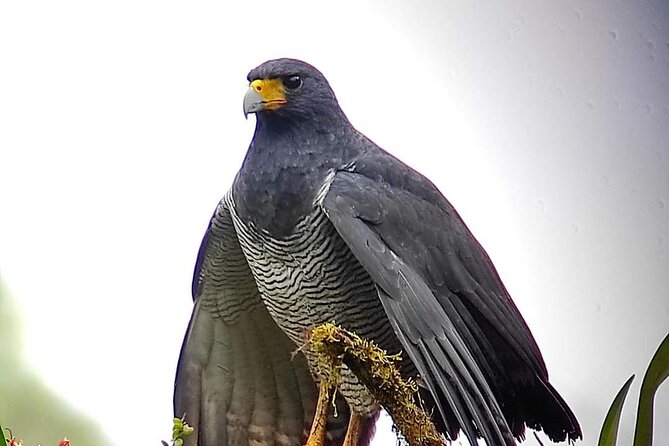
Mindo’s cloud forest is one of the world’s great birding areas, and this early start puts you in the field when the forest is most active. Toucans, hummingbirds, tanagers, parrots, and quetzals are all possible, with a guide helping you find them through a scope or binoculars. I like the private transport and the chance to shape the morning around your own bird list. I also like the small-group format, which makes it easier to pause for a good sighting.
The main thing to understand is the word photography. Your guide can help locate birds and position the scope, but you may need to handle your own phone or camera. A scope is excellent for viewing, though taking steady photos through it can take patience. Birds also set the schedule, so no guide can promise a quetzal, toucan, or any other species.
Key points to know before booking
- The 6:00 am start matters: Early morning gives you the best chance to hear and locate active birds.
- Private transport is included: You can reach forest sites and rougher rural roads without arranging your own driver.
- Irman Arias is a strong guide choice: He is praised for spotting birds by sight and call, and for helping beginners and serious birders alike.
- The bird list can be impressive: One morning produced 48 species, including 14 kinds of hummingbirds, though results vary.
- Photography takes some effort: Scope viewing is simple, but phone photography through the scope may require help and a steady hand.
- The four-hour format is focused: It suits a morning outing, but a longer custom day may be better if you want several reserves or a particular species.
Why Mindo is such a good place for bird photography
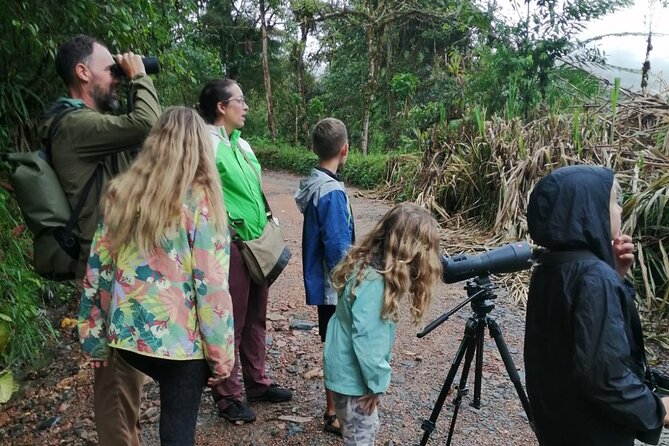
Mindo sits in Ecuador’s Andean Chocó, a cloud forest area known for remarkable bird variety. You are not visiting a single bird feeder and calling it a morning. The experience can include a private viewing platform, forest paths, roadside stops, and small reserves where different birds appear at different heights and habitats.
I like this kind of birding because it gives you more than a checklist. You hear calls in the trees, watch hummingbirds work flowers at close range, and learn how a guide reads the forest. The scenery matters, too. From some viewing platforms, you look across a broad forested ravine while birds move between the trees.
You do not need to be an expert to enjoy it. A guide can point out a bird you would never notice on your own, then help you see its shape, color, and behavior through binoculars or a scope. If you already keep a life list, the Mindo area offers a serious chance to add species that are difficult to find elsewhere.
A few more photo experiences around the world worth a look
- The ‘OG’ Manatee Snorkel Tour with In-Water Guide/Photographer
★ 5.0 · 2,539 reviews - Guided Small Group Manatee Snorkeling Tour with In-Water Photographer
★ 5.0 · 1,336 reviews - NYC Professional Photoshoot and Walking Tour with Private Guide
★ 5.0 · 608 reviews
The 6:00 am start and private pickup
The tour begins at 6:00 am. That is early, but it is a useful early, not a forced one. Bird activity is often strongest in the morning, and a later start would cut into the best part of the outing.
The exact pickup arrangement depends on where you are staying. One account describes pickup at a resort, followed by a drive to a private property with elevated viewing platforms. The transport is private, which is a real benefit in Mindo. Some rural roads are little more than potholed dirt tracks, and having a driver who knows the area saves time and removes a layer of stress.
Paul has been praised as a careful driver, while Irman Arias is the guide most often associated with the experience. Another guide, Julia Patino, has also been used for Mindo birding trips. If a particular guide matters to you, ask for the name and confirm it before booking.
If you are coming from Quito, allow extra time beyond the advertised four-hour activity. One outing began with a taxi ride of about an hour and a half to Mindo, then started early in the morning. The listed experience itself is approximately four hours, not a full Quito to Mindo day with all transport included.
First stop: viewing platforms over the forest
A common first stop is a private property with platforms overlooking a forested ravine. This is often the most productive part of the morning for close, clear views. Feeders or natural activity may bring toucans, tanagers, hummingbirds, and other colorful species within scope range.
The advantage is easy viewing. You are not trying to find a tiny bird through layers of leaves while walking uphill. You can settle in, listen to the guide, and wait for a bird to appear. Two species of toucan have been watched repeatedly from this kind of platform, giving you time to photograph and study them instead of grabbing one rushed picture.
Coffee and light snacks may be served at some private reserves. That small pause is welcome after the early start, and the views make it more than a simple refreshment stop. Keep in mind, though, that a popular platform may have several small groups at once. The tour is private for your own transport and guide, but the property itself may also host other birders.
This is also where your photography expectations matter. A powerful scope can produce excellent views, and phone photos through the scope are possible. Yet the setup may be older or slightly unsteady, and the technique takes practice. You may need to align the phone carefully, hold it still, and wait for the bird to face the right direction.
Some guides will help with the scope, but you should not assume the guide will take every picture for you. If photography is your main goal, say so at the start. Ask for help positioning the phone, and bring a camera setup that you already know how to use.
Forest walks and the hunt for smaller birds
After the platform, the morning can continue along forest paths and rural roads. This changes the rhythm from waiting at a fixed viewpoint to watching and listening as you go. The guide may recognize a call before you see the bird, then stop and scan the trees.
Irman is especially praised for hearing birds first and imitating some calls to draw them closer. That skill can turn an empty-looking patch of forest into a search worth making. His ability to spot movement is just as important. In cloud forest, many birds sit quietly for only a few seconds, and an experienced eye gives you a much better chance.
You might see barranquero-type birds, toucans, hummingbirds, parrots, and tanagers during these walks. One particularly productive morning produced 48 species, including 14 of the 30 hummingbird species known locally. That is an impressive result, but it should be treated as a possibility rather than a promise.
The walking portion can also be the least predictable. A guide may leave a platform in search of toucanets or another species, only to find very little along the path. If a specific bird is important to you, speak up before leaving a productive site. You may prefer to stay longer where toucans are active instead of chasing a less certain sighting.
Same place, a different kind of shoot:
- Bali: Full-Day Instagram Highlights Tour
★ 4.8 · 7,817 reviews - ️ Bali Instagram Tour: The Most Famous Spots (Private & All-Inclusive)
★ 5.0 · 2,857 reviews - Paris: Private Photoshoot at the Eiffel Tower
★ 4.7 · 2,636 reviews - Paris: Eiffel Tower Photoshoot
★ 4.7 · 2,351 reviews
What you might see, and what remains uncertain
Mindo gives you a strong menu of possible birds, but nature does not work from a fixed itinerary. Toucans and hummingbirds are realistic hopes. Tanagers, parrots, and other forest species are also common targets. Quetzals and Andean Cock-of-the-rock are possible in the wider area, but they may require a separate outing or a special early-morning location.
A golden-crowned quetzal was heard but not seen on one morning. That is a useful reminder: a guide can locate the call and bring you close, but the bird may remain hidden. You may also see both male and female quetzals on a fortunate day, as happened during a longer outing.
Cock-of-the-rock is generally a separate experience. The lek requires an earlier departure, with one outing beginning at 5:00 am. Several males may gather at the site, especially around breeding activity, but a female may not appear. If this bird is high on your list, ask about the separate outing rather than assuming it is part of the standard four-hour photography experience.
The guide’s role is not to manufacture sightings. It is to improve your odds, explain what you are seeing, and help you notice birds before they vanish into the canopy. I value that honest approach. A missed quetzal is still a good morning if you understand why it was missed and what you did see instead.
How the photography actually works
The tour title may lead you to expect a dedicated photographer accompanying you and handling the camera. That is not necessarily how it works. The guide helps locate birds, shares binoculars or a scope, and may advise you when a bird is in a good position. You are generally responsible for taking the picture.
For phone photography, the scope is the key tool. You look through it first, then hold your phone against the eyepiece and try to keep the image centered. A steady scope makes this easier. An older or wobbly scope can still give a good view, but it may make video and close-up images frustrating.
I suggest treating photography as a bonus rather than the only purpose of the outing. Watch the bird with your own eyes before reaching for the phone. If you spend every second adjusting the camera, you can miss the best behavior, especially when a hummingbird appears for only a moment.
Tell the guide what you want. If you are building a photo collection, ask for time at the platform and help with the scope. If you care more about a long species list, keep moving and let the guide call out birds along the route. The private format makes that conversation easier.
Guide quality and communication
The strongest part of this experience is the guide’s ability to find birds. Irman Arias is described as patient, prompt, and highly skilled at identifying birds by sight and sound. His English is good, and he can explain names and calls clearly.
His style appears best suited to people who want an active guide. He watches, listens, mimics calls, and keeps looking. If you want a lecture about every species, ask questions as you go. The explanations may be brief unless you invite more detail.
That is not necessarily a weakness. Some people want a quiet morning with quick identification, while others want plumage, habitat, behavior, and conservation details. Tell your guide which style you prefer. A beginner may want help using the binoculars, while an experienced birder may prefer fewer interruptions and more time scanning.
The guide can also be flexible. One outing was adjusted around the group’s interest in bird photography and included several locations plus lunch, returning around 5:30 pm. That sounds like a custom full-day arrangement rather than the standard four-hour activity, so confirm the length and cost if you want something similar.
Price and value for a private group of five
The price is $180 per group, for up to five people. That makes the per-person value strongest when you fill the vehicle. At five people, it works out to $36 each before any extra costs. For two people, the price is $90 each, but private transport and a dedicated guide may still justify it if birding is a priority.
The value comes from more than the guide’s time. You are paying for local route knowledge, transport on rough roads, access to productive sites, and help finding birds that would be easy to miss alone. Mindo has many places to look, but not all spots are equally useful at a particular hour.
The four-hour length is a good match for a focused morning. It gives you enough time for a main viewing site and forest walking without taking over your whole day. Serious birders may find it short, especially if they want a lek, a quetzal search, several reserves, or a long photography session.
The experience is also private, but that does not mean total solitude. A reserve platform can have other small groups present. Your own group remains together with your guide, while the viewing area may be shared.
Weather, roads, and what to bring
Mindo can be cloudy and rainy, especially in some months. One November visit had frequent rain and poor light for photography. Summer may offer better light, though no season guarantees clear skies or cooperative birds.
For photography, light is a major factor. Cloud can soften harsh contrast, but very dim conditions may force you to use a higher ISO or accept slower shutter speeds. Bring protection for your camera and phone, and expect damp conditions in the cloud forest.
Wear shoes suitable for muddy or uneven paths. The exact walking difficulty is not specified, but the outing includes forest walks and rough rural access roads. Most people can participate, though you should ask before booking if you have mobility concerns or need a precise trail description.
A camera, phone, binoculars, and patience are useful. Binoculars may be provided, but confirm what equipment is available if you have strong preferences. The guides can help with viewing gear, but you should not assume a full professional photography kit is included.
Who should book this Mindo birding experience?
I would choose this outing if you want a private morning, have limited time in Mindo, or would rather have a local expert find birds than search alone. It suits beginners because the guide can supply binoculars, identify calls, and point out birds that blend into the canopy.
It also suits serious birders. The possible list is large, and a skilled guide can help you add hummingbirds, toucans, tanagers, parrots, and perhaps a quetzal. Your chances improve if you tell the guide your target species before the morning begins.
I would be more cautious if your main goal is professional-quality photography with the guide operating the camera. The experience offers strong viewing and photo opportunities, but you may need to manage the phone or camera yourself. A dedicated photographer should ask specific questions about scope stability, camera support, and how much time can be spent at each site.
The tour is not ideal for someone who dislikes early starts, wet forest conditions, or uncertain results. Birds do not follow a script. That uncertainty is part of the appeal, but you should accept it before paying for the outing.
Should you book it?
Book this experience if you want a well-organized introduction to Mindo’s birdlife with private transport and a guide who can find birds by sight and sound. The 98 percent recommendation rate and 4.9 rating reflect very strong satisfaction, and the most praised qualities are clear: sharp bird spotting, good communication, patience, and impressive species variety.
Before booking, send your priorities. Tell the guide if you want toucans, hummingbirds, quetzals, Cock-of-the-rock, or photography time. Ask if Irman Arias will lead the outing, and clarify whether your target bird requires a separate early departure.
The $180 group price is fair when shared among several people, and the four-hour format works well as a morning activity. I would book it for the birding, the access, and the local guidance first, then treat the photographs as a welcome reward.
Free cancellation is available up to 24 hours before the start time. Changes or cancellations made less than 24 hours ahead are not accepted for a refund.
FAQ
What time does the birding experience start?
The experience starts at 6:00 am.
How long does the experience last?
The outing lasts approximately four hours.
How much does the private tour cost?
The price is $180 per group, with up to five people included.
What birds might I see in Mindo?
Possible sightings include toucans, tanagers, parrots, hummingbirds, quetzals, and many other forest birds.
Is Cock-of-the-rock included?
Cock-of-the-rock may require a separate experience at a different location, with an earlier start. One outing for it began at 5:00 am.
Can I cancel for a full refund?
Yes. You can cancel at least 24 hours before the local start time for a full refund. Cancellations made less than 24 hours before the experience are not refundable.
Just added around the world
- Private Vacation Photoshoot with Photographer in Myrtle Beach★ 4.0 · 9 reviews
- Traditional Japanese Costumes “Kimono”, “Yukata”, “Ryuso”, “Photograph Course “Hair Set & Lipstick & Kimono & Photography”★ 5.0 · 17 reviews
- Marco Island Photography Experience★ 5.0 · 7 reviews
- Capture Unforgettable Moments: Private Holiday Photography★ 5.0 · 52 reviews
- Hire Photographer, Professional Photo Shoot – Myrtle Beach★ 5.0 · 4 reviews
- Proposal Photoshoot Mykonos★ 5.0 · 2 reviews
- Private Instagram Tour | Mykonos Most Photogenic Spots★ 5.0 · 4 reviews
- Photographer, Professional Photo shoot – Mykonos★ 3.0 · 2 reviews
Guided, compared.
NYC Professional Photoshoot and Walking Tour with Private Guide
Read our review →
Small Group Manatee Snorkel Tour with In-Water Guide and Photographer
Read our review →
Private Guided Professional Photoshoot by the Eiffel Tower
Read our review →
Guided 60-Minute Photography and sightseeing Tour in Edinburgh
Read our review →
Hoi An/Da Nang: Private Photoshoot & Guided Walking Tour
Read our review →
Hallstatt: 2-Hour Guided Walking Tour with Photographer
Read our review →
Los Angeles: Express Hollywood Sign Guided Walk & Photo Tour
Read our review →