
REVIEW · BARCELONA
Barcelona: Phone Photography Tips & Tricks – Park & Old Town
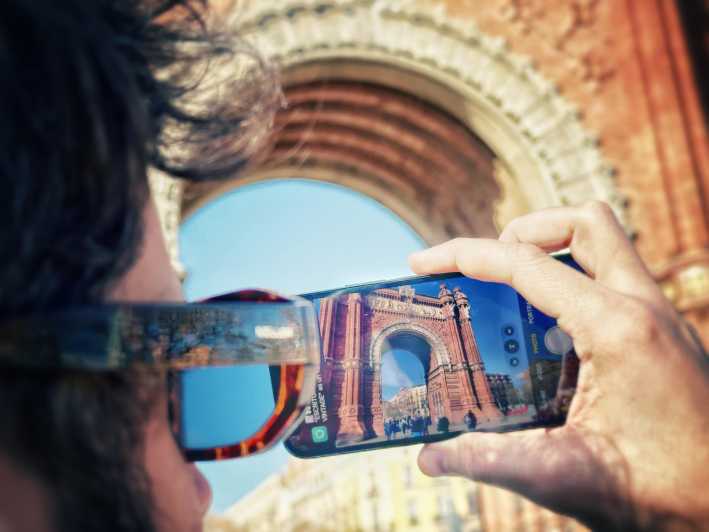
Barcelona: Phone Photography Tips and Tricks in Park and Old Town turns your sightseeing walk into a practical photography lesson. You meet Onno, your photographer and Barcelona guide, beneath the Arc de Triomf, then learn by taking pictures rather than sitting through a technical lecture.
I like two things right away: the class focuses on framing and composition instead of confusing camera jargon, and the route gives you three useful settings in one outing, from the park’s open views to El Born’s tight medieval streets. The main drawback is simple: if you want a traditional course on aperture, ISO, and shutter speed, this is not that kind of class.
Key points to know before booking
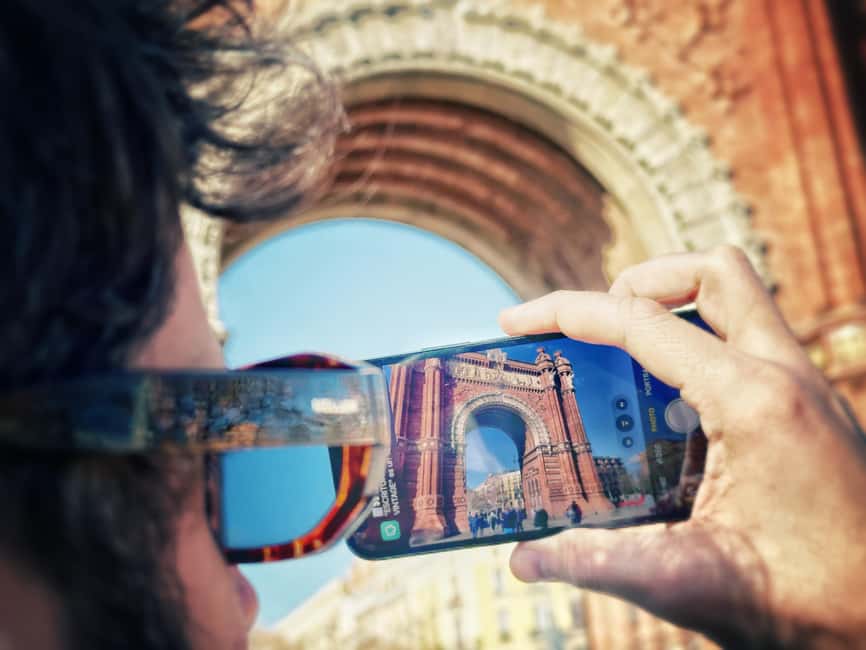
- You start beneath the Arc de Triomf, with a white umbrella making the meeting point easy to spot.
- Onno teaches practical phone photography, including framing, angles, posing, camera modes, zoom, and editing.
- Ciutadella Park provides varied practice, from the monumental fountain to the mammoth sculpture and tall palms.
- El Born adds real street and building photography, with medieval lanes, courtyards, and changing viewpoints.
- The class lasts 2.5 hours, ends back at the starting point, and is taught in English.
- A charged smartphone is essential, with iPhones and higher-end Android phones best suited to the lesson.
Why this phone photography class works
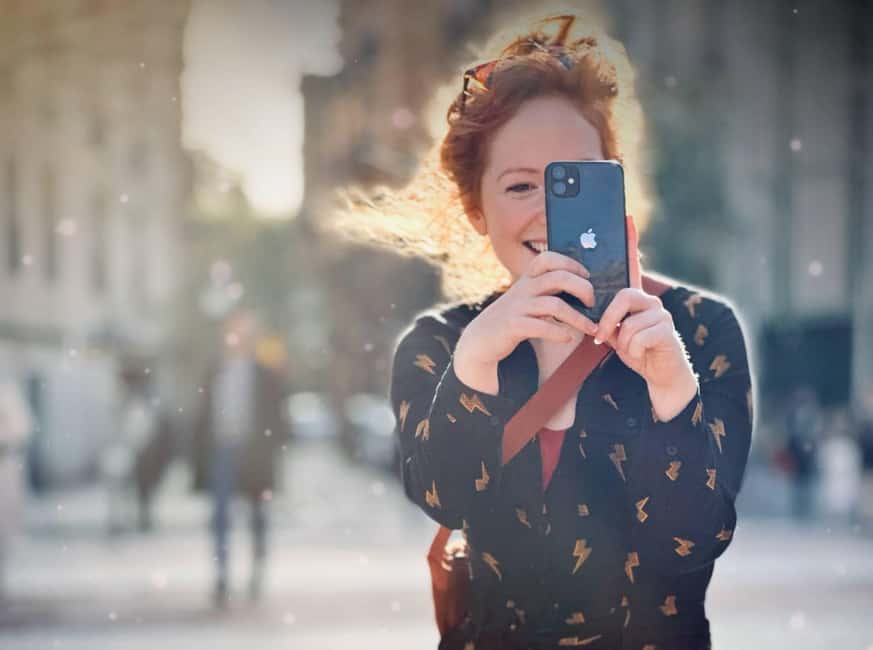
Your phone may have several lenses, portrait tools, editing controls, and camera modes, but most people use only the basic shutter button. This class aims to change that. Instead of asking you to memorize technical settings, it teaches you to look at a scene, place your subject well, and choose the right angle.
That focus is useful because a good photograph often depends more on position and timing than on complicated controls. You learn how to frame buildings, work with people in a scene, and use the phone’s lenses for different visual effects. The lesson also includes what the instructor calls zoom magic, a way to understand how changing your distance and lens choice can alter the look of a picture.
I especially like that the class is interactive. You are not simply watching Onno take perfect pictures while you stand nearby. You try the techniques yourself, compare results, and make adjustments while the scene is in front of you.
The class carries a 5 out of 5 rating from 25 posted ratings, with particular praise for Onno’s practical teaching, calm manner, and ability to explain why one image works better than another. That matters here. Phone photography advice can easily become a list of tricks, but the useful part is learning how to judge your own pictures afterward.
A few more photo experiences around Barcelona worth a look
- Barcelona E-Bike Photography Tour
★ 5.0 · 843 reviews - Barcelona: Instagram Tour of the Most Scenic Spots
★ 4.9 · 332 reviews - Barcelona: Photo Shoot + Exclusive Video of the Best Moments
★ 4.9 · 256 reviews
Meeting Onno at the Arc de Triomf
The experience begins underneath the arch of the Arc de Triomf. Look for the guide holding a white umbrella. That detail is worth remembering, since it gives you a clear way to identify the instructor in a busy city meeting area.
The opening lesson centers on framing and positioning, two of the most useful skills you can carry into the rest of your trip. You work out where to stand, what to include at the edge of the picture, and how a small change in position can make a building, person, or street look more balanced.
The Arc de Triomf is a good place to begin because it gives you a large architectural subject and open public space. You can practice looking at the whole scene, then tighten the frame to focus on details. This also introduces an important habit: before tapping the shutter, stop and ask what the picture is really about.
The early part of the class should suit beginners who normally point and shoot. You do not need prior photography experience, and the lesson avoids the technical terms that can make a first class feel like a science course.
Practicing lenses and angles in Ciutadella Park
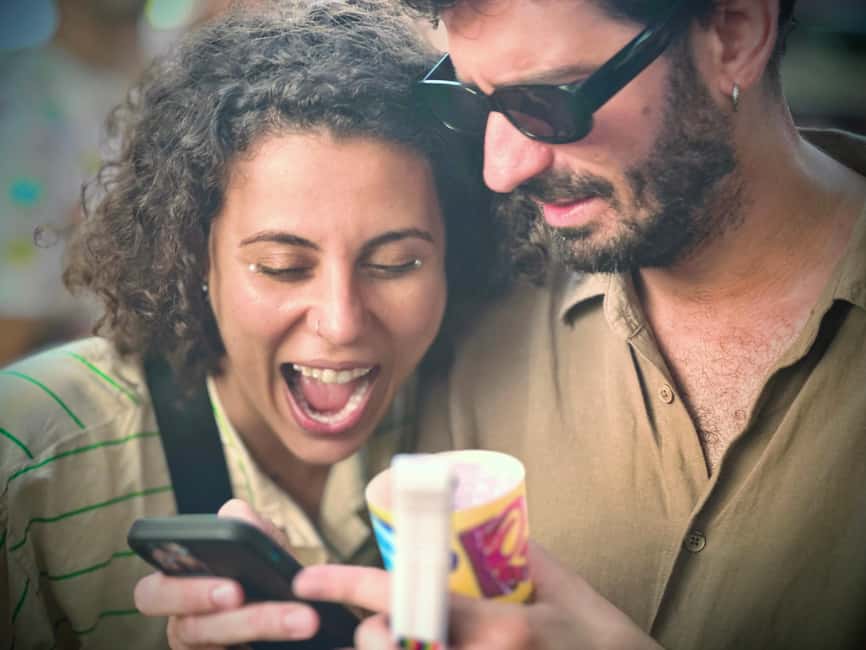
From the arch, you continue into Ciutadella Park. This section gives you more room to test how your phone handles distance, perspective, and different lenses.
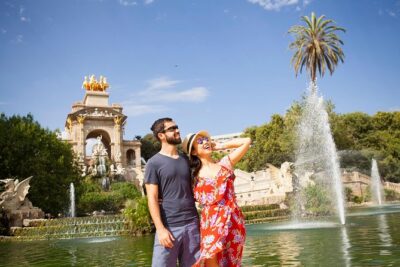
The park includes a large fountain, a mammoth sculpture, tall palms, trees, and other plants. Each subject presents a different photography problem. A fountain can help you work with symmetry and scale. A sculpture gives you a fixed subject that you can photograph from several angles. Palms and trees add height, lines, and layers to the frame.
This is where the lesson about zoom becomes practical. You can see how a wide view places a subject within its surroundings, while a tighter view changes the relationship between foreground and background. The goal is not simply to zoom in for a closer picture. It is to understand how your choice of lens and position changes the feeling of the image.
The guide also introduces camera modes. The exact options depend on your phone, so an iPhone user and an Android user may not see identical controls. Still, the basic ideas apply across modern phones. You learn what your camera can do, when a certain mode may help, and how to avoid letting automatic settings make every image look the same.
This park section is also a good test of patience. You may need to try a photograph more than once, shift your angle, or wait for a cleaner arrangement. That is a useful lesson for the rest of Barcelona, where the best picture may require you to move only a few steps.
Using people and poses without awkward photos
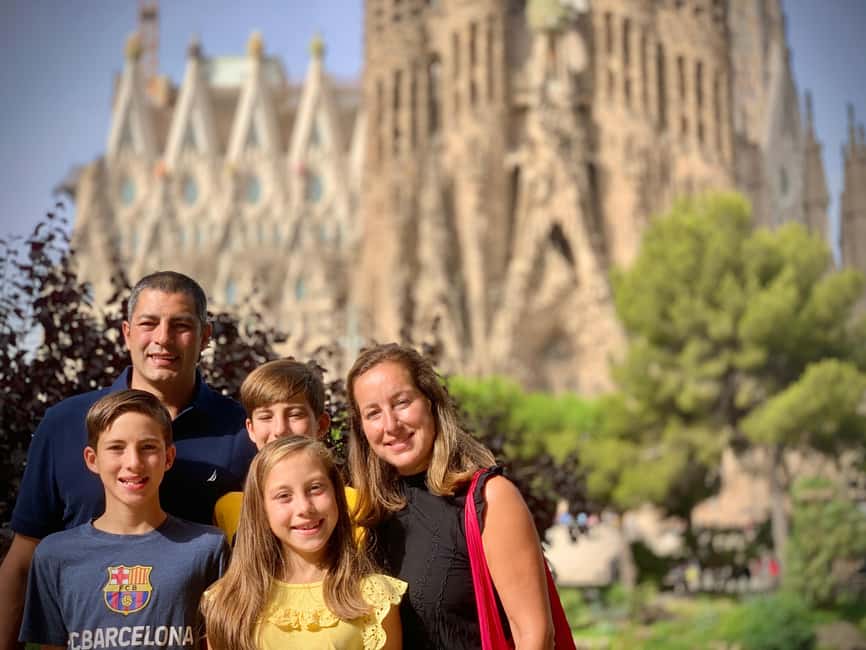
Phone photography often includes friends and family, so posing is part of the class. The supplied information describes interactive exercises that can include playful poses and small challenges. That makes the lesson more useful than a building-only walking tour.
You learn how to place a person in relation to the setting instead of simply putting them in the middle of the frame. A good portrait can show the person and still make the location matter. You may also experiment with angles and openings, using the surroundings to create a more interesting frame.
This part can feel slightly silly, especially if you are not used to directing someone for a picture. That is not necessarily a bad thing. A relaxed subject usually produces a more natural image than someone standing stiffly and staring at the phone.
One useful feature is that the class does not treat people photography as a separate studio exercise. You practice it while walking through Barcelona, where changing light, architecture, and passing activity give you real situations to handle.
A family with a baby has joined the experience, so bringing a young child is not automatically ruled out by the format. Still, you should remember that this is a walking class with repeated stops and hands-on practice, not a private portrait session built around one child.
Same place, a different kind of shoot:
- Photoshoot tour in Barcelona Secret Corners
★ 5.0 · 223 reviews - ✅ Barcelona: Photoshoot Tour Old Town
★ 4.9 · 213 reviews - ✅ Barcelona: Sightseeing Professional Photoshoot Session
★ 4.8 · 194 reviews - Barcelona: Professional Photoshoot Outside Sagrada Familia
★ 4.8 · 179 reviews
Finding photographic subjects in El Born
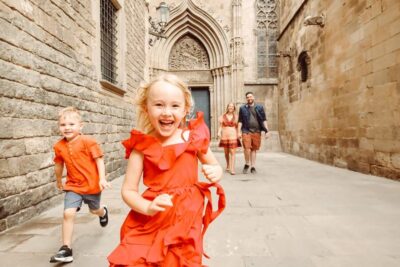
The route then moves into El Born, one of the old city neighborhoods. Here the broad spaces of the park give way to medieval streets, courtyards, walls, and architectural details.
This is the right setting for street photography because the surroundings are less controlled. You work with lines, shadows, doorways, textures, and people moving through the frame. The class can show you how to look for a strong composition instead of waiting for a famous landmark to do all the work.
Building photography also becomes more interesting in narrow streets. You can practice pointing upward, using repeating shapes, and deciding how much of the surrounding street belongs in the image. Courtyards and openings offer natural frames, while the contrast between close walls and brighter spaces can help you make more dramatic pictures.
One of the better lessons here is that you do not need a postcard view for a memorable photograph. A doorway, a slice of sky, a patterned wall, or a person walking through the right spot may produce a stronger image than a standard tourist snapshot.
The old city can also be the most demanding part of the walk. Narrow streets give you less room to step backward, and the scene may change quickly. That makes the instructor’s advice valuable, but it also means you should be ready to practice rather than simply collect polished pictures.
The final drink and quick editing lesson
The class finishes with a drink and a short editing session on your phone. The editing advice is described as simple, which is a good fit for a sightseeing class. You are not being trained as a professional image editor. You are learning how small changes can give a picture a cleaner final look.
The editing portion also covers selection, or deciding which image deserves attention in the first place. This is an overlooked skill. If you take ten versions of the same scene, the best result may come from choosing the strongest composition instead of trying to repair every photo.
You learn to look critically at your own pictures and ask which one has the clearest subject, the most pleasing arrangement, or the best moment. That habit can save you from returning home with hundreds of nearly identical images.
The drink gives the class a natural ending and a chance to review what you have learned. Do not expect a long café stop or a full meal. The emphasis remains on quick editing and practical advice.
What you will actually learn
The class covers a useful range of phone photography skills:
- Framing and composition
- Positioning and camera angles
- Posing people
- Phone camera modes
- Lens choices and zoom
- Street photography
- Building photography
- Basic editing
- Choosing stronger images from a group of similar shots
The most important point is that the course teaches visual judgment. You learn to ask where the subject belongs, what distracts from it, and how the scene changes when you move. Those skills apply to any phone and to almost any destination.
The class is best suited to people who want immediate results. You can use the advice later that same day while photographing Barcelona’s streets, food, architecture, and friends. Several of the practical tips are simple enough to become habits, which is why taking the class early in your visit makes sense.
The experience is less suitable if you are looking for advanced camera theory. It does not focus on aperture, ISO, or shutter speed. That is a limitation for an experienced photographer, but a benefit for many casual phone users who want better images without studying a technical manual.
Is $28 a good value?
At $28 per person for 2.5 hours, the price is reasonable if you want both instruction and a walk through central Barcelona. You are paying for an English-speaking photographer-guide, not just a route between landmarks.
The value improves if you plan to use your phone throughout the rest of your trip. A single useful lesson about composition can affect dozens of later photographs. You also get a chance to practice in several different settings, which is more helpful than learning inside one controlled location.
The value is weaker if you already understand composition, portrait positioning, phone lenses, and basic editing. In that case, the route may still offer pleasant scenery, but the teaching may repeat skills you already use.
There is no separate camera supplied, so you must bring your own charged smartphone. The class can work with any smartphone, but the experience is better suited to iPhones and higher-end Android phones. Older or simpler phones may not offer the same lens choices or camera modes used during the exercises.
You can reserve now and pay later, and cancellation is free up to 24 hours before the activity for a full refund. Those terms help if your Barcelona schedule is still changing.
Timing, meeting point, and accessibility
The experience lasts 2.5 hours, with starting times shown when you check availability. It begins and ends at the Arc de Triomf meeting point, so you do not need to arrange a separate pickup or figure out where the route finishes.
The instructor teaches in English. The activity is listed as wheelchair accessible, but you should still consider that the route includes park paths, old city streets, and courtyards. The supplied information does not give details about every surface or route adjustment, so contact the provider if you need specific access information.
Bring a fully charged phone. Since the class includes repeated practice, your battery matters more than it would on an ordinary walking tour. You may also want enough free storage for new pictures, though storage requirements are not specified.
Who should book this experience?
I would recommend it to first-time visitors who want a useful Barcelona orientation and better holiday pictures. It works especially well for couples, families, and friends who regularly take photos but rarely think about composition.
It also suits anyone who has owned an iPhone for years but still uses only the basic camera button. The class can reveal tools you already carry in your pocket, including lens choices, camera modes, posing ideas, and editing controls.
Take it early in your trip if possible. The lessons are designed for immediate use, so you can apply them later in El Born, at other Barcelona sights, or during ordinary walks around the city.
You may want to skip it if you prefer a fast sightseeing tour with no pauses, or if you want advanced photography theory. The repeated exercises are the point of the class, but they also mean you will spend less time simply walking from sight to sight.
Should you book the Barcelona phone photography class?
Book it if you want practical skills rather than a set of professionally taken portraits. Onno’s teaching style, the easy-to-find white umbrella meeting point, and the route through the Arc de Triomf, Ciutadella Park, and El Born make this a focused way to improve your own pictures.
The strongest reason to go is that the lessons continue after the 2.5 hours are over. You leave with a better eye for framing, angles, people, buildings, and simple editing. At $28, that is good value for a beginner, especially if you take the class near the start of your Barcelona visit.
Skip it only if you already use your phone camera with confidence or want a technical photography course. For most casual photographers, this is a friendly, active lesson that helps you see Barcelona differently and make better use of the camera you already own.
FAQ
Where does the phone photography class begin?
It begins beneath the arch of the Arc de Triomf. Your instructor-guide will be holding a white umbrella.
Where does the activity end?
The activity ends back at the Arc de Triomf meeting point.
How long does the experience last?
The class lasts 2.5 hours. Starting times depend on availability.
What language is the class taught in?
The instructor teaches in English.
Do I need to bring a camera?
You need to bring your own charged smartphone. A separate camera is not included.
Can I use an Android phone?
Yes. The class is suitable for any smartphone, though it is better suited to iPhones and higher-end Android phones.
What photography skills are covered?
The class covers framing, composition, posing, camera modes, editing, street photography, and building photography. It also includes advice about angles and phone zoom.
Which Barcelona areas does the class visit?
The route includes the Arc de Triomf, Ciutadella Park, and the El Born neighborhood of the old city.
Is the activity wheelchair accessible?
Yes, the activity is listed as wheelchair accessible.
Can I cancel for a refund?
You can cancel up to 24 hours in advance for a full refund. You can also reserve now and pay later.
Just added around Barcelona
- Guided tour of Barcelona in French (Old Town & Instagram spots)★ 5.0 · 18 reviews
- Barcelona: Gothic Quarter Cinematic Photoshoot and Guide★ 3.8 · 7 reviews
- Gothic Quarter and Born District: Photographic Workshop★ 5.0 · 6 reviews
- Barcelona Tourist Photographer – Exclusive Photoshoots★ 5.0 · 2 reviews
- Barcelona: Photographic Madness at Barceloneta Beach★ 5.0 · 10 reviews
- Barcelona: Private Sagrada Familia Photoshoot★ 4.8 · 47 reviews
- Barcelona Photo Experience: famous landmarks or the beach!★ 4.9 · 48 reviews
- Barcelona: Photoshoot in Scenic Locations★ 4.9 · 46 reviews
Barcelona Photo Tours & Photoshoots, compared.
✅ Barcelona: Sightseeing Professional Photoshoot Session
Read our review →
Browse the lists this tour appears in