
REVIEW · SOUTH KOREA
Gyeongju Small Group photo Tour (Max 6 Pax)
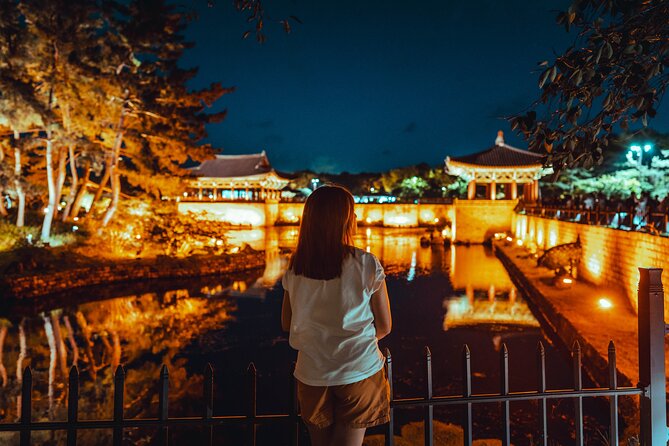
Gyeongju’s best moments come late in the day, when Donggung Palace and Wolji Pond glow over their dark water. This 12-hour outing gives you that evening scene along with Bulguksa Temple, royal tombs, hanok streets, and a garden, all without the trouble of arranging transport from Busan.
I like the six-person limit, which keeps the day more personal than a large coach tour. I also like the photo service: you receive all raw JPG files and can choose up to eight images for basic color and skin retouching. The main drawback is the pace. Six major stops plus the journey from Busan make for a long, walking-heavy day, and the guide’s historical explanation may vary.
Key points at a glance
- A true small-group outing: The vehicle holds no more than six participants, making photo stops and schedule changes easier to manage.
- Six very different stops: You move from a UNESCO-listed temple to a modern café street, royal burial mounds, a traditional village, and a lit palace pond.
- Photos are part of the service: Raw JPG files arrive within 24 hours, and you may select up to eight images for limited retouching.
- The $120 price covers the hard parts: Transport, guide service, taxes, and tickets are included, while lunch and drinks are not.
- Seasonal changes matter: Cherry blossoms and ginkgo trees can alter the route, with different stops substituted or added.
- Plan for a lot of walking: Comfortable shoes are more useful than stylish ones, though you can bring heels for photographs.
Why this Gyeongju day trip works from Busan
Gyeongju is easy to admire but awkward to cover in one day from Busan without a car. The sights are spread across the city and surrounding areas, so an air-conditioned vehicle saves you from piecing together trains, buses, taxis, and walking routes.
The group limit of six is the most important practical feature. You are not waiting for dozens of people to return to a bus, and the guide can spend more time helping with photographs. A group of three, as happened on one outing, gives the day an almost private feel without the cost of a fully private tour.
The schedule lasts about 12 hours. That sounds long because it is long, but Gyeongju is not a quick side trip. The listed visits add up to more than six hours, and the rest goes toward driving between Busan and the sites. You should treat this as a full-day excursion, not a relaxed half-day look at one historic district.
The tour costs $120 per person. Since several stops are free, the price is not mainly paying for entrance tickets. You are paying for the long-distance transport, the driver and guide, the planning, and the photography. If you would otherwise hire a car or taxi for the day and arrange a separate photo session, the value is sensible. If you only want sightseeing and do not care about photographs, a less specialized day trip may cost less.
More Photography Tours in South Korea
- Busan Night Small Group Photo Tour (Max 7)
★ 5.0 · 87 reviews - Busan Small Group Photo Tour (Max 6 Pax)
★ 5.0 · 35 reviews - Busan: Night Small Group Photo Tour (Max 7)
★ 5.0 · 33 reviews
Bulguksa Temple brings the day into focus
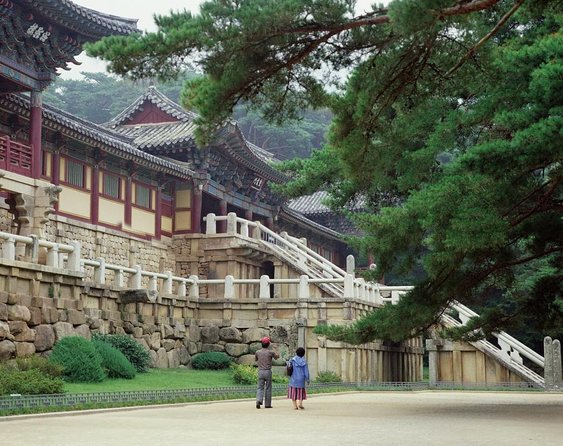
Bulguksa is the serious historical opening. It is Gyeongju’s best-known temple and a UNESCO World Heritage site, recognized for both its buildings and stone work. You have about an hour here, enough to see the main areas and take photographs without turning the visit into a rushed walk-through.
This is the place where a guide’s explanation matters most. The temple is attractive at a glance, but its stone stairways, pagodas, and layout mean more when you understand that it represents the artistic and religious world of the Silla period. The supplied tour information promises a local guide, but the quality of spoken history can vary. One dissatisfied guest found the English difficult to follow and felt the guide acted more like a driver than a history guide.
That is an important caution, especially if you are booking this tour mainly for cultural context. Jessie, also referred to as Jesse in the tour material, receives strong praise for combining guiding with photography. Still, you should ask questions as you go, and keep in mind that this is not a specialist academic tour.
The temple grounds may also involve slopes and steps. Wear shoes that can handle a full day on your feet. If you plan to change into hanbok or heels for photographs, bring practical shoes for moving between locations.
A quiet half-hour at Millennium Forest Garden
The Gyeongbuk Millennium Forest Garden gets only 30 minutes, so think of it as a calm pause rather than a full garden visit. The area includes old trees, flowers, and ponds, offering a change from the formal temple setting.
I like this short stop because the day needs a breather between major sights. You can take softer, more natural photographs here, especially if you prefer greenery to stone buildings. The limited time also keeps the visit from becoming another long walk.
The garden is subject to seasonal adjustments. During cherry blossom season, generally the last week of March through the first week of April, it may be replaced by Bomun Lake or Amgok Village. During the ginkgo season, from the last week of October through the first week of November, the schedule adds Tongiljeon before the forest garden and shortens time at Gyochon Village.
Those changes are not a flaw, but you should know that the route is not fixed in every season. Weather and other unpredictable conditions can also change or cancel the day.
Lunch and free time on Hwangridan-gil
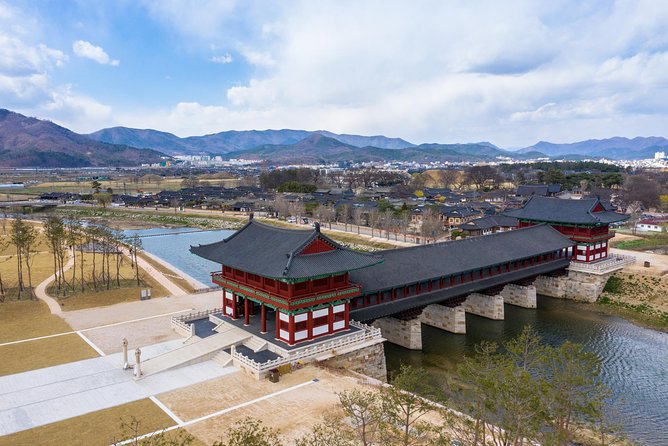
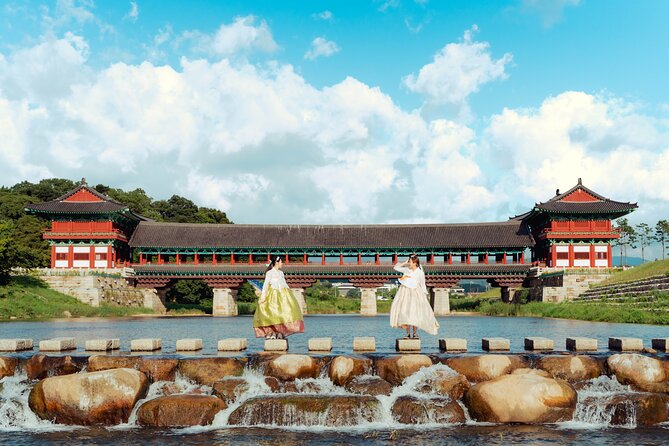
Hwangridan-gil is where old Gyeongju meets its present-day café culture. Traditional hanok-style buildings hold cafés, small shops, boutiques, and cultural spaces. You get about one hour and 40 minutes here, including time to find lunch.
Lunch is not included, which gives you freedom but also means you need to budget for it. The street has enough variety for a quick meal, coffee, or browsing, though the exact choices are not specified. You may also use this stop to look for souvenirs or simply slow down after the temple and garden.
This is one of the tour’s strongest contrasts. Bulguksa and the tomb complex connect you to Silla-era Gyeongju, while Hwangridan-gil shows how the city uses traditional architecture in a modern setting. The contrast makes the day feel less like a list of ruins.
The drawback is the clock. One hour and 40 minutes sounds generous, but it must cover lunch, shopping, and any photographs. If you want a long café stop or a careful meal, you may need to choose one over the other. I would decide in advance whether food or browsing matters more to you.
Same place, a different kind of shoot:
- Hanbok Photoshoot and History Tour at Gyeongbokgung Palace
★ 5.0 · 276 reviews - Seoul: Professional Hanbok Photography at Gyeongbok Palace
★ 4.9 · 172 reviews - Street photoshoot and Seoul Hidden gem History Walking Tour
★ 5.0 · 68 reviews - [Jeju] Hanbok Private guide tour & photo session in beautiful Yongduam rock,
★ 5.0 · 27 reviews
Daereungwon and the Silla royal burial mounds
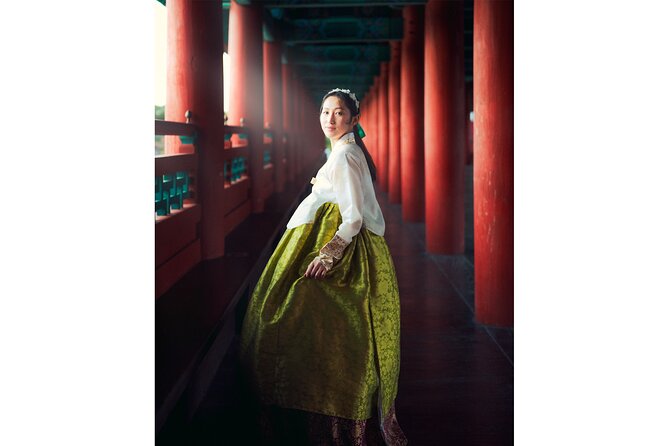
At Daereungwon Tomb Complex, large grassy mounds rise from gardens in the middle of Gyeongju. The complex contains 23 tombs, and one of the most interesting features is the chance to see the interior of a tomb rather than only walk around the outside.
The broad mounds make excellent photographs because they are simple, rounded, and unmistakably Gyeongju. You get an hour here, which should allow time for the main paths and photo stops. The grounds are not a conventional museum experience. Their appeal comes from scale, open space, and the odd feeling of seeing royal burial places woven into the city.
I would use this stop to ask the guide how the tombs fit into Silla society. The tour is strongest when the guide adds context to what you are seeing. If the historical commentary is brief, you will still enjoy the setting, but you may leave with less understanding of why the mounds matter.
Because the tour also includes a dedicated photographer, this is a good place for portraits that need room around you. Hanbok can work especially well against the grass and rounded burial hills, though clothing rental is an extra cost.
Gyochon Village and traditional Korean homes
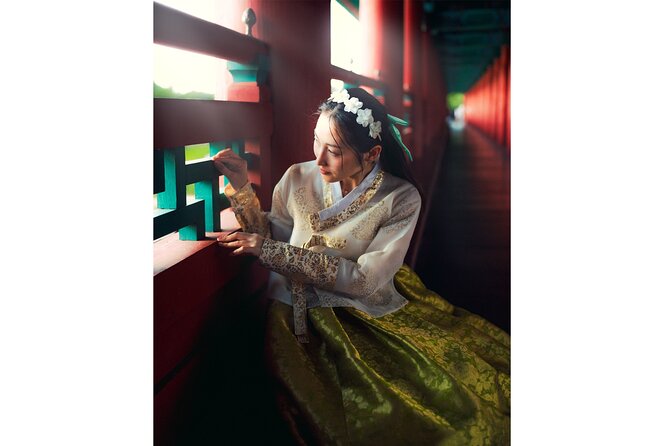
Gyochon Village gives you a closer look at traditional hanok houses and the daily life associated with them. The visit lasts about one hour and 10 minutes, enough to walk through the village and try some of the available cultural activities if time and operating hours allow.
This stop is more intimate than Bulguksa. Instead of a grand religious site, you see domestic architecture, courtyards, tiled roofs, and a village setting. It helps explain how Korean traditional homes functioned and gives your camera plenty of detail beyond the standard monument portrait.
The timing can change during ginkgo season, when the stop is shortened to make room for Tongiljeon. If autumn color is your reason for booking, confirm the day’s plan with the guide after booking. The seasonal adjustment may improve the photographs, but it gives you less time in the village.
Gyochon is also one of the better places to wear hanbok for photographs. Rental is not included, so you pay separately. You should also remember that traditional clothing can be awkward for a long walking day. I would rent it for a planned photo stretch, then switch back to comfortable shoes and practical clothing if the rental arrangement permits.
Donggung Palace and Wolji Pond after dark
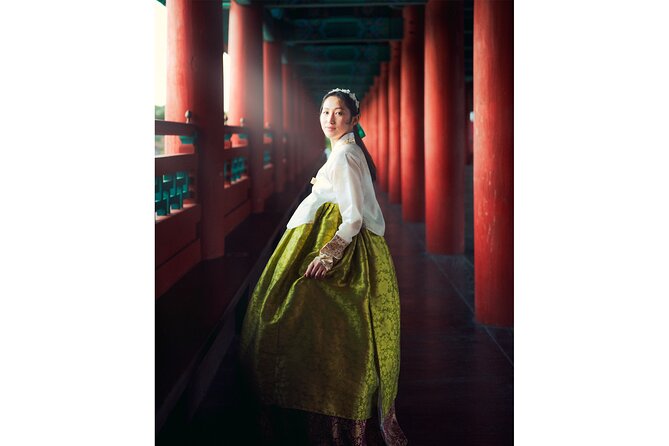
The final stop is the visual payoff. Donggung Palace once served as a banquet site for Silla royalty, and its restored pavilions now shine beside Wolji Pond. At night, the buildings reflect on the water, giving the site a more dramatic mood than the daytime stops.
You have about 50 minutes here. That is enough for the main view and photographs, but not enough for a slow, detailed exploration of every corner. Since this is the only listed admission ticket, it is included in the tour price.
The late timing makes the schedule work well, but it also means you should be prepared for a full day before reaching the most atmospheric stop. If you tire easily, save some energy for this final visit. The walking is not only at the monuments. You also move in and out of the vehicle, stand for photographs, and spend time around the larger sites.
For photography, Donggung is less about posed portraits in front of a building and more about light, reflections, and the relationship between the pavilions and water. Your guide may help you find a good position, but retouching is limited. The editing covers color tones and skin appearance. Requests for major changes are not accepted.
What you receive from the photo service
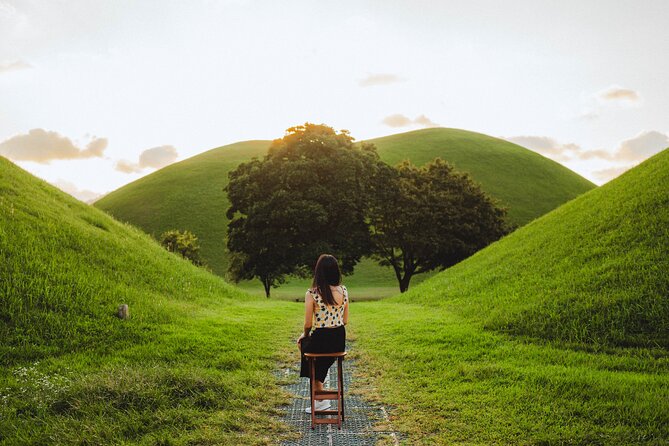
This is not just a sightseeing tour with a few casual snapshots. The guide takes photographs of you at the attractions, and all raw JPG files are sent within 24 hours after the tour.
You may choose up to eight photos per person for retouching. The work is limited to color and skin adjustments, and the finished files may take up to seven days. The information also says the files are stored for only 30 days after delivery, so download everything promptly.
That arrangement is useful if you want a record of the day without hiring a separate photographer. It is less suitable if you expect magazine-style editing, body reshaping, background changes, or special image requests. Think of the service as careful travel photography with light finishing work.
After you pay, the guide should contact you by email within 24 hours. Check your spam folder if the message does not arrive. You can also rent hanbok during the tour, but that cost is separate.
The guide makes a real difference
The strongest praise centers on the guide’s ability to make the day personal and produce a variety of good photographs. Jessie or Jesse is the name connected with the tour, although the exact guide assigned may vary.
You should separate two parts of the service: driving and guiding. The transport can still be useful even if the history talk is lighter than you hoped. One poor experience involved unclear English, limited historical explanation, and concern about smoking. The provider apologized and said guide training would be improved.
That account does not cancel out the many strong ratings, but it gives you a fair warning. If history is your top priority, ask direct questions at Bulguksa, Daereungwon, and Gyochon. If your main goals are efficient sightseeing, good access to the sites, and personal photographs, the tour is a safer fit.
Practical details before you book
The minimum departure is two people. If that number is not reached, the operator can cancel and notify you by email 24 to 48 hours before the start time. Free cancellation is available up to 24 hours before departure, but changes or cancellations inside that window are not accepted unless the operator cancels because of weather or insufficient numbers.
Service animals are allowed, and the tour is near public transportation. Most people can participate, but the amount of walking should guide your decision. Children age two and under can ride free if they do not occupy a seat. If a seat is needed, the child fare applies.
The tour includes the air-conditioned vehicle, taxes, and tickets. Bring money for lunch, beverages, souvenirs, and any hanbok rental. The booking is mobile-ticket based, so keep access to your confirmation and email.
Who should book this Gyeongju tour?
I would choose this outing if you are staying in Busan, want the main Gyeongju sights in one day, and value having photographs taken as you go. Couples, small families, and friends who want a shared photo record are especially well suited to the six-person format.
It also works for someone who dislikes transport planning. You can see a temple, garden, modern street, tomb complex, village, and palace pond without changing buses between each one.
I would hesitate if you want a slow pace, a long lunch, or detailed scholarly commentary at every stop. The day is full, and the guide’s English and historical depth may not match every person’s expectations. You also need to be comfortable with seasonal route changes and a long day on foot.
At $120, the tour earns its value through convenience and photography rather than admission savings. If eight edited images, all raw files, and a well-planned day from Busan matter to you, the price is reasonable. If you only need transportation and sightseeing, compare it with a standard Gyeongju day trip.
FAQ
How long does the Gyeongju Small Group photo Tour last?
The experience lasts approximately 12 hours, including transportation between Busan and Gyeongju and visits to six main stops.
What is the maximum group size?
The tour has a maximum of six participants. At least two participants are required for the tour to depart.
What sites are included?
The route includes Bulguksa Temple, Gyeongbuk Millennium Forest Garden, Hwangridan-gil Street, Daereungwon Tomb Complex, Gyochon Traditional Village, and Donggung Palace and Wolji Pond.
Is lunch included in the price?
No. Lunch, beverages, and souvenirs are not included. You have free time for lunch at Hwangridan-gil Street.
How are the tour photographs delivered?
All raw JPG files are sent within 24 hours after the tour. You can select up to eight photos per person for retouching, with editing limited to color and skin adjustments.
Can I wear hanbok during the tour?
Yes. You can rent Korean traditional clothing and take photographs during the tour, but the rental cost is not included.
What happens if the weather is poor or the minimum group size is not reached?
The operator may change or cancel the schedule because of weather or another unpredictable situation. If the tour is canceled for poor weather or insufficient participants, you can receive a different date or experience, or a full refund.
Just added around South Korea
- Korean-Style Profile Photoshoot | Seoul★ 5.0 · 2 reviews
- From Busan: Gyeongju Small Group Photo Tour & Hotel Pick-up★ 5.0 · 3 reviews
- Family, Couple, and Group Photoshoot in Seoul★ 5.0 · 2 reviews
- Busan: Small Group Photo Tour with Hotel Pick-up & Drop-off★ 5.0 · 9 reviews
- Busan: Max Out City Highlights Photo Spots Full Day Tour★ 4.9 · 16 reviews
- Busan: Night Small Group Photo Tour (Max 7)★ 5.0 · 33 reviews
- Busan Small Group Photo Tour (Max 6 Pax)★ 5.0 · 35 reviews
- [Jeju] Hanbok Private guide tour & photo session in beautiful Yongduam rock,★ 5.0 · 27 reviews
Photography Tours, compared.
Rhodes: E-bike Highlights Sunset or Morning Photo Tour
Read our review →
Browse the lists this tour appears in