
REVIEW · MADRID
Mapfre Foundation Madrid – Photography Exhibitions
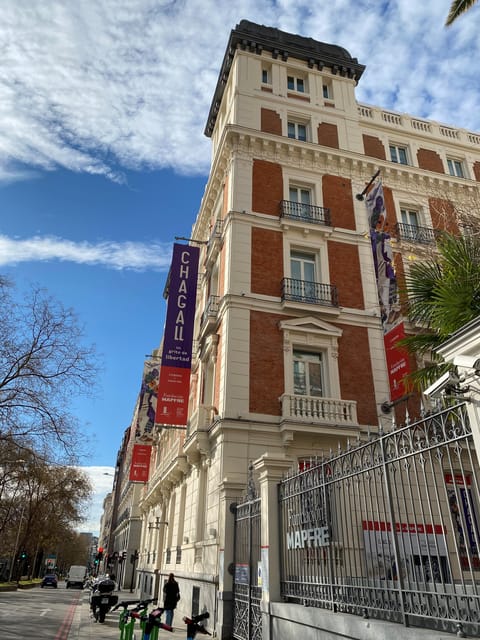
Fundación MAPFRE gives you two very different artistic experiences in one visit: Anders Zorn’s polished paintings, watercolors, and prints, then Helen Levitt’s quiet, sharp photographs of New York street life. Zorn’s travels and Spanish connections make his show especially interesting for visitors who like art with a personal story, while Levitt’s children, gestures, and sidewalk scenes reward close looking.
I like the way the exhibitions cover both grand European portraiture and ordinary city life. I also like the free audio guide in English and Spanish, which lets you set your own pace. The main thing to watch is the ticket information: the listed price is about $5, but one Spanish visitor reported being charged for admission when they expected free entry, so confirm the current terms before you pay.
Key points
- Anders Zorn until May 17, 2026: Follow the Swedish artist from early watercolors and Parisian Impressionist influence to portraits, nudes, and scenes from Mora.
- Helen Levitt’s New York: See nearly 200 photographs arranged in nine sections, including children at play and working-class neighborhood scenes.
- A useful audio guide: Scan the QR code in the room and listen in English or Spanish using your own headphones.
- Art from two eras: Paintings, photography, and sketches focus on the late 19th century through the mid-20th century.
- Good value for art lovers: A $5 ticket can fill much of a day, especially if you take time with both temporary shows and the foundation’s other displays.
- Practical access: Exchange your voucher at the ticket desk, and note that the venue is wheelchair accessible.
Two exhibitions, two ways of seeing Madrid’s art world
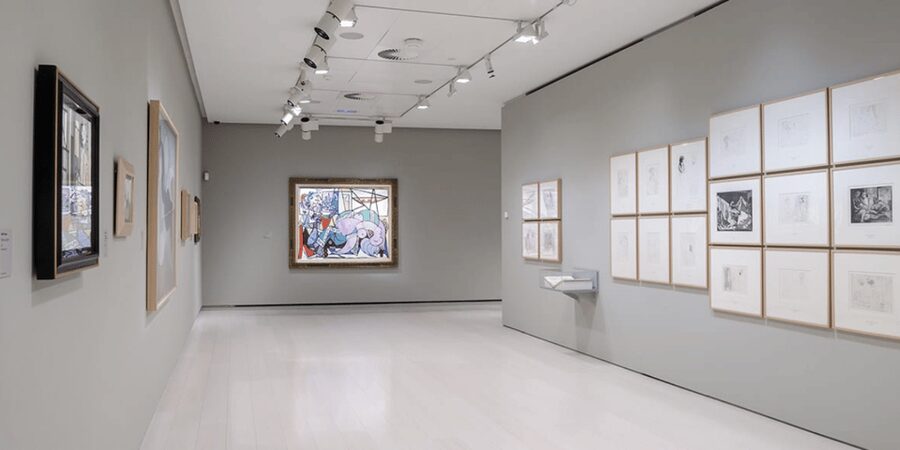
I would plan this as a calm museum visit rather than a quick stop between major Madrid sights. Fundación MAPFRE brings together visual art and photography, with a focus on work made from the late 19th century into the mid-20th century.
The current temporary exhibitions are the main reason to go. Anders Zorn: Traveling the World, Remembering the Land follows a Swedish painter who moved between local subjects and international fame. Helen Levitt presents a different kind of ambition: nearly 200 photographs showing how much drama can be found in a child’s game, a chalk drawing, or a passing expression.
That contrast gives the visit a natural rhythm. Zorn’s art asks you to notice technique, color, and the social world of portrait subjects. Levitt asks you to slow down and catch small moments that could vanish in an instant.
You may also find permanent displays or additional works of painting, photography, and sketches in the foundation’s art program. The exact mix can change, so I would treat the two named temporary exhibitions as the firm center of your visit.
More Museum Visits in Madrid:
- Berlin: Fotografiska Photography Exhibition Ticket
★ 4.6 · 168 reviews - Amsterdam: Foam Photography Museum Admission Ticket
★ 4.2 · 141 reviews - Paris: Private Photoshoot Outside the Louvre Museum
★ 4.8 · 139 reviews
Anders Zorn’s journey from Mora to international fame
Anders Zorn was born in 1860 into a humble background in Sweden and later became an internationally known painter. His career included portraits of kings, presidents, and celebrities, but the exhibition does not reduce him to a society portraitist.
The early watercolors show where his path began. From there, the exhibition follows his period in England and then his move to Paris, where Impressionist ideas helped shape his reputation. This part is useful because it places his technique within the larger art world of the late 19th century rather than presenting each painting as an isolated object.
Zorn worked in oil, watercolor, and printmaking. I like that the exhibition gives space to those different forms, since his skill is easier to understand when you compare the handling of each medium. His celebrated nudes also form part of the story, showing his interest in the human body and his confidence with light and form.
His travels to the United States add another chapter. Zorn found high-profile sitters there, yet the exhibition also follows his return to Mora, where his attention turned toward everyday Swedish life. That movement between international status and home-town subjects is one of the strongest ideas in the show.
The title’s reference to remembering the land fits this change of focus. You are not simply watching an artist collect famous clients. You are seeing a painter move back toward the people, customs, and settings that shaped him.
Look for Zorn’s Spanish connection
The exhibition includes Zorn’s Spanish works and his artistic connection with Joaquín Sorolla. That link gives Spanish visitors an extra reason to pay attention, but you do not need prior knowledge of either painter to follow it.
Both artists are associated with a strong sense of light and an ability to make painted surfaces feel immediate. The connection also helps explain why Zorn’s work belongs in Madrid, rather than feeling like a Swedish art display placed without context.
One image identified with the exhibition is Midnight, from 1891, held by the Zornmuseet in Mora. Details such as this help anchor the show in Zorn’s home country while his career takes you across Europe and the United States.
I would spend time comparing the paintings with the prints and watercolors instead of rushing toward the best-known portraits. The smaller works can show you how Zorn built an image, and they make his technical range easier to appreciate.
Helen Levitt finds poetry on New York streets
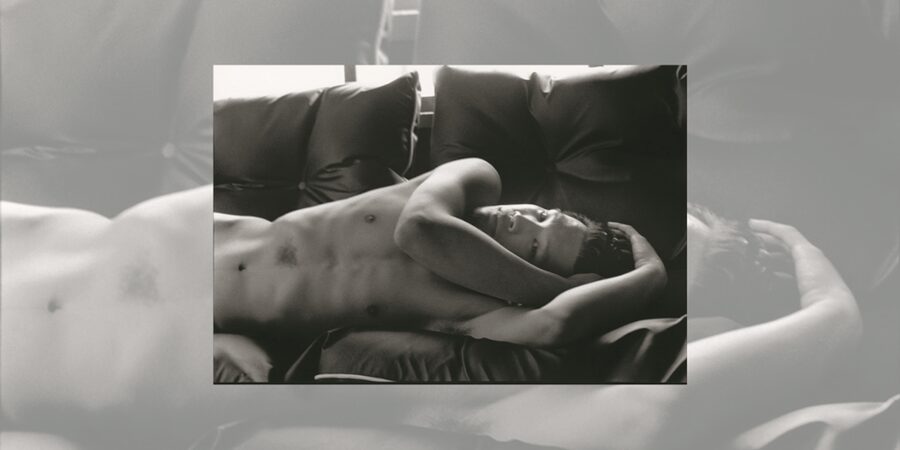
Helen Levitt began photographing in the late 1930s and continued developing her personal view of urban life for more than seven decades. Her subject was often close at hand: children playing, neighbors talking, ordinary gestures, and working-class streets in New York.
This is not photography built around famous landmarks. Levitt’s New York comes through people and behavior. A child’s pose, a group gathered at the curb, or a quick look between strangers can carry the whole picture.
The exhibition is arranged in nine sections and includes nearly 200 works. That scale matters. You get enough material to see patterns in Levitt’s work, rather than forming an opinion from only a few familiar photographs.
Her early photographs are part of the display, along with her cinematic explorations. The reference to cinema is important because Levitt was interested in movement, sequence, and the way a scene unfolds. Her photographs can feel like individual frames from a larger story, even when you know nothing about the people pictured.
I find Levitt’s work best approached slowly. Do not judge each photograph only by its subject. Look at the edges of the frame, the direction of a child’s movement, and the relationship between people who may not even appear to notice one another.
A few more photo experiences around Madrid worth a look
- IKONO: a Unique Sensory and Photographic Experience
★ 4.5 · 1,916 reviews - Photographic tour of Madrid with a professional photographer
★ 5.0 · 104 reviews - Madrid: Private Photoshoot at the Retiro Park
★ 4.9 · 76 reviews - Photoshoot in Madrid
★ 5.0 · 44 reviews
Why the pairing works so well
Zorn and Levitt worked in different media, countries, and periods, but both paid close attention to people. Zorn often made carefully shaped portraits or scenes of national life. Levitt found significance in unplanned public moments.
The comparison gives you two useful ways to think about art. One artist shows how a person can be presented through pose, clothing, setting, and paint. The other shows how a person can be understood through gesture, timing, and a fleeting encounter.
This is also why the visit should suit mixed-interest groups. If one person prefers painting and another prefers photography, both have a strong reason to stay. You can move from Zorn’s formal skill to Levitt’s street scenes without feeling that the exhibitions repeat one another.
The shift in mood may be part of the pleasure. Zorn’s show carries the reach of an international career. Levitt’s pictures bring you back to the sidewalk. I would allow enough time for both rather than treating one as a brief add-on.
The audio guide is useful, but bring headphones
Your standard ticket includes an audio guide in English or Spanish. You access it by scanning a QR code in the room, so you need a mobile device and an active internet connection.
If you do not have mobile data, the venue provides free Wi-Fi. I would connect before you settle into the first gallery, since the guide depends on your phone rather than a separate rented device.
You also need headphones. Bringing your own is the simplest option. The ticket counter sells jack-type headphones for €1, but availability may mean a wait.
The guide should be helpful if you want background on the artists and selected works, but it should not control your whole visit. I would listen to a section, pause, and then spend a few minutes looking without narration. Art museums are better when you give your eyes some quiet time too.
How much time should you allow?
The experience is valid for one day, and the supplied duration is also listed as one day. That does not mean you must remain inside all day. It means you have room to visit at your own pace rather than squeezing the exhibitions into a fixed short tour.
For a quick look at both temporary shows, you could spend less time. If you want to use the audio guide, compare media, and see additional foundation displays, plan for a longer museum visit.
I would not arrive with a rigid minute-by-minute schedule. Zorn’s work rewards comparisons between oil, watercolor, and prints, while Levitt’s photographs can be easy to pass too quickly. Give yourself permission to stop at the images that hold your attention.
The museum’s art focus also makes it a good choice for a quieter part of a Madrid day. It is not a sightseeing route through several landmarks. It is one cultural stop where you can concentrate on the work.
Is the $5 ticket good value?
At about $5 per person, the price is modest for access to two substantial temporary exhibitions, the foundation’s other art displays, and an audio guide. If you enjoy painting or photography, that is a strong deal.
The value is less clear if you only want a very short visit or if the current shows do not match your interests. This is a focused art experience, not a general Madrid attraction with something for everyone.
There is also a practical wrinkle in the admission information. One Spanish booking experience reported being charged for a ticket when the person expected free entry. Because admission policies and booking arrangements can change, I would check the current price and any free-entry conditions before finalizing payment.
The reserve-now, pay-later option gives you some flexibility, and cancellation is available up to 24 hours in advance for a full refund. Those terms are useful if your Madrid schedule is still moving around.
Who will enjoy this visit most?
I would recommend Fundación MAPFRE to anyone who likes art that rewards observation rather than spectacle. You will get the most from it if you enjoy comparing artists, media, and ways of portraying ordinary life.
It is especially suitable for:
- People interested in late-19th and early-20th-century painting
- Photography fans who want more than famous city landmarks
- Visitors curious about Swedish art and Zorn’s connection with Spain
- Couples or friends with different interests in painting and photography
- Anyone looking for a reasonably priced cultural stop in Madrid
- Visitors who prefer to explore at their own pace with an audio guide
The visit may be less suitable if you want a guided group tour with a named art historian. No guide name is provided, and the included commentary is accessed on your own phone.
A few practical tips before you go
Exchange your voucher at the ticket desk when you arrive. The meeting point is the ticket counter, not a separate street meeting place.
Bring headphones with a standard jack connection if you want to use the audio guide comfortably. Also make sure your phone is charged and ready to scan the QR code.
Choose English or Spanish according to the language in which you prefer to hear art commentary. Free Wi-Fi is available, but connecting before you enter the galleries can save time.
The venue is wheelchair accessible. If access is a major concern for your party, you can still confirm current arrangements when you exchange your voucher.
Finally, check the exhibition dates. The Anders Zorn and Helen Levitt shows are scheduled to run until May 17, 2026. The foundation’s temporary program can change after that date.
Should you book Fundación MAPFRE?
Book it if you want two serious art exhibitions for a low price and you enjoy taking your time. Zorn gives you technical skill, travel, portraiture, Swedish life, and a Spanish connection. Levitt gives you nearly 200 photographs of urban life, arranged so you can follow the development of her eye.
I especially like the balance between the two. You get international painting on one side and intimate street photography on the other, with a free audio guide to add context.
I would confirm the current admission cost before paying, since the supplied information includes a report of unexpected charges. If the price remains around $5, Fundación MAPFRE is an easy recommendation for an art-focused half day or longer visit in Madrid.
FAQ
Where is Fundación MAPFRE’s photography and art experience located?
It is located in the Community of Madrid, Spain.
How much does admission cost?
The listed price is $5 per person. Admission terms can change, so confirm the current price before payment.
How long is the experience valid?
The ticket is valid for one day, and availability should be checked for current starting times.
Which exhibitions can I see until May 17, 2026?
You can see Anders Zorn: Traveling the World, Remembering the Land, and the Helen Levitt exhibition, which includes nearly 200 works in nine sections.
Is an audio guide included?
Yes. The standard ticket includes a free audio guide available in English and Spanish.
What do I need to use the audio guide?
You need a mobile device, an active internet connection, and headphones. You can use the venue’s free Wi-Fi if you do not have mobile data.
Is the venue wheelchair accessible?
Yes, the experience is wheelchair accessible.
Just added around Madrid
- Madrid Photo Tour with Pro Photographer Lifestyle and Portrait★ 5.0 · 6 reviews
- Private Photography Tour in Madrid with Personal Guide and Photographer★ 5.0 · 2 reviews
- Private Photographic Session by Puntos de Madrid★ 4.0 · 4 reviews
- Flying dress photoshoot in Madrid★ 5.0 · 20 reviews
- Private Tour of Madrid with a Photography Session★ 5.0 · 6 reviews
- Private Photo sessions in Madrid★ 5.0 · 9 reviews
- Photoshoot in Madrid★ 5.0 · 44 reviews
- Private Vacation Photography Session with Photographer in Madrid★ 5.0 · 3 reviews
Museums, compared.
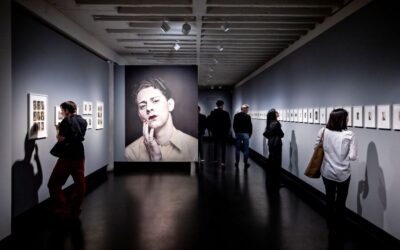
Ticket for Photography Exhibitions at C/O Berlin
Read our review →Stockholm: Subway Art & Photo Tour – World’s longest gallery
Read our review →
Rotterdam: National Museum of Photography Entrance Ticket
Read our review →
Louvre Museum (Essential) – 2-hour visit in Portuguese with a photo session
Read our review →Browse the lists this tour appears in