
REVIEW · MARRAKECH
Marrakech Tuk-Tuk Tour with Photography Museum+Secret Garden
Marrakech is easiest to grasp from a tuk-tuk seat. You glide past the Koutoubia Mosque, fortified walls, old gates, flea markets, and souks, then step off for two of the medina’s best small museums and gardens. It is a smart way to get your bearings during a short stay.
I like the local social purpose behind the ride. These three-wheeled vehicles help mature drivers with disabilities return to active work and support their families. I also like the flexible photo stops and the chance to see both the old medina and modern Gueliz in one outing.
The main limitation is that this is not a guided walking tour. Your driver may explain the city, but the amount of English and historical detail can vary. One recent passenger found that Hassan could not communicate well in English and had to collect the museum tickets independently.
Key points at a glance
- Koutoubia to Secret Garden: Cover major Marrakech sights in about 90 minutes of driving, then spend time at two important cultural stops.
- A practical first-day ride: The tuk-tuk helps you understand the medina’s layout before you return on foot.
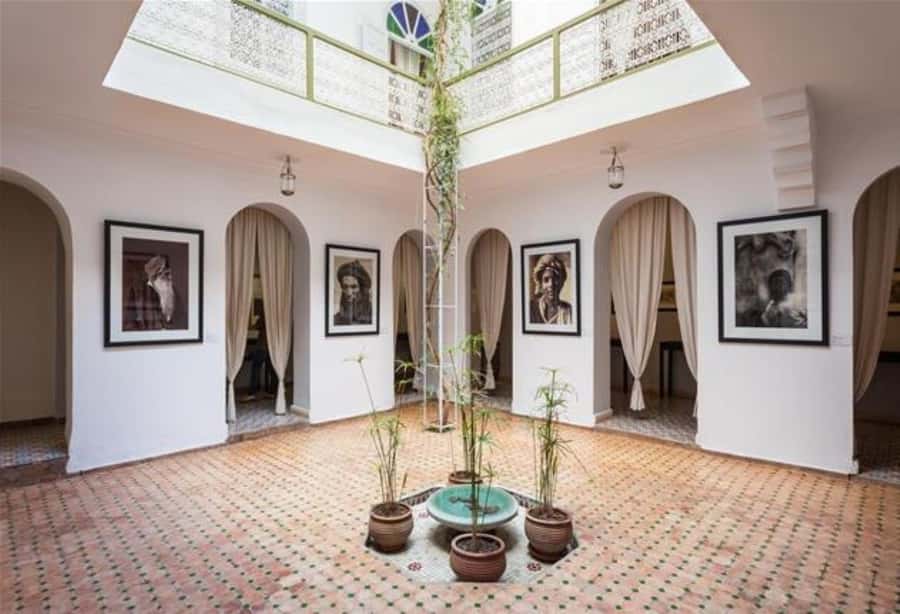
- Photography Museum included: See Moroccan and African photographs dating from 1879 to 1960, plus city views and old camera equipment.
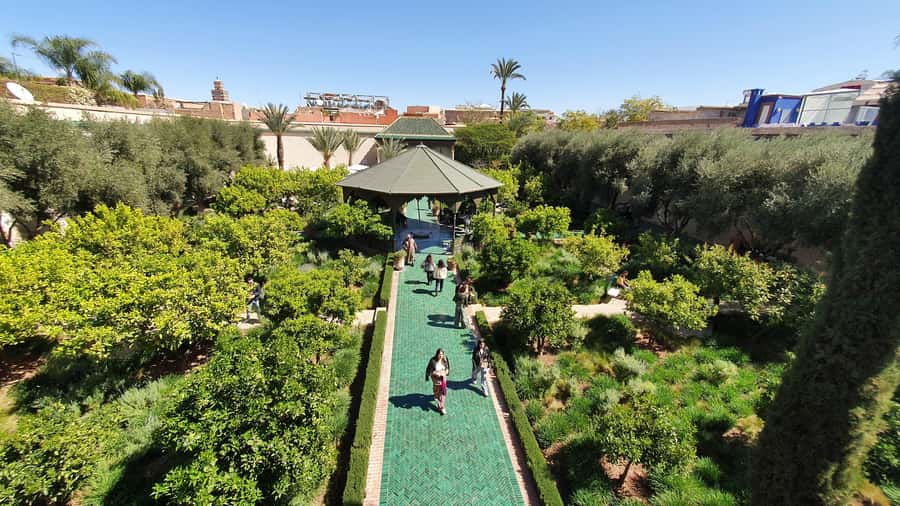
- Secret Garden finish: Explore an Islamic garden, an exotic garden, irrigation displays, and rooftop or patio dining.
- A community-minded choice: Your fare helps local drivers with disabilities earn an income.
- Know the tradeoff: The ride is comfortable and flexible, but it is not a substitute for a full historical guide.
Why this Marrakech tuk-tuk ride works so well
At $88 per person for three hours, this is not the cheapest way to see Marrakech. The value comes from combining transportation, two entry tickets, and orientation in one compact outing.
You are not simply driven from one attraction to another. The route links the grand Koutoubia Mosque, the old ramparts, several gates, the Gueliz quarter, markets, craft souks, and the medina’s smaller streets. Then you have time to explore Maison de la Photographie and Le Jardin Secret at your own pace.
I would look at this as a useful first or second day activity. It gives you a broad sense of the city without asking you to walk through the medina for three straight hours. You also finish near the center, only about 15 minutes on foot from Jamaa El Fna Square.
The tour has a 4.4 rating from 12 reviews, with particular praise for the drivers’ kindness and willingness to stop for photographs. Jalil was singled out for making time at old gates and walls, while Hassan was praised for taking a scenic route through the flea, flower, and spice markets. Those details matter because the driver makes much of the experience.
More Tuk-Tuk Rides in the world:
- Express Tuk-Tuk Tour in Malaga: Gibralfaro Viewpoint and Photography
★ 4.1 · 56 reviews - Albufeira: Best Views & Photo Spots Tuk Tuk Tour (Private)
★ 4.8 · 25 reviews - Heritage Trivandrum Photography Walk Tour With Tuk Tuk Ride
★ 3.8 · 10 reviews
Meeting the driver beside Koutoubia Mosque
You meet at the entrance to the Koutoubia parking area, west of the mosque tower. It is opposite Jamaa El Fna Square on Mohammed V Boulevard, between the gardens and the Great Mosque.
Arrive with a little patience. The meeting point is easy to identify on a map, but the area around Jamaa El Fna can feel busy and confusing, especially if this is your first time in Marrakech. Use the supplied map location, or contact the provided number if you need help finding the vehicle.
The tour begins with introductions and a short safety briefing near Koutoubia Mosque. This 12th-century landmark is one of Marrakech’s clearest reference points, and the tower gives you a useful sense of direction before the ride begins.
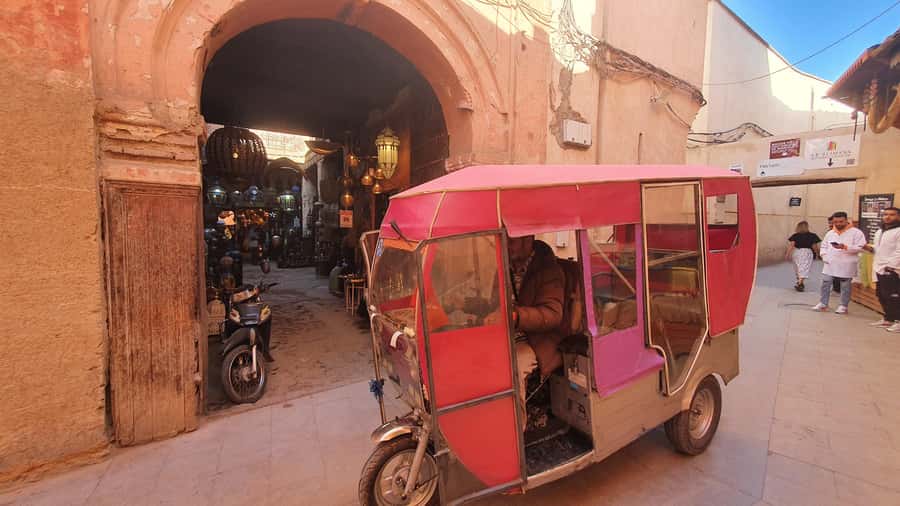
The tuk-tuk itself has an open-sided body, three wheels, a canvas roof, and drop-down curtains. It is based on a motorcycle and designed for narrow streets. You get shade from the roof, but not a sealed cabin, so you remain connected to the sounds, smells, and movement of the city.
That open design is part of the appeal. It also means you should dress for the weather. The ride is more exposed than a car, and the tour is not suitable for wheelchair users. No child or baby seats are available, although a child can sit as an adult or on a parent’s lap.
From Koutoubia to the old city walls
The first part of the route passes Bab Agnaou, Bab Er-Rih, the Marrakech walls, Bab Doukkala, and Seven Towers Square. You will have short photo stops and scenic stretches rather than long guided visits at each site.
Bab Agnaou is one of the city’s best-known historic gates, and the walls show how the old city was protected and defined. Along the route, the driver can pause for photographs, which is useful because the tuk-tuk gives you a quick view without forcing you to search for every sight on foot.
The old walls are especially valuable as an orientation tool. They separate the historic medina from newer parts of Marrakech, and seeing them from the road helps you understand the city’s shape. You are not studying each gate in detail, but you are building a mental map.
The trip also passes through Gueliz, the newer quarter. Its broader streets and different urban feel contrast sharply with the old city. That change is one of the ride’s strengths. In a short time, you see that Marrakech is not only a medieval medina, but also a modern city with separate districts and rhythms.
Expect around 90 minutes of total riding, spread across the route. The exact pattern of stops can change because the drivers are described as flexible. That flexibility is helpful for photographs, but it also means the tour may feel less tightly scripted than a conventional sightseeing circuit.
Maison de la Photographie and Morocco through old images
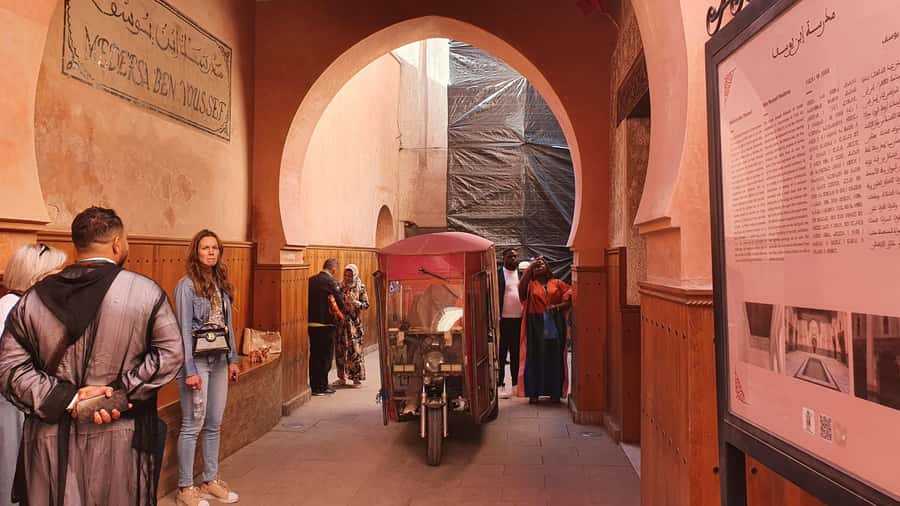
The first major visit is Maison de la Photographie, set inside a riad. You have roughly 30 to 45 minutes here, depending on how the timing is arranged.
The collection includes more than 10,000 items, with photographs and archives from Morocco and Africa dating from 1879 to 1960. The displays cover portraits, street scenes, daily life, mountain views, and aerial images of Marrakech.
This is a good stop because photographs provide context that a quick drive cannot. You see people, places, clothing, buildings, and ways of life from earlier periods. The museum also includes photographic tools and explanations of techniques, making it more than a room of attractive old pictures.
A special feature is a projection of the first color film recorded in Morocco in 1957, titled Landscapes & Faces of the High Atlas. The museum’s focus is broad enough to appeal to anyone interested in local culture, not just photography enthusiasts.
You can also pause at the café terrace for views over the medina rooftops and toward the High Atlas Mountains. The small shop sells paper prints and original postcards. If you enjoy taking home something light and easy to pack, this is a better stop than a large souvenir market.
The timing deserves attention. Thirty minutes is enough for a selective visit, but not enough to study every section of a collection this size. If photography is a major interest, you may want to return on your own. For most people, the brief visit works as a focused introduction before the tuk-tuk continues into the old city.
Your driver is supposed to provide the entrance ticket here. That is normally convenient, but one recent experience involved collecting the ticket independently because the driver was not able to walk easily. If you have mobility concerns, ask clearly at the start how the ticket handoff will work.
More Museum Visits in the world:
- Berlin: Fotografiska Photography Exhibition Ticket
★ 4.6 · 168 reviews - Amsterdam: Foam Photography Museum Admission Ticket
★ 4.2 · 141 reviews - Paris: Private Photoshoot Outside the Louvre Museum
★ 4.8 · 139 reviews - Berlin Museum of Photography Entry Ticket
★ 4.5 · 88 reviews
Through the flea market, flower market, and souks
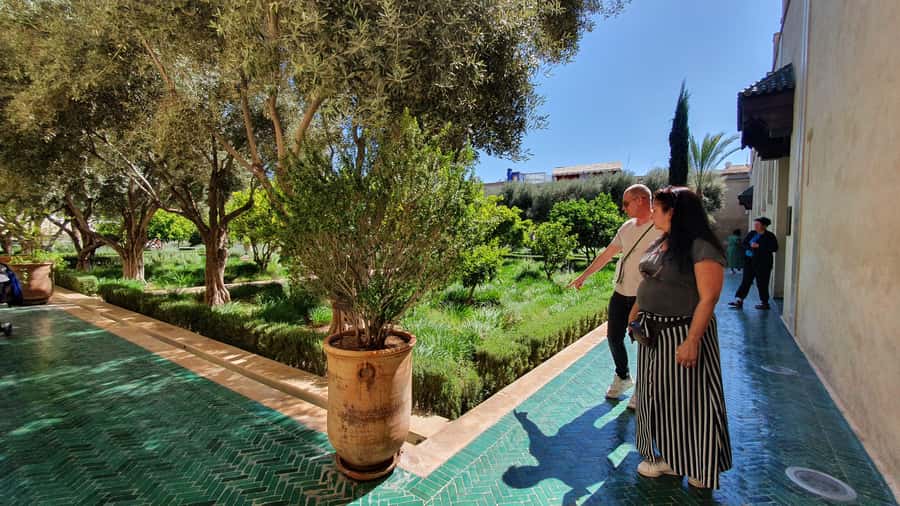
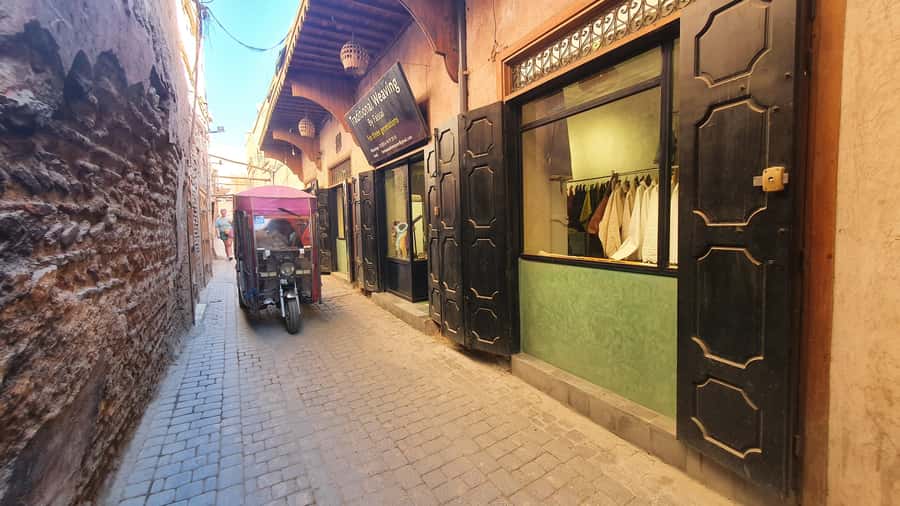
After the museum, the tuk-tuk heads deeper into the medina. The route can pass the Souk El Khemis flea market, flower and spice markets, and the craft souks before moving toward the Dar El Pacha area.
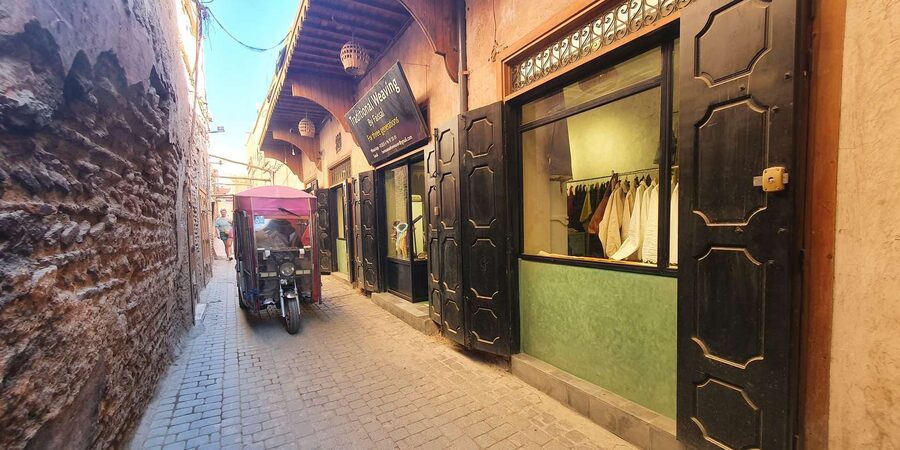
This section is where the vehicle earns its keep. Marrakech’s old city has narrow, twisting streets that can be tiring to cross on foot, especially when you are still learning which lane leads where. The tuk-tuk slips through spaces that suit its small size.
You remain seated while the city passes close by. You may see shop fronts, craft stalls, market goods, and everyday traffic at a slower pace than from a larger vehicle. The driver may stop for photographs or point out places, but do not expect a full explanation of every market or trade.
That distinction is important. You are paying for a local ride and access to sights, not a formal history lesson. Drivers speak Arabic, French, or English, but language ability can vary. Hassan received strong praise for being attentive and taking a scenic route, while another passenger found his English too limited for the explanations they wanted.
I would book this ride if you value movement and atmosphere more than detailed commentary. If you want dates, dynasties, and long explanations at every stop, pair it with a separate walking guide or use the tuk-tuk mainly as transport.
Le Jardin Secret and a peaceful final hour
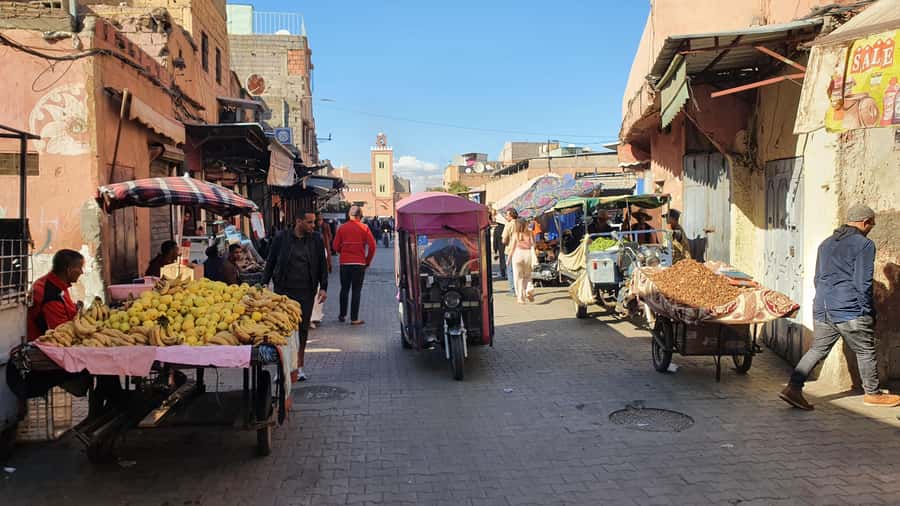
The ride ends at Le Jardin Secret, where the driver provides the entrance fee and says goodbye. You then have about an hour to explore without the group being hurried from one display to the next.
The site began as part of a palace district founded by a royal dynasty in the 1500s. It later fell into disrepair and remained unmaintained until restoration work brought it back to public use in 2016.
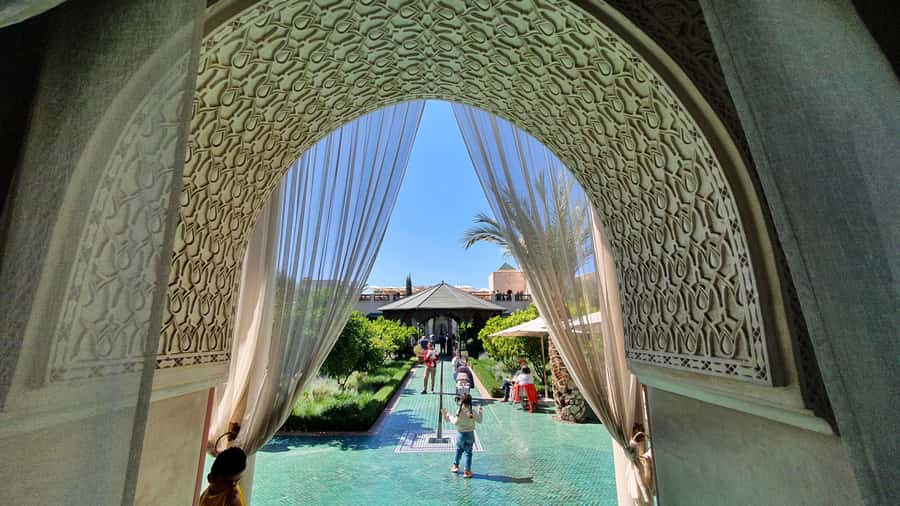
The garden is divided into two main parts. The exotic garden contains plants from different parts of the world and recalls Marrakech’s tradition of experimenting with imported plant life. The Islamic garden follows a more ordered, symmetrical plan, with water and planting arranged to support irrigation.
The water system is one of the most interesting parts of the visit. Exhibits, video, and displays explain how the site moved and managed water. The garden is not only a pretty place for photographs. It shows how design, faith, engineering, and daily comfort were connected in historic Marrakech.
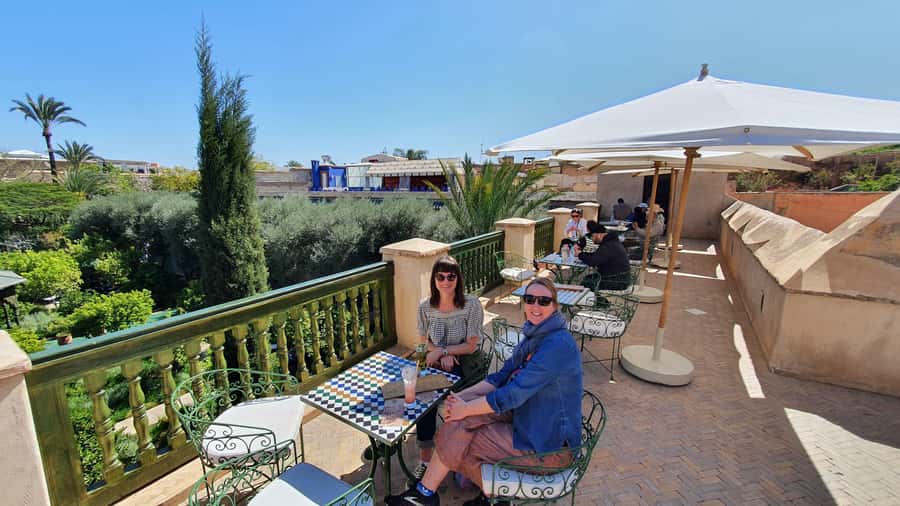
You can walk at your own pace, stop for a drink, or have a meal at the terrace or patio restaurants. Fresh juices and cold beer are available, which is a rare convenience inside the medina. Since the tour ends here, you are free to linger rather than rush back to a vehicle.
The end point is practical. Le Jardin Secret is about a 15-minute walk from Jamaa El Fna Square, so you can continue to the main square, return to your accommodation, or keep exploring the nearby streets.
What the $88 price includes
The fee covers about 90 minutes of tuk-tuk hire with a local driver, entry to Maison de la Photographie, and entry to Le Jardin Secret. It also includes access to the Mouassine Music Museum, which gives you another cultural option in the old city.
Food and drinks are not included. That is easy to manage because the Secret Garden has places to eat and drink, and the museum has a café terrace. Still, allow extra money if you plan to stop for lunch or a cold drink at the end.
For two people, the price buys a private-feeling ride with flexible stops, though the supplied information does not specify group size. The strongest value is for a short visit when you want an overview and do not want to arrange separate tickets and transport.
For a longer stay, you may find better value by walking the medina independently and visiting the museums on your own. The tuk-tuk makes more sense when your time is limited, when you want a comfortable orientation ride, or when you appreciate the social purpose behind the service.
The fare also supports drivers with disabilities who own or work with these vehicles. That gives the outing a direct local benefit beyond sightseeing. You are helping provide work and income for drivers and their families while using a vehicle built for Marrakech’s narrow streets.
Who should book this experience?
I recommend it for first-time visitors who want a quick overview before exploring the medina on foot. It is also useful for anyone with only a few hours, photographers who want flexible stops, and people who prefer not to walk continuously through crowded lanes.
Families can use it, but there are no child or baby seats. Children can sit as adults or on a parent’s lap, so decide based on your own comfort and safety needs.
I would be more cautious if you use a wheelchair, since the activity is not suitable for wheelchair users. I would also think twice if your main goal is detailed historical commentary. The driver may offer useful local information, but the experience is built around transport, views, and museum access rather than formal guiding.
FAQ
Where does the Marrakech tuk-tuk tour begin?
Meet at the entrance to the Koutoubia Mosque parking area, west of the tower. It is opposite Jamaa El Fna Square on Mohammed V Boulevard, between the gardens and the mosque.
Where does the tour finish?
The ride ends at Le Jardin Secret in the medina. From there, Jamaa El Fna Square is about a 15-minute walk away.
How long does the experience last?
The full activity lasts three hours. About 90 minutes are spent riding in the tuk-tuk, with visits to the Photography Museum and Secret Garden included.
Are museum entrance fees included?
Yes. The price includes entry to Maison de la Photographie and Le Jardin Secret. It also includes access to the Mouassine Music Museum.
What languages does the driver speak?
Drivers are listed as speaking Arabic, French, and English. The amount of English conversation may vary between drivers.
Is the tour suitable for wheelchair users or babies?
The activity is not suitable for wheelchair users. No child or baby seats are available, though a child can sit as an adult or on a parent’s lap.
Should you book it?
Book this tour if you want a comfortable first look at Marrakech, two worthwhile cultural stops, and a ride that supports local drivers with disabilities. Jalil and Hassan are examples of the warm, helpful service you may receive, especially when you ask for photo stops.
Skip it if you want a fully guided historical tour, need wheelchair access, or prefer to explore every museum at length. For most short visits, though, the tuk-tuk is a useful way to get oriented, see more than you could comfortably walk, and finish in one of the medina’s most pleasant gardens.
Just added around the world
- Montmartre Sacre Coeur area photoshoot by Paris photographer★ 5.0 · 5 reviews
- Lyon: Photoshoot Experience★ 3.2 · 4 reviews
- Lucerne: Lake Cruise & Old Town Tour w/ Guide & Photographer★ 5.0 · 3 reviews
- Louvre area photo shoot by Paris photographer★ 5.0 · 6 reviews
- Louvre Museum (Essential) – 2-hour visit in Portuguese with a photo session★ 4.8 · 23 reviews
- Como: Private Photoshoot with Post-Editing★ 4.9 · 8 reviews
- Los Angeles: Private Professional Vacation Photoshoot★ 5.0 · 2 reviews
- Louisville: Photoshoot Walking Tour with Pictures★ 4.8 · 3 reviews
Morocco Photo Tours & Photoshoots, compared.
Day Trip to Chefchaouen from Fez (instagram /Photos)
Read our review →

Dinner Show at Agafay desert & Traditional Outfit Photoshoot
Read our review →
Marrakech Medinas: Your Personal Photoshoot in Paradise
Read our review →Browse the lists this tour appears in