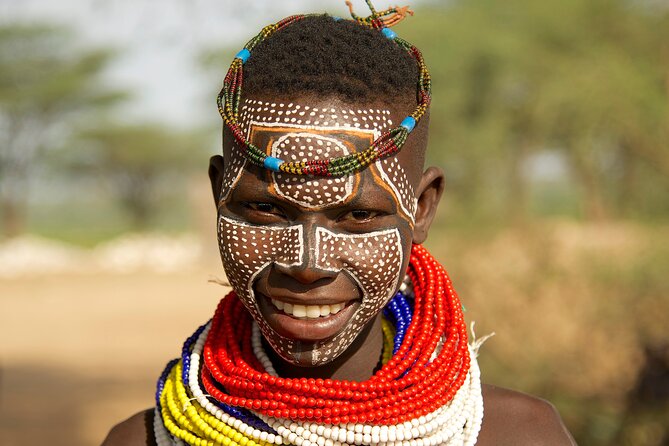
REVIEW · PHOTO TOURS & PHOTOSHOOTS
Photography Expeditions to Omo Valley
The Omo Valley offers the kind of photographic variety few destinations can match. In six days, you move from Mursi highlands and Hamer markets to Karo body painting, Dassanech villages, Lake Chamo crocodiles, and Dorze beehive houses. It is a serious cultural and photography trip, not a soft sightseeing circuit.
I like two things right away: the private format lets your group focus on photography, and the tour includes village entrance and photography fees, which makes the encounters easier to plan. I also like the route’s range, from people and culture to birds, hippos, and crocodiles. The drawback is the pace. Long drives, early starts, regional flights, and several short visits leave little room for delays.
Key points at a glance
- Mursi highlands: Visit Mago National Park and photograph one of Ethiopia’s best-known ethnic groups, including the traditional lip plates worn by some Mursi women.
- Four distinct cultural stops: The route includes Mursi, Hamer, Karo, and Dassanech communities, each known for different dress, hair, painting, or ceremony traditions.
- Private group of up to seven: Your party travels together rather than joining a large coach group, which matters when you are carrying cameras and waiting for good light.
- Lake Chamo wildlife: An afternoon boat trip offers chances to see crocodiles, hippos, African fish eagles, flamingos, herons, storks, and kingfishers.
- Photography costs included: Village entrance and photography fees are covered, along with five breakfasts, five lunches, and five dinners.
- A demanding six-day route: The schedule begins in Addis Ababa, reaches Jinka by air, continues by road through Turmi and Arba Minch, then returns to Addis by air.
Why the Omo Valley makes such a strong photo trip
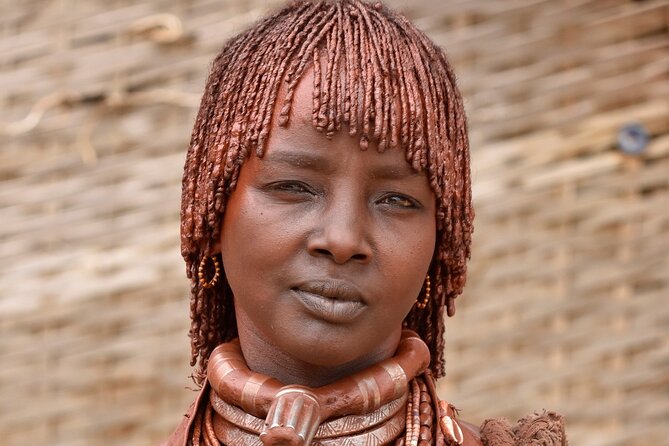
The Omo River Valley is a small area with at least 30 distinct ethnolinguistic groups. For centuries, many communities lived with limited outside contact, and their clothing, body decoration, hairstyles, homes, and ceremonies developed along their own lines.
That variety gives you more than a collection of portraits. In one part of the trip, you may be looking at Mursi lip plates and highland life. Later, Karo artists use clay and plant pigments to create bold designs across faces, chests, arms, and legs. The Dassanech are known for ornate hair buns, while the Dorze are associated with woven cotton cloth and tall, beehive-shaped homes.
Photography is clearly central here. A photography fee is included, as are village entrance costs, so you are not left guessing about two common expenses. Still, the subject matter calls for care. You are photographing real people and living traditions, not a staged cultural show. Follow your guide’s direction, ask before making close portraits, and treat the camera as a way to pay attention rather than simply collect dramatic images.
The tour is operated by Ethiopian Photography Tours. The supplied information names Mulugeta and Captain among the people associated with the company. One particularly useful strength is the company’s apparent willingness to adjust when plans change. That matters in southern Ethiopia, where flights, roads, weather, and local timing can all affect a tightly packed route.
A few more photo experiences around the world worth a look
- Bali: Full-Day Instagram Highlights Tour
★ 4.8 · 7,817 reviews - ️ Bali Instagram Tour: The Most Famous Spots (Private & All-Inclusive)
★ 5.0 · 2,857 reviews - Paris: Private Photoshoot at the Eiffel Tower
★ 4.7 · 2,636 reviews
Day 1: Addis Ababa, Jinka, and Ari village
Your trip begins with pickup in Bole, Addis Ababa. Before the flight south, you may have the option to visit the National Museum or Merkato, Addis Ababa’s open market. These are different kinds of introductions. The museum offers national context, while Merkato gives you a more immediate feel for city life and trade.
You then fly from Addis Ababa to Jinka. After meeting the driver at the airport, the group continues to an Ari village. The Ari are one of the major peoples of the Jinka area, and this first village visit gives you an early cultural stop before the longer drives begin.
The timing is useful, but you should keep your expectations realistic. This is a four-hour touring day on paper, yet flights and airport transfers can make the day feel longer. You also need to keep camera gear organized, since you move from an urban airport to a road-based village visit in a short span.
Jinka is the practical base for the first part of the trip. The itinerary does not list an admission charge for this day, and the tour includes transport in an air-conditioned vehicle. That vehicle matters once the road schedule gathers speed.
Day 2: Mursi country, Mago National Park, and the road to Turmi
Day two is the most culturally famous part of the route. You leave early for Mago National Park and the Mursi highlands. The Mursi are known internationally for the large decorative lip plates worn by some women. The tour presents this as a chance to photograph Mursi culture and tradition, but it is important to look beyond the most familiar image.
The lip plates are only one part of Mursi identity. Your time here is also a chance to notice clothing, adornment, expressions, family groups, and the highland setting. Your guide’s role is especially important because the photography experience depends on local relationships and clear direction.
After returning to Jinka for lunch, you continue toward Turmi. The route passes through Dimeka, with a possible stop at Alduba market. Market timing is never something to take for granted, so the wording here matters. Treat Alduba as a possibility, not a guaranteed centerpiece.
This is a long day, listed at about seven hours. You cover substantial ground and change from one cultural area to another. The reward is range. The cost is fatigue. You will want batteries charged, memory cards ready, and a willingness to accept that the best image may come during a brief stop rather than a carefully controlled session.
Day 3: Karo body painting and a possible bull-jumping event
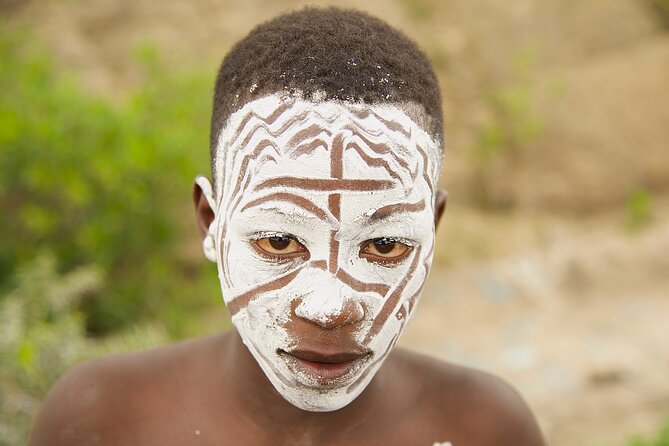
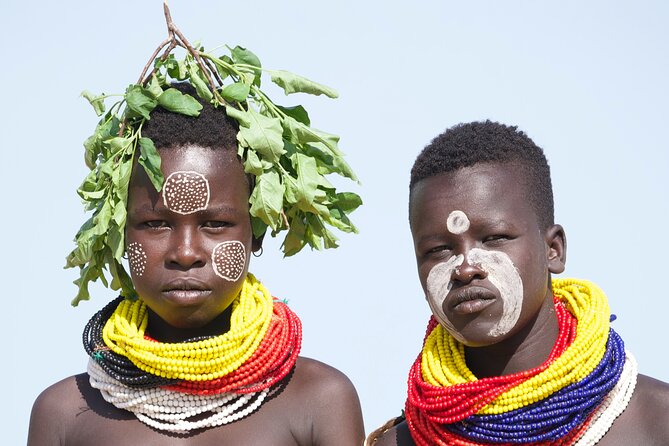
The Karo visit is one of the tour’s most distinctive photography opportunities. Karo people are known for painting their bodies with clay and locally available plant pigments. The patterns may cover faces, chests, arms, and legs, and the designs are described as aesthetic creations rather than fixed symbols.
That detail helps you understand what you are seeing. The body painting is not simply a costume for outsiders. It is an artistic practice, and the people creating the designs may compete to make striking patterns. Karo men may also shave and shape their hair into unusual forms, sometimes adding ochre and ostrich feathers.
The stop is at Karo-Korcho, followed by a return to Turmi. The day is listed at about four hours, so it is less punishing than day two. You may also have the chance to photograph a bull-jumping rehearsal or ceremony. This is an important qualification: it is a possible opportunity, not a fixed performance included at a stated time.
For photographers, this day can offer strong detail work. Clay texture, feather shapes, painted skin, and sculpted hair all call for different lenses and approaches. For everyone else, it is a reminder that the Omo Valley cannot be reduced to one visual theme. Each community has its own way of presenting identity.
Same place, a different kind of shoot:
- The ‘OG’ Manatee Snorkel Tour with In-Water Guide/Photographer
★ 5.0 · 2,539 reviews - Paris: Eiffel Tower Photoshoot
★ 4.7 · 2,351 reviews - Manatee Swim Tour with In Water Photographer
★ 5.0 · 2,300 reviews - IKONO: a Unique Sensory and Photographic Experience
★ 4.5 · 1,916 reviews
Day 4: Crossing the Omo River to Dassanech country
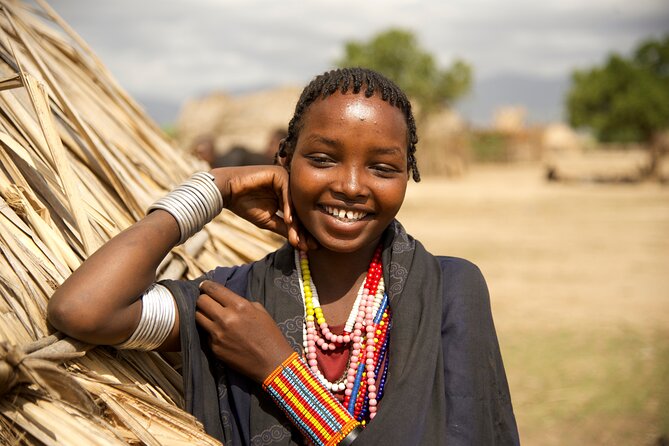
On day four, you rise early and drive to the edge of the Omo River. A canoe carries you across to a Dassanech village. That crossing is not just transport. It gives the day a clear sense of place, with the river marking the passage into another community and another cultural setting.
The Dassanech are described as semi-nomadic, with about 40,000 people spread across southern Ethiopia, Kenya, and Sudan. Their ornate hair buns are one of the details photographers will likely watch for, but the broader value is seeing how a community’s identity extends across modern national borders.
After photographing the village, you return to Turmi. The afternoon is left for rest or additional photography around town. That open time is welcome after several early starts and long drives. It also gives you a little flexibility if day three runs late or if you need to sort files and clean equipment.
This is another four-hour touring day, though river crossings and local timing can affect the clock. You should bring only what you need for the village visit and protect your equipment carefully around the canoe. The supplied details do not specify the canoe type or river conditions, so your guide’s instructions should take priority.
Day 5: Turmi to Arba Minch and Lake Chamo
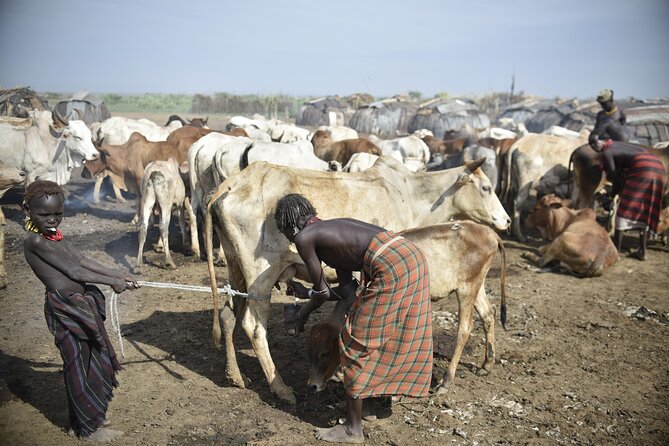
Day five shifts the focus from portrait and cultural photography to wildlife. You drive to Arba Minch in the morning, then take a boat on Lake Chamo after 3 p.m.
Lake Chamo is the trip’s clearest nature stop. The northern shore is known for large crocodiles, which can often be seen resting in the heat. The boat may also bring you close to hippos and aquatic birds, including African fish eagles, flamingos, herons, storks, and kingfishers.
The late-afternoon timing makes sense for a boat outing, since it gives you a different quality of light from the hard conditions often found at midday. It also breaks up the human-focused photography of the Omo Valley with wildlife and open water.
This day is listed at about four hours, but the morning drive to Arba Minch is still a significant transfer. You should think of it as a travel day with a rewarding afternoon activity, not a slow wildlife cruise from breakfast onward. The boat trip is included in the route, while the general inclusions list does not separately identify a boat fee, so confirm the final booking details if that cost matters to your budget.
Day 6: Dorze and Chencha villages before flying home
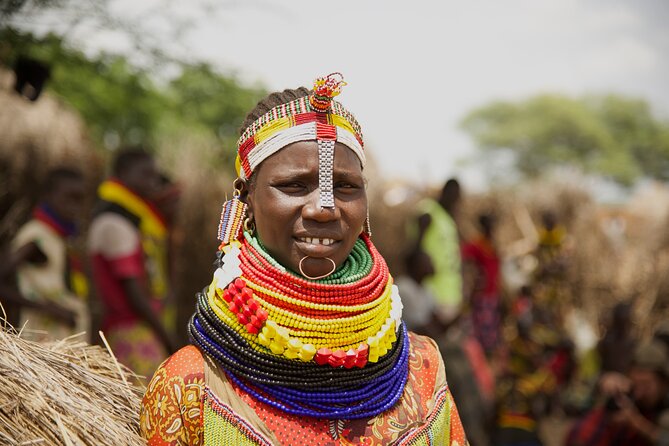
The final full touring morning takes you about 40 kilometers northwest of Arba Minch into the Guge Mountains. You visit Dorze and Chencha villages, where the focus turns to farming, weaving, house design, and mountain communities.
The Dorze are known for high-quality woven cotton cloth. Their tall, beehive-shaped homes are built from organic materials and surrounded by small gardens with spices, cabbage, and tobacco. This stop offers a quieter kind of photography than the Mursi or Karo visits. You can look at structure, texture, food plants, weaving, and daily work rather than concentrating only on portraits.
After lunch, you transfer to Arba Minch Airport and fly back to Addis Ababa. The listed schedule puts you in Addis in the late afternoon, followed by a hotel room for day use so you can wash and change. That is a practical touch after six days of road travel. The details do not say whether a full overnight room is provided, so think of this as a short day-use arrangement rather than an extra hotel night.
The final day is listed at about eight hours. It combines mountain travel, a village visit, lunch, airport transfers, a flight, and a short stay in Addis. Keep your departure plans sensible and do not assume you will have a wide margin before an international flight unless you confirm the timing directly.
What the $3,312.83 group price really covers
The advertised cost is $3,312.83 per private group of up to seven people. At seven participants, that works out to about $473 per person for the listed tour price. A smaller group pays more per person, but gains the comfort of a private party and more control over the vehicle and photography rhythm.
The package includes an air-conditioned vehicle, village entrance fees, photography fees, five breakfasts, five lunches, and five dinners. It also includes the planned touring arrangements and airport transfers described in the route. Those inclusions make the price more useful than a bare transport quote, especially in a region where multiple local visits are spread across several days.
You should confirm the treatment of domestic flights before booking. The itinerary includes flights from Addis Ababa to Jinka and from Arba Minch back to Addis Ababa, but the stated included-items list does not explicitly name airfare. International flights, visas, personal expenses, tips, and alcohol are not included.
That distinction is important. The price can be good value for a group of photographers sharing a private vehicle, but your final budget may be higher once flights and personal costs are added. Ask for a written breakdown before paying.
Who will get the most from this tour
This trip suits you if people, cultural detail, and photography are your main interests. It is also a good match for someone who wants wildlife added to a cultural route rather than booking a pure safari.
The private format works well for up to seven people who already share a similar pace. Photographers may appreciate the included photography fee and the chance to work across portraits, body art, architecture, markets, birds, crocodiles, and hippos.
You need to be comfortable with early mornings, long road transfers, basic village settings, and a tightly planned route. The schedule is not designed for a leisurely hotel-based holiday. It also may not suit you if you want long, unstructured time with each community or a guarantee of every listed market and ceremony.
The tour has received a top overall rating from five submitted reviews, with its strongest praise focused on planning, communication, handling of changes, and attention to photography goals. One wildlife photographer valued the company’s interest in endangered and endemic species, while another described months of help from Mulugeta before arrival. Those details point to a useful strength: discuss your photographic priorities early rather than arriving with vague expectations.
Practical details before you reserve
Pickup is offered from Bole in Addis Ababa, and the activity ends back at the meeting point after the return to the city. Confirmation is provided at booking, and the activity is private, with only your group participating.
Most people can take part according to the supplied information, but the schedule still demands stamina. You should be ready for road time, early departures, airport transfers, village walking, and a canoe crossing. Keep your camera equipment compact enough to handle changes between vehicle, village, boat, and flight.
Free cancellation is available if you cancel at least 24 hours before the local start time. Cancellations or changes made inside that window are not accepted for a refund, and the tour requires a minimum number of participants. If that minimum is not met, the provider offers another date or experience, or a full refund.
Should you book the Omo Valley photography expedition?
Book it if you want a focused private route through southern Ethiopia and are willing to trade comfort and spare time for unusual cultural access and strong photographic variety. The combination of Mursi, Hamer, Karo, Dassanech, Dorze, Lake Chamo, and domestic flights covers a great deal in six days.
Before booking, confirm the domestic airfare, exact hotel arrangement in Addis, expected village photography procedures, and how much time is normally spent at each stop. If those details fit your budget and pace, this is a strong choice for photographers who want the Omo Valley as the main event, not a quick side trip from Addis Ababa.
FAQ
Where does the tour begin and end?
The tour begins in Bole, Addis Ababa, with pickup offered. It ends back at the meeting point after the return to Addis Ababa.
How long is the experience?
The trip lasts approximately six days. The listed touring times range from about four to eight hours per day, not counting every flight and transfer.
How many people can join the private tour?
The price covers one private group of up to seven people. Only your group participates in the activity.
What meals are included?
The package includes five breakfasts, five lunches, and five dinners.
Are village entrance and photography fees included?
Yes. Village entrance fees and photography fees are included in the stated package.
What is not included in the price?
Visa fees, international flights, personal expenses, tips, and alcohol are not included. The supplied inclusions do not explicitly list the domestic flights, so confirm that cost before booking.
Just added around the world
- Private Vacation Photoshoot with Photographer in Myrtle Beach★ 4.0 · 9 reviews
- Traditional Japanese Costumes “Kimono”, “Yukata”, “Ryuso”, “Photograph Course “Hair Set & Lipstick & Kimono & Photography”★ 5.0 · 17 reviews
- Marco Island Photography Experience★ 5.0 · 7 reviews
- Capture Unforgettable Moments: Private Holiday Photography★ 5.0 · 52 reviews
- Hire Photographer, Professional Photo Shoot – Myrtle Beach★ 5.0 · 4 reviews
- Proposal Photoshoot Mykonos★ 5.0 · 2 reviews
- Private Instagram Tour | Mykonos Most Photogenic Spots★ 5.0 · 4 reviews
- Photographer, Professional Photo shoot – Mykonos★ 3.0 · 2 reviews
Photo Tours & Photoshoots, compared.
️ Bali Instagram Tour: The Most Famous Spots (Private & All-Inclusive)
Read our review →
Northern Lights Bus Tour with Free Photography
Read our review →
Explore the City by Vespa with an Optional Photoshoot
Read our review →