REVIEW · TOKYO
Tokyo Shinjuku Night Photo Tour with Pro Gota
Shinjuku is at its best after dark, when neon signs, lanterns, narrow lanes, and glowing shrines give the district several different moods in a short walk. With photographer Gota, you move from Shinjuku Sanchome to Golden Gai, Kabukicho, Jouenji Temple, and the Shintoshin pedestrian bridge while he handles the pictures.
I like two things here. First, you get more than the usual phone snapshot, with at least 20 professionally edited photos afterward. Second, Gota adds local background on Japanese traditions, religion, and the areas you pass. The welcome drink is a nice way to begin, too.
The main drawback is the pace. This is a 90-minute walk of about 3 kilometers, with time needed for several photo stops. If you dislike walking or standing, or want a long meal and relaxed sightseeing, this will feel brisk. The $85.89 price makes the most sense if the photos matter to you.
Key points at a glance
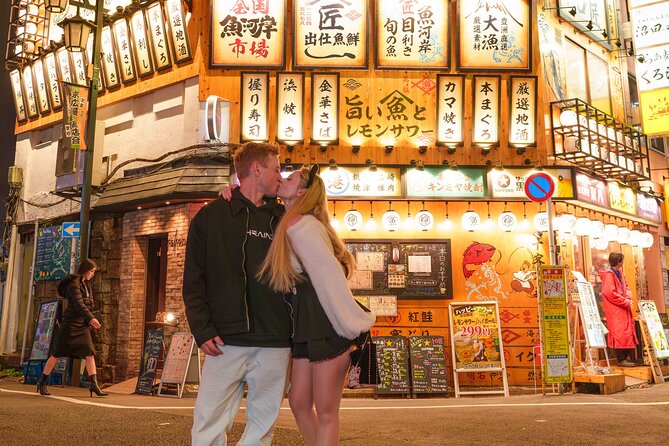
- A planned 3-kilometer night route: You visit several very different Shinjuku settings instead of staying in one neon street.
- At least 20 edited photos: Gota photographs you during the walk and provides polished images after the session.
- A welcome drink included: The tour begins around Shinjuku Sanchome with a drink at a bar.
- Several looks in 90 minutes: Expect traditional shrine lanterns, retro Golden Gai lanes, Kabukicho signs, and a city skyline.
- Private for your group: You are not placed with unrelated participants, though group discounts are available.
- Gota is both photographer and guide: His 15 years of experience and cultural explanations add context to the pictures.
Why Shinjuku works so well after dark
Shinjuku can feel like several cities stitched together. One block has polished restaurants and department stores. Another has tiny drinking lanes, glowing lanterns, or giant advertising signs. A night photo session takes advantage of those sharp changes.
You are not simply stopping at one famous sign and going home. The route gives you a set of contrasting backdrops. That matters because a collection of photos feels more personal when the setting changes from traditional to retro to modern.
The experience is also useful if you are not comfortable directing your own portraits. Gota can show you how to pose and give examples of ways to use the surroundings. That removes much of the awkwardness that comes with asking a stranger to take a quick picture.
The cultural side adds value. Information from the tour’s feedback points to explanations about Japanese traditions and religion, not just directions to the next photo spot. You should think of this as a short guided walk with a professional photo session attached, rather than a portrait studio moved outdoors.
More Photography Tours in Japan
- Tokyo Cyberpunk Street Photo Tour
★ 5.0 · 165 reviews - Tokyo by Night Photography Tour (Private Option Available)
★ 5.0 · 151 reviews - Tokyo: Evening Photography Tour
★ 4.8 · 61 reviews
Starting with a drink in Shinjuku Sanchome
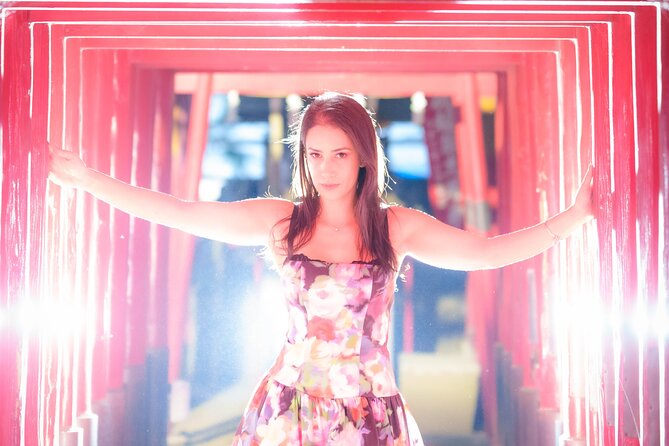
The meeting point is Marugo Grande in Shinjuku Sanchome, at 3-chome 6-14, first floor. This area is a good opening scene because bars and restaurants bring a warm glow to the streets. The first section is planned for about 20 minutes and includes a welcome drink at a bar.
That drink helps set the tone. You can meet Gota, settle in, and get comfortable before the camera comes out in earnest. It is a small inclusion, but a useful one, especially for solo visitors who may feel self-conscious at the start.
Shinjuku Sanchome also provides a softer look than Kabukicho. The light is often warmer, and the restaurant frontage can make for more relaxed portraits. You might find this part especially useful if you want photos that feel stylish rather than loud.
The drink is included, but the supplied details do not specify the exact beverage. If you have dietary or alcohol concerns, ask the provider in advance rather than assuming what will be served.
Hanazono Shrine, a quiet pause among the city lights
Hanazono Shrine brings a traditional Japanese setting into the route. It is described as a peaceful, historic spot in the middle of Shinjuku, offering a contrast to the bars and commercial streets nearby.
For photographs, this is an important change of pace. Red shrine structures, traditional details, and lower light can produce a calmer mood than the bright signs of Kabukicho. If you want your final photo set to show more than Tokyo nightlife, this stop helps.
Gota also uses the setting to explain aspects of Japanese religion and custom. That kind of context is valuable because a shrine can otherwise become just a pretty backdrop. You get a better sense of why the place feels different from the surrounding entertainment district.
Keep your expectations practical. This is one stop on a short walking tour, not a long shrine visit with time for extensive exploration. You will be photographing and moving on, so anyone seeking a detailed temple or shrine lesson should book a separate visit.
Golden Gai for retro lanes and close-up portraits
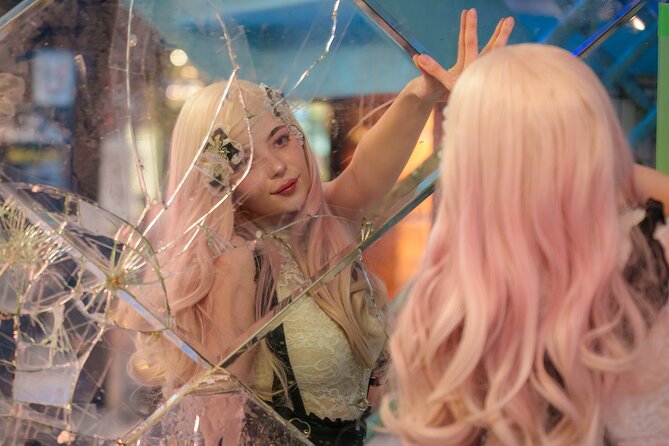
Golden Gai is one of the most distinctive parts of the walk. Its narrow lanes, small bars, signs, and old-fashioned atmosphere create a tight, textured setting for portraits.
This is where a guide with a planned route helps. Golden Gai is compact and easy to wander into, but it can be hard to know which corners will work best for a picture. Gota’s job is to position you where the signs, alleyways, and light create a stronger frame.
The narrow streets also mean you should expect close surroundings and limited room to move. That is part of the character, but it can make the stop feel less comfortable for anyone who dislikes confined spaces or crowded nightlife areas.
Be respectful around the bars and doorways. The area is a working nightlife district, not a photo set. Your guide can help you take pictures without treating private entrances or customers as props.
More Photography Tours in Tokyo
- Asakusa Kimono Photography Tour
★ 5.0 · 8 reviews
Kabukicho puts the neon on full display
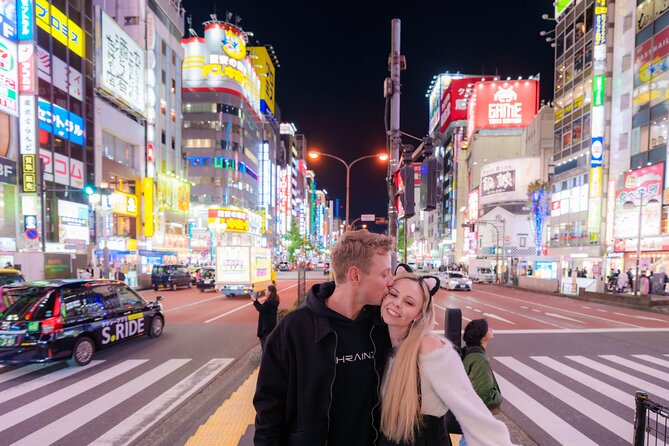
Kabukicho supplies the boldest part of the session. This famous entertainment district is filled with colorful signs, busy streets, and strong artificial light. The Godzilla Head at Kabukicho is one of the named photo points, giving you an instantly recognizable Shinjuku background.
This stop is likely to produce the pictures many people imagine when they think of Tokyo at night. Neon can make a portrait look dramatic, but it can also create harsh shadows and mixed colors. A professional photographer is useful here because camera position and timing matter more than simply standing under the brightest sign.
The area can also feel intense. You are walking through a major nightlife zone, so this is not the quiet, reflective part of the route. If you prefer calm streets, Hanazono Shrine and Jouenji Temple will suit you better.
Gota’s local guidance is part of the appeal. His role is not only to press the shutter. He can help you move through the district, point out places worth using, and explain what you are seeing along the way.
Jouenji Temple and its rows of lanterns
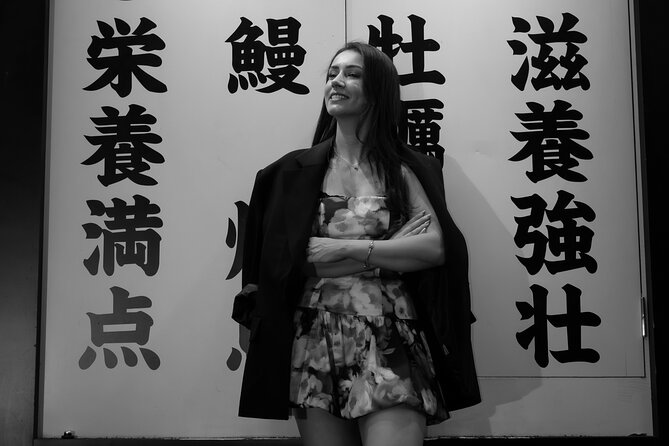
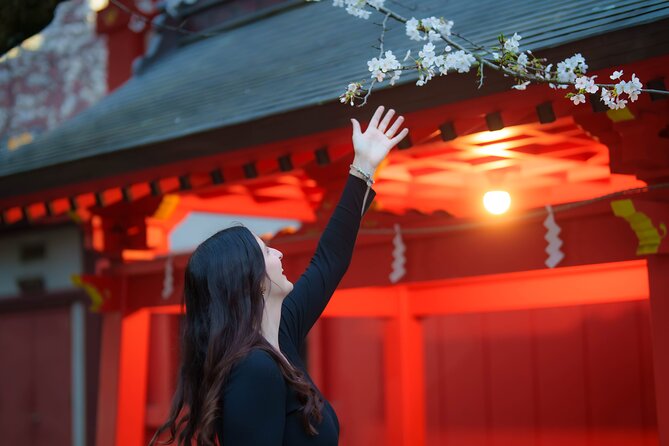
Jouenji Temple in Nishi-Shinjuku changes the visual mood again. The stop focuses on rows of lanterns, which give the photographs a warm and traditional feel.
This is one of the more unusual settings on the route because it is less obvious than the major neon attractions. It helps break up a photo collection that might otherwise show only signs and nightlife. The lantern light should suit portraits that are quieter and more atmospheric.
The route’s variety is its strongest feature. In a single evening, you can go from a bar-lined street to a shrine, then a narrow nightlife lane, a giant city sign, and a temple lit by lanterns. That range gives you options when choosing which photos to keep or share.
As with Hanazono Shrine, the temple stop is a photo visit rather than a full cultural tour. You should allow time for the pictures and the walk, not expect a long inspection of the temple grounds.
Finishing above the city at Shintoshin Bridge
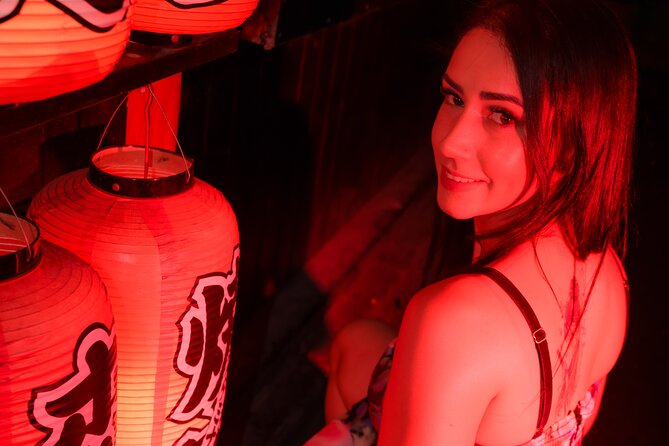
The final stop is the Shintoshin pedestrian bridge in Nishi-Shinjuku. Here, the background shifts from close alley walls to the glittering Shinjuku skyline.
Ending with a wider city view is a sensible choice. It gives the session a feeling of scale after the tight spaces of Golden Gai and Kabukicho. The bridge is also a useful place for portraits that show the city around you rather than placing you directly in front of a sign.
The end point is listed near the FamilyMart Nishi-Shinjuku 1-Chome Store, at 1-chome 3-17 Nishishinjuku. The store is near Kogakuin University, on a street corner, and has the familiar green FamilyMart sign. Use that detail to confirm where you should finish and how you will continue afterward.
This end point is not the same as the starting point in Shinjuku Sanchome. That is convenient if you plan to continue through Nishi-Shinjuku, but you should check your onward route before starting. The activity finishes after the bridge area rather than returning you to Marugo Grande.
What the photography service adds
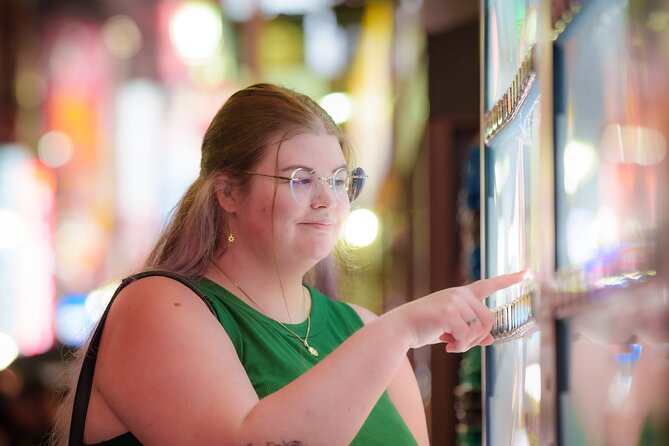
The central reason to book is the finished photo set. At least 20 images are professionally edited, which gives you something more lasting than a few hurried phone pictures.
Gota has about 15 years of experience, according to the information provided, and the comments about his work repeatedly focus on the quality of the photographs. He also helps people feel at ease, including solo visitors and people who are not fully comfortable speaking English. One person specifically noted that Google Translate helped with communication.
That does not mean you need to be an experienced model. The session is presented as casual, and Gota can offer examples and guidance along the way. Still, you should be ready to pose several times and walk between locations.
The exact delivery time and method for the edited photos are not stated, so ask before booking if that detail affects your plans. The promise of at least 20 edited photos is clear, but the schedule for receiving them is not.
Is $85.89 good value?
At $85.89 per person, this is not the cheapest way to see Shinjuku at night. You can walk through Golden Gai, Kabukicho, and the shrine areas without paying an admission fee. The price is paying for the photographer, route planning, welcome drink, cultural guidance, private format, and edited images.
For a solo visitor, the value depends heavily on how much you want good portraits. Hiring a photographer separately could cost more, and taking self-timer pictures in crowded streets is awkward. The private setup also means you are not sharing the session with unrelated participants.
For a couple, the price can feel more worthwhile because both people can appear in the images. It may also work for a small family or friend group, especially since group discounts are offered. Confirm the discount before booking, because the supplied details do not explain how it is calculated.
If you mainly want a guided introduction to Shinjuku, the photography service may be more than you need. If you want polished images of yourself in several classic Tokyo settings, the cost is easier to justify.
Who will enjoy this walk most
I would recommend it most to solo visitors, couples, and small groups who want a visual record of a night in Tokyo. It is also a good fit if you are visiting Shinjuku for the first time and would rather follow a planned route than search for photo locations on your own.
You do not need advanced camera skills. The tour is built around Gota taking the pictures and helping with the posing. People who want cultural comments alongside their photos should also get more from it than someone seeking a purely technical photography lesson.
The walk is less suitable if you have difficulty walking or standing for long periods. The distance is about 3 kilometers, and the 90-minute schedule includes repeated stops. Wear comfortable shoes and keep your evening plans flexible enough that you do not have to hurry away from the final bridge.
Because this is a private activity, it can feel more personal than a standard group sightseeing tour. You can focus on your own group’s pictures and questions. It does not, however, provide the scale or depth of a full Shinjuku history tour.
Practical details before you book
Confirmation is provided at booking, and the starting area is near public transportation. Check the exact meeting address carefully: begin at Marugo Grande in Shinjuku Sanchome, not at the FamilyMart used as the end landmark.
The activity is booked, on average, 28 days ahead. That suggests you should reserve early if your Tokyo dates are fixed, especially if you want a particular evening. Free cancellation is available when you cancel at least 24 hours before the start time. Changes or cancellations inside that window are not accepted for a refund.
Most people can take part, but the walking requirement matters. The tour includes outdoor streets, narrow lanes, shrine and temple areas, and a pedestrian bridge. Comfortable footwear will make the evening easier.
The route and timing may also be affected by conditions on the night, though no specific weather policy is supplied. Ask the provider about arrangements if rain is a concern.
Should you book the Shinjuku Night Photo Tour?
Book it if you want professional portraits in several recognizable Tokyo settings and like the idea of a local guide leading you between them. The mix of Golden Gai, Kabukicho, Hanazono Shrine, Jouenji Temple, and Shintoshin Bridge gives you far more variety than a single photo stop.
I especially like the balance between famous sights and quieter corners. Gota’s cultural explanations, relaxed approach, and ability to work with Google Translate also make the experience approachable for solo visitors and international couples.
Skip it if you want a slow night of eating and bar-hopping, or if 3 kilometers of walking sounds tiring. At $85.89, the tour earns its price through the photos and personal guidance, not through access to attractions. If you will treasure at least 20 edited pictures from your Tokyo trip, it is a strong choice. If you only want to see Shinjuku, explore it on your own and save the money.
FAQ
How long does the Tokyo Shinjuku Night Photo Tour last?
The experience lasts approximately 1 hour and 30 minutes.
How far do you walk during the tour?
The tour involves about 3 kilometers of walking, with several photo stops along the route.
Where does the tour start?
The meeting point is Marugo Grande, Japan, 160-0022 Tokyo, Shinjuku City, Shinjuku, 3-chome 6-14, first floor, in Shinjuku Sanchome.
Where does the tour end?
The stated end point is near the FamilyMart Nishi-Shinjuku 1-Chome Store at 1-chome 3-17 Nishishinjuku, Shinjuku City, Tokyo 160-0023. The store is near Kogakuin University and sits on a street corner.
What locations are included?
The route includes Shinjuku Sanchome, Hanazono Shrine, Golden Gai, Kabukicho, the Godzilla Head area, Jouenji Temple, and the Shintoshin pedestrian bridge.
Is a drink included?
Yes. The experience includes a welcome drink at a bar near the beginning of the tour.
How many photos will I receive?
You will receive at least 20 professionally edited photos.
Is this a private tour?
Yes. Only your group participates in the activity. Group discounts are also available.
Can I cancel for a full refund?
Yes, if you cancel at least 24 hours before the experience start time. Cancellations or changes made less than 24 hours before the start are not accepted for a refund.
More Evening Experiences in Tokyo
- Rhodes: E-bike Highlights Sunset or Morning Photo Tour
★ 4.9 · 351 reviews - Cappadocia Sunrise & Sunset Horse Tour with Photography
★ 4.9 · 348 reviews - Mediaeval Rhodes E-bike Highlights Photo Tour Morning/Sunset
★ 5.0 · 164 reviews - Sunset Hike and Photography Tour near Red Rock with Optional 7 Magic Mountains
★ 5.0 · 149 reviews
More Night Photography in Tokyo
- Rome Night Photo Tour
★ 5.0 · 109 reviews - Rome: Night Photo Session in a Fiat 500 with Aperol Spritz
★ 4.7 · 54 reviews - Private Tour: Night Photography Tour in London
★ 5.0 · 48 reviews - Private Night Photography Tour in London
★ 5.0 · 29 reviews
Just added around Tokyo
- Tokyo: Shinjuku & Shibuya historical guided photoshoot Tour★ 5.0 · 2 reviews
- Asakusa Kimono/Yukata Rental & Photography_Tsutsuji★ 5.0 · 12 reviews
- Asakusa Kimono Photography Tour★ 5.0 · 8 reviews
- Tokyo: Photo Shoot with a Private Vacation Photographer★ 5.0 · 53 reviews
- Travel Tokyo with Your Own Personal Photographer★ 5.0 · 43 reviews
- Personal Travel and Vacation Photographer Tour in Tokyo★ 5.0 · 19 reviews
- Tokyo: Photography Masterclass – Private Photo Lesson★ 5.0 · 7 reviews
- Blade Runner photo workshop in Shibuya with Laurence Bouchard★ 5.0 · 15 reviews
Night & Astro Photography, compared.
Tokyo by Night Photography Tour (Private Option Available)
Read our review →
Night Photo Session in a Fiat 500 with Aperol Spritz
Read our review →