
REVIEW · HO CHI MINH CITY
Using Medium Format film camera to discover Saigon
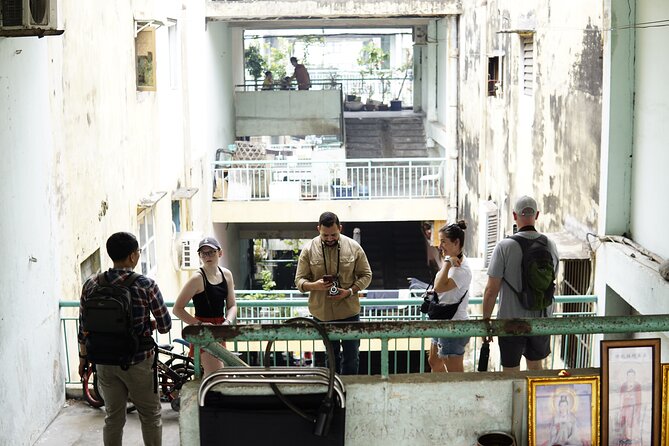
Saigon looks different through a twin-lens reflex camera. Instead of racing from landmark to landmark, you slow down, frame carefully, and pay attention to ordinary streets, old buildings, coffee, and local faces. Guide Bui Hoang Tu helps you use the camera and acts as a translator when you meet people along the way.
I like two things here: you get a real roll of black-and-white medium-format film, not a pretend vintage-camera photo session, and the route points you toward places tied to local life, including a 90-year-old coffee shop and alley markets. The main drawback is simple: one roll gives you only a limited number of exposures, and film processing is not listed as included.
Key points at a glance
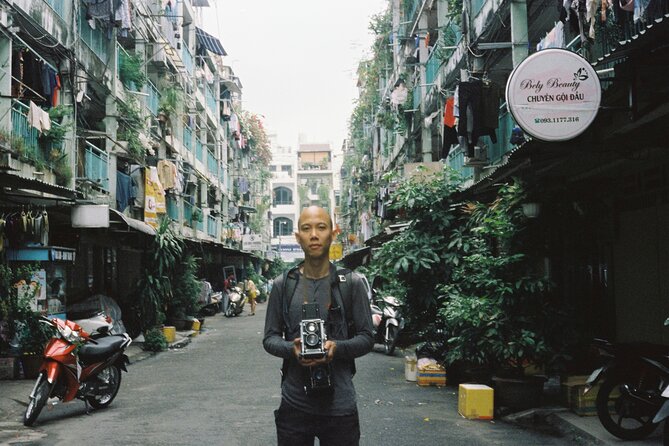
- A vintage TLR camera: You borrow an analog twin-lens reflex camera and learn its basic controls before setting out.
- One roll of black-and-white film: The limited number of frames encourages slower, more thoughtful photography.
- A 90-year-old coffee shop: You stop for coffee or tea and see a long-running part of Saigon’s everyday culture.
- Alley markets and an old apartment building: The route favors local streets over major tourist sights, including a 1968 building in Ho Chi Minh City.
- Bui Hoang Tu as guide and translator: He helps you break the ice with local people and provides context about Saigon.
- Private, flexible-feeling format: Only your group takes part, with a start in District 1 and an end at Chợ Bàn Cờ in District 3.
Why a film camera changes the way you see Saigon
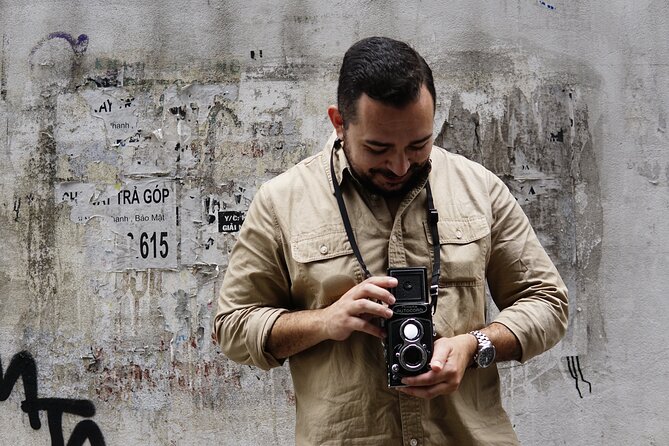
A phone lets you make dozens of pictures without thinking much about any of them. This experience gives you one roll of black-and-white medium-format film, so every frame matters.
That limitation is the point. You need to pause, look through the viewfinder, and decide if a scene is worth using one of your exposures. A published comment about the experience makes this practical benefit clear: the old camera is charming partly because its simplicity asks you to be more thoughtful and reflective.
The camera is a TLR, or twin-lens reflex model. You look down into the viewing lens from above rather than holding the camera to your eye in the usual way. That may feel unfamiliar at first, but the short briefing is meant to get you comfortable before you head into the streets.
Do not expect modern speed or automatic convenience. The camera is described as a relic, and that is part of the appeal. You are not buying instant results. You are practicing composition, patience, and attention in a city where there is plenty to notice.
The film is black and white, which also changes your approach. Colorful signs, scooters, produce, and painted walls will not appear in color on the final negatives. Instead, you will be looking for light, shadow, shapes, faces, building details, and contrasts. That can make an ordinary alley more interesting than a polished landmark.
A few more photo experiences around Ho Chi Minh City worth a look
- Private Sunrise Photography Tour – Down in Chinatown
★ 5.0 · 59 reviews - Saigon Street Photography Experience
★ 5.0 · 56 reviews - ️ Ho Chi Minh City Instagram Tour: Hidden Gems (Private & All-Inclusive)
★ 5.0 · 55 reviews
Meeting Bui Hoang Tu in District 1
The experience begins at 73/8 Hồ Hảo Hớn in District 1. You come to the guide’s store, pick up the analog camera and film, and have a short introduction before setting off.
This first meeting matters. With an older camera, a few minutes of instruction can prevent confusion later. You can learn how to hold it, use the viewing system, wind the film, and think through each exposure before pressing the shutter. The experience is designed for people who may not already know analog photography, rather than only for experienced film photographers.
Bui Hoang Tu also provides the local connection. He is not only there to hand over equipment. He helps translate and introduce you to people you meet along the route, which is useful if you want portraits or simple conversations but do not speak Vietnamese.
The activity is private, so only your group participates. That gives you more room to ask questions and work at a comfortable pace than you would have on a large group outing. It also makes the format better suited to a couple, a small group of friends, or a solo photographer who wants direct help.
The starting address is in District 1, and the experience ends in District 3. Private transportation is not included, so you need to arrange your own way to the starting point and from the ending market. The experience is near public transportation, which helps, but the supplied information does not specify a hotel pickup.
Coffee at a 90-year-old Saigon shop
The first major stop is a coffee shop described as one of the oldest in town, with around 90 years of history. Coffee and tea are included, and you sit down to enjoy the drink in a local setting rather than simply walking past a café for a quick picture.
This is a good opening to the experience because it gives you time to settle into the slower rhythm of the camera. You can talk with Bui Hoang Tu about Saigon while learning more about how the city uses coffee shops as everyday meeting places.
The stop is also useful for photography. A café can offer strong black-and-white subjects: hands around a cup, old furniture, signs, windows, shadows, and the movement of people coming and going. Still, do not assume every detail is arranged for a photo. The appeal comes from observing the place as it is.
The itinerary allows about an hour for the main city stop, though the full activity lasts approximately three to four hours. That suggests the coffee visit is part of a wider outing, not the entire program. Exact timing can depend on how quickly your group learns the camera and moves between locations.
If coffee is not your thing, tea is included as an option. The experience is built around the setting and conversation as much as the drink itself.
Finding Saigon in its alleys and markets
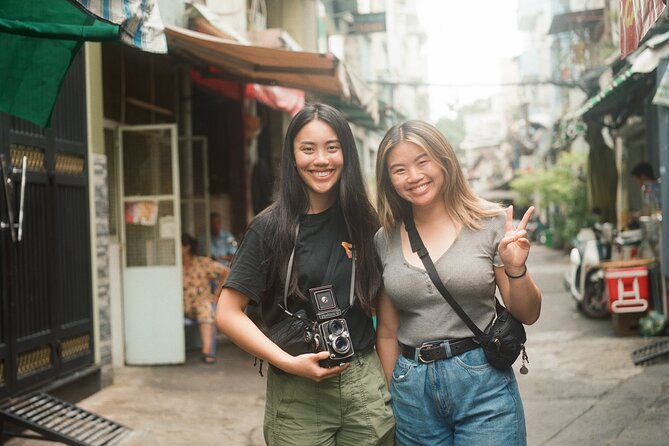
After the introduction, you wind through nearby alley streets and local market areas. This is where the experience moves away from the polished version of central Ho Chi Minh City and toward the daily places where people shop, work, eat, and pass through.
The route includes alley markets and the oldest apartment building in town, described as a 1968 building of Ho Chi Minh City. These are not presented as grand monuments. Their value is in the details: narrow passages, worn surfaces, small shops, street activity, and the way people use older buildings.
For black-and-white photography, this kind of route makes sense. You have layers of texture and light without needing a famous viewpoint. A market stall, an aging stairwell, or a shopfront can become a strong image if you frame it carefully.
You should also expect a less controlled photographic setting. Markets can be crowded, and light may change quickly. Your guide can help with local contact and translation, but you still need to be respectful about photographing people. If you want a portrait, ask first, or let Bui Hoang Tu help you communicate.
The experience description places strong emphasis on breaking the ice with local people. That does not mean every person will want to pose. It means you have someone who can make an introduction and help you approach the setting with more confidence.
This is one of the strongest reasons to choose the activity instead of simply renting a camera. You are not left alone to guess how to interact. The guide helps connect the camera to the people and places around you.
Same place, a different kind of shoot:
- Private Photography Tour & Ho Chi Minh City Exploration By Local
★ 5.0 · 25 reviews - Traditional cuisines through the top local restaurants in Saigon
★ 5.0 · 21 reviews - Private Photography Tour & Ho Chi Minh City Exploration
★ 4.8 · 16 reviews - Photography Tour with Professional Photographer in Ho Chi Minh
★ 5.0 · 13 reviews
The 1968 apartment building and everyday architecture
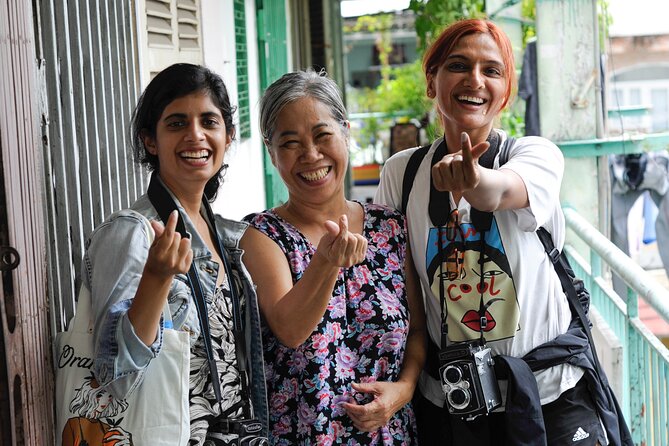
The itinerary includes a 1968 apartment building in Ho Chi Minh City. The supplied information does not give a detailed architectural description, so you should not book this expecting a formal building tour or a long historical lecture.
What you can expect is a chance to photograph an older urban setting and see how an earlier building fits into present-day Saigon. A building from 1968 can offer useful subjects for a film camera: aging walls, balconies, corridors, doorways, signs, and the contrast between old construction and current life.
The building also gives the route a little structure. You are not only photographing random streets. You have a few clear visual subjects, along with time to respond to what you find between them.
The exact amount of time spent there is not stated. That is worth keeping in mind if you have a specific architectural interest. The experience is a photography walk with local contact, not a specialist architecture tour.
A lesson in making every frame count
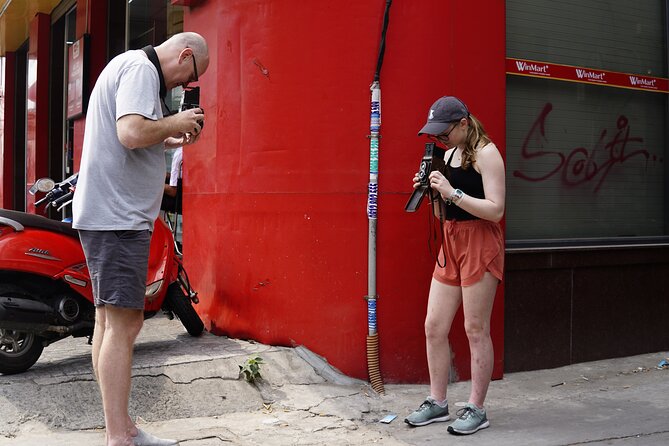
A roll of medium-format film does not give you unlimited chances. The number of exposures is not specified, so you should ask Bui Hoang Tu how many frames are available when you receive the roll.
That question is practical. You may want to save some film for the market or apartment building rather than use most of it at the coffee shop. A short briefing should help, but you will get more from the session if you treat it as a lesson in choosing subjects, not just operating a camera.
The older camera has a clear advantage for this style of outing: it makes you slow down. Its simplicity can feel refreshing if you are tired of taking the same quick phone pictures. The drawback is that it may feel frustrating if you want immediate previews, automatic exposure, or a large collection of images.
Film also creates a delayed result. The supplied details say that one roll is included, but they do not say that development, scanning, or prints are included. Plan on checking this before booking if receiving finished images is important to you.
I would also avoid treating the camera as a prop. The best part of the activity is using it seriously, even if you are new to film. Look carefully, ask questions, and accept that some frames may not work. That uncertainty is part of the experience.
What the 3 to 4 hours feel like
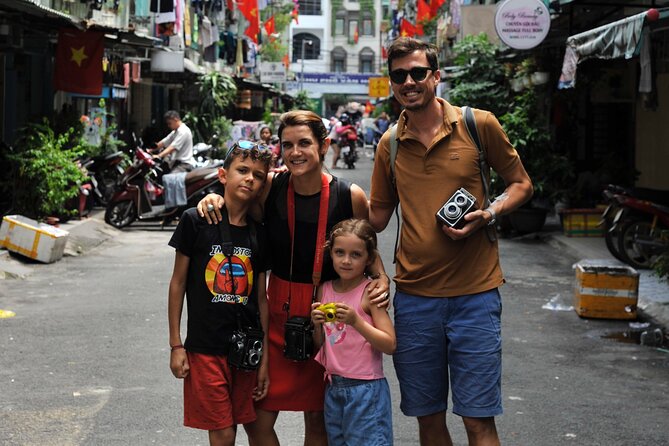
The activity lasts approximately three to four hours. That is enough time for a short camera lesson, coffee, local streets, market scenes, and the older apartment building without turning the experience into an all-day commitment.
The pace should suit you if you want a focused introduction to analog photography. It is long enough to practice, but short enough to fit into a wider Ho Chi Minh City visit.
There is no private transportation included. The route is built around the starting store, nearby streets, and a final market in District 3. You should wear comfortable shoes and be ready to move between stops, although the exact walking distance is not provided.
The end point is Chợ Bàn Cờ, Phường 3, Quận 3. That gives you a useful place to continue exploring on your own after the activity. You will need to arrange your onward transport, since the tour does not include a private vehicle.
The experience requires good weather. If poor weather causes cancellation, you are offered another date or a full refund. Since the activity depends on outdoor streets and markets, that condition is reasonable.
Is $148.27 a fair price?
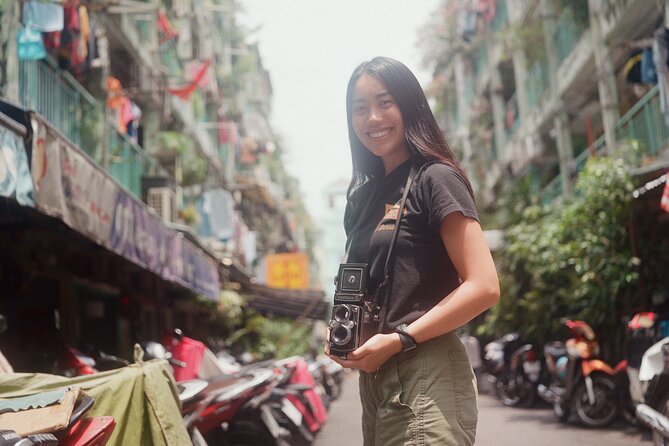
At $148.27 per person, this is not a cheap coffee walk or a standard city stroll. The price needs to cover more than the drink and the camera. You are paying for a private experience, a TLR camera, one roll of medium-format black-and-white film, instruction, local guiding, and translation.
The value is strongest if you care about the process. A photographer who already owns film equipment and knows Saigon may find the price harder to justify. You could explore the streets independently and take pictures with your own camera.
The value is also stronger for a first-time film user. You receive equipment and a guide who can help you start without having to buy a camera or work out local interactions alone. The personal format gives you direct access to Bui Hoang Tu, which is more useful than a generic group lesson.
Keep the film-processing question in mind. Since only the camera and one roll are explicitly included, ask what happens after the final frame. If development and scanning cost extra, include that in your budget.
For the right person, the cost buys a distinct way to see Ho Chi Minh City. For someone mainly seeking famous sights, a lower-cost sightseeing option may be a better match.
Who should book this experience?
I would recommend it to you if you enjoy photography, old cameras, local coffee, and small-scale exploration. It is especially suitable if you want to meet people through a guide rather than simply photograph streets from a distance.
It can also work well for beginners. You do not need to arrive as a film expert, because the experience includes a briefing on how to use the camera. The private format means you can ask for help when the controls or viewing system seem unfamiliar.
You may want to skip it if you need a fixed sightseeing checklist, air-conditioned transport, or a large number of finished digital photos. It is also not the best fit if you dislike the uncertainty of film or prefer to review each picture immediately.
Couples and small groups may appreciate the shared challenge of choosing frames. Solo participants can benefit from the guide’s help with translation and local introductions. Families should confirm that all participants are comfortable with a several-hour photography outing, since the supplied information does not describe a child-specific format.
Should you book the Saigon film photography walk?
Book it if you want to slow down and see Ho Chi Minh City through a deliberate, old-fashioned camera. The 90-year-old coffee shop, alley markets, 1968 apartment building, and final stop at Chợ Bàn Cờ give the outing a clear local focus.
The strongest reason to choose it is the combination of equipment and personal guidance. Bui Hoang Tu teaches you the camera, helps with translation, and connects the photographic exercise to everyday Saigon.
Go in with realistic expectations. You get one roll, not unlimited shots, and film development is not listed as included. If that sounds like a welcome challenge rather than a nuisance, the $148.27 price can make sense. If you only want quick photos and famous sights, spend your time and money elsewhere.
FAQ
How long does the experience last?
The experience lasts approximately three to four hours.
Where does the experience begin?
It begins at 73/8 Hồ Hảo Hớn, Phường Cô Giang, Quận 1, Ho Chi Minh City, Vietnam.
Where does the experience end?
It ends at Chợ Bàn Cờ, Phường 3, Quận 3, Ho Chi Minh City, Vietnam.
Is transportation included?
No. Private transportation is not included. The experience is near public transportation.
What photography equipment is provided?
You receive an analog camera and one roll of black-and-white medium-format film. The camera is a twin-lens reflex model, and a short briefing explains how to use it.
Is coffee or tea included?
Yes. Coffee and tea are included during the visit to the old coffee shop.
What happens if the weather is poor?
The experience requires good weather. If it is canceled because of poor weather, you are offered a different date or a full refund. You can also cancel up to 24 hours before the start time for a full refund.
Just added around Ho Chi Minh City
- Traditional cuisines through the top local restaurants in Saigon★ 5.0 · 21 reviews
- The River’s Edge Photo Tour★ 5.0 · 4 reviews
- Sundown in the Colony Photo Tour★ 5.0 · 8 reviews
- Photography Tour with Professional Photographer in Ho Chi Minh★ 5.0 · 13 reviews
- Vietnamese Ao Dai Photoshoot at Iconic Landmarks in Ho Chi Minh★ 5.0 · 2 reviews
- Saigon Railway Village Photo Tour★ 5.0 · 10 reviews
- [Free E-sim] Half day Instagram Cafe Tour in Ho Chi Minh★ 4.5 · 8 reviews
- Private Photography Tour & Ho Chi Minh City Exploration★ 4.8 · 16 reviews
Ho Chi Minh City Photo Tours & Photoshoots, compared.
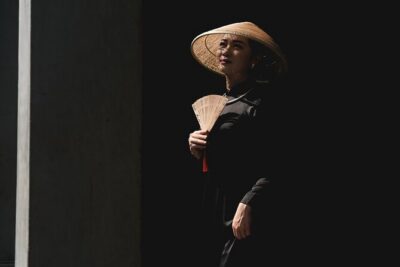
Private Sunrise Photography Tour – Down in Chinatown
Read our review →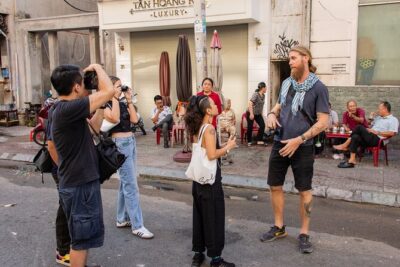
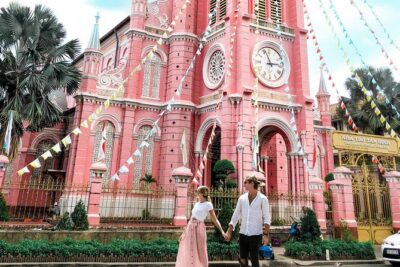
️ Ho Chi Minh City Instagram Tour: Hidden Gems (Private & All-Inclusive)
Read our review →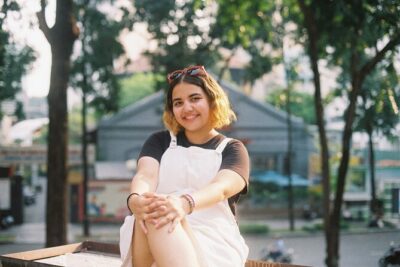
Private Photography Tour & Ho Chi Minh City Exploration By Local
Read our review →
Traditional cuisines through the top local restaurants in Saigon
Read our review →
Private Photography Tour & Ho Chi Minh City Exploration
Read our review →
Photography Tour with Professional Photographer in Ho Chi Minh
Read our review →
Private Sunset Photography Tour – Travel through history and time
Read our review →Browse the lists this tour appears in