
REVIEW · JAPAN
Fuji Photo Tour
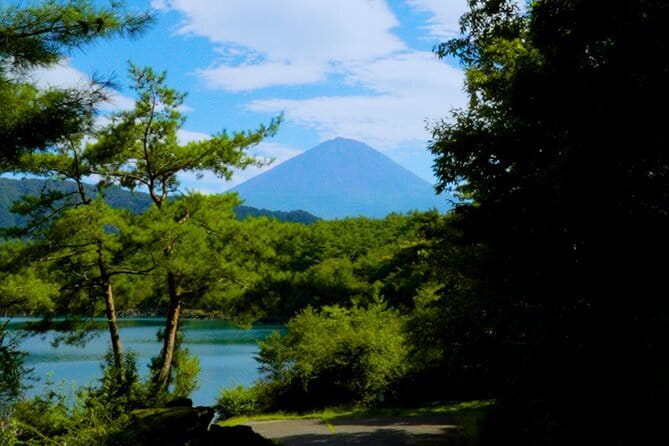
Mount Fuji is the star here, but the best part is the variety of settings around it. In roughly five hours, you move from Lake Kawaguchiko and the famous Chureito Pagoda to spring-fed ponds, a waterfall, flower fields, lava forest, and quieter lakes. The tour is led by Ryo and Eriko, who also take photos and video for you.
I like the private vehicle, which lets your group avoid the fuss of arranging transport between far-flung viewpoints. I also like the included photo and video data, especially if you want proof that you were looking at the mountain instead of constantly looking down at your camera.
The main consideration is weather. Mount Fuji can disappear behind cloud, and this tour operates only in good weather. English communication is also basic, with simple phrases and translation tools doing some of the work, so this suits flexible visitors more than anyone seeking a detailed lecture at every stop.
Key points to know before booking
- Eight Fuji-area stops in about five hours: You cover a wide area, but most stops are short and photo-focused.
- Ryo and Eriko provide the personal touch: They guide, take pictures, and help shape the day around your group.
- Private transport keeps the route practical: The price is $423.49 for up to eight people, not per person.
- Chureito Pagoda requires stairs: The famous viewpoint is rewarding, but it is not a drive-up photo stop.
- Clouds can make or break the views: The tour can be moved or refunded if poor weather forces cancellation.
- Photo and video files are included: You can concentrate on the scenery while the guides record parts of the experience.
Why this Fuji photo tour works
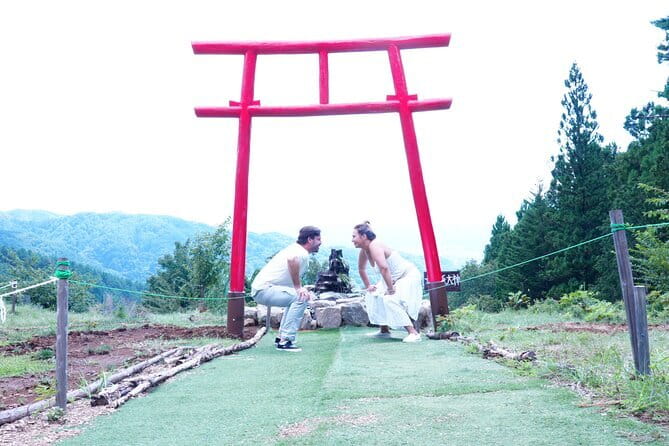
A Mount Fuji photo day can easily become a hunt for one famous angle. This experience gives you a fuller picture of the Fujikawaguchiko area. You see the mountain beside lakes, flowers, traditional-looking ponds, forest, and running water. That variety matters because Fuji does not look the same from every direction.
The route is also useful for people who do not want to build a complicated day around local buses. The meeting point is Forest Mall Fujikawaguchiko, and the tour returns there at the end. A private, air-conditioned vehicle handles the transfers, which is a real advantage when you are trying to fit several places into a half-day.
At $423.49 per group of up to eight, the value depends on your party size. For eight people, it works out to about $53 per person. For two people, it is a much more serious expense, but you are paying for a private vehicle, a guide, a customized feel, and photo and video files rather than simply buying admission to a viewpoint.
The tour averages about five hours. The listed sightseeing time adds up to roughly four hours and 40 minutes, leaving little room for long meals or leisurely wandering. Think of this as a moving photo session with many carefully chosen stops, not a slow cultural tour.
More Photography Tours in Japan
- Tokyo Cyberpunk Street Photo Tour
★ 5.0 · 165 reviews - Tokyo by Night Photography Tour (Private Option Available)
★ 5.0 · 151 reviews - Tokyo Shinjuku Night Photo Tour with Pro Gota
★ 5.0 · 142 reviews
Lake Kawaguchiko sets the pace
Your first major stop is Lake Kawaguchiko, where you have about two hours. This is the longest part of the outing, and that makes sense. The lake gives you time to look for a clean view of Fuji, adjust your composition, and work with changing light instead of rushing in and out.
The lake is also a sensible place to begin because it helps you get used to the rhythm of the tour. Ryo and Eriko can help with photos while you enjoy the view, and the open setting gives you room to capture the mountain with water, shoreline, and seasonal color.
The description specifically points to cherry blossoms and autumn foliage as possible companions for Fuji. Those conditions are seasonal, of course, and no flower display or clear mountain view can be guaranteed. Still, the range of scenery is one reason to choose this tour over a single lookout.
Two hours sounds generous, but remember that this is also the main photo session. If you want posed family photos, solo portraits, or several versions of the same view, this is where the extra time is most useful. Tell the guide early if you care more about people pictures than scenic frames.
Chureito Pagoda brings the classic Fuji view
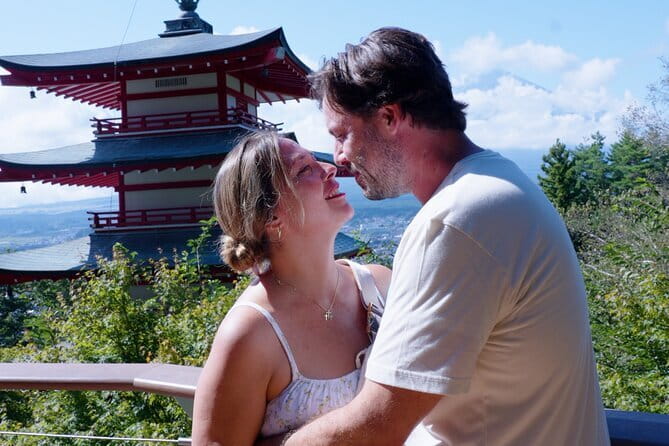
The 30-minute visit to Chureito Pagoda is the tour’s most recognizable photo stop. Here, the red pagoda and Mount Fuji share the frame, creating the image many people associate with the area.
There is a catch: you must climb stairs and walk up a gentle slope to reach the viewpoint. The tour information says the walk is manageable for most participants, but it is still worth planning for. Thirty minutes is not a long window once you include the climb, stopping to catch your breath, and taking photos.
If your mobility is limited, this may be the most demanding part of the route. Stroller access is limited in certain areas, and the pagoda viewpoint should not be treated as fully step-free. Ask about your specific needs before booking rather than assuming the vehicle can take you directly to the photo platform.
The short stop also means you should arrive ready. Wear comfortable shoes, keep your camera or phone easy to reach, and avoid using this portion of the tour for a long pause. The payoff is the classic Fuji composition, but the visit is tightly timed.
Oshino Hakkai adds water and old-Japan atmosphere
At Oshino Hakkai, you have about 30 minutes to photograph clear spring water, small ponds, seasonal scenery, and Fuji in the background. This stop changes the mood. Instead of a broad lake view, you get close details: water, reflections, plants, and traditional village scenery.
It is a useful break from the large, familiar Fuji postcard. If the mountain is partly covered, you may still have plenty to photograph in the ponds and surrounding setting. That makes Oshino Hakkai a smart inclusion in a weather-sensitive day.
Thirty minutes goes quickly. You will want to decide whether your priority is the spring water, the wider view toward Fuji, or small details around the ponds. Ryo’s local familiarity can help you spend the short visit well, but the basic English arrangement means you should be clear and direct about what you want.
Same place, a different kind of shoot:
- Tokyo: Asakusa and Skytree Go-Kart Tour and Photo Shoot
★ 4.6 · 721 reviews - Tokyo: Kimono Dressing, Walking, and Photography Session
★ 4.9 · 427 reviews - Osaka: Sumo Stage Show with Bento or Snack + Fight & Photo
★ 4.3 · 364 reviews - Tokyo Ryogoku Sumo Morning Practice + Photo Shoot with Wrestlers
★ 4.5 · 277 reviews
Hahanoshira Falls offers a quieter frame
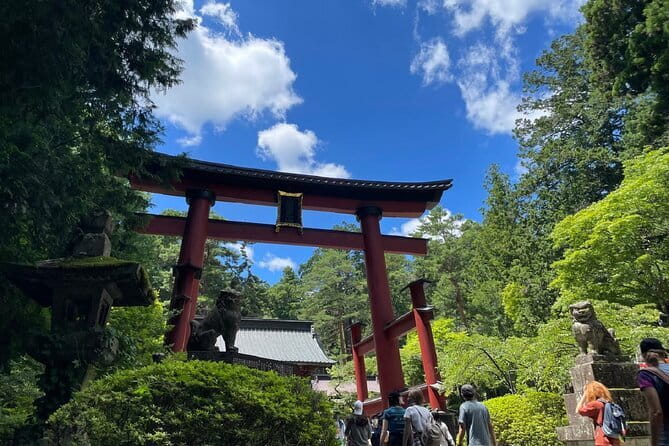
Haha no Shirataki, also called Mother’s White Waterfall, is a smaller and calmer nature stop. The waterfall drops through a wooded setting, giving you a different subject from the mountain and lakes.
This is the kind of place that helps prevent the tour from becoming a parade of famous viewpoints. You can photograph falling water, rock, and surrounding greenery without needing Fuji in every frame. The stop lasts about 30 minutes, enough for a focused visit but not a long walk through the area.
The name and setting give the stop a gentle, local character, yet you should keep expectations in proportion. The supplied information describes it as a tranquil waterfall, not a major attraction with extensive facilities. Its value is the change of pace and the chance to make a few nature images between larger Fuji scenes.
Oishi Park pairs flowers with Mount Fuji
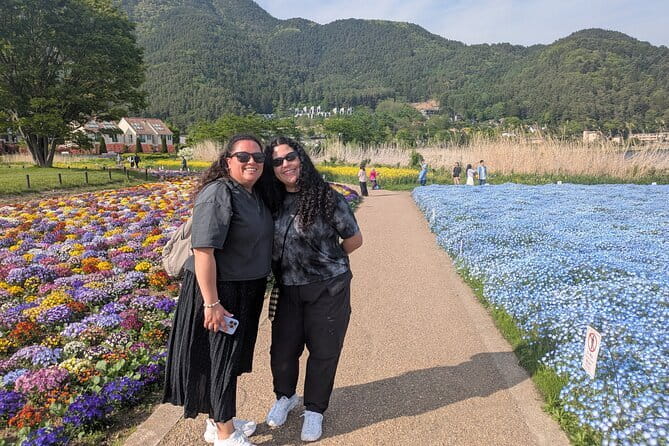
Oishi Park is known for its views toward Mount Fuji and its changing flower displays. Lavender season is especially notable, when the park can take on a purple color. Other flowers appear through the year, but exact conditions depend on the date.
The planned stop is only about 20 minutes. That is enough for a quick set of photos, especially if the flowers are in season, but not enough for a long stroll or relaxed visit. If gardens are a high priority for you, say so before the tour begins and ask how much time can realistically be spent there.
Oishi Park is also a good example of the tour’s basic promise: it gives you several ways to frame Fuji. You might use flowers in the foreground, the lake or open space as a middle layer, and the mountain behind. Even a short stop can produce a very different image from the pagoda view.
Aokigahara Forest changes the mood
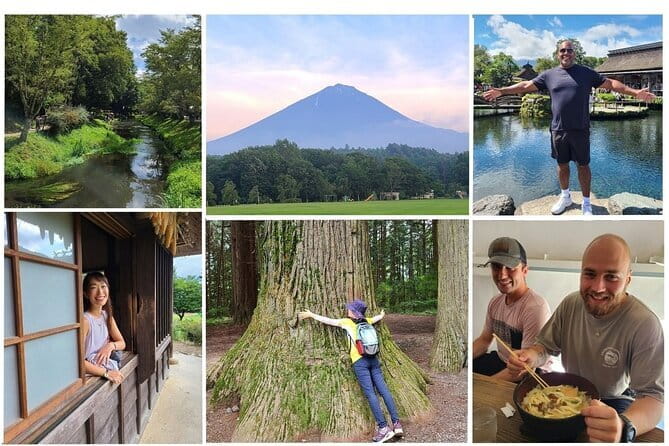
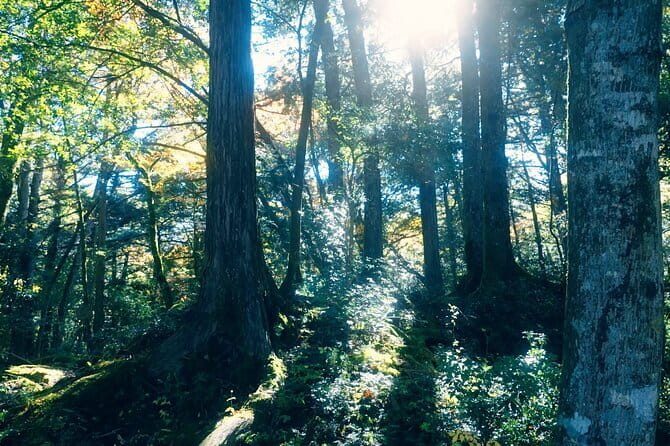
Aokigahara, known as Fuji Jukai, spreads across lava formations at the foot of Mount Fuji. The 20-minute visit introduces a darker, more mysterious setting, with forest and volcanic ground replacing open lake views.
Do not expect a long forest hike. The time is brief, and the tour is built around photography rather than an extended nature walk. The attraction here is texture and atmosphere: trees, unusual lava shapes, filtered light, and the quiet feel of the forest.
This stop also reminds you that Mount Fuji is more than a cone viewed from a distance. Its volcanic past shaped the ground and forests around it. You get only a short look, but it adds useful variety to the day and may appeal to photographers who prefer mood and detail to standard scenic views.
Saiko and Lake Shoji favor quieter views
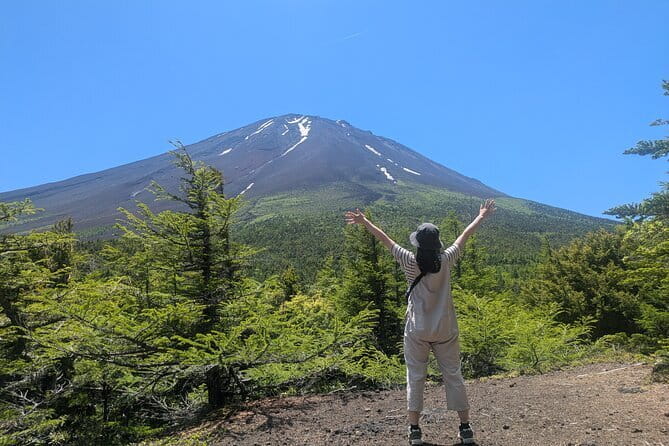
Lake Sai, or Saiko, is one of the Fuji Five Lakes. The 30-minute stop is presented as a less crowded photo location, with seasonal scenery and a calm lakeside setting. It gives you another angle on Fuji without the same emphasis on iconic structures.
Lake Shoji, or Shojiko, receives about 20 minutes. It is also described as quieter than the more heavily visited areas, with a peaceful setting below Japan’s highest mountain. Together, these two lakes offer a useful counterpoint to Kawaguchiko.
The tradeoff is time. Twenty or 30 minutes does not allow for a long lakeside walk, and the exact quality of the view depends on cloud, light, and season. Still, these stops are valuable if you want a less familiar set of Fuji photographs. The route is not just checking off one famous viewpoint. It is sampling several moods around the mountain.
What the guides add to the day
Ryo receives particularly strong praise for being kind, professional, and attentive to the group’s wishes. One family found that he included both the places they requested and additional suggestions. That points to an important feature of a private tour: you are not locked into a rigid group schedule in quite the same way as on a large bus outing.
Ryo and Eriko also take photos and video while you enjoy the scenery. Their photo style and videos are part of the appeal, and the files are included. You should confirm how and when the data will be delivered, since the supplied information does not specify the format or delivery timing.
English is limited. The guides use simple English and translation tools, and the experience has worked for solo visitors, couples, and families. You will get the most from it if you use short, clear requests and show examples of the kind of photo you want. This is not the right choice if you need long explanations about Japanese history or advanced photography instruction in English.
The personal approach can be especially helpful for solo visitors. You do not need to arrange your own tripod-style portrait at every stop, and you can spend more time looking at Fuji rather than operating your phone.
Weather, timing, and practical value
Mount Fuji is famously changeable from a viewing standpoint. A cloudy morning can turn into a brief clear window, so flexibility matters. The tour operates only in good weather, and if poor conditions lead to cancellation, you are offered another date or a full refund.
That weather policy is helpful, but it does not guarantee a clear mountain during an operating tour. You may still encounter clouds during the five hours. The tour protects you from losing your booking because of a full weather cancellation, not from ordinary changes in visibility.
The experience runs Monday through Friday from 8:30 AM to 5:00 PM during the stated operating period. Confirmation arrives when you book, and the activity begins and ends at Forest Mall Fujikawaguchiko. Pickup is offered, but the provided meeting details identify the mall as the start point, so confirm the exact pickup arrangement before setting out.
Lunch is not included. With the schedule packed across eight stops, plan to eat before or after unless your group receives different arrangements. Infant facilities such as high chairs are not provided. Service animals are allowed, and the experience is near public transportation, though the tour itself uses private transport.
Who should book this experience
I would choose this tour for a group that wants many Fuji viewpoints without managing buses, driving, and parking. It is particularly well suited to families, couples, solo photographers, and small groups who want personal photos as well as scenic images.
It also suits people who value coverage over depth. You will see a lot in five hours, but several stops last only 20 or 30 minutes. If you prefer one long walk, a slow lunch, or a detailed lesson at one location, this pace may feel hurried.
The tour is less suitable if clear communication in English is essential, if you need fully step-free access, or if your main goal is a guaranteed unobstructed view of Mount Fuji. Cloud can win the day. Bring patience and treat the other lakes, ponds, waterfall, and forest as worthwhile subjects in their own right.
Cancellation is free up to 24 hours before the start time. Changes or cancellations inside that window are not accepted for a refund. That gives you some room to watch the forecast, but the weather-based cancellation policy is the more important protection.
Should you book the Fuji Photo Tour?
Book it if you want a private, photo-centered circuit of the Fuji foothills and like the idea of Ryo and Eriko handling the pictures while you take in the views. The included photo and video files add real value, especially for solo visitors and families who often struggle to get everyone in the frame.
Think twice if you want a slow cultural tour, advanced English guiding, or a relaxed schedule. The strongest case for this experience is its mix of locations, private transport, local flexibility, and personal photos. In a group of four to eight, the price becomes easier to justify. For smaller parties, book only if those personal services and the broad route matter more to you than a cheaper single-viewpoint outing.
FAQ
How long does the Fuji Photo Tour last?
The tour lasts approximately five hours, including travel between the photo stops.
How much does the tour cost?
The price is $423.49 per group of up to eight people.
Where does the tour start and end?
It starts at Forest Mall Fujikawaguchiko, at 8017-1 Kodachi, Fujikawaguchiko, Yamanashi, Japan. The activity ends back at the meeting point.
Which places are visited?
The route includes Lake Kawaguchiko, Chureito Pagoda, Oshino Hakkai, Hahanoshira Falls, Oishi Park, Aokigahara Forest, Lake Sai, and Lake Shoji.
Are photos and videos included?
Yes. Photo and video data are included as part of the experience.
Is the tour available in English?
The staff use simple English and translation tools. English fluency is limited, so clear, short requests are helpful.
What happens if the weather is poor?
The tour operates only in good weather. If it is canceled because of poor conditions, you can choose a different date or receive a full refund.
Just added around Japan
- Hiroshima Kimono Rental and Photo Shoot★ 5.0 · 3 reviews
- Private Hakone Kimono costume Photo Tour with Hotel Pick-up★ 5.0 · 4 reviews
- Luxury Kimono Photoshoot at Ginza Tokyo★ 5.0 · 7 reviews
- Photoshoot in Shirakawago/Takayama by professional photographer★ 5.0 · 5 reviews
- Private Mt.Fuji Kimono costume Photo Tour with Hotel Pick-up★ 5.0 · 5 reviews
- 1 Hour Private Photoshoot in Hakata★ 5.0 · 5 reviews
- Mt. Fuji 2-Hour Photo Shoot with a Local Photographer-Kawaguchiko★ 5.0 · 6 reviews
- Asakusa Kimono Photography Tour (Private Option Available)★ 5.0 · 20 reviews
Photography Tours, compared.



Rhodes: E-bike Highlights Sunset or Morning Photo Tour
Read our review →
Browse the lists this tour appears in