
REVIEW · HANOI
Hanoi On the Tracks Photo Tour
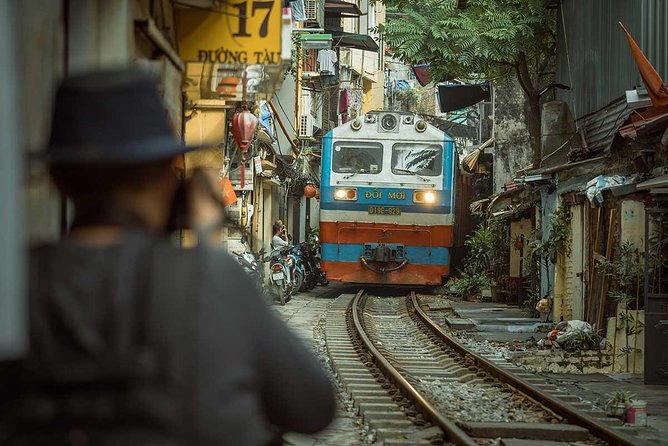
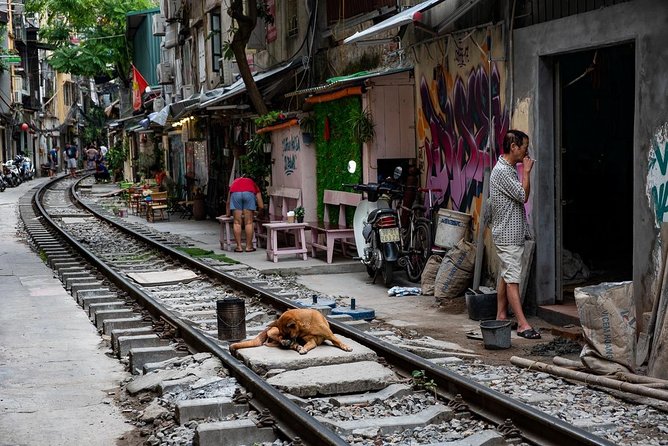
Hanoi’s railway corridor gives you a sharp change of scene from the city’s main tourist streets. At dawn, you photograph trains passing close to homes, watch markets open, and see residents begin the day. The setting is gritty, human, and far less staged than the familiar cafe-lined parts of Train Street.
I like the hands-on camera coaching, which works for both DSLR users and phone photographers. I also like the market stop, where your guide helps you practice street photojournalism by speaking with local people rather than simply pointing out photo spots. Guides named Tung, Fuong, and William have each led this experience.
The main consideration is the 5:30 am start. You need to be ready early, and food and drinks are not included. At $144 per person, the tour makes the most sense if you want serious photography help and the privacy of an activity reserved for your own group.
Key points at a glance
- Dawn railway photography: Watch for trains moving between houses near Hanoi and Long Bien stations.
- Private attention: Only your group participates, so the guide can adjust advice to your camera and skill level.
- Useful for phone photographers: The coaching is not limited to DSLR owners. One session helped a couple improve both DSLR and iPhone photography.
- Local morning life: Visit markets, lakes, and parks as Hanoians begin their day.
- Hotel transfers included: Pickup and drop-off remove some of Hanoi’s early-morning transport hassle.
- Weather matters: Poor conditions can lead to a new date or a full refund.
The railway at 5:30 am
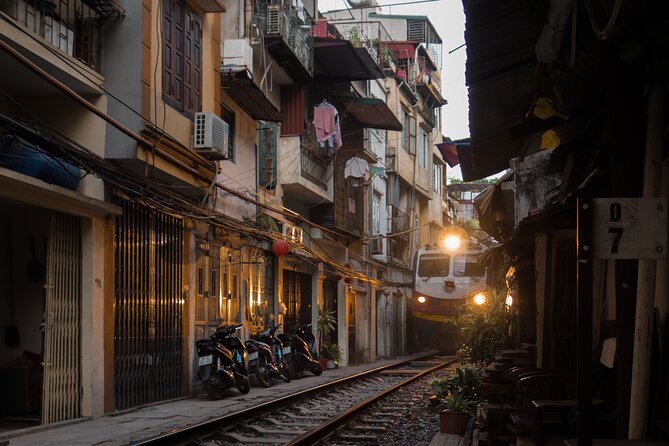
The best reason to book this tour is the hour. Hanoi’s railway district feels different before the city fully wakes up. You are not simply walking to a famous viewpoint, taking one picture, and leaving. You are moving through a working part of the city, with rail tracks, homes, markets, parks, and everyday routines shaping the morning.
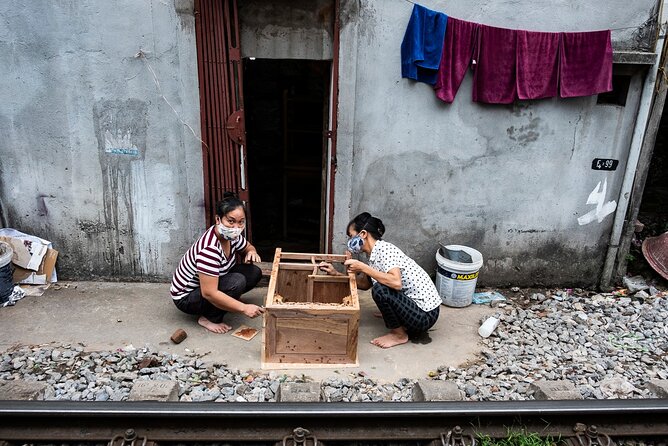
The route begins at Hanoi Railway Station and follows the stretch toward Long Bien Station. The experience is built around observation. You might photograph the train moving between houses, but the railway is not the only subject. Doors opening, market stalls being prepared, people heading out, and quiet corners near lakes and parks all give you material to work with.
The early hour also changes the quality of the photographs. Morning light can give streets and buildings more shape than harsh midday sun. Just as important, people are starting their day rather than posing for a tourist scene. Your guide helps you notice those small moments and choose how to frame them.
A train sighting is central to the appeal, but you should not treat the tour as a guaranteed train timetable. The useful result is a morning spent photographing real city life, with the railway as its main thread.
More Photography Tours in Vietnam
- Hanoi Explorer Photo Tour
★ 5.0 · 40 reviews - Photo Tour to Capture The Vanishing Craft of Making Fish Traps
★ 5.0 · 31 reviews - Ultimate Hanoi Photography Tour
★ 5.0 · 19 reviews
What happens around Hanoi Railway Station
The tour’s only listed stop is Hanoi Railway Station, but that does not mean you spend four hours in one fixed spot. The route takes you along the railway area and into nearby places where daily life supplies the pictures.
Your guide helps identify worthwhile angles and explains how to approach a scene. This may mean waiting for movement, changing your position, or deciding whether a subject works better as a wide scene or a closer portrait. The focus is on making choices, not just collecting snapshots.
You also practice talking directly with local people. That matters because street photography is not only about technical settings. It involves timing, courtesy, body language, and knowing when to ask before taking a picture. A guide who can help you communicate makes this part less awkward, especially if you have limited Vietnamese.
The surrounding markets are a strong part of the route. You see the morning trade as it is getting started, which gives you changing subjects and natural activity. The market also provides a good test of your attention. You may need to work quickly, avoid blocking people, and decide which details tell the larger story.
Lakes and parks add a useful contrast to the railway. After photographing tracks and buildings, you can work with open space, reflections, exercise, or people beginning their routines. The changing settings keep the four hours from feeling like a single repeated photo stop.
Personal coaching from a working photographer
The guide is the main value here. You are not simply hiring transport to a railway district. You are paying for a professional photographer to watch how you work and suggest improvements as the morning unfolds.
The coaching can include basic composition, timing, camera handling, and ways to make a street photograph clearer. The exact advice will depend on your experience. A beginner may need help choosing a subject and managing camera settings. An experienced photographer may want help with visual rhythm, people, or storytelling.
The experience also works for mixed camera groups. One couple used a DSLR and an iPhone, and both received useful suggestions. That is important if your companion does not carry a dedicated camera. You do not need to own expensive equipment to take part.
The guides named in the supplied tour experiences include Tung, Fuong, and William. Fuong brought a journalistic approach to the walk, while Tung helped with photography from the start. William was especially helpful when a participant ended up as the only person booked that morning. Guide assignments can change, so book this for the format and subject rather than for a promise of one particular person.
I would ask your guide early what you want to improve. Perhaps you struggle with people photography, phone composition, or knowing when to press the shutter. A clear goal gives the coaching more direction.
A street photography lesson, not just a photo walk
The phrase street photojournalism describes the tour well. You are encouraged to look for a small story, not only a colorful object or a famous background.
That approach is valuable in Hanoi, where much of the interest comes from ordinary activity. A market opening, a person walking beside the tracks, or a quiet park scene may say more about the city than a carefully arranged tourist photograph. Your guide can help you connect separate pictures into a sequence.
You also gain practice in the social side of photography. Approaching people respectfully is part of the lesson. If you normally avoid photographing strangers, this gives you a supported way to try. If you already take street pictures, the guide can help you refine your manner and timing.
Do not expect a classroom-style lesson with a printed syllabus. The teaching happens while you walk. You should be ready to photograph, ask questions, and try the advice immediately. People who want a relaxed sightseeing walk with only occasional camera tips may find the photo instruction more central than expected.
More Photography Tours in Hanoi:
- Hanoi Long Bien Sunrise Photo Tour
★ 5.0 · 16 reviews - Into the Thieves Market Hanoi Photo Tour
★ 5.0 · 10 reviews - Hanoi: Rent a Traditional Ao Dai & Photo Walk in Old Quarter
★ 5.0 · 10 reviews - Cultural Hanoi Photo Walk – A Street Photography Tour
★ 5.0 · 6 reviews
Why the market stop matters
The market is not filler between railway pictures. It is where the tour shifts from photographing a place to noticing people and routines.
Morning markets change quickly. Sellers prepare goods, customers arrive, and the setting can look different from one minute to the next. This gives you practice with timing and changing light. It also helps you photograph movement without turning the scene into a collection of random frames.
Your guide can help you find a respectful distance and a useful viewpoint. That is especially helpful in a market, where space is limited and people are working. You learn to stay aware of where you stand while still looking for strong compositions.
The market also makes the experience more cultural than a standard railway photo stop. You see how the area functions, not just how it looks through a camera. If you want an introduction to local morning life, this is one of the strongest parts of the route.
Private format and hotel transfers
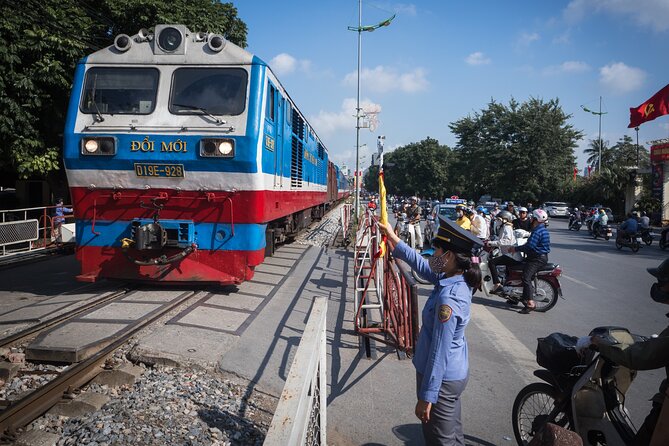
This is a private activity, so only your group participates. The description also emphasizes small-group attention, and the private setup means you can ask questions without competing with a large crowd. If you are traveling alone, the price is harder to justify. If two or more people in your party care about photography, the cost can make more sense because the instruction is shared within your own group.
Hotel pickup and drop-off are included. For a 5:30 am start, that is a real convenience. You do not need to work out an early transfer to Hanoi Railway Station or arrange your way back after four hours on foot.
The available information does not specify the pickup zone or exact vehicle details, so confirm the pickup point when booking. You should also be ready at the agreed time, since an early private pickup leaves little room for delay.
The tour lasts about four hours. That is long enough to cover the railway area, morning market, lakes, and parks without turning the outing into a full-day commitment. It also gives you time to test suggestions more than once. A short walk might offer advice, but four hours gives you a chance to apply it.
Is $144 per person good value?
At $144 per person, this is not a budget sightseeing walk. The price includes a professional photography guide and round-trip hotel transfers, but not food or drinks.
The value depends on what you want from Hanoi. If your main goal is to see the railway district cheaply, you can find less expensive ways to walk around the area. This tour earns its price through private access to a guide, personalized instruction, and the chance to combine photography with local observation.
The cost is easier to defend for a photographer who wants direct feedback. It also suits a couple or private group with different skill levels, since one person can use a DSLR and another can use a phone. You are paying for help with seeing and shooting, not only for getting to the tracks.
I would skip it if you rarely take photographs or if you prefer a general city tour with more historical explanation. I would also compare the cost with other private activities in your Hanoi plan. The tour is a specialist experience, and its value rises sharply when photography is one of your main reasons for visiting.
What to bring and how to prepare
Bring the camera or phone you actually plan to use. There is no need to own a professional DSLR, and phone photographers can take part fully. If you use a camera with manual controls, arrive with a charged battery and enough storage so you can concentrate on the lesson.
Wear shoes suitable for walking around railway-side streets, markets, parks, and station areas. The supplied information does not list a specific dress code or equipment requirement, so keep your kit practical rather than heavy.
You should eat before pickup or carry your own plan for breakfast, since food and drinks are not included. The early start may make this easy to overlook. A small amount of water is sensible, though the tour provider does not list refreshments.
Weather is a real factor. The experience requires good conditions, and poor weather can lead to a different date or a full refund. If your Hanoi schedule is tight, leave some flexibility around this booking.
Free cancellation is available when you cancel at least 24 hours before the start time. Changes or cancellations inside that window are not accepted for a refund, and the cutoff uses Hanoi local time.
Who should book this Hanoi photo tour?
I would choose this experience if you want to photograph ordinary Hanoi life with help from someone who understands both cameras and people. It fits solo photographers, couples with different equipment, and private groups that want a focused morning rather than a broad city overview.
It is also a good match for beginners. You can ask direct questions and get advice while making pictures, instead of trying to absorb a long technical lecture. Phone photographers are welcome in practice, not only in theory, since the coaching has helped people using an iPhone as well as a DSLR.
The tour may suit experienced photographers too, especially if you want to work on street storytelling or portrait approach. The journalistic style associated with Fuong’s tour is useful for anyone who wants more than attractive railway pictures.
I would not make it your first choice if you dislike early starts, want a slow breakfast, or are mainly interested in Hanoi landmarks. The route focuses on the railway area, markets, lakes, parks, and local routines. Its strength is a close look at one part of the city, not a checklist of major sights.
Should you book the Hanoi On the Tracks Photo Tour?
Book it if you want a private, early-morning photography session with a professional guide and a view of Hanoi beyond the main tourist route. The combination of railway scenes, a waking market, local conversations, and hotel transfers gives you more than a quick stop at Train Street.
The $144 price is fair for a serious photo lesson, especially when shared by a couple or private group. It is less attractive for someone who only wants to see the tracks. Plan for the 5:30 am pickup, bring your preferred camera or phone, and leave room for weather changes.
For photographers who value personal instruction and unpolished city scenes, this is a focused and worthwhile Hanoi morning.
FAQ
What time does the Hanoi On the Tracks Photo Tour start?
The tour starts at 5:30 am.
How long does the experience last?
The experience lasts approximately four hours.
Where does the tour take place?
The tour begins at Hanoi Railway Station and explores the railway stretch between Hanoi and Long Bien stations, along with nearby markets, lakes, and parks.
Is hotel transportation included?
Yes. Hotel pickup and drop-off are included.
Is this a private tour?
Yes. Only your group participates in the activity.
Are food and drinks included?
No. Food and drinks are not included.
What happens if bad weather cancels the tour?
If poor weather causes cancellation, you will be offered another date or a full refund. You can also cancel at least 24 hours before the start time for a full refund.
Just added around Hanoi
- Tho Ha Handicaft Village – Private Hanoi Photo Tour★ 5.0 · 2 reviews
- Vietnam Fishing village photography tours★ 5.0 · 3 reviews
- Instagram Tour Duong Lam Ancient Village with Train Street Visit★ 5.0 · 3 reviews
- Ultimate Quang Phu Cau Photo Experience★ 5.0 · 13 reviews
- Ultimate Hanoi Photography Tour★ 5.0 · 19 reviews
- Private Photo Session with a Local Photographer in Hanoi★ 5.0 · 2 reviews
- Photography Tour to Tho Ha – The rice paper making village★ 5.0 · 4 reviews
- Hanoi by Night Photo Tour★ 5.0 · 4 reviews
Photography Tours, compared.

Rhodes: E-bike Highlights Sunset or Morning Photo Tour
Read our review →
Browse the lists this tour appears in