
REVIEW · HANOI
Vietnam Fishing village photography tours
Before sunrise, hundreds of fishing boats return to Nam Dinh beach. Men pull the boats ashore. Women sort the catch on the sand, and buyers carry the seafood toward restaurants in town. It is a working beach, not a staged show, and that gives you the chance to photograph real tasks, real tools, and real people at close range. The dawn return is the main event, but the day keeps offering new scenes.
I like two things most here. First, you get time from sunrise to sunset, which gives you soft morning light, harder midday scenes, and evening color for different kinds of pictures. Second, the small maximum of six people should make it easier to work without getting in everyone’s way. The tour also includes transport, lodging, and most meals, which matters when you are carrying camera gear.
The main consideration is the price: $408 per person is a serious spend for two days, especially if your main goal is a quick look at a fishing beach. You also need moderate physical fitness, and the weather can cancel the outing. This suits photographers who want access, patience, and local direction more than people seeking a casual sightseeing stop.
Key points at a glance
- Dawn boat returns: Photograph fishing boats coming ashore after a night at sea, with seafood sorted and sold directly on the beach.
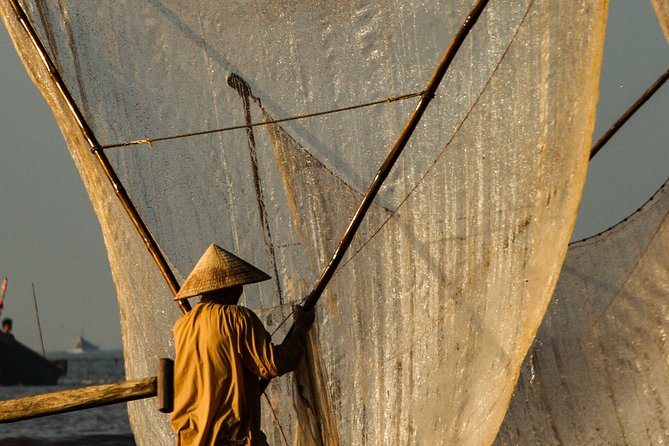
- Large hand-pulled nets: Watch groups of 10 to 15 people haul nets that can stretch for hundreds of meters.
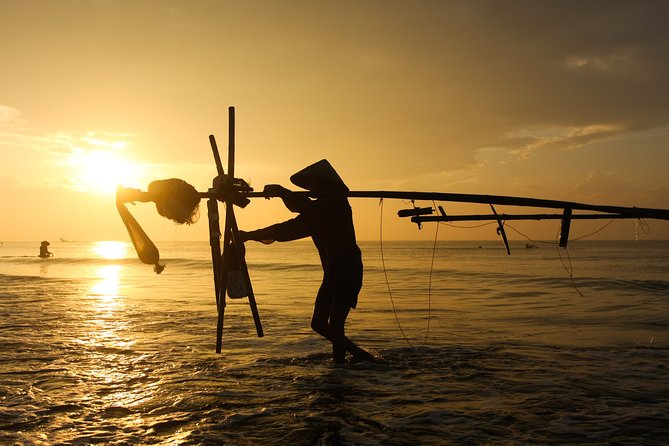
- Stilt fishing: Look for fishermen walking on stilts and scooping small fish from the seabed.
- Salt-making scenes: Make time to photograph the local salt-making process, a separate layer of coastal working life.
- Full-day light: The schedule allows for sunrise, low light, portraiture, composition, and storytelling through sunset.
- Small-group format: The tour takes no more than six people, a useful limit when several photographers need room to work.
What makes the Nam Dinh coast worth photographing
This is not a tour built around one monument or one carefully timed photo stop. Its appeal comes from a chain of working scenes that change as the day moves along.
The morning begins with boats returning from a night of fishing. Men are busy pulling the boats onto the beach, while their wives take charge of the catch. They sort the seafood carefully, and the sale takes place right beside the water. Buyers then transport the catch to restaurants in town.
That division of work gives you more than a few boat pictures. You can follow a visual story: boats arriving, people unloading, seafood being sorted, and the catch moving into the local food economy. If you like documentary photography, this sequence is more useful than a single postcard view.
You should also expect plenty of visual detail. Fishing tools, nets, boats, baskets, and seafood all give you subjects at different distances. A wide frame can show the beach and the returning fleet. A tighter image can focus on hands, ropes, netting, or the day’s catch.
The scenes are authentic in the plain sense of the word: people are carrying out work they need to do. That also means you should behave like a considerate photographer. The supplied details do not set out a formal photography etiquette policy, so use good judgment, avoid blocking work, and follow your guide’s direction around boats and seafood.
More Photography Tours in Vietnam
- Hanoi Explorer Photo Tour
★ 5.0 · 40 reviews - Hanoi On the Tracks Photo Tour
★ 5.0 · 33 reviews - Photo Tour to Capture The Vanishing Craft of Making Fish Traps
★ 5.0 · 31 reviews
The early beach scene, from boats to seafood sales
The strongest photographic period is likely the early morning, when the boats return and the beach fills with activity. The low light can separate the boats from the background and give texture to nets, wet sand, and working hands.
You are not limited to photographing fishermen at sea. The action continues once the boats reach shore. Husbands pull boats in, wives sort the catch, and buyers make purchases right on the beach. This gives you human interaction and a clear sense of place.
For portrait photographers, this is the most promising part of the day. The tour description specifically points to portraiture, and the morning work provides natural subjects rather than arranged poses. Still, portrait opportunities depend on the people present and on what your guide can arrange respectfully. Do not assume every person will want to pose.
The timing deserves attention. The listed start time is 8:30 am, while the main description centers on an early-morning return. Ask Momentlives Photography Tours to confirm the actual pickup and beach arrival time before you book, especially if dawn photography is your priority. An 8:30 am start could mean the group meets in Hanoi then, or it could reflect a general booking time rather than the exact moment of arrival. The provided details do not settle that point.
Pulling a net that stretches across the water
Another major scene involves a long net spread across a large section of water. Each end is pulled by a group of 10 to 15 strong people, and the work can continue for hours before the catch reaches shore.
This is excellent material for action photography. You can look for repeated movement, lines formed by the net, and the changing positions of people as the catch comes closer. A wide composition can show the scale of the operation. A tighter frame can isolate strain, teamwork, wet rope, or the moment the catch appears.
The long duration is useful. You do not have to press the shutter during one rushed moment and leave. You can watch how the process develops, then choose a better position or wait for stronger light. That patient approach is one reason this tour may offer more than going to the beach alone.
There is a practical drawback. A large group hauling a net can cover a wide area, and the best viewpoint may shift as the work moves toward shore. You need to stay alert and remain clear of the working teams. The group limit of six helps, but the beach is still an active workplace, not a controlled photo set.
Stilt fishermen and the smaller catch
Near the larger net operation, some fishermen walk on stilts and scoop into the seabed for small fish. The expected catch may be around 10 kilograms, though the work is done with hope rather than certainty.
This is a good counterpoint to the dramatic net hauling. The scale is smaller and the technique is more unusual. The stilts create strong shapes against the water, while the scooping action can produce useful moments for both still images and visual storytelling.
You might find that this part rewards patience more than speed. The action may not happen in one neat, camera-ready instant. Watch the rhythm of the fisherman’s movement, the angle of the tools, and the relationship between the person and the water.
The tour description does not promise that every fishing method will be operating at every visit. Weather, tides, catch, and local work patterns can affect what you see. That uncertainty is part of photographing a real fishing community, but it also means you should not book expecting a fixed list of guaranteed shots.
More Photography Tours in Hanoi:
- Ultimate Hanoi Photography Tour
★ 5.0 · 19 reviews - Hanoi Long Bien Sunrise Photo Tour
★ 5.0 · 16 reviews - Into the Thieves Market Hanoi Photo Tour
★ 5.0 · 10 reviews - Hanoi: Rent a Traditional Ao Dai & Photo Walk in Old Quarter
★ 5.0 · 10 reviews
Salt making adds another working tradition
Salt making is included as one of the tour’s photographic subjects. This gives the trip a useful change of pace. Fishing scenes focus on water, boats, nets, and seafood, while salt making brings a different set of textures and processes.
The information supplied does not specify the exact salt-making location or each step you will see. You can expect the visit to focus on photographing the process rather than simply passing through for a quick look. Ask your guide how much time is planned there if salt production is especially important to you.
For a two-day photo trip, this variety matters. You are not relying on one beach scene to carry the whole outing. Salt work can provide close-up details, repeating patterns, tools, and images that connect coastal labor with food production.
Afternoon repairs and quieter documentary pictures
By afternoon, groups of fishermen gather near the beach to repair their boats and mend torn nets. The energy is different from the morning return. Instead of boats arriving and seafood moving quickly from hand to hand, you get slower work and more time to observe.
I like this part because it can produce the pictures that explain how the fishing economy continues after the catch is sold. A torn net is not just a prop. It shows maintenance, skill, and the practical limits of working equipment. Boat repairs offer another set of details, from hands and tools to worn surfaces and patched sections.
The afternoon light may be less gentle than sunrise, but it can help you show texture and labor clearly. Since the tour allows photography from sunrise to sunset, you can return to a subject when the light improves or wait for a more complete action sequence.
The phrase ill-equipped fishing boats suggests modest working conditions, but it should not be treated as a promise of a particular boat design or state of repair. Conditions can vary. Your guide can help you find the most worthwhile scenes without turning the work into a performance.
Why the two-day format matters for photographers
A two-day trip gives you more breathing room than a short photo stop. You have time to work with several subjects, revisit a scene, and make pictures at different times of day. That is valuable if you care about a small visual story rather than a single dramatic image.
The schedule also reduces pressure. On a quick outing, you may feel forced to photograph every boat, net, and person immediately. Here, you can think about composition and return to a location later. The tour description specifically allows time for low-light photography, portraits, composition, and storytelling.
You should still clarify the exact overnight plan before departure. Accommodation is included, but the supplied details do not name the property or explain whether the night is in Nam Dinh or elsewhere. That is not necessarily a problem, but photographers may want to know where they will sleep, store equipment, and prepare for the next day.
Transport is by air-conditioned vehicle, another practical advantage over arranging your own connection with camera bags. Pickup is offered, and the listed start time is 8:30 am. Confirm the pickup point and the early-morning schedule directly, since the dawn return is central to the tour’s appeal.
What the $408 price covers
At $408 per person, this is not a budget beach excursion. The value comes from the combination of local access, a small group, transport, accommodation, and time set aside for photography.
The included food details need careful reading. Dinner is included, and the meal information says all meals are included except breakfast on Day 1 and dinner on Day 2. Coffee and tea are also included. In practical terms, you should plan to buy or arrange your first morning breakfast and your final evening meal, unless the operator gives you different instructions.
The price makes more sense if you are serious about photography and would otherwise need to arrange transport, an overnight stay, meals, and local access yourself. It is less convincing if you want only a quick look at a fishing village or if you are not planning to spend much time with your camera.
The maximum of six is important. A tiny group can make it easier to move, pause, and work around other photographers. It may also allow more direct help from the local team. No specific guide names are provided, so do not book expecting a named photographer unless Momentlives confirms who will lead your departure.
Momentlives Photography Tours also handles longer photo trips in Vietnam, including arrangements involving accommodation, domestic flights, ground transport, and meals. That background suggests the company is used to managing photography-focused travel, but this particular tour should still be judged on its own schedule and inclusions.
Who will get the most from this tour
I would recommend this trip most strongly to photographers who enjoy people, process, and imperfect real-world conditions. You should be comfortable waiting, adjusting your composition, and accepting that fishing work follows its own timetable.
It is a good fit for:
- Documentary and street photographers
- Portrait photographers who prefer working around real activity
- People interested in tools, trades, and coastal life
- Photographers who want sunrise, sunset, and low-light opportunities
- Small groups that value time and space over a fast checklist
It may not suit you if you want a polished resort outing, guaranteed weather, or a fixed set of picture-perfect scenes. Moderate physical fitness is required, and the tour may involve standing and moving around a working beach for long periods. The details do not specify accessibility arrangements, so ask before booking if you have mobility concerns.
The tour has a perfect 5 rating from three supplied ratings, and the strongest praise centers on access to places tourists do not usually reach, careful organization, and images that would be difficult to make alone. One person returned for a second trip and planned another visit with the same company, which is a useful sign for photographers who value repeat local support.
Cancellation, weather, and planning details
You can cancel up to 24 hours before the start time for a full refund. Changes made inside that 24-hour window are not accepted, and the amount paid is not refunded for a late cancellation.
Weather matters here because much of the trip takes place outdoors and depends on coastal working conditions. If poor weather cancels the tour, you are offered another date or a full refund. If the minimum number of participants is not reached, the operator offers another date or experience, or a full refund.
Confirmation is provided at booking, and the mobile ticket is useful for keeping the reservation on your phone. I would still contact the operator before departure to confirm the meeting point, the meaning of the 8:30 am start time, and the exact breakfast and dinner arrangements.
Should you book the fishing village photography tour?
Book it if your idea of a good photo trip includes fishing boats returning at dawn, seafood sorting, hand-pulled nets, stilt fishing, salt making, and boat or net repairs. The two-day format, small group, and long photography window give you time to build a connected set of images instead of collecting one quick snapshot.
Skip it if you mainly want sightseeing, dislike uncertain outdoor conditions, or cannot commit to a physically active day. At $408, the tour needs to deliver more than transport to a beach, and its value depends on your willingness to use the access and time it provides.
For the right photographer, this is a focused way to see coastal Vietnam through work rather than monuments. Confirm the dawn schedule before paying, pack for long hours outside, and go ready to watch first and photograph second.
FAQ
Where does the Vietnam fishing village photography tour take place?
The tour is based in Hanoi and visits the Nam Dinh beach area in Vietnam for fishing village and coastal photography.
How long does the tour last?
The experience lasts approximately two days.
What time does the tour start?
The listed start time is 8:30 am. Because the main photography focuses on early-morning boat returns, confirm the exact pickup and beach arrival time when booking.
Is pickup available?
Yes. Pickup is offered, and the tour also includes transport in an air-conditioned vehicle.
How many people can join the tour?
The tour has a maximum of six participants.
What meals are included?
Dinner is included, and the meal information states that all meals are included except breakfast on Day 1 and dinner on Day 2. Coffee and tea are also included.
Do I need to be physically fit?
You should have a moderate level of physical fitness for this activity.
Can I cancel for a full refund?
Yes. You can cancel at least 24 hours before the experience starts for a full refund. Poor weather or failure to meet the minimum number of participants can also lead to another date or a full refund.
More Fishing in Hanoi
- Sunrise Photography Tour in Vietnam Fishing Village
★ 5.0 · 9 reviews
Just added around Hanoi
- Tho Ha Handicaft Village – Private Hanoi Photo Tour★ 5.0 · 2 reviews
- Instagram Tour Duong Lam Ancient Village with Train Street Visit★ 5.0 · 3 reviews
- Ultimate Quang Phu Cau Photo Experience★ 5.0 · 13 reviews
- Ultimate Hanoi Photography Tour★ 5.0 · 19 reviews
- Private Photo Session with a Local Photographer in Hanoi★ 5.0 · 2 reviews
- Photography Tour to Tho Ha – The rice paper making village★ 5.0 · 4 reviews
- Hanoi by Night Photo Tour★ 5.0 · 4 reviews
- Hanoi On the Tracks Photo Tour★ 5.0 · 33 reviews
Photography Tours, compared.




Rhodes: E-bike Highlights Sunset or Morning Photo Tour
Read our review →

Browse the lists this tour appears in