

REVIEW · HO CHI MINH CITY
The River’s Edge Photo Tour
Ho Chi Minh City’s river edge offers a side of the city that many visitors miss: tugboats hauling Mekong goods, rickety houseboats, working families, temples, markets, and a modern skyline in one compact route. I like the small maximum group of six, which gives you room to shoot and ask questions. I also like the chance to build a photo story instead of collecting random snapshots. The catch is the 5:30 am start, which will feel early, especially if you prefer a slow holiday morning.
I’d book this for practical instruction and access to everyday scenes, not for a checklist of famous sights. Guides Paul Green and William have been praised for giving quick, useful photography advice, suggesting fresh ways to frame a scene, and helping visitors approach people with care. The four-hour route is active and visual, but the early start and focus on photography will not suit everyone.
Key points to know before booking
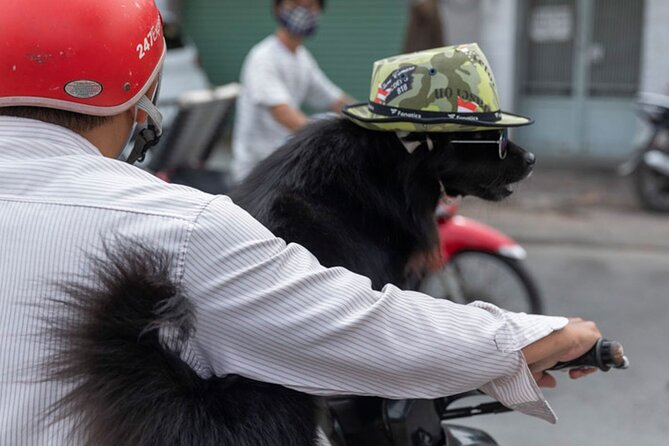
- A 5:30 am start shapes the whole experience: You’ll work through the morning rather than spend the day on a standard sightseeing route.
- The group is limited to six people: That matters when you need space to compose a picture or want direct feedback.
- The route mixes working river life and modern Saigon: Tugboats, houseboats, a temple, a market, and the skyline all serve different photographic purposes.
- Paul Green and William focus on hands-on help: Expect advice on composition, settings, portraits, and the order of images in a photo story.
- People photography is a major part of the walk: You’ll have opportunities to photograph residents at work and play, with a guide helping you approach the scene.
- The $119 price is for instruction and access, not admission tickets: The route itself has no separate admission charge, and the main included service is the professional photographer guide.
Why the river edge makes a strong photo subject
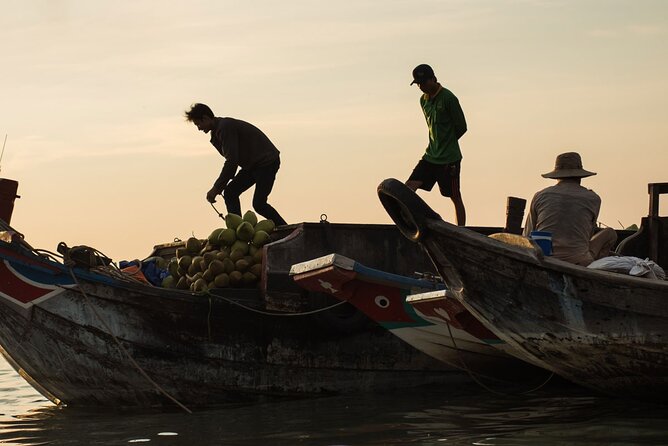
A city river walk can easily become a string of disconnected views. This one has a clearer purpose. You are asked to create a photographic story about life along the water, moving from working boats to homes, religious architecture, people, commerce, and the city skyline.
That structure is useful even if you are not an experienced photographer. Instead of asking only what looks attractive, you begin asking what connects one image to the next. A tugboat can establish the working river. A portrait can bring the human side closer. The skyline can show how the old and new parts of Saigon meet.
I like this approach because it gives the four hours a narrative spine. You are not simply walking until something catches your eye. You are learning how to pace a set of pictures and vary the subject matter.
The route also gives you several kinds of light and setting. You may be working beside open water, near a temple, among houseboats, across from tall buildings, and inside a market. Each location asks for a different response from your camera. That variety is a good fit for anyone who wants to move beyond one favorite setting.
More Photography Tours in Vietnam
- Private Sunrise Photography Tour – Down in Chinatown
★ 5.0 · 59 reviews - Private Photography Tour & Ho Chi Minh City Exploration By Local
★ 5.0 · 25 reviews - Private Photography Tour & Ho Chi Minh City Exploration
★ 4.8 · 16 reviews
District 7 and the first river scenes
The tour begins in District 7 with a canal-side walk. This opening section focuses on working river life, including tugboats arriving with coconuts and other goods from the Mekong.
These boats give you more than a pretty waterfront picture. They show the river as a working transport route, tied to the movement of food and other goods. You can use the boats, cargo, water, and people together to establish the setting for your photo story.
Your guide can help you think about composition here. A wide picture may show the canal and the activity around it. A tighter frame may focus on a person at work or the texture of the boat and its load. The supplied details do not promise a fixed sequence of boat arrivals, so the exact action will depend on what is happening that morning.
That uncertainty is part of the appeal, but it is also worth noting. This is not a staged photography show. The river scenes are real and changeable. You should arrive ready to adapt rather than expect the same picture every time.
A Buddhist temple and the floating village
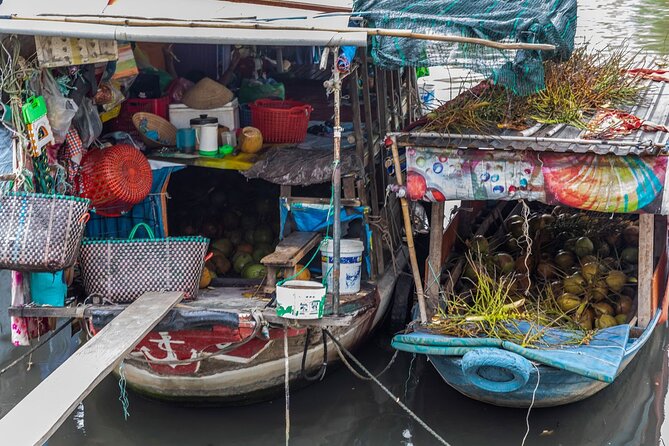
From the canal, the walk continues past a Buddhist temple and toward a floating village. The temple adds a quieter visual break after the working boats. It also gives you a chance to change your approach, looking at structure, detail, space, and atmosphere rather than only people and movement.
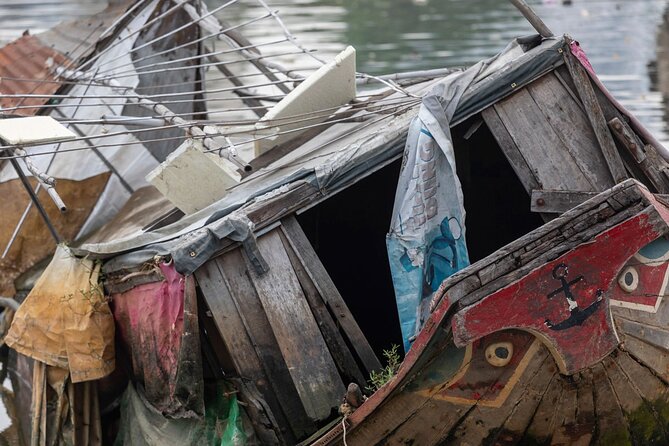
The floating village is one of the most distinctive parts of the route. Rickety houseboats sit anchored along the path, giving you a close look at homes connected to the water. This is where the experience moves beyond standard city photography. You are looking at a form of daily life that is easy to miss if you stay on the main visitor routes.
Residents may come out to chat, creating opportunities for portraits and photographs of people at work and play. That can be rewarding, but it requires tact. A camera can make a stranger feel exposed, so take your cue from the guide and the person in front of you. A friendly approach and a clear gesture can matter more than the camera itself.
Paul Green has been singled out for showing how to approach people even without speaking Vietnamese. That is a useful lesson for any street photographer. You are not only learning where to stand or how to set exposure. You are learning how to make the act of taking a picture feel respectful.
The condition of the houseboats is also important to understand. The word rickety sets an expectation of rough, improvised surroundings. This is not a polished waterfront promenade. If you want neat architecture and easy walking surfaces, this may not be your ideal photo outing. If you want honest scenes of life beside the water, it is likely to be far more rewarding.
The skyline from the river
The route finishes its riverside section with a dramatic view of Ho Chi Minh City’s modern skyline across the water. This gives your story a strong change of scale.
Earlier pictures focus on boats, homes, and individuals. The skyline pulls back and shows the wider city. It can work as a closing image, or as a visual counterpoint to the low, informal river settlement you have just photographed.
This contrast is one of the tour’s best ideas. You see Saigon as both a working river city and a modern urban center. The point is not simply that old and new exist side by side. The route lets you photograph that relationship directly.
Your guide may suggest different ways to handle the skyline, such as including water or foreground activity rather than photographing buildings alone. The exact instruction will depend on your guide and your camera, but the opportunity is clear: use the river to give the city view context.
Do not book this solely for an iconic skyline picture. The skyline is one part of a longer visual story. Its value comes from the way it follows the boats, temple, and floating homes.
More Photography Tours in Ho Chi Minh City:
- Photography Tour with Professional Photographer in Ho Chi Minh
★ 5.0 · 13 reviews - Private Sunset Photography Tour – Travel through history and time
★ 5.0 · 13 reviews - Saigon Railway Village Photo Tour
★ 5.0 · 10 reviews - Sundown in the Colony Photo Tour
★ 5.0 · 8 reviews
Finishing in a traditional market
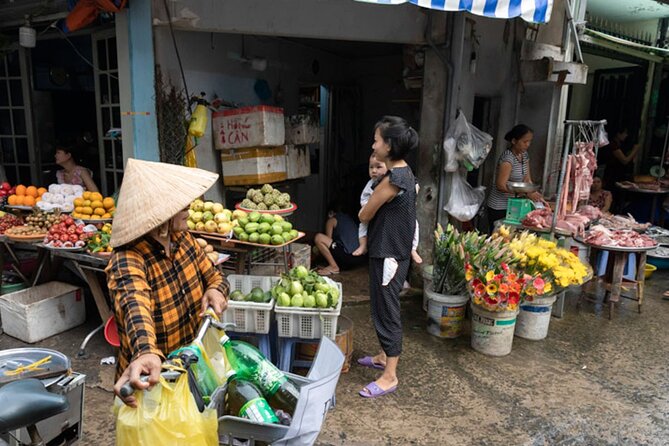
The final stop is a traditional market with attractive light for people photography. This is a useful ending because a market gives you a different kind of human activity from the river.
At the floating village, you may be working with people in a home setting. At the market, you can look for movement, exchanges, work, and small details. The light can help, but the main challenge is deciding what belongs in the frame and what should stay outside it.
This is another place where composition advice can pay off quickly. You may work on balancing a person with the surrounding stalls, keeping a background from becoming distracting, or using a close detail to connect the market to the larger story.
A market is not a guaranteed collection of easy portraits. People may be busy, camera-shy, or simply uninterested. That is why the guide’s role matters. You can concentrate on observing and composing instead of worrying about every social decision alone.
The market also gives the route a natural finish. You move from the river’s broad setting to the city’s close, human scale. If you edit your pictures later, the market images can add a final sense of daily life rather than ending with only architecture.
What the photography instruction covers
This is not just a walk with a photographer carrying a camera. The stated focus includes composition, camera settings, and the creation and pacing of a narrative with images.
Composition advice should be useful across the whole route. The boats, houseboats, temple, skyline, and market all offer different ways to arrange lines, people, open space, and background details. You can test ideas as the subject changes instead of hearing a classroom lecture disconnected from actual pictures.
The settings advice is also practical because the route includes changing subjects. A stationary building, a moving boat, and a person at work may each require a different approach. The tour promises guidance on using various settings, but it does not specify a particular camera system or technical syllabus. Expect adaptable tips rather than a formal course.
The storytelling element may be the most valuable part. Many people return from a trip with hundreds of images but no clear group of pictures. Here, you are encouraged to think about sequence and pacing while you shoot. A strong set might begin with a wide river view, move closer to the boats and residents, pause at the temple, expand to the skyline, and close with the market.
Paul Green and William have both been praised for offering helpful suggestions and new ideas. The feedback described is practical rather than abstract. That makes this experience suitable if you want to improve quickly while working in real conditions.
How the six-person limit affects the experience
The maximum group size is six people. For a photography walk, that is a meaningful limit.
A large group can make people wait while everyone takes the same picture. It can also make a guide’s advice too general. With six or fewer, you have a better chance to ask about your own camera choices, show a frame, or get a suggestion about where to stand.
The group size does not guarantee a private tour. You will still share the guide’s time, and the exact amount of personal instruction will depend on the group. Still, the limit supports the hands-on nature of the experience.
It also matters at the floating village and market. A smaller group is less likely to fill a narrow path or make a portrait subject feel surrounded. That can make the social side of photography more comfortable for everyone.
Is $119 good value?
At $119 per person, the price is not simply paying for four hours of walking. You are paying for a professional photographer guide, a planned route, and direct help with making better pictures.
The route itself has free admission, so the financial value depends on how much you want instruction. If you only want to see the river, you could seek out public areas without booking a tour. The reason to pay is the combination of access to varied scenes and guidance on how to photograph them.
For a beginner, the value may come from learning how to approach people, choose a composition, and use camera settings with more purpose. For an experienced photographer, the benefit is different. You may appreciate the local route, fresh subject ideas, and a guide who can suggest ways to turn familiar street photography into a coherent set.
The price is easier to justify if you want feedback during the walk. It is harder to justify if you plan to keep your camera in automatic mode and mainly want sightseeing. Group discounts are offered, which may improve the cost for people booking together.
Pickup is offered, and a mobile ticket is available. The published details give a 5:30 am start but do not provide a specific meeting address in the information here, so confirm the pickup or meeting arrangement before you set out.
Who should book the River’s Edge Photo Tour?
I would recommend this to photographers at beginner or intermediate level who want to work on street scenes, portraits, composition, and visual sequencing.
It also suits people who have limited time in Ho Chi Minh City and want one focused morning covering several types of subject. The route gives you river life, a temple, floating homes, a skyline, and a market without turning into a general city tour.
You should also be comfortable with an early start and an active walk. The experience is built around observation and picture-making, not a relaxed ride between major sights. You will get more from it if you are willing to pause, try a new angle, and accept that some moments cannot be planned.
I would be more cautious about booking if you want a private lesson, a guaranteed boat scene, or a fixed list of camera techniques. The group can include up to six people, and the exact pictures will depend on the morning’s activity and weather.
Free cancellation is available up to 24 hours before the start time. Changes or cancellations within 24 hours are not accepted for a refund. Because the experience requires good weather, a weather cancellation brings the choice of another date or a full refund.
Should you book it?
Book the River’s Edge Photo Tour if you want to photograph Ho Chi Minh City through ordinary working life rather than only its headline sights. The strongest reasons are the small group, the mix of river and city subjects, and the chance to get direct help from guides such as Paul Green and William.
The $119 cost makes the most sense when you treat the morning as a practical photography lesson with a distinctive route. Skip it if you dislike early starts or want a simple sightseeing walk without camera instruction. For the right person, the riverboats, floating homes, portraits, market light, and skyline can become more than separate pictures. They can form a clear story about Saigon beside the water.
FAQ
Where does the River’s Edge Photo Tour take place?
The experience takes place in Ho Chi Minh City, beginning with a canal-side walk in District 7 and continuing to a Buddhist temple, floating village, river viewpoint, and traditional market.
What time does the tour start?
The start time is 5:30 am.
How long does the experience last?
The tour lasts approximately four hours.
How many people can join the tour?
The maximum group size is six people.
Is hotel or other pickup offered?
Pickup is offered. The available details do not specify the exact pickup locations, so confirm the arrangement when booking.
Who leads the tour?
The experience is provided by Vietnam in Focus, with a professional photographer guide. Guides named in the available information include Paul Green and William.
What photography skills will I work on?
You will receive tips on composition, camera settings, portraits, and creating and pacing a photographic story.
Are admission tickets included?
The route has no admission charge. The included service listed for the experience is a professional photographer guide.
What does the tour cost?
The listed price is $119 per person. Group discounts are offered.
Can I cancel for a refund?
You can cancel at least 24 hours before the start time for a full refund. Cancellations or changes made less than 24 hours before the start time are not refunded or accepted. If poor weather causes the tour to be canceled, you will be offered another date or a full refund.
Just added around Ho Chi Minh City
- Traditional cuisines through the top local restaurants in Saigon★ 5.0 · 21 reviews
- Sundown in the Colony Photo Tour★ 5.0 · 8 reviews
- Photography Tour with Professional Photographer in Ho Chi Minh★ 5.0 · 13 reviews
- Vietnamese Ao Dai Photoshoot at Iconic Landmarks in Ho Chi Minh★ 5.0 · 2 reviews
- Saigon Railway Village Photo Tour★ 5.0 · 10 reviews
- Using Medium Format film camera to discover Saigon★ 5.0 · 5 reviews
- [Free E-sim] Half day Instagram Cafe Tour in Ho Chi Minh★ 4.5 · 8 reviews
- Private Photography Tour & Ho Chi Minh City Exploration★ 4.8 · 16 reviews
Photography Tours, compared.

Rhodes: E-bike Highlights Sunset or Morning Photo Tour
Read our review →

Browse the lists this tour appears in