
REVIEW · TOKYO
Mt. Fuji Highlight Photo Spots One Day Tour from Tokyo
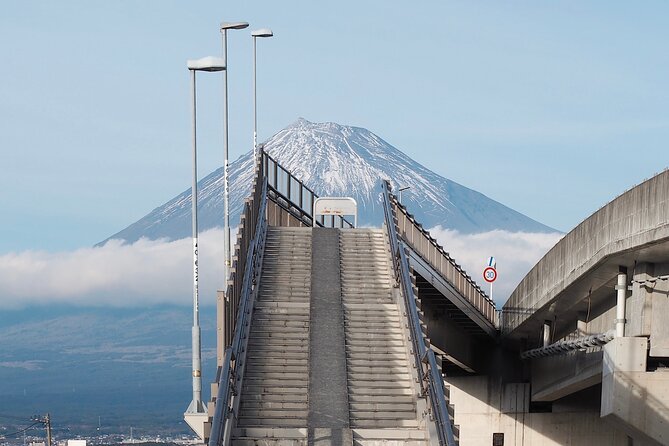
Mt. Fuji gets a full day of attention here, not just a quick roadside stop. You move around its northern and western sides, collecting very different views: a red pagoda, a flower park, a lake, a waterfall, a town street, and neat rows of tea plants. This is a photo tour first, with Japanese scenery and heritage providing the setting.
I like the range of viewpoints and the fact that round-trip transport removes the headache of piecing together trains and buses. I also like the practical help from the guides. Ukei is described as funny, informative, and helpful, while Yunan has sent exact meeting coordinates and helped guests connect with the group.
The main caution is the schedule. Seven stops in about 10 to 11 hours means short visits and a long day on the road. Clouds can also hide Fuji, and the itinerary may change with traffic, weather, or the legal driving-time limit.
Key points to know before booking
- Seven distinct Fuji views: See the mountain with Chureito Pagoda, a traditional-looking shopping street, Lake Kawaguchi, Shiraito Falls, and tea fields.
- A camera-friendly route: Most stops are planned around short walks and photo time, with guides willing to take pictures.
- Round-trip transport from Tokyo: You avoid arranging several trains and buses across the Fuji area.
- No lunch included: Bring snacks or a light meal because eating time is not part of the planned stops.
- Weather matters greatly: The experience requires good weather, and Fuji visibility is never guaranteed.
- A large possible group: The maximum is 60 people, so this is not a private or small-group outing.
Why this Fuji day trip works for photographers
The appeal is simple: you get many chances to see Fuji from different angles in one organized day. A single viewpoint can be disappointing if clouds cover the summit. This route gives you several opportunities, and each one has a different foreground.
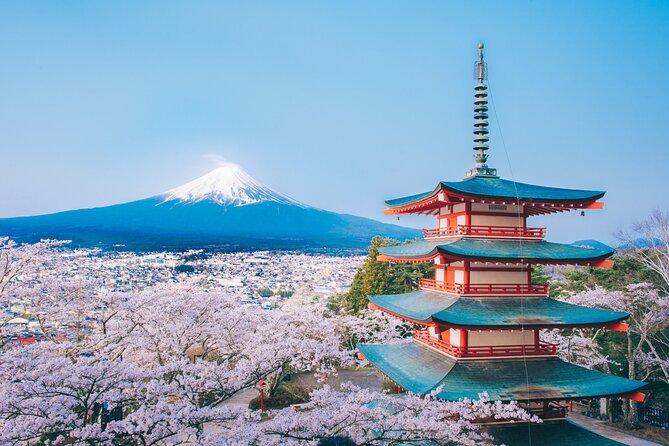
At Arakurayama Sengen Park, the familiar composition is clear: Mount Fuji behind the five-story Chureito Pagoda. At Oishi Park, the mountain rises beyond Lake Kawaguchi and seasonal flowers. At Obuchi Sasaba, orderly tea rows lead your eye toward Fuji. These are not variations of one photo. They feel like separate scenes.
I also appreciate the balance between famous and less obvious stops. The pagoda is the headline image, but Shiraito Falls gives you a break from mountain photography. The tea plantation brings a quieter view, while Shimoyoshida Honcho Street adds signs, lanterns, and overhead wires for a distinctly Japanese town picture.
The schedule is built for quick visual rewards. You do not spend hours at one attraction waiting for the perfect frame. Instead, you make several short visits, which is useful when you have only one free day outside Tokyo.
The tradeoff is time. The listed stops add up to only a few hours, with the rest taken by transport and moving between places. You will need to get ready for quick decisions: take the photo, enjoy the view, and return to the vehicle on time.
More Instagram Spot Tours in Japan
- Tokyo 6hr Instagram Highlights Private Tour with Licensed Guide
★ 5.0 · 38 reviews - Tokyo: Instagram-Worthy Mt Fuji & Lake Kawaguchiko Day Trip
★ 4.0 · 26 reviews - Kyoto 6hr Instagram Highlights Private Tour with Licensed Guide
★ 5.0 · 18 reviews
Chureito Pagoda and the first Fuji view
Arakurayama Sengen Park is the classic opening stop. The pagoda and Fuji form one of Japan’s most recognizable views, especially when cherry blossoms are in season. Admission is free, and the planned stay is about 40 minutes.
This stop also gives you a taste of Japanese religious and cultural scenery, rather than offering only a mountain lookout. The park’s setting makes the view feel connected to the place, not simply pasted onto a distant horizon.
You should expect some physical effort here. The tour requires a moderate fitness level, and the park includes an uphill walk to the pagoda viewpoint. The time allowance is not generous if you want to pause often, take portraits, and enjoy the setting. Wear shoes you can walk in comfortably.
Cloud cover can change the whole experience. With a clear sky, this may be the strongest single photo stop of the day. With Fuji hidden, the pagoda and park still provide a worthwhile scene, but the famous composition loses its main subject.
Shimoyoshida Honcho Street and its old-town feel
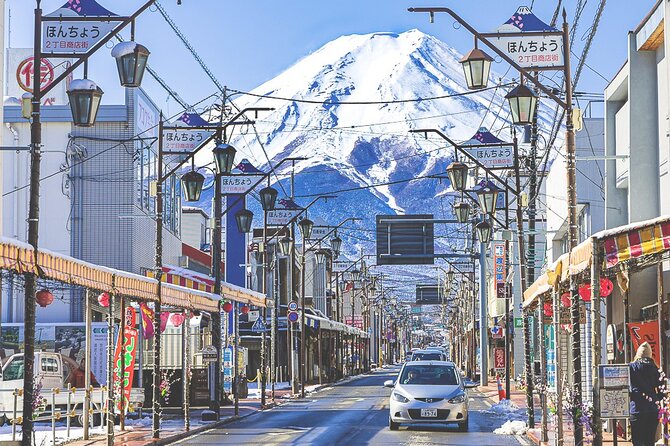
The next stop shifts from a formal park to Fujiyoshida’s Shimoyoshida Honcho Street. From behind its signs, lanterns, and electric wires, you can frame Fuji above an ordinary-looking Japanese town street. That contrast is the point.
The planned visit is about 40 minutes, enough for a walk and several compositions. This stop can appeal to you if you prefer street photographs to polished scenic views. The wires and shopfront details are not distractions here. They help create the nostalgic character that makes the image feel like a real town rather than a constructed viewpoint.
There is no admission charge. As with every stop, the mountain may be partly or fully hidden by weather. Even so, the street remains useful for photographs of local architecture and daily surroundings.
Because this is a walking stop, keep your camera ready and stay aware of the group’s meeting time. The tour is moving through several locations, so it cannot wait for long photo sessions at one corner.
Lawson Fujikawaguchiko Town Hall: a quick postcard stop
This 15-minute stop is brief and very specific. The familiar Lawson convenience store sits in front of a view toward Fuji, creating the popular image of everyday Japan with the mountain behind it.
You will have time to take photographs and refresh yourself, but not time for a long visit. The stop works best as a quick visual pause between larger attractions. If you have seen photographs of this location online, you will recognize the composition immediately.
The short timing is both useful and limiting. It keeps the day moving, but you should not expect a relaxed café break or a chance to explore the surrounding town. Treat it as a carefully chosen photo stop.
More Instagram Spot Tours in Tokyo:
- Bali: Full-Day Instagram Highlights Tour
★ 4.8 · 7,817 reviews - ️ Bali Instagram Tour: The Most Famous Spots (Private & All-Inclusive)
★ 5.0 · 2,857 reviews - Dubai: Instagrammable Yacht Tour with Drinks & Ain/JBR Views
★ 4.7 · 1,494 reviews - Murals of Nashville Instagram Tour by Golf Cart
★ 5.0 · 950 reviews
Lake Kawaguchi for open water and reflection
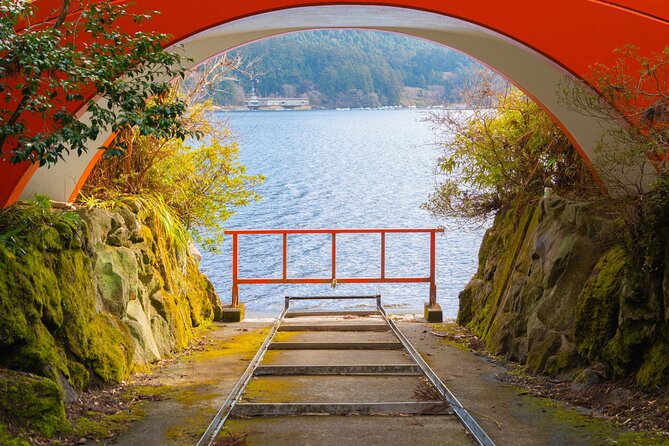
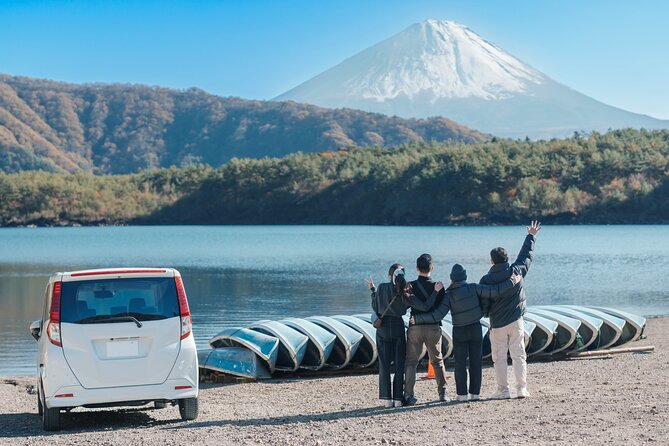
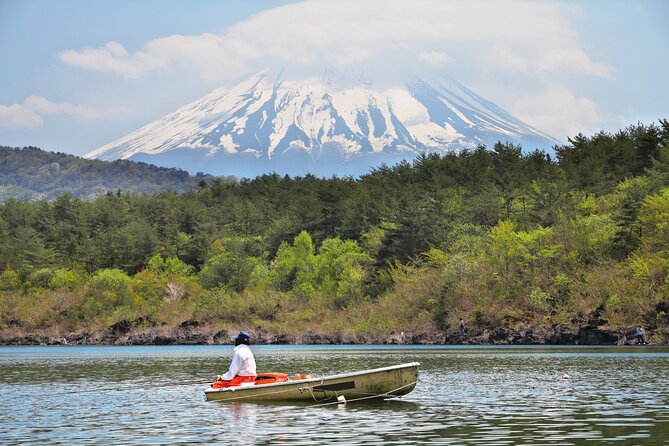
Lake Kawaguchi is one of the Fuji Five Lakes and offers a wider view than the town locations. The lake’s reflective surface gives Fuji a broad foreground, and the setting is known for boating, fishing, and spring cherry blossoms.
The planned stay is about 20 minutes, with admission included. That is enough to step out, look across the water, and take photographs, but it is not enough for boating or an extended lakeside visit. The tour gives you an introduction rather than a full lake holiday.
I like this stop because it changes the pace. After the pagoda, street, and convenience store, the open water gives you breathing room. If the air is clear and the lake is calm, this may be one of the cleanest compositions of the day.
Do not count on a perfect reflection. Wind, cloud, and changing light can alter the view. The value here is the setting itself, plus another chance to see Fuji from a new angle.
Oishi Park and seasonal flowers
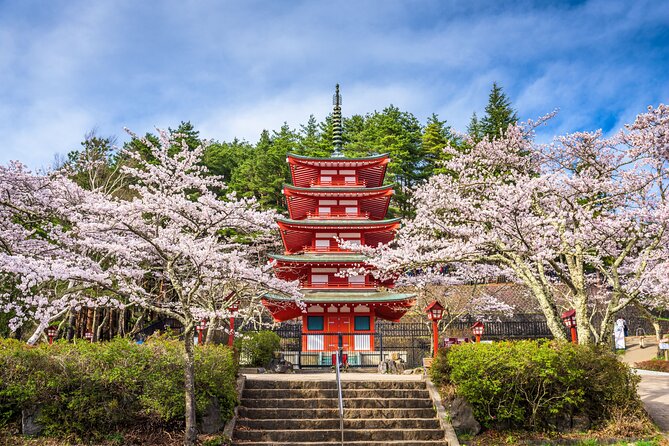
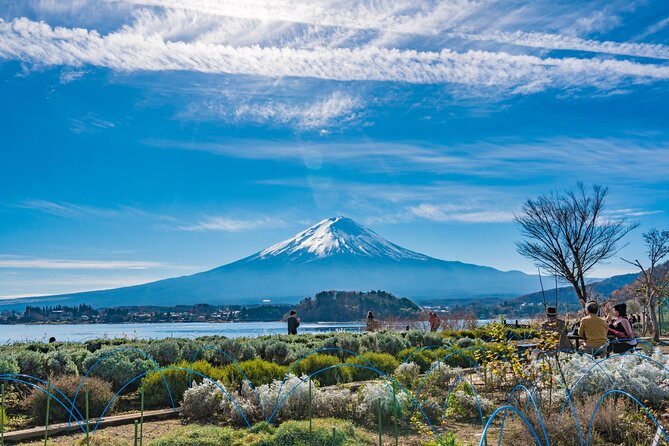
Oishi Park sits along Lake Kawaguchi and is known for its flower displays, including lavender in summer. The park adds color and texture to the mountain view, giving you more than a simple water-and-sky photograph.
The planned stay is about 20 minutes, and entry is free. This is another short visit, so you will probably want to choose your preferred photo angle quickly. The flowers change with the season, which means the exact appearance of the park depends on your travel dates.
I like the way this stop adds a softer, more colorful scene to the route. It is also an easy place to enjoy Fuji without the uphill walk required at the pagoda. Still, the tour does not provide a long stroll or a slow garden visit. You are stopping for the view, not spending half a day in the park.
Shiraito Falls brings a welcome change
Shiraito Falls is the day’s strongest non-Fuji attraction. Water slips over a curved basalt cliff in many fine streams, which explains the name, meaning thread-like falls. The waterfall is a designated national scenic spot, and the planned stay is about 50 minutes.
This longer stop matters. After several quick photo locations, you get more time to look around and enjoy the sound and movement of the water. It also gives you a break from trying to keep Fuji centered in every frame.
The falls are free to enter. You should still expect walking and a moderate level of physical activity across the day. The tour does not specify a detailed route at the falls, so your available time may depend on the site conditions and the guide’s timing.
For photographers, the falls offer a different technical challenge. Instead of a distant peak and wide sky, you are working with flowing water, rock, and close natural detail. Even if clouds have covered Fuji, this stop retains much of its appeal.
Obuchi Sasaba and the tea-field view
The final major stop is Obuchi Sasaba, a green tea plantation with rows of tea bushes leading toward Fuji. It is one of the more unusual views on the route and a strong reason to choose this tour over a standard lake-and-pagoda outing.
The planned stay is about 40 minutes. That gives you time to photograph the rows, enjoy the quiet setting, and look for the angle where the plants guide the eye toward the mountain. The scene connects Fuji with one of Japan’s best-known agricultural products.
This stop depends heavily on visibility. If Fuji is hidden, you still have the tea fields, but the main composition is incomplete. The orderly rows remain attractive, yet you should book with realistic expectations: clear views cannot be promised.
I find this ending appealing because it finishes away from the most crowded, familiar images. After a full day of major viewpoints, tea fields offer a calmer last impression.
What the transport and timing mean
The tour lasts about 10 to 11 hours and includes round-trip transportation. That is the practical heart of the experience. Reaching seven places around the Fuji area by public transport would require careful connections and a willingness to manage delays, walking, and separate fares.
Here, you can let the guide handle the route while you watch the scenery and prepare your camera. The tradeoff is less freedom. You cannot decide to stay longer at Lake Kawaguchi or skip the convenience-store stop to spend more time at the waterfall.
Japanese law limits vehicle operation to 10 hours. Because of that, the guide may adjust the itinerary in real time. Traffic and weather can also affect the order, duration, or number of stops. You should view the schedule as a plan, not a guarantee of exact minutes at every location.
The possible maximum of 60 people is important. A large group may make meeting points and departure times more noticeable parts of the day. On the positive side, the organized format keeps the route simple. On the negative side, it is not suited to someone seeking a quiet private outing.
Guides, communication, and meeting carefully
English, Korean, and Chinese-speaking staff are included. The strongest practical help appears to come through clear communication and group care. Yunan sent exact coordinates for the starting point, and guides such as Ukei and K-san are described as helpful with photographs and attentive to the group.
You should take the meeting instructions seriously. One guest missed the tour after arriving 15 minutes early because of confusion about the guide’s identity and contact details. The guide sends a WhatsApp message the night before, so remember the guide’s name and make sure you have access to Wi-Fi or another way to contact the guide.
This is not a minor detail. A coach tour cannot easily hold for someone who is waiting at the wrong landmark. Save the meeting point, the guide’s name, and the contact instructions before leaving your hotel.
Guides may offer cultural information, though the amount can vary. One account describes Ukei as informative and funny, while another notes that the guide did not say much about each location but was kind and helpful with pictures. If you want a detailed lecture at every stop, this may not be the right format. If you want practical assistance and a smooth route, it is more promising.
Food, fitness, and what to bring
Meals are not included, and lunch is not built into the schedule. Bring snacks or a light meal that you can carry with you. The short stops do not leave much room for a relaxed restaurant lunch, so planning ahead will make the day easier.
Wear comfortable walking shoes. The tour asks for moderate physical fitness, and the pagoda stop in particular involves walking uphill. You will also be getting in and out of the vehicle several times.
A phone with a charged battery is useful for directions, group messages, photos, and contact with the guide. If you rely on WhatsApp, confirm that you can access it before the morning departure. A small bag with water, food, and weather protection will be more useful than heavy luggage.
Is the $78.82 price fair?
At $78.82 per person, the tour offers a good practical deal if you want many Fuji viewpoints in one day. The price includes round-trip transportation and access to the listed attractions, with no separate admission charge at most stops. You are paying for route planning, driving, and the chance to see places that would be awkward to combine independently.
The value is strongest for a first visit to the Fuji area, especially if you are staying in Tokyo and have only one open day. Train and bus planning can take time, and missed connections can eat into a short visit. This outing puts the transport burden in one package.
The price is less compelling if you want a private guide, a slow pace, a guaranteed clear view, or a long visit at each location. The group may reach 60 people, and weather can reduce the mountain views. You are buying access to several chances, not a promise of a perfect Fuji photograph.
The 92 percent recommendation rate and 4.7 rating from 36 ratings suggest a generally strong experience, with guide organization and helpfulness receiving particular praise. Still, the missed-tour warning and weather limits deserve equal attention.
Who should book this experience?
I would choose this tour if you want a straightforward day outside Tokyo, care about photography, and prefer included transport over independent route planning. It suits first-time visitors who want a broad sample of Fuji scenery without arranging several separate trips.
It also works well for people who enjoy short scenic stops. The route gives you a lot of visual variety, but it does not offer much unplanned time. Families and mixed-interest groups may appreciate Shiraito Falls and the lake, while serious photographers should note that each stop has a firm schedule.
I would look elsewhere if you dislike early starts, long vehicle days, large groups, or changing plans. A clear view of Fuji is never guaranteed, and the itinerary may be shortened or altered under traffic, weather, or driving-time limits.
Free cancellation is available if you cancel at least 24 hours before the start time. If poor weather causes the operator to cancel, you can receive a different date or a full refund. Changes made less than 24 hours before departure are not accepted, so keep that deadline in mind.
Should you book the Mt. Fuji Highlight Photo Spots tour?
Book it if your goal is to collect many strong Fuji viewpoints in one day for a reasonable price. The pagoda, lake, waterfall, and tea plantation give you a better range than a tour focused on one famous lookout. The help from guides such as Ukei and Yunan can also make the day easier, especially when meeting directions and photos matter.
Do not book it expecting a private pace or a guaranteed mountain view. Bring food, protect your meeting details, prepare for moderate walking, and accept that traffic or clouds may change the plan. With those limits understood, this is a practical and visually varied way to trade Tokyo’s city streets for Fuji country.
FAQ
How long does the Mt. Fuji photo tour last?
The tour lasts approximately 10 to 11 hours.
What is included in the price?
Round-trip transportation and English, Korean, and Chinese-speaking staff are included.
Is lunch included?
No. Meals are not included, and you are advised to bring snacks or a light lunch.
How many places does the tour visit?
The route includes seven listed stops: Arakurayama Sengen Park, Shimoyoshida Honcho Street, Lawson Fujikawaguchiko Town Hall, Lake Kawaguchi, Oishi Park, Shiraito Falls, and Obuchi Sasaba.
Is admission included?
Admission is listed as free at Arakurayama Sengen Park, Shimoyoshida Honcho Street, Lawson Fujikawaguchiko Town Hall, Oishi Park, Shiraito Falls, and Obuchi Sasaba. Admission to Lake Kawaguchi is included.
Can I expect to see Mt. Fuji clearly?
Clear views are not guaranteed. The tour depends on good weather, and clouds may hide the mountain. The operator can also adjust the schedule because of weather and traffic.
How large can the group be?
The maximum group size is 60 people.
What physical ability do I need?
A moderate level of physical fitness is recommended. The day includes walking at several stops, including Arakurayama Sengen Park.
What is the cancellation policy?
You can cancel for a full refund up to 24 hours before the experience starts. Cancellations or changes made less than 24 hours before the start time are not accepted for a refund. If the operator cancels because of poor weather, you can choose another date or receive a full refund.
More 1-Day Tours in Tokyo
- From Yerevan: 6 Most Instagramable Armenian Sights Day Trip
★ 4.3 · 304 reviews - Day Trip to Chefchaouen from Fez (instagram /Photos)
★ 5.0 · 180 reviews - Tromsø: Day trip to the island of Sommarøy through the Fjords
★ 4.5 · 63 reviews - Birding & Photography Day Trip to Doñana from Seville
★ 5.0 · 61 reviews
Just added around Tokyo
- Tokyo: Shinjuku & Shibuya historical guided photoshoot Tour★ 5.0 · 2 reviews
- Asakusa Kimono/Yukata Rental & Photography_Tsutsuji★ 5.0 · 12 reviews
- Asakusa Kimono Photography Tour★ 5.0 · 8 reviews
- Personal Travel and Vacation Photographer Tour in Tokyo★ 5.0 · 19 reviews
- Tokyo: Photo Shoot with a Private Vacation Photographer★ 5.0 · 53 reviews
- Travel Tokyo with Your Own Personal Photographer★ 5.0 · 43 reviews
- Tokyo: Photography Masterclass – Private Photo Lesson★ 5.0 · 7 reviews
- Blade Runner photo workshop in Shibuya with Laurence Bouchard★ 5.0 · 15 reviews
Instagram Spot Tours, compared.


️ Bali Instagram Tour: The Most Famous Spots (Private & All-Inclusive)
Read our review →
Murals of Nashville Instagram Tour by Golf Cart
Read our review →
Fansipan Cable, Cat Cat Village & Moana Instagram Tour
Read our review →
️ Phuket Private Instagram Tour: All-Inclusive
Read our review →
Browse the lists this tour appears in