
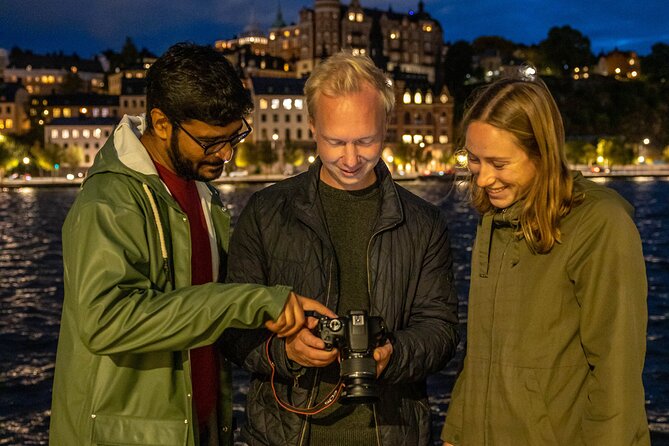
REVIEW · STOCKHOLM
Magical ”Stockholm by Night” Photo Walk
Stockholm looks made for night photography. At Blue Hour, the last daylight hangs over the water while windows, lamps, and reflections begin to glow. This private walk turns that short, magical window into a practical lesson in making sharp, moody photos.
I especially like the one-to-one coaching and the route that runs from Slussen toward Old Town, with scenic viewpoints and lesser-known corners along the way. You also learn useful skills such as long exposure and light painting instead of simply being led to a photo stop. The main consideration is the price: $155 per person is a serious spend for two hours, and you must bring your own camera and ideally a tripod.
- Blue Hour timing: Begin as daylight fades, when Stockholm’s water and city lights work together in the frame.
- Private instruction: The route and teaching are adjusted to your experience level and interests.
- Practical night skills: Learn low-light shooting, long exposure, movement, and light painting.
- Slussen to Old Town: Meet at Stadsmuseet by Slussen station and finish in Stockholm’s Old Town.
- Useful follow-up: Receive the Skyline Stories city photography guide after the walk.
- Simple setup: Bring your own camera or phone, charged smartphone, and comfortable shoes. A tripod is recommended but not included.
Blue Hour Turns Stockholm Into a Working Studio
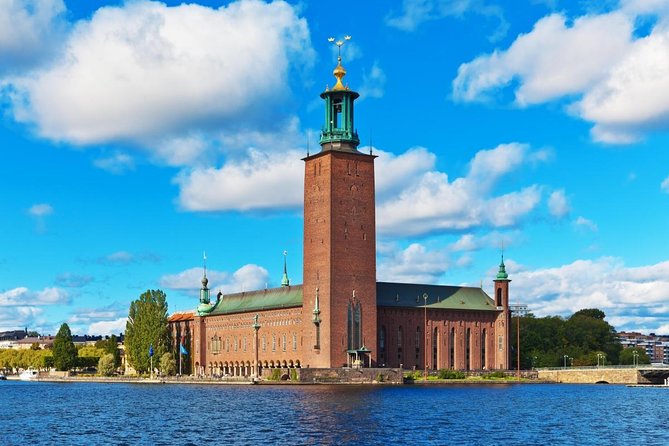
The walk begins at Stockholm’s city museum, Stadsmuseet, beside Slussen subway station. This is a sensible meeting point because you can reach it by public transport, and the route then leads toward Old Town rather than ending where it began.
The timing matters more than the clock on the booking page. The experience starts during Blue Hour, that brief period after the sun has dropped but before the sky goes fully dark. You get a softer sky, balanced exposure, and city lights that do not yet overpower the scene.
This is often the easiest time to make a city photograph feel layered. The sky still has colour, the buildings have shape, and the water can pick up reflections. Once darkness takes over, bright lamps and windows create stronger contrast. That can look dramatic, but it also makes exposure harder.
Your guide, photographer Julien, works with you through this change in light. The teaching is not limited to pressing the shutter at a scenic viewpoint. You learn how the changing light affects the image and how to use it as part of the composition.
You should expect the first part of the walk to focus on getting comfortable with the camera in fading light. If you already know the basic controls, you can spend more time on creative choices. If you are new to night photography, the private format gives you room to ask simple questions without holding up a group.
From Slussen to Old Town, With Time to Frame the City
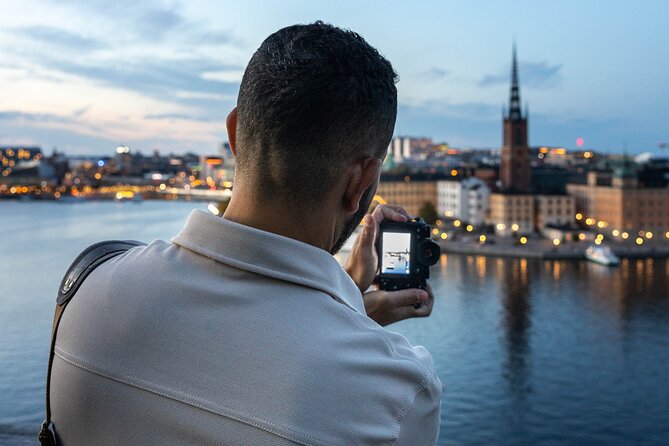
The route begins at Slussen and ends in Old Town. Exact stops are not fixed because the walk is tailor-made, but the guide takes you toward scenic viewpoints and less familiar corners of Stockholm.
That flexibility is useful. Your route can be adapted to your photography level and interests instead of following the same list of stops for everyone. You may want broad city views, reflections, building details, or images with people and movement. The guide can shape the walk around those aims.
Slussen is also a good place to begin a photo walk because it connects the city, the water, and the historic centre. As you move toward Old Town, the setting changes. You can work with wider views, then shift toward tighter compositions and architectural details.
Do not expect a long sightseeing tour with a guide explaining every landmark. The focus is photography, with local insight into Stockholm and Swedish culture added along the way. You are there to make better images, not to collect a full history lecture.
The final stop in Old Town gives the walk a clear finish. You do not need to return to Slussen, which is helpful if you plan to continue your evening in the historic centre. Still, you should check your route home before you start, especially if you are carrying a camera bag and tripod.
More Photography Tours in Sweden:
- Abisko: National Park Northern Lights Photo Tour
★ 4.6 · 86 reviews - Abisko: Fjord Sightseeing and Photography Tour
★ 4.8 · 48 reviews - Stockholm: Subway Art & Photo Tour – World’s longest gallery
★ 4.6 · 36 reviews
What You Actually Learn During the Two Hours
The strongest part of this experience is its practical focus. Night photography can feel technical at first, but the guide breaks it into useful problems you can solve in the field.
You work on:
- Sharp night images: Learn how to handle low light and reduce the chance of blurred photographs.
- Long exposures: Keep the shutter open longer to record reflections, movement, and light trails.
- Light painting: Use moving light as part of the photograph rather than treating it as a mistake.
- Movement: Add a sense of motion and energy to an image.
- Depth and mood: Arrange foreground, middle distance, and background so the picture has more than one flat layer.
- Storytelling: Build photographs that communicate a place or moment without words.
The long-exposure work is especially useful if you normally photograph with automatic settings. The camera must gather more light, and the subject must remain steady enough to stay clear. The result can be calm water, stretched lights, or a deliberate blur that gives the picture character.
A tripod helps here. It is recommended, but you need to bring your own. That is an important cost and packing detail. The experience provides headlamps, but it does not provide a camera, phone, or tripod.
You do not need advanced technical knowledge. You do need curiosity and a camera or phone. A phone can handle some low-light work, but the depth of instruction will be most useful if your camera gives you control over shutter speed, aperture, and ISO.
A Private Lesson, Not a Group Photo Line
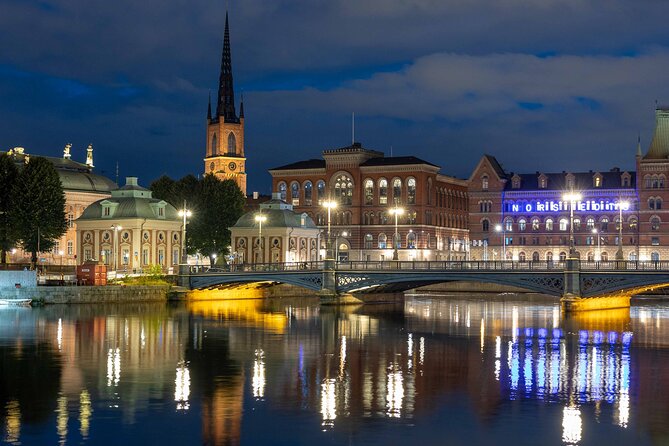
The private format changes the feel of the walk. You are not waiting for a group to finish adjusting lenses, and the guide does not need to split attention between several skill levels.
If you are a beginner, you can spend time learning what each setting does. If you already photograph regularly, you can ask about composition, creative movement, or the best way to use reflections. The route is adjusted to your level rather than fixed around a standard lesson.
That personal approach has a clear value. One of the strongest points from the available feedback is that Julien adapted the route and guidance to the participant’s photography level. Another person who came alone found the walk useful for locating photo spots across the city and learning how to photograph them.
Those details matter if you are visiting Stockholm by yourself. A private photo walk gives you a local person to guide the evening, while still keeping the focus on your own pictures. It is also suitable for a couple or small private party that wants to work at its own pace.
The tradeoff is cost. At $155 per person, this is not a casual sightseeing stroll. You are paying for private instruction, a flexible route, local knowledge, headlamps, and the chance to work directly with a professional photographer. The value improves if you actively use the teaching and plan to keep photographing after the tour.
Why Night Photography Takes More Than a Pretty View
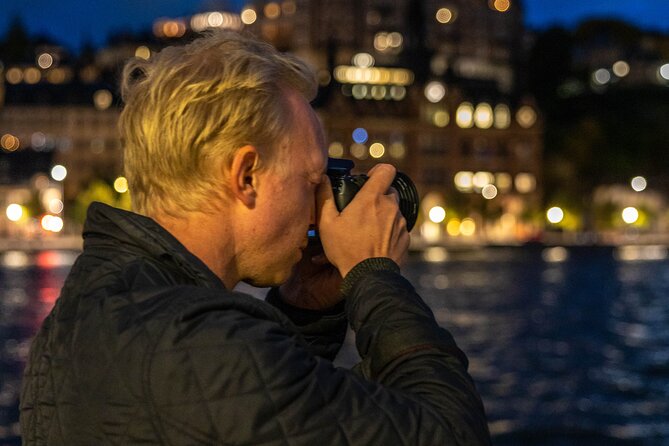
A pretty view is only the starting point. The hard part is deciding what to include, how bright the image should be, and how to keep the photograph from looking flat or accidental.
In Stockholm, water can help. Reflections create another layer below the skyline and can stretch points of light across the frame. Blue Hour gives you a sky with enough detail to balance those reflections, while the first city lights add structure.
The guide’s approach is built around these choices. You learn to use light as material, almost like paint. A moving lamp, passing figure, or shifting reflection can become part of the image if you control the exposure.
This is also where the private setting helps. You can try an image, check it, and make a second attempt with a different composition. A two-hour walk is not long enough for endless experiments, but it gives you a focused session rather than a rushed stop for a single picture.
You should keep your expectations realistic. The tour cannot guarantee perfect weather, a particular sky, or a specific photographic result. The supplied information does not promise any of those things. What it does offer is guidance in using the conditions you find on the evening of your walk.
More Walking Tours in Sweden:
- Private Golden Hour Photo Walk in Stockholm
★ 5.0 · 24 reviews - Magical “Stockholm by Night” Photo Walk
★ 5.0 · 8 reviews - Private Golden Hour Photo Walk in Stockholm
★ 5.0 · 7 reviews - NYC Professional Photoshoot and Walking Tour with Private Guide
★ 5.0 · 608 reviews
The Route Is Flexible, But the Evening Has a Clear Shape
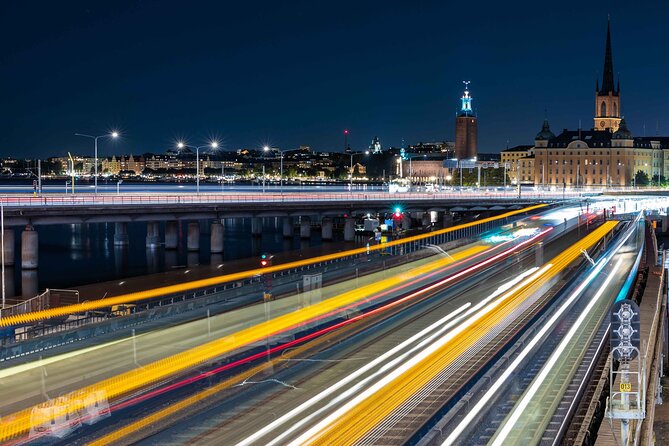
Although the precise stops can change, the experience follows a useful rhythm.
You meet at Stadsmuseet by Slussen station and get set up. Bring your camera, make sure your smartphone is charged, and wear comfortable shoes. The guide can provide headlamps, which are useful as the light fades.
You then begin working during Blue Hour. This is the time for broad views, soft colour, and reflections. The guide helps you use the remaining daylight before the scene becomes fully nocturnal.
As the city lights grow stronger, the lesson shifts toward low-light technique. You work on exposure, sharpness, and the effect of movement. The walk also includes light painting and long-exposure images, so this is the point when a tripod becomes especially useful.
The final part continues toward Old Town. Here, the changing streets and architecture give you different ways to frame the city. The route is not sold as a fixed list of landmarks, and that is a strength for someone who wants photographs rather than a checklist.
You finish in Old Town. From there, you can continue your own evening, but the experience itself lasts two hours.
What to Bring, and What You Will Not Receive
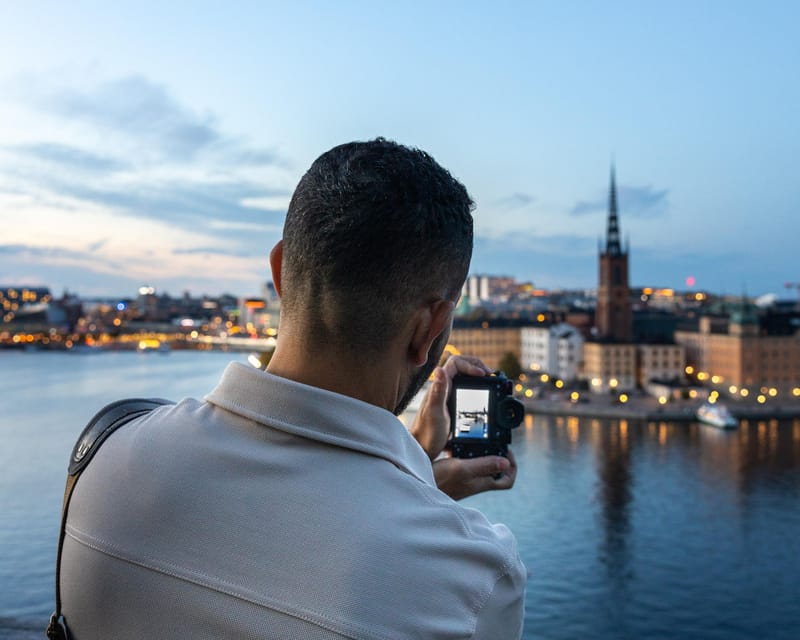
Pack light, but pack the right things. Comfortable shoes are important because this is a walking experience, and you should bring your own camera or phone.
A charged smartphone is also requested. It may be useful for communication, navigation, or photography, but the main point is to arrive with a device ready to use.
A tripod is recommended and not included. If you own a small travel tripod, this is the place to use it. If you do not, you can still learn the principles of night photography, but some long-exposure techniques may be harder to execute cleanly.
Headlamps are included. That small detail is easy to overlook, but it helps once the sky darkens and you are adjusting equipment outdoors.
After the tour, you receive a link to Skyline Stories, a guide with tips for composing city photographs. This gives the lesson some life beyond the two-hour walk. You can return to the advice later when photographing Stockholm or another city.
Languages, Access, and Booking Flexibility
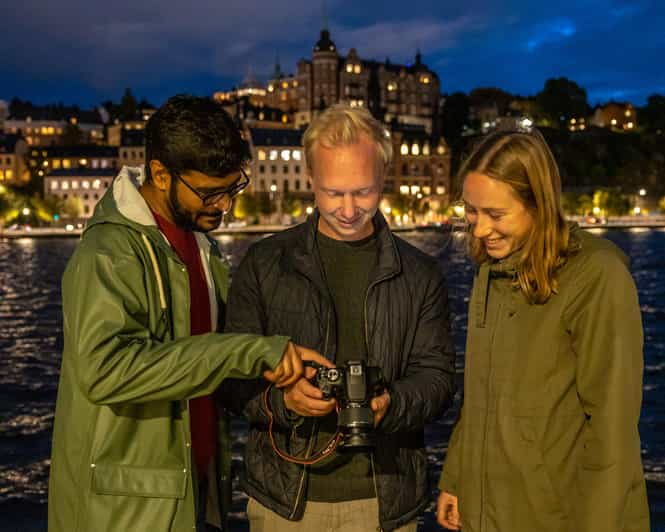
The tour is offered in English and German. It is a private group experience, so you can request the language that suits your party when booking.
The activity is listed as wheelchair accessible. Since the experience involves a walking route from Slussen to Old Town, you may want to confirm any route-specific needs before booking, particularly if you require detailed accessibility information.
The duration is two hours, and starting times depend on availability. Because the experience is tied to Blue Hour, the start time matters. Check the offered time carefully rather than choosing only for convenience.
You can cancel up to 24 hours in advance for a full refund. Reserve now and pay later is also available, which helps if your Stockholm plans are still taking shape.
Who Gets the Most From $155?
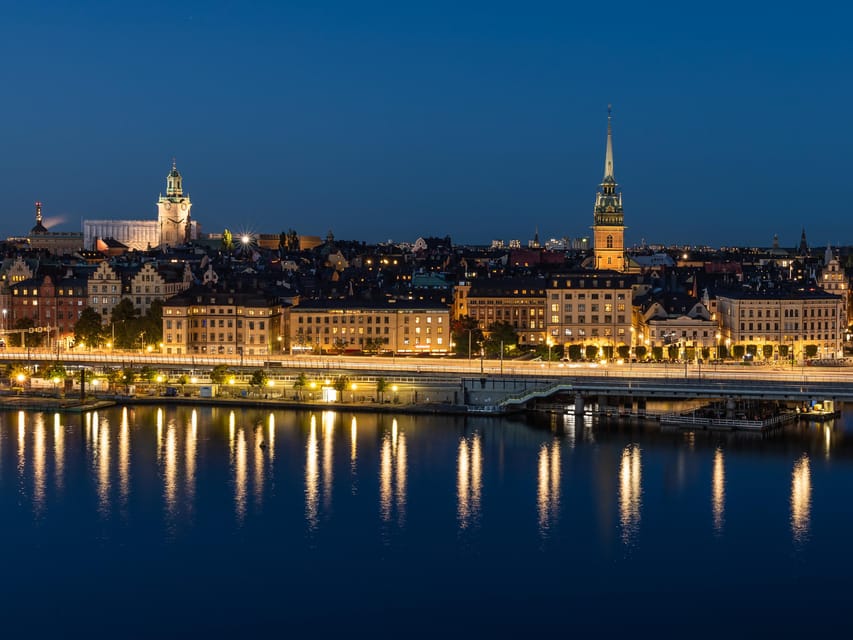
I would recommend this walk most strongly to someone who values instruction over a standard sightseeing tour. It is a good fit if you want to understand why a night photograph works, not just stand at a viewpoint and take one.
It also suits a solo visitor. You get a private guide, a local route, and direct help with your camera. The personal format avoids the awkward pace of joining a large group with very different interests.
Couples and private parties can make good use of it too, especially if everyone wants to photograph together. The guide can adapt the route to your shared interests, though the price is charged per person.
The experience may be less suitable if you do not care about photography or simply want a general evening tour of Stockholm. Two hours is a short time for broad sightseeing, and the teaching will take priority.
It is also worth thinking about your equipment. If you only have a phone and do not want technical instruction, you may not get the full value of the price. If you have a camera and want to improve, the one-to-one format makes more sense.
Should You Book the Stockholm by Night Photo Walk?
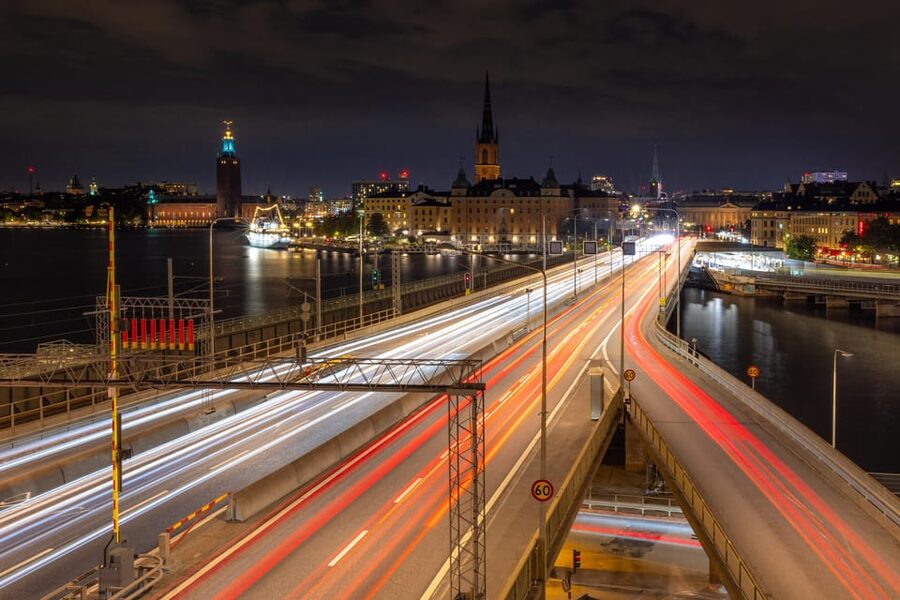
Book it if you want a focused evening with a professional photographer, a flexible route, and specific skills you can use after Stockholm. The strongest reasons are the private guidance, the Blue Hour timing, and the chance to work on long exposures and light painting in real city conditions.
At $155 per person, it is best treated as a private photography lesson with sightseeing included, not as a low-cost city walk. Bring your own camera, plan to carry a tripod if you have one, and choose it because you want to learn.
If that sounds like your kind of evening, this walk offers a clear route from Slussen to Old Town and a useful follow-up ebook. If you would rather hear a broad city story or see many landmarks quickly, spend your budget on a general Stockholm tour instead.
FAQ
Where does the Stockholm by Night Photo Walk begin?
It begins in front of Stockholm’s city museum, Stadsmuseet, at the Slussen subway station.
Where does the walk finish?
The walk ends in Stockholm’s Old Town.
How long does the experience last?
The photo walk lasts two hours.
What time does the tour start?
The starting time depends on availability. The walk begins during Blue Hour, when daylight is fading and city lights begin to appear.
Is the experience private?
Yes. It is a private group experience with a route adapted to your experience level and interests.
Which languages are available?
The live tour guide is available in English and German.
Do I need advanced photography skills?
No. The experience is designed for people who are curious and want to learn, and the guidance is adjusted to your level.
Is a camera included?
No. You must bring your own camera or phone.
Is a tripod included?
No. A tripod is recommended, especially for long-exposure photography, but you need to bring your own.
What is included after the tour?
You receive a link to the Skyline Stories guide, an ebook with tips about composing city photographs.
More Evening Experiences in Sweden
- Rhodes: E-bike Highlights Sunset or Morning Photo Tour
★ 4.9 · 351 reviews - Cappadocia Sunrise & Sunset Horse Tour with Photography
★ 4.9 · 348 reviews - Mediaeval Rhodes E-bike Highlights Photo Tour Morning/Sunset
★ 5.0 · 164 reviews - Tokyo by Night Photography Tour (Private Option Available)
★ 5.0 · 151 reviews
Just added around Sweden
- Magical Northern Lights Photography Tour Kiruna★ 4.5 · 30 reviews
- Half day Wildlife and Nature Photography★ 5.0 · 6 reviews
- Northern Light Photo tour★ 4.5 · 18 reviews
- Private Professional Photo Shoot in Stockholm★ 5.0 · 2 reviews
- Private Golden Hour Photo Walk in Stockholm★ 5.0 · 7 reviews
- Kiruna: Wildlife and nature photography★ 4.5 · 7 reviews
- Kiruna: Northern Light Photo Tour with Equipment★ 5.0 · 7 reviews
- Abisko: Photo Hike with Professional Photographer★ 4.9 · 12 reviews
Photography Tours, compared.

Rhodes: E-bike Highlights Sunset or Morning Photo Tour
Read our review →
Browse the lists this tour appears in