
REVIEW · NEW YORK CITY
New York Icon Photography Tour led by a Local Photographer
New York’s famous sights are easy to photograph badly. This tour helps you do better. A local working photographer leads you from Rockefeller Center and Fifth Avenue into Central Park, showing you how to find fresh angles, frame buildings, use reflections, and get more from the camera or phone you already carry. I especially like the small maximum of eight and the choice of morning or afternoon. The two-and-a-half-hour route gives you real coaching, not just a parade of photo stops.
I also like that the guides focus on your skill level. Zim has helped beginners move beyond automatic settings while still challenging experienced photographers, and Rob has coached groups on framing and reflective images. The main drawback is simple: you need a moderate level of fitness, and this is a walking and subway tour rather than a relaxed sightseeing ride. You also pay $125 before any admission to attractions such as Top of the Rock.
Key points at a glance
- Small groups of no more than eight: You get room to ask questions and receive hands-on advice.
- Local working photographers: Guides such as Zim and Rob bring practical camera experience and strong knowledge of New York streets.
- A useful mix of Midtown and Central Park: You photograph grand architecture, shop windows, public art, fountains, bridges, and skyline views.
- Morning or afternoon departures: This makes it easier to fit the session into a busy New York day.
- Subway fare included: The guide can move the group between parts of the route without leaving you to sort out the local fare.
- Skills you can keep using: Lessons cover composition, perspective, camera settings, angles, and reflections, not only one good picture.
Why this photo tour is different from a standard New York walk
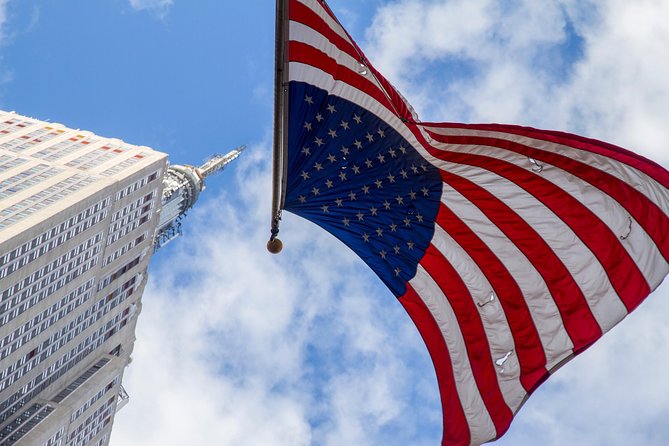
A regular sightseeing walk points out the landmarks. This experience asks you to look at them as a photographer. That change matters in New York, where the familiar sights are often surrounded by scaffolding, traffic, crowds, signs, and competing buildings.
Your guide helps turn those distractions into part of the picture. A tight crop of an architectural detail may work better than a full shot of Rockefeller Center. A shop window or polished stone surface may provide the reflection you need. A change in height or angle can make a well-known building feel new.
The guides are local professional photographers, not simply tour leaders carrying cameras. That is the heart of the experience. Zim, who appears often in the guide’s published feedback, is described as patient, funny, technically sharp, and willing to push participants beyond safe habits. Rob has helped groups improve framing and create reflective images. The teaching is practical and tied to what is directly in front of you.
You do not need to be an expert. The session suits people who shoot with a phone, a compact camera, or a more advanced model. If you already understand exposure and composition, you can ask for more demanding advice. If you normally point and press, you can work on the basics without feeling left behind.
More Photography Tours in New York City
- Central Park Photography Tour with Local Photographer
★ 5.0 · 85 reviews - Iconic New York City Photography Tour
★ 5.0 · 61 reviews - Manhattan Architecture Photography Tour
★ 5.0 · 24 reviews
Starting at 180 Madison Avenue
The tour begins at 180 Madison Avenue, New York, NY 10016. The meeting point is not at Rockefeller Center, so allow enough time to reach the starting address before the scheduled departure.
From there, the route works toward Midtown’s major sights and then into Central Park. The precise order may vary, but the listed stops show the character of the session: prominent architecture, storefronts, public spaces, and quieter details that reward a careful eye.
Because the group uses the subway, comfortable shoes matter. Subway fare is included, which removes one small but useful expense and keeps the group moving between sections of the city. Hotel pickup and drop-off are not included, and the activity returns to its starting point at the end.
Rockefeller Center and Radio City: learning to frame the big sights
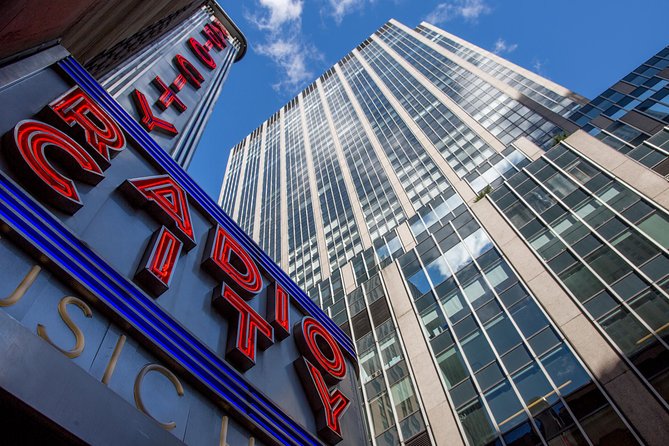
Rockefeller Center is a strong opening subject because it gives you several kinds of photographs in one place. You can work with wide views, vertical architectural lines, repeating patterns, sculptures, and people moving through open public space.
Your guide may help you decide when a wide shot is useful and when it simply includes too much. This is where a lesson in composition becomes practical. Look for symmetry, leading lines, and small details that make the picture more than a postcard.
Radio City Music Hall adds another layer of Midtown character. Its bold exterior and signs can be treated as a broad architectural subject or photographed in close detail. You may find that the best picture is not the obvious front-facing view, but a tighter composition that isolates lettering, curves, or color.
The nearby New York City Photo Safari stop reflects the identity of the company itself. It is less a separate attraction than a reminder that the session is built around active instruction. You are not just collecting snapshots as the guide walks ahead. You are stopping to adjust, try again, and discuss what works.
St. Patrick’s Cathedral and Fifth Avenue details
St. Patrick’s Cathedral gives you a change of texture and form. Its stone exterior, vertical lines, and detailed decoration can be difficult to capture in a single frame. Your guide can help you decide how much of the building to include and how to avoid a flat, ordinary record shot.
The nearby ATLAS statue, Saks Fifth Avenue, the LEGO Store, and Apple Fifth Avenue provide very different subjects within a short Midtown stretch. ATLAS offers a human-scale sculpture with strong shape and symbolism. Saks and other Fifth Avenue façades can be photographed for architecture, window displays, or reflections.
Apple Fifth Avenue is especially useful for experimenting with glass, geometric lines, and bright interior light. These subjects teach you to watch for glare, reflections, and competing visual elements. You might use your phone or camera differently at each stop, which makes the route a practical lesson in adapting to conditions.
Do not expect long visits inside every business. The value here is in learning to photograph the street-facing features and public spaces. If you want extended shopping time, this is not the right format. The schedule is designed for picture-making.
More Photography Tours in the USA
- From Waikiki: Best of Oahu Photo Tour with Pickup
★ 4.9 · 274 reviews - The Ultimate LA and Hollywood Photo Tour
★ 5.0 · 233 reviews - Beautiful Colors of Hawaii Photo Tour
★ 5.0 · 165 reviews - Beacon Hill Boston History + Photo Walking Tour (SMALL Group)
★ 5.0 · 163 reviews
Pulitzer Fountain, The Plaza, and Fifth Avenue’s grand scale
Pulitzer Fountain and The Plaza offer recognizable New York scenes, but they also give you a chance to work with layers. Water, stone, trees, moving people, and tall buildings can all appear in the same frame.
At a fountain, shutter speed and timing affect the feel of the water. You may want a crisp splash or a softer blur, depending on the camera you use. At The Plaza and the Pierre, the challenge is often balance. Large buildings can dominate a picture, so your guide may encourage you to include a person, doorway, tree, or street detail to give the image scale.
This part of the route also shows why a local photographer can be more useful than a printed list of sightseeing stops. The buildings are not new to New York, but the guide can direct your attention to an angle you would likely walk past.
Grand Army Plaza and the Central Park Zoo area
Grand Army Plaza marks the transition from Midtown’s hard surfaces to Central Park’s more open setting. The statue and surrounding streets provide a strong subject, while the entrance toward the park lets you practice moving from architectural photography to outdoor composition.
The Central Park Zoo area, Gar Pond, and Gapstow Bridge add variety without sending you far from the main sights. Gar Pond can provide still water and reflections. Gapstow Bridge is a natural place to work on framing, depth, and the relationship between the bridge and its surroundings.
These stops may reward patience more than expensive equipment. A phone can make a good image if you pay attention to position, background, and light. A larger camera gives you more control, but the instruction focuses on seeing and composing, not on buying new gear.
The route does require walking, and the group may use stairs or uneven city surfaces. The stated fitness requirement is moderate. If you have difficulty walking for an extended period, ask yourself if a two-and-a-half-hour photo walk is a comfortable match.
The Manhattan skyline and Gapstow Bridge
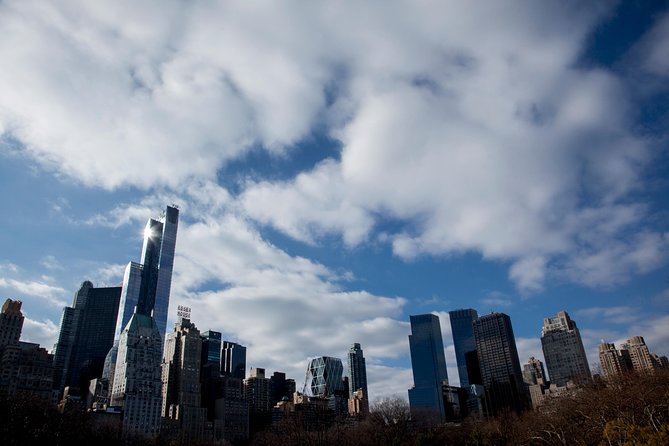
The Manhattan skyline is one of the tour’s broadest subjects. Big views can tempt you to use the widest setting and include everything. That often leaves the main subject too small. A guide can help you choose between a full skyline view and a tighter frame that emphasizes one building or a clear visual relationship.
Gapstow Bridge gives you a more controlled composition. Bridges naturally create lines that draw the eye, while water and trees provide foreground and background layers. This is also a good setting to test the idea that the best photograph may come from a slight shift in position rather than a complicated camera setting.
The exact conditions will affect the result. Morning and afternoon light can produce different colors and shadows, but the experience does not promise a specific weather condition or sunset. Book the time that suits your schedule, then let the guide help you work with the light you get.
Top of the Rock, MoMA, and the final Midtown subjects
Top of the Rock appears on the route as a photo subject and viewpoint reference. The experience price does not list an admission ticket, so you should not assume entry is included. You may photograph the landmark or views associated with it from the route, while any separate attraction admission would be your responsibility.
The Museum of Modern Art, Bergdorf Goodman, and Tiffany & Co. complete the visual range. MoMA brings a strong cultural reference and a clean urban exterior. Bergdorf Goodman and Tiffany provide polished Fifth Avenue storefronts, window displays, and details that work well for close compositions.
These final stops are useful because they show how to photograph city life without relying only on famous monuments. A display, façade, sign, or reflection can tell you as much about New York as a skyline. The guide’s job is to help you notice those smaller subjects.
What you actually learn during the 2.5 hours
The teaching varies with the guide and the group, but the experience focuses on usable skills. You can expect advice on framing, angles, perspective, reflections, and camera technique.
Some instruction is technical. You may work on getting more from your camera, using settings in a less automatic way, or choosing a better way to handle a difficult subject. Some of it is visual. One participant described learning to look at buildings differently and to focus more carefully on the subject instead of simply recording a place.
That mix is important. A camera lesson without composition can leave you with technically clean but dull pictures. A composition lesson without any technical help can be frustrating. The strongest part of this format is the link between the two.
The pace also allows room to try a picture again. Zim’s coaching style is described as patient but willing to challenge people when an image is not quite there. That is more useful than a quick compliment. You leave with a better idea of how to judge your own work.
Some past coaching has even included help with Lightroom. That does not mean editing software instruction is guaranteed, but it shows the kind of broader photography support a professional guide may offer when the group’s needs allow.
Is $125 a fair price?
At $125 per person, this costs more than a basic group sightseeing walk. You are paying for a small class as well as a route through Midtown and Central Park.
The maximum group size of eight makes the price easier to justify. A guide can look at your picture, suggest a new angle, and answer a specific question. In a large group, that personal attention would be limited. The included subway fare and local taxes also reduce small extra costs.
The value is strongest if you want to improve. If you only want someone to lead you past famous buildings, a cheaper walking tour may fit better. If you want a set of polished pictures but have no interest in learning how to make them, a private photographer session might be more direct.
For someone who wants both better New York photographs and skills to use later, the price is reasonable. The lessons do not end at Gapstow Bridge. You can apply them to the rest of your visit and future trips.
Who should book this experience?
I would point this tour toward solo photographers, couples, families with older children, and anyone who wants a more active way to see Midtown. It works especially well for a person who owns a camera but feels stuck using the same safe settings.
The tour also suits a mixed-skill group. A beginner can work on framing and basic technique while a more experienced photographer asks for advice on perspective, reflections, or editing. The guide adapts the coaching rather than forcing everyone through the same lesson.
Children must be accompanied by an adult. Service animals are allowed, and the route is near public transportation. You need a moderate level of physical fitness, and you should be comfortable walking through the city for about two and a half hours.
The experience is offered in English. It returns to the meeting point, so plan the rest of your day from 180 Madison Avenue rather than assuming you will finish in Central Park or near a subway station of your choice.
Booking, timing, and cancellation details
You can choose a morning or afternoon departure. That choice may affect the feel of the light and how easily the tour fits around museums, meals, or other plans, but no specific lighting result is guaranteed.
Confirmation is provided when you book. Free cancellation is available if you cancel at least 24 hours before the local start time. Cancellations or changes made inside that window are not accepted for a refund.
The tour is often reserved well ahead, with bookings averaging about 56 days in advance. If your New York dates are fixed, it makes sense to reserve early, especially if you want a particular time of day.
Should you book the New York Icon Photography Tour?
Book it if you want to see major New York sights while learning how to photograph them with more purpose. The strongest reasons are the small group, local professional guides, subway fare, and practical coaching from people such as Zim and Rob.
Skip it if you want a seated sightseeing experience, a private car, or guaranteed entry to Top of the Rock and other attractions. You should also think twice if walking for two and a half hours would be tiring.
For photographers at almost any skill level, this is a smart way to turn famous sights into a hands-on lesson. You will still see Rockefeller Center, Fifth Avenue, and Central Park, but you will leave with something more useful than a checklist: a better eye for the city.
FAQ
How long is the New York Icon Photography Tour?
The experience lasts approximately 2 hours and 30 minutes.
Where does the tour start?
It starts at 180 Madison Avenue, New York, NY 10016, USA.
Where does the tour finish?
The activity ends back at the meeting point.
How many people can join the tour?
The maximum group size is eight travelers.
Is subway fare included?
Yes. Subway fare and local taxes are included in the price.
Is hotel pickup and drop-off provided?
No. Hotel pickup and drop-off are not included.
Can I cancel for a full refund?
Yes, if you cancel at least 24 hours before the experience start time. Cancellations made less than 24 hours before the start time are not refunded.
Just added around New York City
- Instagram tour of New York with a private photographer★ 4.0 · 5 reviews
- Private Tour: Personal Travel Photographer Tour in New York★ 5.0 · 24 reviews
- Brooklyn: Personal Travel and Vacation Photographer★ 4.6 · 22 reviews
- New York City: Personal travel and vacation photographer★ 5.0 · 3 reviews
- New York City: Personal Travel and Vacation Photographer★ 4.9 · 35 reviews
- Soho and Brooklyn Private Photoshoot and Walking Tour★ 5.0 · 34 reviews
- Private New York City Walking Tour with Photo Shoot★ 5.0 · 28 reviews
- Central Park Private Photoshoot Tour with Pro NYC Guide★ 5.0 · 36 reviews
Photography Tours, compared.

Rhodes: E-bike Highlights Sunset or Morning Photo Tour
Read our review →
Browse the lists this tour appears in