REVIEW · PARIS
Paris Photography Masterclass – Private Photography Lesson
Paris Photography Masterclass – Private Photography Lesson
Paris is easy to photograph badly. The monuments are famous, the light changes fast, and a quick snapshot often looks like every other souvenir picture. This private three-hour lesson gives you time to slow down, look for stronger angles, and learn how to use your camera instead of simply pointing it at a landmark.
I like two things in particular: the one-to-one instruction, which lets the guide focus on your actual goals, and the route through central Paris, which turns a camera lesson into a useful city walk. Guides such as Clara, Michiru, Federica, William, and Alexander have helped people work with DSLRs, mirrorless cameras, and even an iPhone 15 Pro Max.
The main drawback is the price, $205.59 per person, and the fact that you must bring your own camera. The walk also operates in all weather, so rain or tired legs can affect the experience. Still, for up to four people sharing a private session, the cost can make sense if you want practical instruction rather than a standard sightseeing tour.
Key points to know before booking
- Private instruction for up to four people: You get direct feedback instead of trying to keep up with a large class.
- A classic Paris route with a creative purpose: Photograph Notre Dame, the Louvre, the Eiffel Tower, and Place de la Concorde while learning how to frame them.
- Useful for beginners and experienced photographers: Guides can work on basic settings, composition, low-light shooting, or more advanced technique.
- Night photography can be requested through the departure time: Evening sessions have focused on long exposures, city lights, and shooting in manual or aperture-priority mode.
- The guide adapts to your goals: You can concentrate on camera controls, perspective, portraits, cityscapes, or simply finding better views.
- Bring your own equipment and dress for the forecast: A camera is not supplied, and a tripod is available only upon request.
Why a private Paris photo lesson works
A regular group photo walk can be fun, but it often moves at the pace of the slowest person while the instructor divides attention among many cameras. Here, the maximum is four people per booking, and the activity is private to your group. That changes the feel of the lesson.
If you are new to photography, you can ask basic questions without feeling rushed. You might spend time learning shutter speed, aperture, exposure compensation, or focus modes. If you already know those controls, you can work on more subtle matters such as foreground interest, perspective, light, and timing.
I especially like the practical nature of the teaching. One participant arrived with an iPhone 15 Pro Max, and the guide explained how to use its native camera features, adjust exposure beyond automatic settings, and make stronger low-light images. That matters because good photography is not limited to expensive equipment.
The guide also asks what you want from the session. You may want a technical lesson, a portrait session, better night shots, unusual views of familiar buildings, or a quick introduction to Paris before a short stay. The more clearly you explain your goal, the more useful the three hours should be.
Several guides are named in the experience’s feedback. Clara is praised for patient instruction and helpful camera explanations. Michiru has led sessions focused on composition, manual settings, and adapting to difficult weather. Federica has worked with families and photographers interested in perspective. William has taught night cityscapes and helped a solo visitor gain confidence with a new camera. Alexander has combined camera tips with stories and observations about the city.
More Private Photoshoots in France
- Paris: Private Photoshoot at the Eiffel Tower
★ 4.7 · 2,636 reviews - Private Guided Professional Photoshoot by the Eiffel Tower
★ 5.0 · 388 reviews - Paris: Your Own Private Photoshoot at the Eiffel Tower
★ 4.5 · 263 reviews
Starting at Pont Marie and finding your photographic eye
The meeting point is 3 Pont Marie in the 4th arrondissement. This puts you near the Seine and gives the session a natural start in central Paris. You should arrive ready to walk, with your battery charged and your camera set up as far as you can manage.
The first lesson may be less about pressing the shutter and more about deciding what deserves attention. A large monument can fill the frame, but a foreground element, a reflection, a person, or a line in the street can give the picture more depth. One particularly useful lesson described by a participant was learning to use a foreground element when photographing a large building or monument.
That is the difference between collecting proof of where you were and making an image with a point of view. Your guide can give immediate, constructive feedback while you are still in the street and can try the shot again.
The route is a walking experience, not a vehicle tour. Transportation between attractions is not included, so wear shoes that can handle several hours on Paris pavements. The schedule allows multiple departure times from morning through early evening, but the exact departure time depends on the date you select.
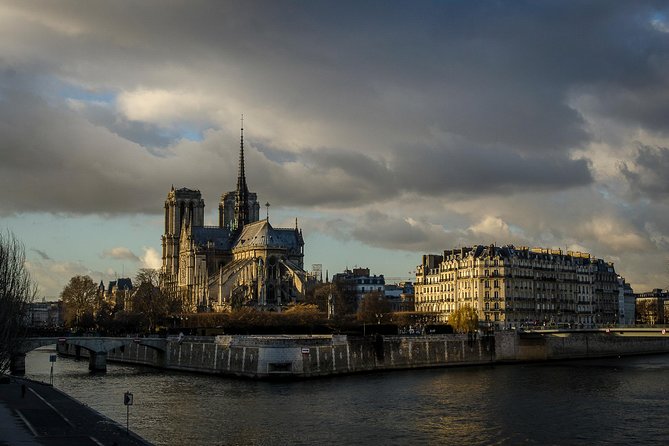
Notre Dame: a first exercise in scale and detail
The first listed stop is Notre Dame Cathedral, with about 30 minutes set aside for photography. Admission is free because the lesson takes place outside, where you can work on views of the cathedral rather than tour the interior.
Notre Dame presents an immediate challenge. Its facade is large, symmetrical, and familiar, so a straight-on picture can look flat. Your guide may help you consider how much sky to include, how to use nearby details, or how to place the cathedral within the surrounding streetscape.
This is also a good place to get comfortable with your equipment. Beginners may learn where to change exposure or focus. More advanced photographers can think about lines, balance, and the relationship between the building and its setting.
Thirty minutes is enough for a focused exercise, but not enough for every possible angle. The route is designed to expose you to several major locations, so do not expect a long architectural study of each one. Its strength is variety and hands-on practice.
The Louvre: courtyards, pyramid, and clean geometry
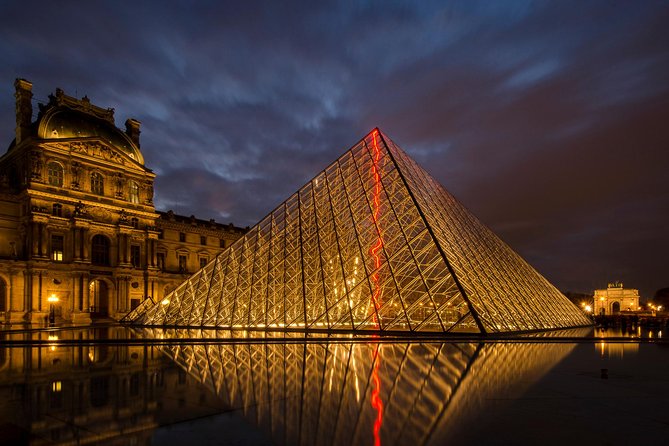
The next stop is the Louvre, where you photograph the courtyards and pyramid for roughly 30 minutes. Again, the activity does not include museum admission. You are using the outdoor spaces as a working studio.
The Louvre is useful for photographers who want to improve composition. Its courtyards offer strong lines, repeated shapes, open space, and the contrast between historic architecture and the modern glass pyramid. You can practice symmetry, reflections, framing, and the effect of changing your position by only a few steps.
This is the kind of stop where a guide can save you time. Instead of wandering through a huge complex hoping to find a pleasing view, you can concentrate on how to build the image. If you are new to manual settings, this is a useful place to learn while the subject remains still.
The Louvre can also be demanding. Open courtyards may offer bright light and hard shadows during the day, while evening sessions bring low light and the need for steadier technique. A tripod may be available upon request, but you should arrange that before the tour rather than assume one will appear.
More Private Photoshoots in Paris
- Paris Private Walking Tour with a Personal Photographer
★ 5.0 · 262 reviews - Paris: Private Photoshoot Near Eiffel Tower 55 Photos
★ 4.9 · 238 reviews - Paris: Photo Shoot with a Private Travel Photographer
★ 4.9 · 206 reviews - Paris: Private Photoshoot Outside the Louvre Museum
★ 4.8 · 139 reviews
The Eiffel Tower over the Seine
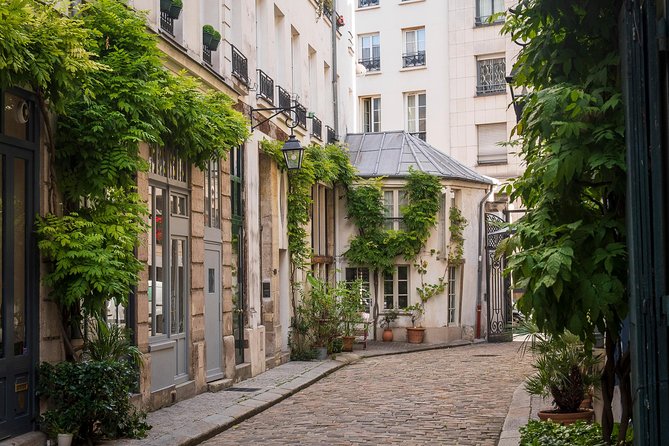
The Eiffel Tower section focuses on photographing the tower over the Seine, with about 30 minutes at the stop. This is one of the most appealing parts of the route because the river can add a natural leading line and a sense of space around the tower.
The tower is so familiar that the challenge is finding a less predictable composition. Your guide may help you work with reflections, scale, foreground elements, or the balance between the tower and the river. A change in viewpoint can make a larger difference than a change in camera.
Evening departures are especially suited to this part of the route. Several people have used the session to learn long exposures, cityscape technique, and low-light settings. One participant brought a tripod and learned how to create effects through long exposure. Another moved into manual shooting within the first hour after receiving help with composition and camera controls.
If this is your main goal, choose a departure time that gives you the kind of light you want. Morning and daytime sessions are better for learning basic composition in clear conditions. Later departures can provide sunset or night scenes, depending on the date and season, but light conditions vary.
Place de la Concorde and the end of the walk
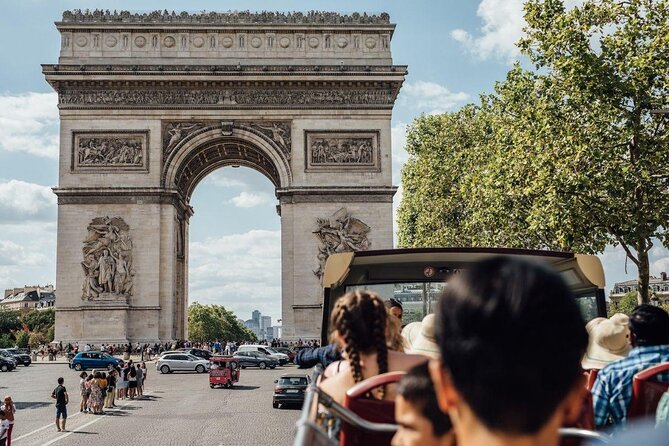
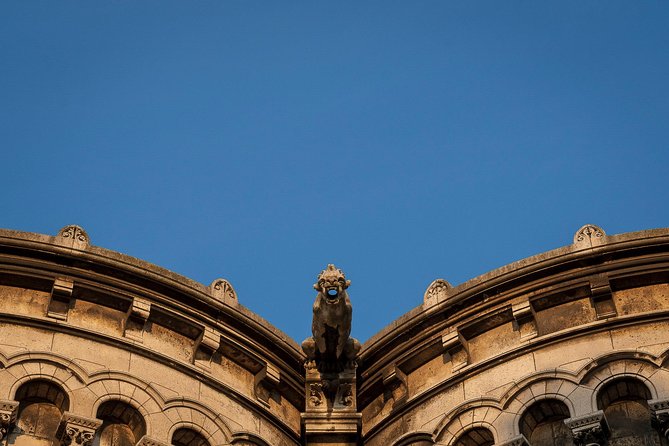
The final listed stop is Place de la Concorde, where you can photograph the Champs-Élysées or the fountains. The official end point is near Concorde, Quai des Tuileries, though the precise finish can vary with walking speed. In practice, you should expect to end near Place de la Concorde.
This stop gives you a different kind of subject from Notre Dame and the Louvre. The broad square, fountains, and long view toward the Champs-Élysées encourage wider compositions. You can work on balance, scale, and the way open space affects a picture.
It also provides a useful finish to the lesson. By this point, you have had several chances to apply the guide’s advice. You may find yourself checking the edges of the frame, looking for a foreground detail, or changing your position before taking the obvious shot.
The three-hour estimate is approximate. The route includes walking time, and the end can shift based on how quickly your group moves. If you need to reach a dinner reservation or train at a precise time, leave a buffer after the stated duration.
What you can learn in three hours
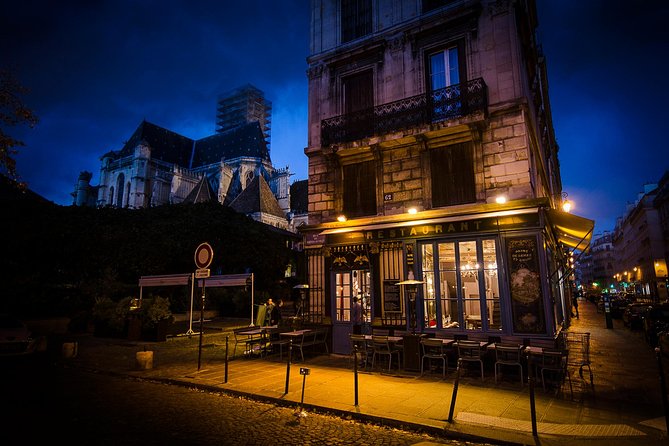
The lesson is not a formal classroom course with a fixed syllabus. It is a moving session built around the places you photograph. That is good news if you want advice tied to real pictures, but you should tell the guide what matters most before you begin.
You might focus on:
- Camera settings and moving beyond automatic mode
- Aperture priority, manual shooting, and exposure
- Composition, perspective, and foreground elements
- Night photography and long exposures
- Cityscape framing and architectural lines
- Making better use of a phone camera
- Photographing people or creating personal portraits
- Finding less obvious angles around famous sights
The guides have helped complete beginners and experienced photographers, so the pace can change. A beginner may spend much of the session learning the camera’s basic controls. An experienced photographer may get more value from feedback on composition and visual choices.
The strongest instruction is specific and immediate. Instead of hearing a general lecture about composition, you can take a picture, look at the result, and adjust the next frame. That kind of repetition is often more useful than a long explanation indoors.
Daylight, evening, and weather choices
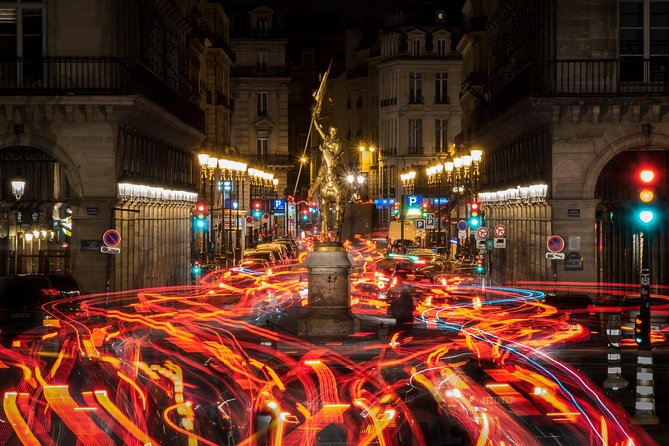
Departure times range from morning to early evening, depending on the date. Choose based on your goals rather than simply selecting the most convenient slot.
A morning session can offer a calmer start and clear daylight for learning. A daytime lesson makes it easier to see camera controls and study architecture. An evening session is the better fit if your priority is city lights, long exposures, or low-light technique.
The experience runs in all weather. That is a practical point, not a footnote. Rain can change the route and the kind of pictures you make. One wet-weather session used the Metro and time around Palais Royal, the Louvre, and a cafe when conditions became too difficult for a normal walk. The guide adapted to the situation, but heavy rain still made the experience harder, especially for a tired child.
Bring weatherproof clothing and protection for your camera. You should also be ready for the possibility that the most useful lesson comes from working with imperfect conditions rather than waiting for an ideal sky.
Price, group size, and overall value
At $205.59 per person, this is not a cheap way to see Paris. The value depends on what you want. If you only need a quick introduction to the main sights, a standard walking tour will cost less. If you want private photography coaching and plan to keep using the skills after Paris, the price is easier to justify.
The maximum group size is four, and the private format is important. Two people with different skill levels can receive separate help, although one person may naturally become the main student if the others choose not to take part. Families can also use the session as a shared activity, with the guide adjusting explanations for adults and children.
Group discounts may be available, which can improve the price for a small party. Food, drinks, and transportation are not included, so budget for those separately. Your camera is also your responsibility, and a tripod is available only upon request.
I would see this as a lesson with sightseeing included, not a sightseeing tour with a camera theme. Book it when improving your photography is a central reason for going. If the goal is simply to collect a few attractive pictures, the cost may feel high.
Who should book this experience
This suits a first-time DSLR owner who wants confidence before photographing the rest of a trip. It also works well for an enthusiast who understands the camera but wants help with composition and city scenes.
Solo visitors get focused instruction and a structured way to see Paris. Couples and families can share the walk, though you should be clear about who wants active photography help. The experience is also suitable for people using an iPhone, despite the request to bring a DSLR in the practical information. The iPhone 15 Pro Max session shows that the lesson can include phone photography when you discuss it with the guide.
You should be comfortable walking for around three hours and dealing with changing weather. There are no stated health restrictions, and most people can participate, but the route is on city streets and includes time on foot.
Booking advice and cancellation terms
Confirmation is provided at booking, and you should check the exact departure time for your selected date. The experience is offered in English.
Free cancellation is available up to 24 hours before the start time for a full refund. Cancellations or changes made less than 24 hours before the start are not accepted for a refund. The cut-off uses Paris local time.
Should you book the Paris Photography Masterclass?
Book it if you want to return from Paris with better skills, not just more pictures. The private format, small maximum group, and direct feedback make it especially useful for beginners, solo visitors, and photographers who want to improve night shots or composition.
I would choose an evening departure for city lights and long exposures, and a daytime slot for basic camera instruction and architecture. Tell the guide your goals, bring the camera you actually plan to use, request a tripod if needed, and dress for the forecast.
Skip it if you want a conventional photo shoot in which someone else takes polished portraits of you, or if you are looking for a low-cost way to see the landmarks. This is an active lesson. You do the photographing, and the best value comes from applying the advice as you walk.
FAQ
How long does the Paris Photography Masterclass last?
The session lasts approximately three hours, though the exact finish can vary depending on how quickly your group walks.
How many people can join the private tour?
A maximum of four people can be included per booking. Only your group participates in the private activity.
What sights are included on the route?
The route includes Notre Dame Cathedral, the Louvre courtyards and pyramid, the Eiffel Tower viewed over the Seine, and Place de la Concorde.
Do I need to bring my own camera?
Yes. The practical information asks you to bring your own DSLR camera, and the camera itself is not included. A participant has also used an iPhone 15 Pro Max during a lesson.
Is a tripod included?
A tripod is available upon request. You should arrange this before the experience rather than assume one is supplied automatically.
Does the tour operate in bad weather?
Yes. The experience operates in all weather conditions, so you should dress appropriately and protect your camera from rain.
Where does the tour start and end?
The tour starts at 3 Pont Marie, 75004 Paris. It typically ends near Place de la Concorde, at or around Concorde, Quai des Tuileries, though the exact finish varies with walking speed.
More Photography Workshops in Paris
- 2-Hour Photography Class While Touring Downtown Santa Fe, Smart Phones Welcome!
★ 5.0 · 108 reviews - Unique Rome by Night, Photo Tour and Workshop Under the Stars
★ 5.0 · 96 reviews - Elevate Your Photography – Barcelona Private Tour & Workshop
★ 5.0 · 78 reviews - Rome Photography Masterclass – Private Photography Lesson
★ 5.0 · 67 reviews
Just added around Paris
- Montmartre Sacre Coeur area photoshoot by Paris photographer★ 5.0 · 5 reviews
- Louvre area photo shoot by Paris photographer★ 5.0 · 6 reviews
- Louvre Museum (Essential) – 2-hour visit in Portuguese with a photo session★ 4.8 · 23 reviews
- Instagrammable Paris: Icons & Hidden Gems with a Local★ 4.8 · 7 reviews
- Instagram tour of Paris with a private photographer★ 5.0 · 2 reviews
- Immortalize your memories in Paris with a professional photo shoot!★ 5.0 · 12 reviews
- Marriage Proposal in Paris + Photographer 1h-Proposal agency★ 5.0 · 2 reviews
- Photo session for couples with flowers around Eiffel tower★ 5.0 · 3 reviews
Photography Workshops & Lessons, compared.
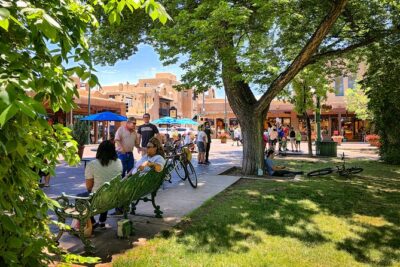
2-Hour Photography Class While Touring Downtown Santa Fe, Smart Phones Welcome!
Read our review →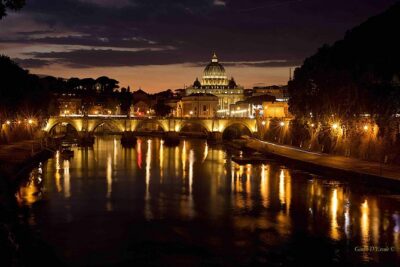
Unique Rome by Night, Photo Tour and Workshop Under the Stars
Read our review →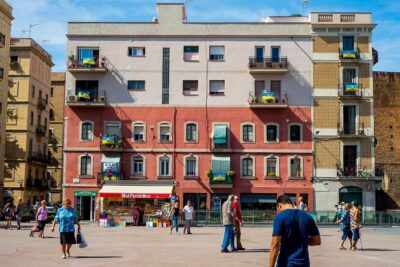
Elevate Your Photography – Barcelona Private Tour & Workshop
Read our review →
Rome Photography Masterclass – Private Photography Lesson
Read our review →
Private (Phone) Photography Class in Park & Old Town
Read our review →
Venice Photography Masterclass – Private Photography Lesson
Read our review →
Edinburgh Photography Masterclass – Private Photography Lesson
Read our review →