REVIEW · ROME
Rome Photography Masterclass – Private Photography Lesson
Rome is your classroom on this private photography walk. With Emanuele, you can work on camera settings, composition, perspective, and street photography while moving between famous sights and less obvious viewpoints. The lesson is shaped around your skill level, not a fixed lecture.
I like the one-on-one attention, especially if you are new to photography or want help with a particular camera. I also like the choice between a daytime walk and a night outing, since Rome changes character dramatically after dark. The main consideration is that this is a walking lesson and sightseeing route, not an admission tour. You may photograph the sights from outside, but attraction entry, transport, and a camera are not included.
Key things to know before booking
- Private coaching with Emanuele: The lesson can be adapted to your experience, from zero camera knowledge to more focused help with street photography and composition.
- Day or night options: Choose the light you enjoy most, from daytime architectural detail to evening scenes around Rome’s fountains and monuments.
- Six major Rome sights: The route may include the Colosseum, Roman Forum, Pantheon, Trevi Fountain, Piazza Navona, and Castel Sant’Angelo.
- Three hours on foot: Plan for a practical photo walk rather than a full-day sightseeing tour, with time spent shooting and learning at several stops.
- Your own camera is required: A tripod can be requested, but the camera itself is not supplied.
- Private pricing: At $181.02 per person, the value depends on how much you want personal instruction rather than a standard group tour.
A photography lesson built around your camera
The best part of this experience is its practical format. You do not simply listen to a guide describe Rome while taking the same snapshots as everyone else. You bring your camera, make photographs, and receive help as problems appear.
That matters because photography advice is most useful when it fits the camera in your hands. Emanuele has worked with complete beginners who had no experience at all, as well as photographers looking for better perspective, street composition, and urban views. If you are unsure about shutter speed, aperture, focus, or composition, you can ask about the exact setting in front of you rather than trying to remember a general rule from a classroom.
I also like that the lesson is tailored to your interests. One person may want dramatic architecture. Another may care more about portraits, romantic scenes, or night photography. The available information points to a flexible approach, with Emanuele taking time to understand your ability and photographic style before shaping his advice.
The private format is important here. Only your group takes part, so you are not competing with ten other people for a quick explanation or waiting while strangers adjust their cameras. A couple can share the lesson, and a non-photographer can come along, though the person holding the camera will naturally receive most of the instruction.
More Photography Workshops in Italy
- Unique Rome by Night, Photo Tour and Workshop Under the Stars
★ 5.0 · 96 reviews - Rome by Day, Beauty and History Unique Photo Tour and Workshop
★ 5.0 · 36 reviews - Unique Photo Tour and Workshop in Rome Dusk to Dawn
★ 5.0 · 23 reviews
What three hours in Rome can cover
The advertised route lists six major sights, each with about 30 minutes allowed. That suggests a brisk but useful circuit, not a slow visit inside every monument. The exact order and stopping time may change, and the wording indicates that the group may pass by and photograph each place rather than enter it.
That distinction is worth understanding before you book. This tour is about seeing Rome through a camera and learning how to make stronger images. If you want extended time inside the Colosseum or Roman Forum, you will need separate admission and a different visit.
The meeting point is at Fontana del Colosseo, beside the Colosseum. The activity ends back at the meeting point. Since transportation to and from the attractions is not included, plan on walking between the stops and allow enough time to reach the starting point by public transport or on foot.
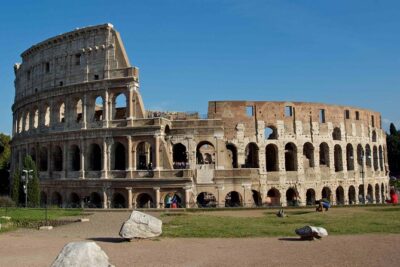
Colosseum: strong lines and changing light
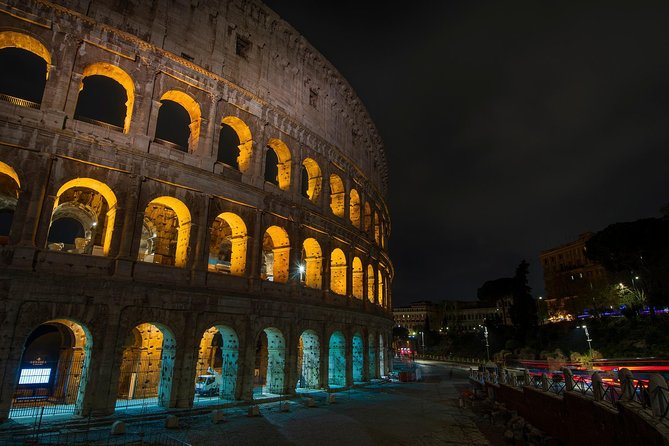
The Colosseum is an ideal first lesson because its shape gives you plenty to work with. You can practise vertical lines, wide views, close architectural details, and different angles around the exterior.
Emanuele can help you think beyond the obvious front-facing shot. The amphitheater has repeating arches and strong curves, so it gives beginners a clear way to practise framing. More experienced photographers can work on perspective, light, and the challenge of including the monument without losing the feeling of the surrounding space.
You may pass by and photograph the Colosseum rather than go inside. That keeps the lesson moving, but it also means you should not book this experience as a substitute for an archaeological visit.
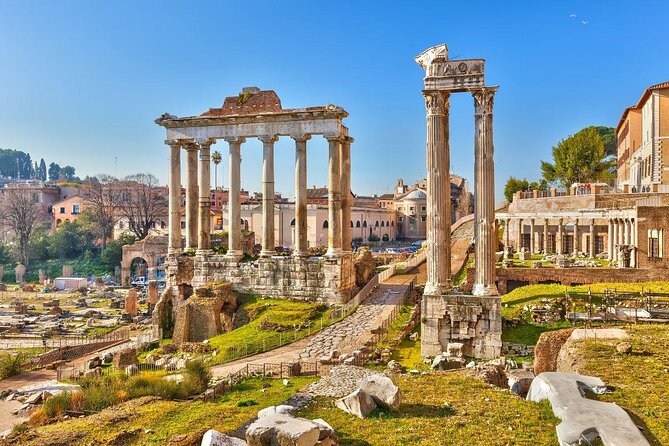
Roman Forum: layers of stone and perspective
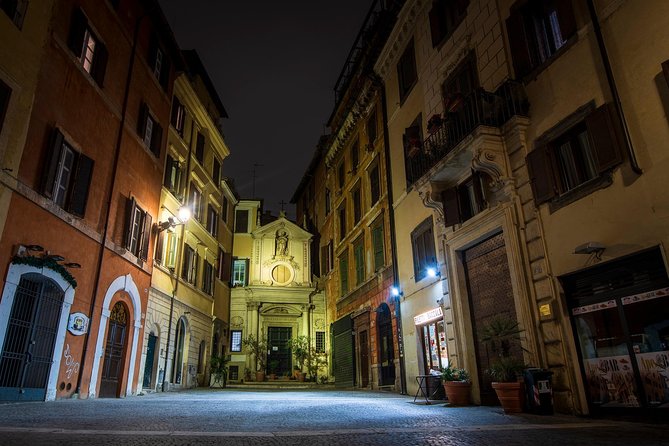
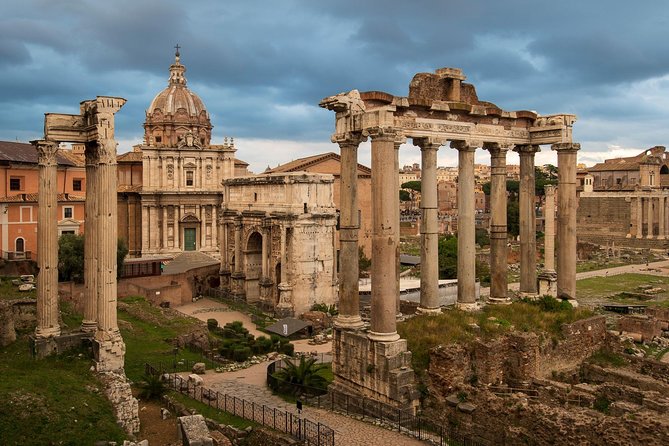
The Roman Forum offers a different kind of photographic problem. Instead of one clean monument, you are looking at columns, ruins, paths, and changing levels. It is a good place to learn how to organize a busy frame.
The route may give you viewpoints of the Forum from outside or along nearby streets. Emanuele has taken groups to less obvious places for distinctive views of the Colosseum and Forum, which is useful if you want images that do not look like every postcard in the shop.
This is also where a guide who understands both Rome and photography can add value. You can learn about the setting while receiving advice on how to use foreground, distance, and architectural detail. The focus remains on making a photograph, not simply recording that you were there.
Same place, a different kind of shoot:
- Rome: Explore the City by Vespa with an Optional Photoshoot
★ 5.0 · 1,103 reviews - Rome Vespa Scooter Tour with Professional Photographer
★ 5.0 · 857 reviews - Rome: Photoshoot Service with Vintage Fiat 500
★ 5.0 · 611 reviews - Rome: Personalized Photoshoot outside the Colosseum
★ 5.0 · 526 reviews
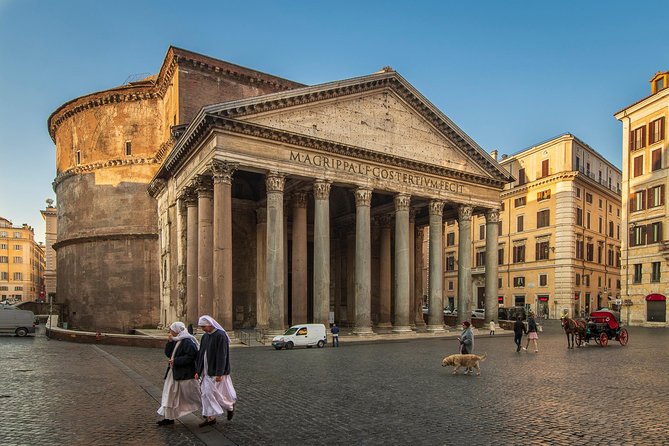
Pantheon: detail, symmetry, and a compact stop
The Pantheon is a natural place to practise symmetry and clean composition. Its exterior has strong geometry and a memorable entrance, so you can work on centering, balance, and the effect of nearby buildings.
The stop may be brief, especially if the route is keeping to its three-hour schedule. That is not a flaw if you want a sample of several parts of Rome, but it does mean you should arrive ready to shoot. Have your battery charged, your memory card available, and your basic controls easy to reach.
The tour information does not promise interior entry. If seeing the famous dome and oculus from inside is a priority, arrange a separate visit. Here, the Pantheon functions mainly as a photographic subject and a lesson in architectural framing.
Trevi Fountain: famous views and a more personal angle
Trevi Fountain is one of Rome’s hardest subjects because the standard view is so familiar. The practical advantage of private guidance is that you can ask how to find a less expected composition rather than simply point your camera at the water and press the shutter.
Emanuele has shown participants a discreet viewpoint for an unusual Trevi image. The exact location is not specified, so you should think of this as a possible local tip, not a guaranteed secret-access stop. Still, that kind of local awareness is valuable in a city where the most famous sights are often photographed from the same few positions.
The fountain can also work well for learning about light and movement. A daytime visit gives you bright stone and active street scenes. A night option may offer a more dramatic mood, but you should choose the tour time based on the sort of image you want to make.
Piazza Navona: people, space, and street photography
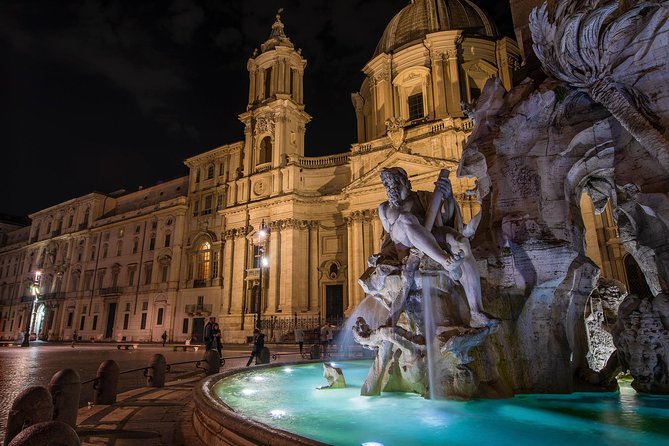
Piazza Navona gives the lesson room to move beyond monuments. Its broad shape and open views allow you to practise photographs that include people, fountains, façades, and everyday movement.
This is a useful setting for street photography because the subject is not only the architecture. You can work on timing, distance, and deciding what belongs in the frame. If you prefer to avoid photographing strangers, the square still gives you strong lines and public art to study.
The experience is not described as a formal portrait session, but it can suit couples who want photographs of themselves in Rome. One couple particularly enjoyed having Emanuele take pictures and videos while leading them toward romantic spots. If personal photos are important to you, mention that when booking so the lesson can reflect that goal.
Castel Sant’Angelo: Rome from another angle
The route may continue to Castel Sant’Angelo, a large cylindrical fortress near the Tiber. Its shape and position offer a change from the tighter streets around the historic center.
You can use this stop to think about scale and context. Instead of filling the frame with one façade, you might include the river, bridge, sky, or surrounding city. The guide can help you decide what to leave out, which is often as important as what you include.
Again, this is a pass-by photography stop rather than a promise of entry. The value comes from seeing several types of Roman scenery in one walk and applying the same camera principles in different settings.
Daylight or night photography?
The choice of timing is one of the most useful features. A daytime tour is a sensible pick if you want to study architecture, colour, and detail with plenty of natural light. It is also the easier option for a beginner who is still learning camera controls.
A night tour suits you if you want fountains, illuminated monuments, reflections, and a more atmospheric Rome. Low light can make camera settings harder, so it gives you a chance to learn about stability, exposure, and working with available light.
Do not choose simply because one time sounds more romantic. Choose according to your goals. If you want straightforward instruction and a broad look at the monuments, day may be easier. If you already know basic controls or want to stretch yourself, night can provide more interesting technical challenges.
What the private format is worth at $181.02
At $181.02 per person, this is not a budget sightseeing walk. You are paying for a private professional guide, a local guide, and direct instruction over about three hours. The price makes more sense if you want to improve quickly, have limited time in Rome, or are carrying a camera you do not yet understand well.
The value is strongest for one person or a couple who will actively ask questions and practise throughout the walk. It is less compelling if you only want a guide to point out monuments or if you plan to take casual phone snapshots without seeking technical advice.
Group discounts are available, though the exact discount is not stated. Since this is a private activity, ask about the final group price if more than two people are considering it. A larger group may reduce the cost per person, but it can also reduce the amount of individual coaching each person receives.
The experience includes the guide and the photography lesson. It does not include a camera, transportation, attraction admission, or a tripod as a standard item. A tripod is available on request, so ask ahead if you need one for night work.
Who will get the most from this walk?
I would recommend this for:
- A beginner who wants to learn directly on the streets of Rome.
- A photographer with a new camera or confusing manual controls.
- A solo visitor who wants focused instruction rather than a group lecture.
- A couple who wants a private activity with some personal photographs.
- A more experienced photographer interested in urban composition, perspective, or night scenes.
- Someone with only one day in Rome who wants sightseeing and a useful skill lesson in the same outing.
It may not suit you if you want extensive interior visits, a relaxed food-and-history walk, or a fixed sightseeing itinerary with guaranteed time at every monument. The route covers many places, but the core product is photography coaching.
The tour can also work for a mixed couple. A non-photographer may join while one person receives most of the technical instruction. That companion will still see major Roman sights, but should not expect equal lesson time unless both people want to use cameras.
Practical advice before meeting Emanuele
Bring the camera you actually want to learn. If you have several cameras, choose the one you are most likely to use after the tour. Bring spare batteries if you have them, since three hours of repeated shooting can use more power than a normal sightseeing walk.
Think about your goals in advance. You may want help with night exposure, street composition, portraits, architectural detail, or simply understanding the basic controls. Telling Emanuele what you hope to learn will help the private format work harder for you.
Wear comfortable shoes and expect to walk. The meeting point is at Fontana del Colosseo, and the experience returns there at the end. Public transportation is nearby, but transport between the attractions is not part of the service.
The activity is offered in English. Confirmation arrives at booking, and most people can participate. Free cancellation is available up to 24 hours before the local start time. Inside that window, changes and refunds are not accepted.
Should you book the Rome Photography Masterclass?
Book it if you want Rome to teach you how to take better pictures, not simply provide a backdrop for them. The strongest reasons are the private format, Emanuele’s patient approach, the flexible day or night timing, and the chance to work at famous sights while also finding less familiar viewpoints.
I would be more cautious if your main aim is to enter the Colosseum, Pantheon, or Roman Forum, since admission is not included and the stops may be exterior photo visits. For a focused three-hour lesson, though, the price can be fair, especially if you are a beginner, have limited time, or want advice shaped around your own camera and style.
FAQ
How long is the Rome Photography Masterclass?
The experience lasts approximately three hours.
Is this a private tour?
Yes. Only your group participates, and the activity includes a private tour with a local guide and professional photography guide.
Who leads the photography lesson?
The experience is led by Emanuele, who provides photography coaching and local guidance.
Can I choose a day or night tour?
Yes. You can choose between day and night options based on your photographic interests.
Which Rome sights may be included?
The route may pass by and photograph the Colosseum, Pantheon, Roman Forum, Trevi Fountain, Piazza Navona, and Castel Sant’Angelo.
Are entrance tickets included?
No. The listed stops are pass-by photography opportunities, and attraction admission is not included.
Do I need to bring my own camera?
Yes. A camera is not included, so you need to bring your own. A tripod is available upon request.
Where does the activity start and finish?
It starts at Fontana del Colosseo, 00184 Rome, and ends back at the same meeting point.
More Private Photoshoots in Rome
- Rome: Early Morning Private Photoshoot at Iconic Landmarks
★ 5.0 · 206 reviews - Private Photoshoot in Rome
★ 5.0 · 201 reviews - Rome: Colosseum Photoshoot, Private & Custom Experience
★ 5.0 · 141 reviews - Rome: Vatican and Castel Sant’Angelo Private Photoshoot
★ 4.9 · 133 reviews
More Private Photoshoots in Italy
- Rome: Colosseum Photoshoot – Private Session
★ 5.0 · 304 reviews - Rome: Private Photoshoot at the Trevi Fountain
★ 4.9 · 235 reviews - Rome: Iconic Trevi Fountain Private Photoshoot Experience
★ 5.0 · 233 reviews - Rome: 1-Hour Private Photo Shoot for Family, Couples or Solo
★ 5.0 · 214 reviews
Just added around Rome
- Golf cart tour in Rome & Professional Photoshoot★ 5.0 · 2 reviews
- Rome : Golf cart tour & Professional Photoshoot★ 4.5 · 13 reviews
- Professional Photoshoot in the Eternal City Rome★ 5.0 · 19 reviews
- Rome in a Fiat Jolly: Exclusive Vintage Ride & Photo Tour★ 5.0 · 20 reviews
- Explore city on Vespa with Professional Photographer★ 5.0 · 3 reviews
- Fiat 500 Photo Experience Capture the Magic of the City★ 5.0 · 6 reviews
- Expert Photographer of Rome with Guide★ 5.0 · 7 reviews
- Electric Tuk-Tuk Photography Service of Rome★ 5.0 · 3 reviews
Photography Workshops & Lessons, compared.
Paris Photography Masterclass – Private Photography Lesson
Read our review →
2-Hour Photography Class While Touring Downtown Santa Fe, Smart Phones Welcome!
Read our review →
Unique Rome by Night, Photo Tour and Workshop Under the Stars
Read our review →
Elevate Your Photography – Barcelona Private Tour & Workshop
Read our review →
Private (Phone) Photography Class in Park & Old Town
Read our review →
Venice Photography Masterclass – Private Photography Lesson
Read our review →
Edinburgh Photography Masterclass – Private Photography Lesson
Read our review →