
REVIEW · TOKYO
Tokyo: Sumo Practice Tour with Ring-Side Seat and Photoshoot
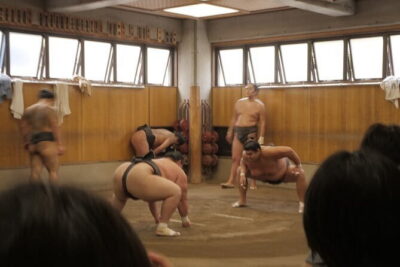
The best part of this Tokyo experience is the distance between you and the action. You are not watching a staged cultural show. You are sitting near a real sumo ring while wrestlers repeat drills, collide in full bouts, and follow the strict rhythm of their morning training. You can hear breathing, footwork, and the sharp advice from the stable master.
I like the small group of no more than 10 people, which keeps the setting quiet and makes it easier to ask questions. I also like the guides’ clear preparation. Marie, Sho, and Masao Hiramatsu have explained the ranking system, stable rules, and basic techniques in ways that help first-time viewers follow what they see. The main drawback is comfort: you may sit on tatami, and some sessions require standing for much of the two hours.
Key points to know before you book
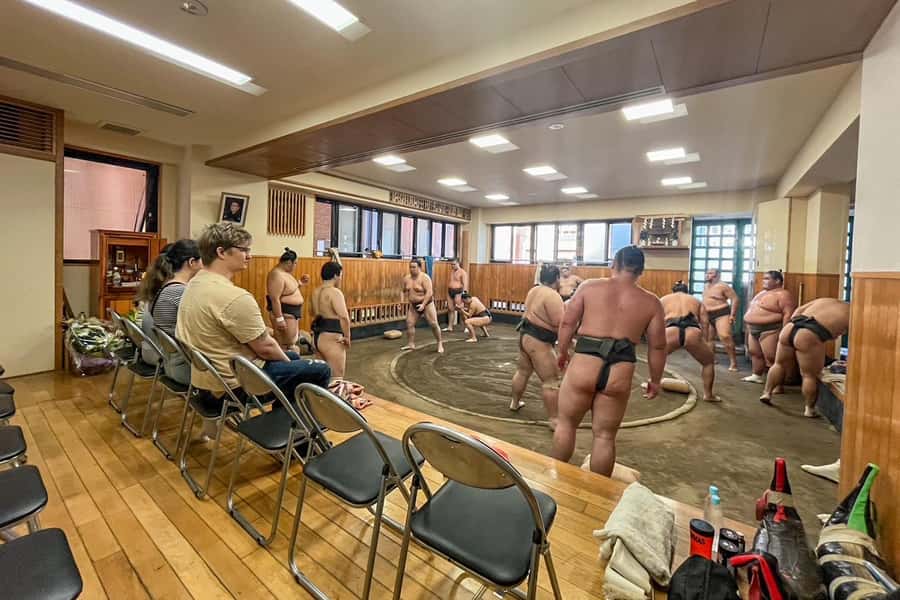
- Watch a real morning practice: The wrestlers train in their own stable rather than performing a tourist demonstration.
- Sit close to the ring: You may hear the wrestlers breathe and see their footwork, grips, and collisions at close range.
- Learn before the action begins: Your guide explains sumo rules, rankings, customs, and the stable’s etiquette.
- Chairs are not guaranteed: Some stables have rows of chairs, while others expect you to sit on cushions or tatami.
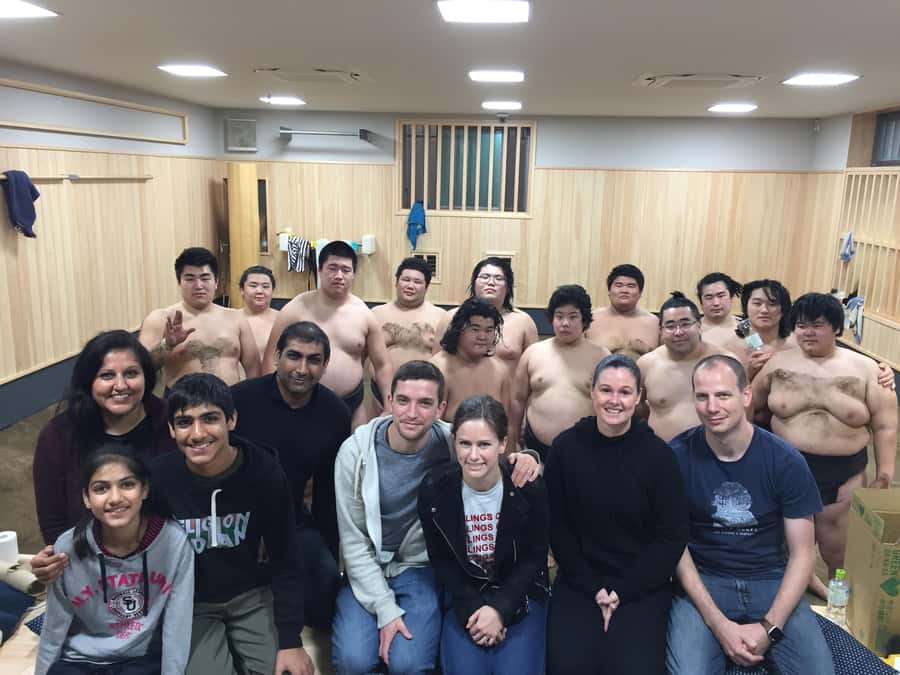
- Photos come at the end: A group photo or picture with a wrestler may be possible, but the wrestler decides.
- Plan for strict timing: Arrive at the A1 exit of Kiyosumi-Shirakawa Station early. Late arrivals cannot join and do not receive a refund.
Why a practice session can beat a tournament
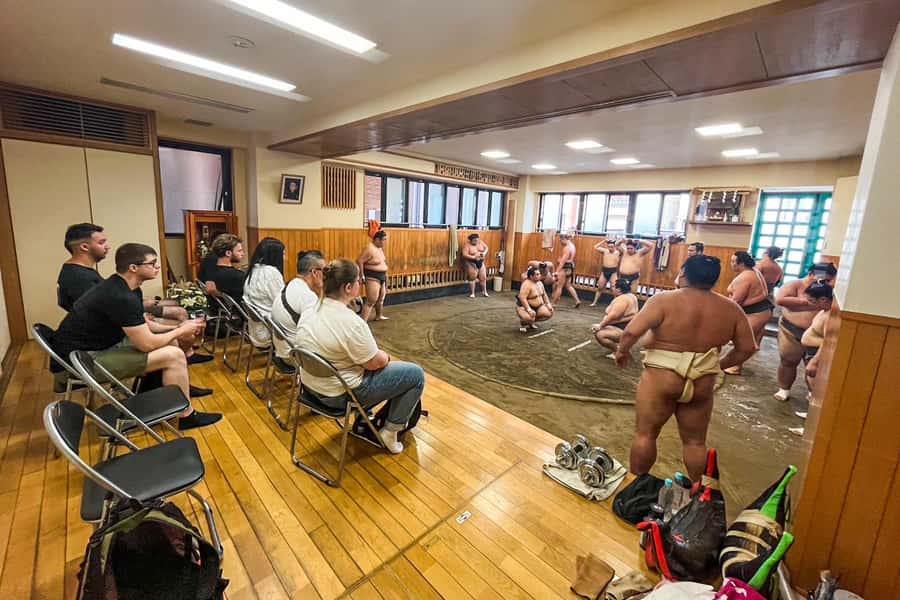
A Tokyo sumo tournament gives you the color, ceremony, crowds, and formal matches. This visit gives you something different: the work behind those matches.
At a stable, you see wrestlers repeat the same movements again and again. You watch them push, brace, recover, and listen to instructions from the stable master. The practice can begin quietly, then build into hard, full-contact bouts. That change in intensity is part of the appeal.
I find this setting useful for anyone who knows sumo mainly as two large men rushing at each other. The sport is far more technical than that quick image suggests. Balance, timing, grip, stance, and the ability to absorb force all matter. Your guide helps connect those details to what is happening in front of you.
The two hours also give you time to notice the discipline of the stable. The wrestlers are not simply exercising. They are following a shared structure, showing respect to the master, and working through a demanding routine. You do not need to know the difference between a push-out and a belt throw before arriving. The guidebook and spoken explanation give you enough background to follow along.
A few more photo experiences around Tokyo worth a look
- Tokyo: Asakusa and Skytree Go-Kart Tour and Photo Shoot
★ 4.6 · 721 reviews - Tokyo: Kimono Dressing, Walking, and Photography Session
★ 4.9 · 427 reviews - Tokyo Ryogoku Sumo Morning Practice + Photo Shoot with Wrestlers
★ 4.5 · 277 reviews
Meeting at Kiyosumi-Shirakawa Station
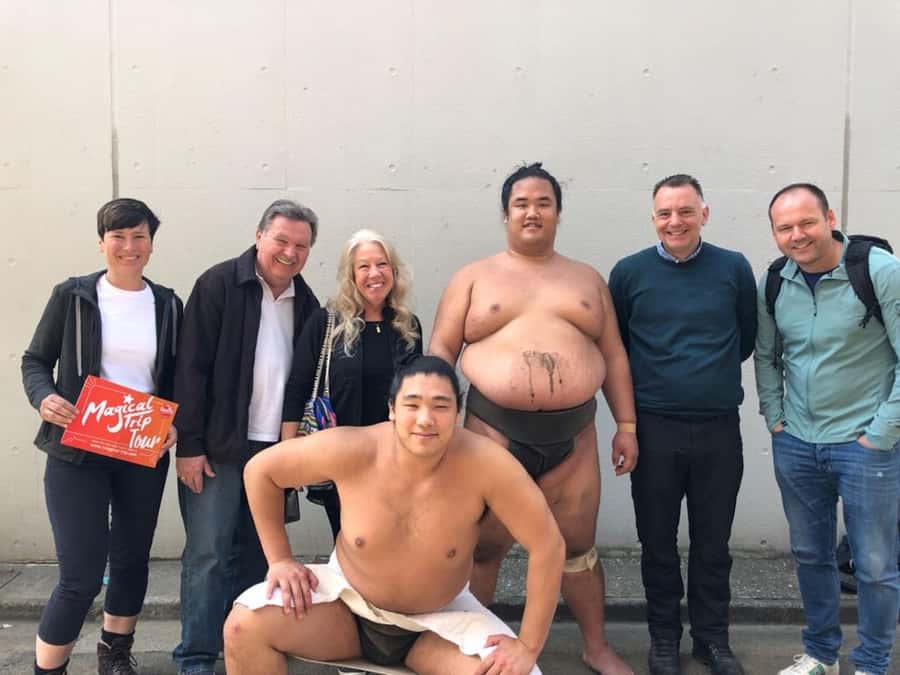
Your meeting point is the A1 exit of Kiyosumi-Shirakawa Station. Look for a guide holding a red or orange Magical Trip sign. This is a practical meeting point, but do not cut it close. The tour starts promptly, and late arrival means missing the stable visit with no refund or rescheduling.
The walk to the stable is very short. One account describes it as about two minutes, which makes the opening simple even if you are still getting your bearings in Tokyo. You then enter a place that normally is not open to casual sightseeing.
Before going inside, your guide explains the basic rules. This part matters. A sumo stable is a working home and training space, not a theater. You will be told where you may sit, which areas are off-limits, and how to behave while the wrestlers train.
Listen carefully and keep your voice low. The stable’s rules take priority over the tour schedule. Disruptive behavior or disrespect can lead to refused entry without a refund.
Entering a working sumo stable
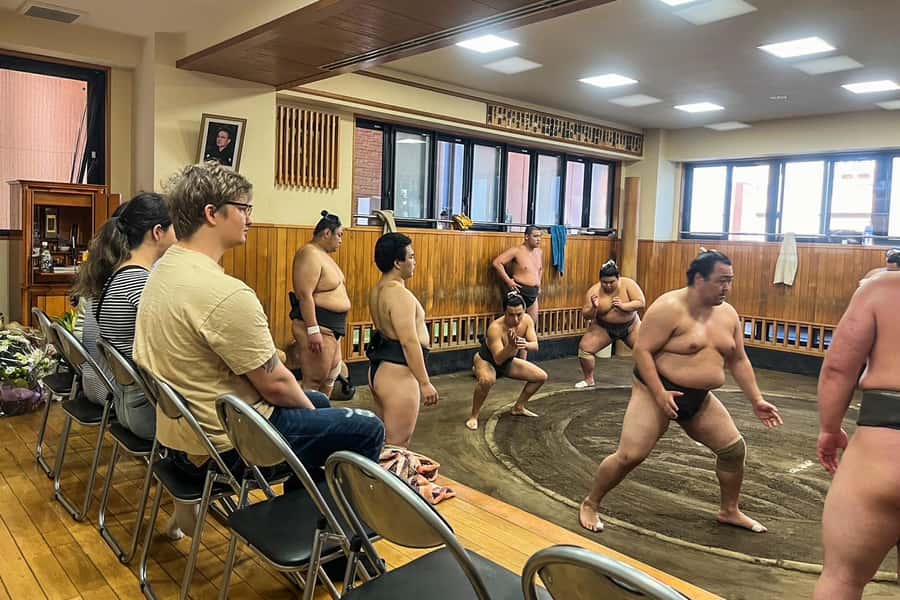
The stable is the heart of the experience. You may expect a polished visitor center, but the attraction is precisely that it is a functioning training space. You sit in the permitted tatami area and watch the wrestlers work at close range.
Only the designated viewing area is accessible. You cannot wander through the building or inspect private rooms. That limitation is sensible, and it helps protect the stable’s daily life. You are there to observe, not to interrupt.
The room may feel spare. There may be no conventional seating, and the floor can be hard on your knees and hips. Some sessions do provide chairs. One stable had several rows, while another account warned that people in the back rows chose to stand. The seating arrangement can change, so bring patience and be ready for either a chair or floor seating.
This is also where expectations matter. You are not guaranteed a particular wrestler, a set number of bouts, or a fixed training pattern. The stable may change or cancel practice at short notice because of a wrestler’s condition or tournament commitments. If the stable cancels, you receive a full refund.
What you will see during the two-hour practice
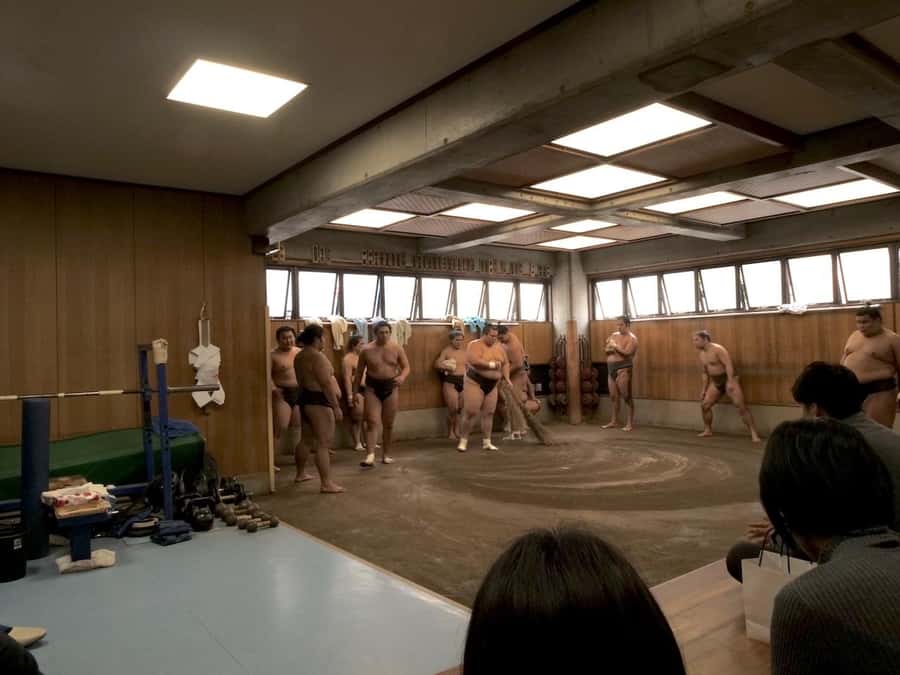
The practice is repetitive by design. Sumo wrestlers need to build power, balance, reflexes, and stamina, so drills may repeat the same movement many times. If you want constant narration or a new spectacle every few minutes, this may feel slow.
I think the repetition becomes more interesting once you understand its purpose. Watch how a wrestler sets his feet before contact. Notice how he uses his hands and hips. See how quickly a bout can end, then watch both wrestlers reset and try again.
The session may grow more intense as it continues. You could see careful exercises at first, followed by hard collisions and successive bouts. One of the most striking details is the sound. From close to the ring, you may hear breathing, slapping feet, and the force of bodies meeting.
Your guide adds the missing context. Marie has been praised for explaining the history and basic rules in an engaging way. Sho has explained the ranking system and the physical demands of training. Masao Hiramatsu has also helped with questions about Japan after the practice. Guide assignments vary, but these examples show the kind of support you can expect from the English-speaking team.
The supplied sumo guidebook is useful here. It offers a short explanation of rules, traditions, and the sport’s past, along with information about the stable and its wrestlers. It is not a substitute for a full book on sumo, but it gives you something to check while the action unfolds.
Same place, a different kind of shoot:
- Daikoku Car Club Temporary Membership
★ 4.5 · 275 reviews - Tokyo Cyberpunk Street Photo Tour
★ 5.0 · 165 reviews - Tokyo by Night Photography Tour (Private Option Available)
★ 5.0 · 151 reviews - Tokyo Shinjuku Night Photo Tour with Pro Gota
★ 5.0 · 142 reviews
Understanding ranks, rituals, and stable life
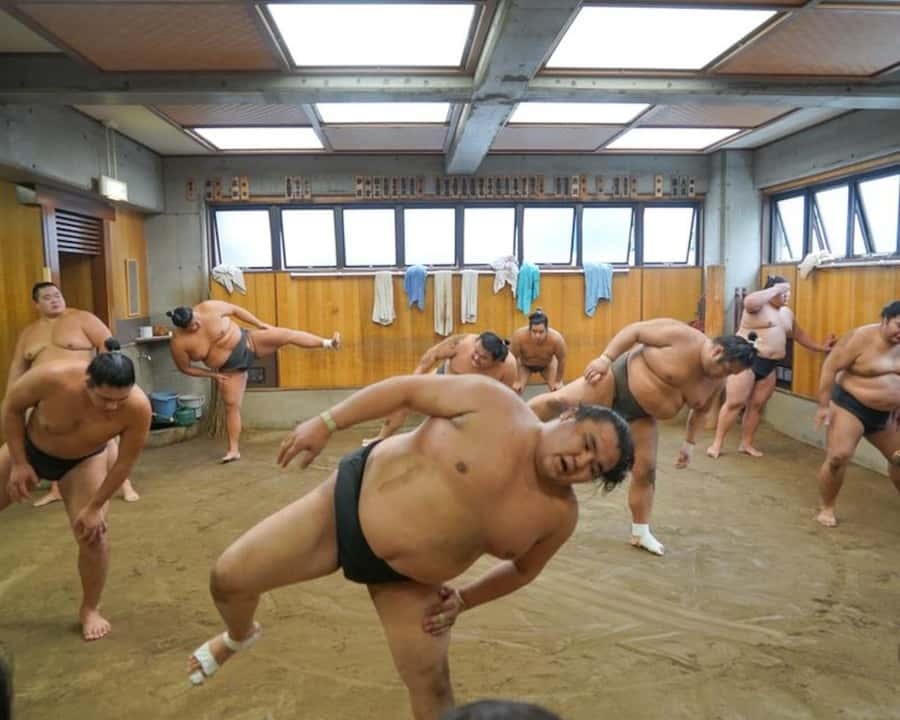
The guide’s introduction is not filler. Without it, you may see a series of powerful clashes without knowing why the wrestlers train in a particular way or what separates one level from another.
Ask questions about rank if the session allows it. You might see wrestlers at different stages of their careers, and clothing or status may differ. One participant wanted more explanation about the experience level of the wrestlers present and the meaning of a different-colored loincloth. That is a useful reminder: the more specific your questions, the more you may get from the visit.
You will also learn about the customs of the stable. The wrestlers’ conduct toward one another and the stable master is part of what makes the morning so compelling. The atmosphere can feel serious and highly ordered, with advice coming from the master as the wrestlers work.
This is not an opportunity to chat with wrestlers during practice. Respect the silence and keep your attention on the ring. Questions are best saved for the guide’s explanation or the closing period.
Seating, comfort, and the view
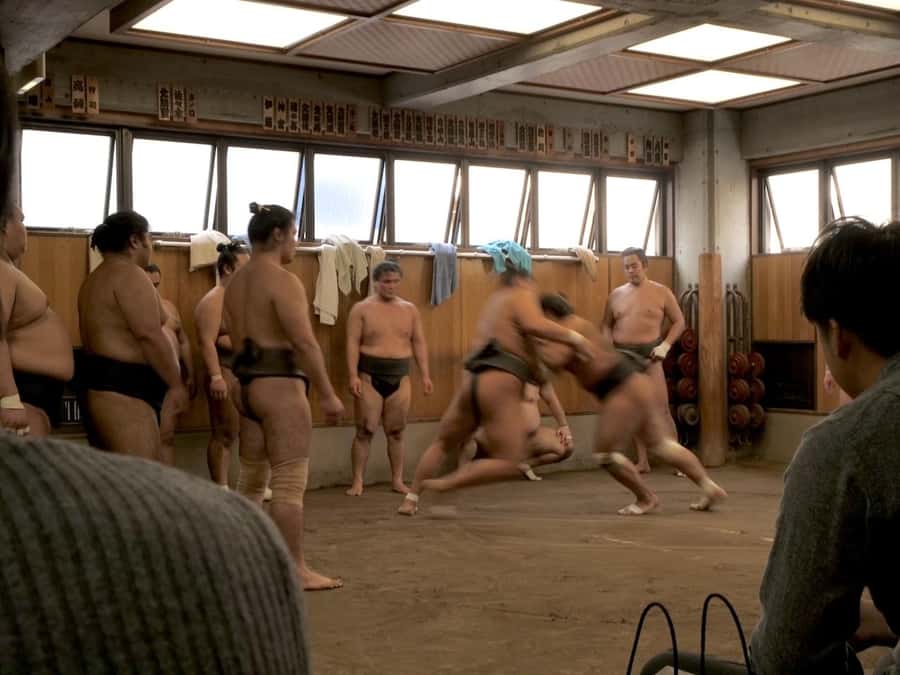
Comfort is the biggest practical variable. The information for this activity warns that most stables do not provide chairs, and tatami seating is common. Other accounts describe rows of chairs with a close view of the ring. Both situations are possible.
If you have trouble sitting cross-legged, do not assume the floor will be easy. Some people may choose to stand, particularly from the back rows. The activity is only two hours, but two hours on tatami can feel long if your knees are sensitive.
A chair can make a major difference. When chairs are available, the view may remain good even from the second or third row. The exact layout depends on the stable, so treat seating as a variable rather than a promise.
The front rows can put you remarkably close to the action. That proximity is valuable, but it also means you must remain still and follow instructions. Do not reach toward the ring or attempt to move into a better position.
The closing photo opportunity
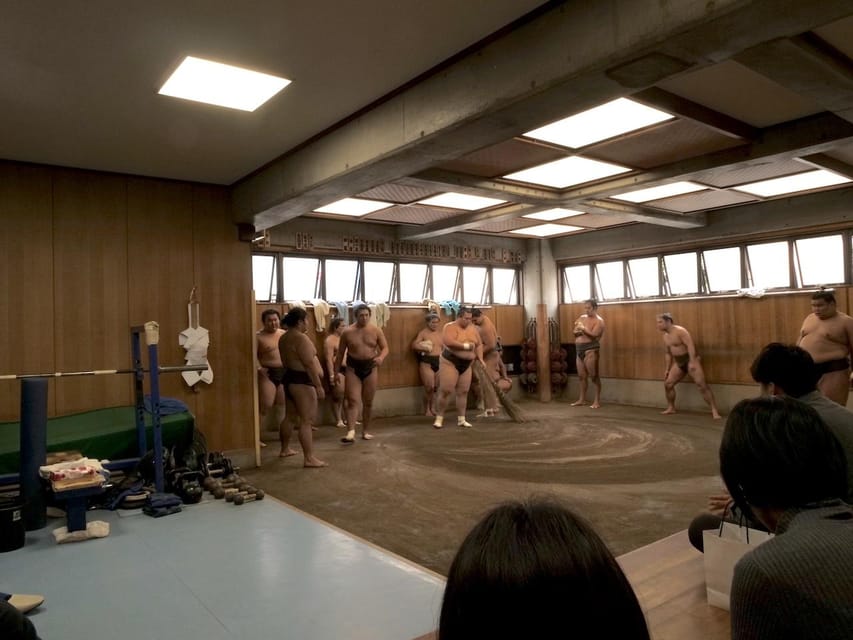
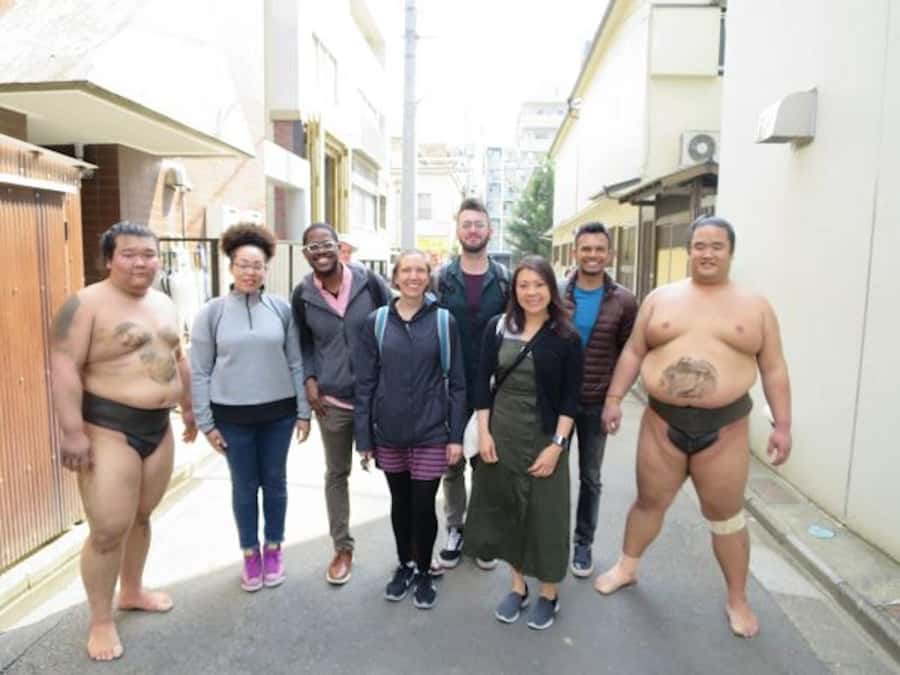
At the end of practice, you may have a chance to take a photo with a sumo wrestler. The activity includes a photoshoot, but participation depends on the wrestler’s discretion and the stable’s circumstances.
A group photo may also be arranged. Keep your expectations modest. This is not a guaranteed private portrait session, and the wrestlers’ training and personal boundaries come first.
The photo is a nice finish, but it should not be the reason you book. The strongest part of the visit is watching the practice itself. If a photo is possible, treat it as an extra.
Is $96 a fair price?
At $96 per person, this is not a cheap short sightseeing stop. The value comes from access rather than duration. You are paying for entry to a normally restricted working stable, an English-speaking guide, interpretation of what you are seeing, a guidebook, and the chance of a photo afterward.
A tournament ticket can offer more matches and a grander public setting. It may also require more time and leave you to work out the rules on your own. This practice visit gives you a close look at training and a guide who can explain the details as they happen.
The small group helps justify the price. With a maximum of 10 people, the guide can answer questions and help the group respect the stable. You are not being moved through a large attraction with a guide speaking over a crowd.
Food and drinks are not included, though the visit lasts two hours and is focused on the stable. Plan anything you want to eat before or after the tour rather than expecting refreshments inside.
Who will enjoy this most
I would recommend this to anyone curious about Japanese sport, ritual, discipline, or daily life. You do not need to be a dedicated sumo fan. The guide’s introduction makes the session accessible, and the close view helps even a newcomer understand why the sport is so demanding.
It is especially good for:
- First-time Tokyo visitors who want something beyond major sights
- Sumo fans who want to see training rather than only tournament bouts
- Couples looking for a memorable morning activity
- Families with children aged 12 or older
- Anyone interested in Japanese customs and strict group etiquette
I would hesitate if you need guaranteed chairs, wheelchair access, or a fully predictable schedule. The activity is not suitable for wheelchair users, and some parts of the stable are not wheelchair or stroller accessible. Baby strollers are not allowed, and children under 12 cannot enter.
You should also skip it if you dislike quiet observation. The practice may be repetitive, and the right response is to watch closely rather than expect nonstop entertainment.
Timing and booking advice
The tour lasts two hours, but allow extra time to reach Kiyosumi-Shirakawa Station. Meet at the A1 exit and arrive early. The stable will not wait for late arrivals.
You can cancel up to 24 hours in advance for a full refund, and you can reserve now and pay later. Those terms help if your Tokyo plans are still changing, but they do not protect you from missing the start.
The stable can alter its practice schedule at the last minute. If the stable cancels, the activity provider issues a full refund. That uncertainty is part of booking access to a real training session rather than a fixed theatrical performance.
Should you book the sumo practice tour?
Book it if you want a close, respectful look at how sumo wrestlers train. The combination of ringside proximity, clear explanations, and a small group makes the sport easier to understand and more memorable than simply watching a match from a distant seat.
Before paying, make sure you can handle tatami or standing for much of the session, and accept that chairs and a wrestler photo are not guaranteed. If those conditions suit you, $96 is a reasonable price for access to a working Tokyo sumo stable and an experience that shows the discipline behind the spectacle.
FAQ
Where does the sumo practice tour meet?
Meet your guide at the A1 exit of Kiyosumi-Shirakawa Station. The guide will hold a red or orange sign marked Magical Trip.
How long does the activity last?
The tour lasts two hours.
What language is the tour in?
The live tour guide speaks English.
How large is the group?
The group is limited to 10 participants.
Is the sumo practice held in a real stable?
Yes. You visit a real sumo stable and watch its morning training session.
Will I sit on a chair?
Not necessarily. Most stables do not provide chairs, and you may need to sit on tatami. Some stables do have rows of chairs, so seating depends on the location and session.
Can I take a photo with a sumo wrestler?
A photo may be possible at the end of practice, but it is at the wrestler’s discretion. A group photo may also be arranged.
Are children allowed?
The activity is for people aged 12 and older. Children under 12 cannot enter the sumo stable.
Is the activity wheelchair accessible?
No. The activity is not suitable for wheelchair users, and some areas of the stable are not wheelchair or stroller accessible. Baby strollers are not allowed.
What happens if the stable cancels the practice?
If the stable cancels or changes the session because of a wrestler’s condition or tournament commitments, a full refund is issued.
Just added around Tokyo
- Tokyo: Shinjuku & Shibuya historical guided photoshoot Tour★ 5.0 · 2 reviews
- Asakusa Kimono/Yukata Rental & Photography_Tsutsuji★ 5.0 · 12 reviews
- Asakusa Kimono Photography Tour★ 5.0 · 8 reviews
- Personal Travel and Vacation Photographer Tour in Tokyo★ 5.0 · 19 reviews
- Tokyo: Photo Shoot with a Private Vacation Photographer★ 5.0 · 53 reviews
- Travel Tokyo with Your Own Personal Photographer★ 5.0 · 43 reviews
- Tokyo: Photography Masterclass – Private Photo Lesson★ 5.0 · 7 reviews
- Blade Runner photo workshop in Shibuya with Laurence Bouchard★ 5.0 · 15 reviews
Tokyo Photo Tours & Photoshoots, compared.
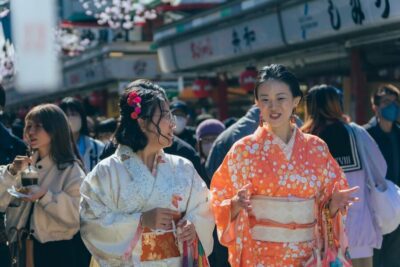
Kimono Dressing, Walking, and Photography Session
Read our review →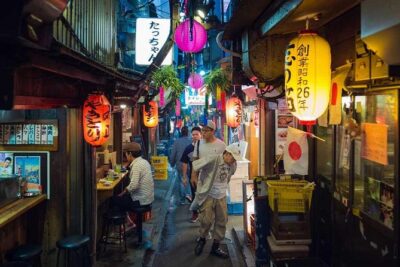

Tokyo by Night Photography Tour (Private Option Available)
Read our review →
Tokyo Sumo Morning Practice Tour w/ Ring-Side Seat + Photo Shoot
Read our review →
Tour with Pro Tokyo Photographer and take Edgy Unique Portraits
Read our review →
Tokyo Portrait Tour with a Professional Photographer
Read our review →Browse the lists this tour appears in