REVIEW · ROME
Unique Photo Tour and Workshop in Rome Dusk to Dawn
Rome looks completely different after midnight. With Giulio D’Ercole guiding you from 10 pm toward sunrise, you can photograph the Pantheon, Trevi Fountain, St. Peter’s Square, and the Colosseum area without the daytime crush. The small group limit of four makes this feel like a real workshop, not a standard sightseeing ride.
I like the mix of hands-on camera coaching and carefully timed Rome views. I also like the private transport, which lets you cover far more ground than a walking photo tour. The main drawback is the schedule: this is a long night, and the tour requires patience, alertness, and decent weather.
Key points to know before booking
- Night-to-sunrise timing: You work through darkness, blue hour, and early morning light in one session.
- A maximum of four people: The small group allows Giulio to help with individual camera settings and composition.
- Private transportation included: The route combines short walks with rides between distant parts of central Rome.
- Built for hands-on learning: Expect practice with manual mode, ISO, aperture, shutter speed, white balance, and long exposures.
- Camera rental available: If you arrive without equipment, a Nikon camera and tripod kit costs 50 euros, payable in cash.
- A demanding but unusual schedule: The experience starts at 10 pm and lasts about seven hours, ending back at the meeting point.
Rome after midnight, with a camera ready
This is not simply a nighttime tour with a few photo stops. It is a practical workshop built around the problems that make night photography tricky: weak light, bright lamps, reflections, moving traffic, and changing color.
You will work with manual camera settings as you shoot. Giulio can help you adjust ISO, aperture, shutter speed, and white balance rather than leaving you to guess at the controls. Long exposures are part of the lesson, so a tripod matters. You will also look at composition, including symmetry, leading lines, foreground interest, and layers within the frame.
I especially like the way the timing gives you several types of light in one outing. Early shots may rely on artificial lighting and long exposures. Later, the sky can shift toward blue hour, followed by the warmer tones of sunrise. That change helps you understand not just where to stand, but when to press the shutter.
The small group is important here. With no more than four people, Giulio has a fair chance to look at your setup, help with tripod placement, and offer advice while you are shooting. The experience is aimed at intermediate photographers and enthusiastic beginners who are ready to leave automatic mode behind.
You should not expect a formal classroom or a slow lecture at every stop. The teaching happens on location, with the monument in front of you and the camera in your hands. That suits people who learn by doing.
More Photography Tours in Italy
- Rome: Vespa Photo Tour with Historic City Highlights
★ 5.0 · 395 reviews - Rome: Vespa Photo Tour with City Center Pickup
★ 5.0 · 239 reviews - Rome Night Photo Tour
★ 5.0 · 109 reviews
Starting at Castel Sant’Angelo at 10 pm
The usual meeting place is the entrance to Castel Sant’Angelo, opposite the Bridge of Angels on Lungotevere Castello. Pickup can also be arranged from your hotel, Airbnb, or home in Rome if requested in advance.
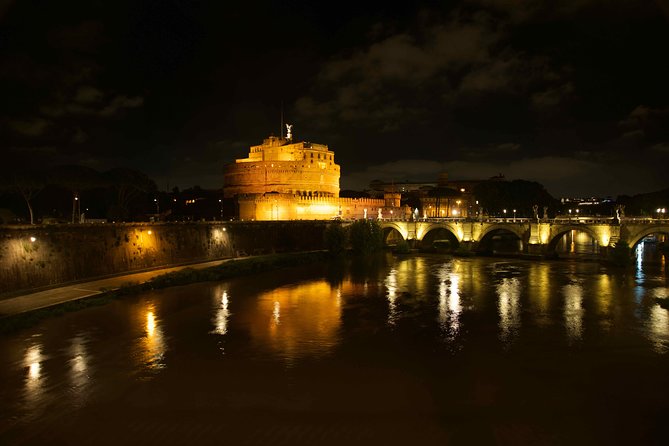
Starting here makes sense for both photography and transport. Castel Sant’Angelo and the nearby Tiber provide strong night subjects, while the location offers a clear point for beginning the route. Since the tour ends back at the meeting point, confirm your return plan before setting off, especially if you are not using hotel pickup.
The session lasts about seven hours. That usually means a late-night start and a finish around dawn, although the exact rhythm depends on the light and the time spent at each location. Wear comfortable shoes and bring clothing suitable for standing outside for long periods.
Campidoglio and the Pantheon: clean lines and controlled light
Piazza del Campidoglio is a useful early stop because its architecture rewards careful framing. The square is associated with Michelangelo’s design, and its measured geometry gives you a chance to practice symmetry, leading lines, and balanced composition.
At night, the square’s shape can become more important than small details. Giulio can help you decide how much of the paving, buildings, and surrounding space to include. This is a good place to work on keeping vertical lines straight and using the square to lead the eye toward the central architecture.
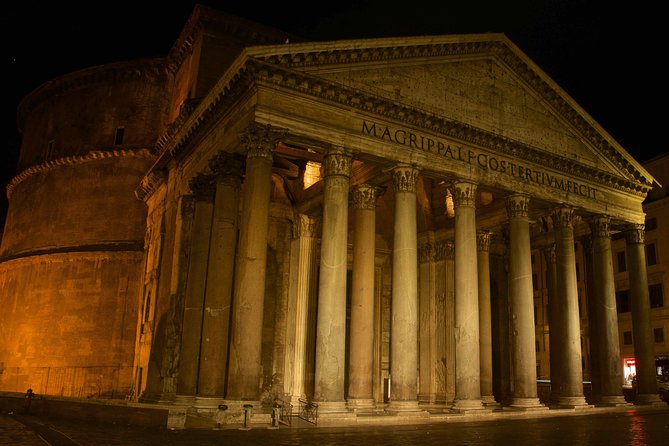
The Pantheon offers a different challenge. Its façade and columns create strong vertical forms, while the limited night light forces you to balance shadow and illumination. You may need to manage contrast between the building and nearby lamps rather than simply pointing the camera and shooting.
These first stops help set the pace. You begin with recognizable Roman architecture, but the purpose is to learn how to read light and shape. If you are new to manual settings, this early part of the tour may be where the technical coaching feels most useful.
Piazza Navona and Castel Sant’Angelo after dark
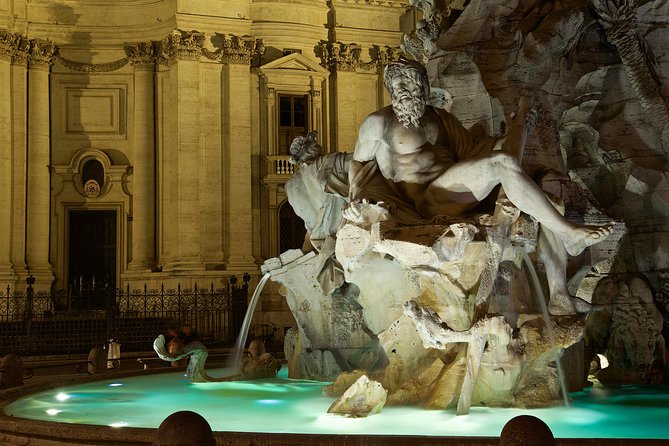
Piazza Navona gives you a long, open view with fountains, façades, and lines that can work well in a wide composition. It is also a place where empty space matters. A mostly vacant square can look very different from the daytime version filled with people.
You will have to decide whether your frame should focus on the fountains, the surrounding buildings, or the full length of the piazza. Giulio’s advice on foreground interest and layering can help keep a wide night image from looking flat.
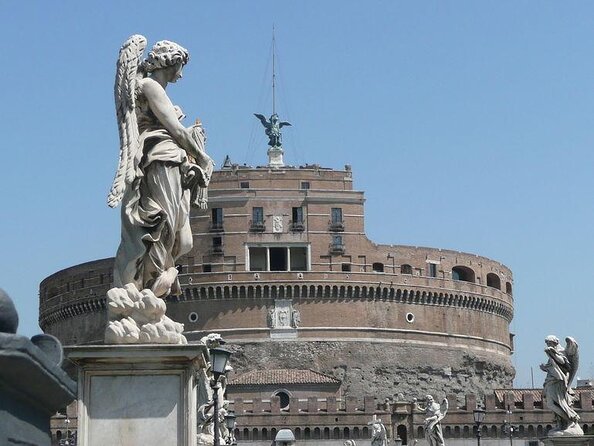
The route also includes the Museo Nazionale di Castel Sant’Angelo. The fortress-like structure has a strong silhouette, and its position near the river creates opportunities to use reflections, open sky, and nearby stonework.
The benefit of visiting several locations by car is clear here. These places are close enough to connect in a wider Rome route, but walking between all the listed stops would take much longer and leave less time for shooting. Private transportation keeps the night practical.
More Photography Tours in Rome
- Unique Rome by Night, Photo Tour and Workshop Under the Stars
★ 5.0 · 96 reviews - Vespa Rome Photography Tour by Local
★ 5.0 · 67 reviews - Rome by Day, Beauty and History Unique Photo Tour and Workshop
★ 5.0 · 36 reviews - Rome in a Fiat Jolly: Exclusive Vintage Ride & Photo Tour
★ 5.0 · 20 reviews
St. Peter’s Square and the Vatican at dawn
St. Peter’s Square is one of the most important stops in the program. The vast space, curved colonnades, and central axis give you plenty to work with, especially if the square is quiet.
This is also where timing becomes especially valuable. A night image of the square has a different mood from a blue-hour photograph, and both differ again from a sunrise frame. You can compare how the same place changes as the sky brightens.
One detailed account of the experience describes reaching the Vatican as the last location around sunrise. That makes the ending feel purposeful rather than simply late. After hours of photographing under artificial light, you get to apply the same ideas to softer natural light.
The tradeoff is fatigue. If you are not comfortable staying awake through the night, the final portion may be hard work. Families can book it, and one past outing kept a nine-year-old engaged, but that does not mean every child will enjoy a seven-hour overnight schedule.
Teatro di Marcello, Piazza Venezia, and the Tiber
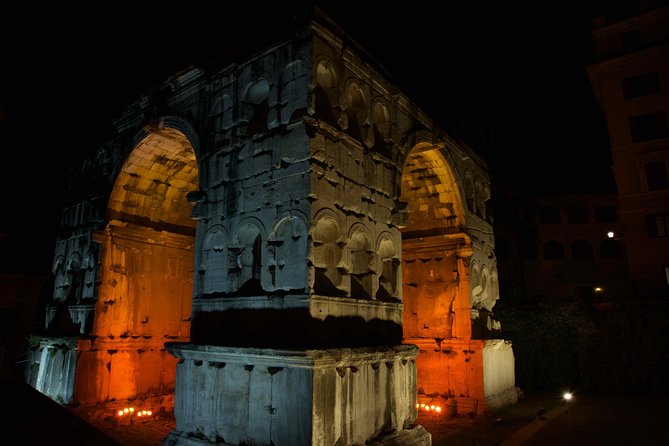
Teatro di Marcello brings ancient Roman structure into the route. Its curved stone form can work well for close framing, wider architectural shots, or images that use shadow to show texture.
Piazza Venezia provides a much larger urban setting. The square and its surrounding monuments can be photographed from different angles, with traffic and artificial light adding complications. This is a useful place to practice controlling highlights and deciding how much movement to include.
The route then reaches Isola Tiberina, the small island in the Tiber. Water can add reflections and a darker foreground, but it also makes exposure choices more sensitive. A long exposure may soften moving water, while a faster shutter speed can preserve more surface detail.
These stops show why the experience is not just a series of famous postcard views. You move between plazas, monuments, streets, and the river. Each setting presents a different problem, and that variety gives the camera lessons more staying power.
Rione Parione, Tempio di Vesta, and changing viewpoints
Rione Parione brings the tour into a neighborhood setting rather than keeping you only at major monuments. Narrow streets and back alleys can offer a more intimate side of Rome, with doorways, stone walls, lamps, and lines of buildings.
This part may appeal to you if you want more than the standard landmark collection. The smaller details of the streets can help you practice layering and framing without relying on a single grand monument.
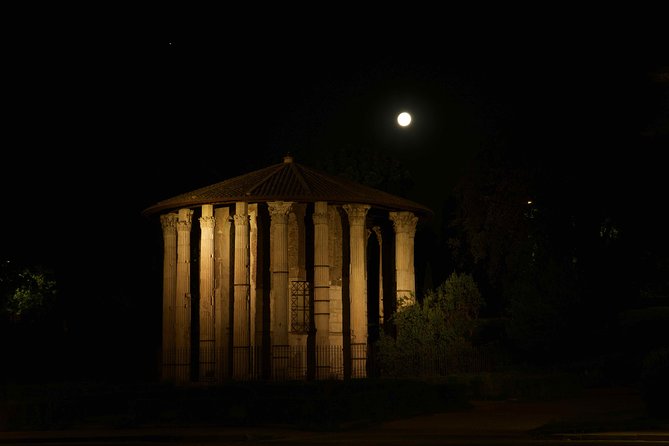
Tempio di Vesta offers another compact ancient subject. Its round form and surrounding space can reward a careful choice of angle. At night, the challenge is often to avoid losing the structure in darkness while retaining the mood of the setting.
The route has a strong emphasis on angles and timing. Giulio’s local knowledge is useful because good night photography often depends on exact positioning, not just the landmark itself. The goal is to find the view that works at that moment, given the light, traffic, and available space.
Terme di Caracalla and the Trevi Fountain
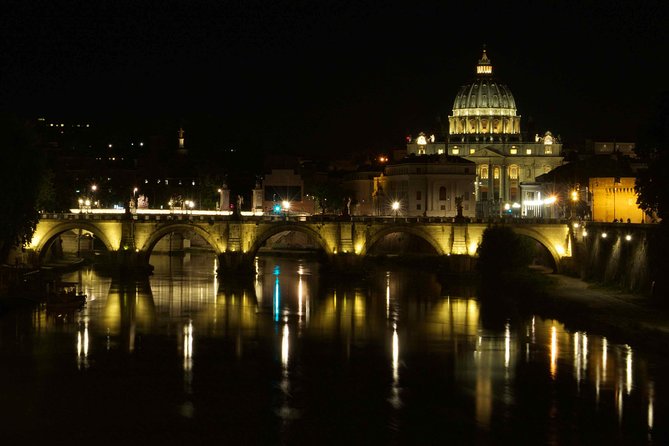
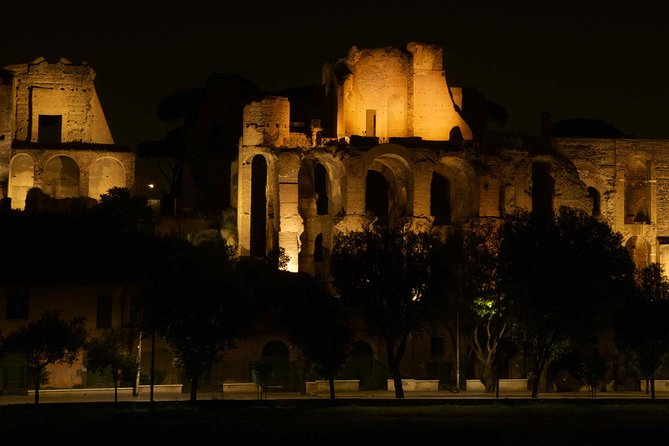
The Terme di Caracalla adds scale and open space to the itinerary. The ancient bath complex is known for its large surviving walls and monumental proportions. At night, those forms can become dramatic, but you may need to work harder to show their size in a single frame.
This is a good place to use layering. A closer piece of stonework can provide foreground interest, while the larger ruins recede behind it. Wide compositions can also show how much space the baths occupy.
The final listed stop is Fontana di Trevi. The fountain is an obvious crowd favorite, but nighttime photography gives you a better chance to work without people blocking every angle. Water, pale stone, and strong illumination create a demanding mix of bright and dark areas.
Do not expect an empty fountain at every moment. The tour is designed to avoid the worst daytime crowds, not to promise total solitude. Still, a late-night visit gives you far more control than a midday stop, and Giulio can help you find a workable position and exposure.
What the private transport adds
The transportation is not a luxury extra with no purpose. The route covers many parts of central Rome, including sites that are spread across the city. Moving by private vehicle lets you save your legs and reserve more of the seven hours for photography.
You still walk at each stop. This is not a drive-by sightseeing trip where you remain in the vehicle. The format is a useful middle ground: walk enough to explore the viewpoint, then ride to the next area.
Pickup from your accommodation can make the start easier, but it is offered upon request. Otherwise, you meet at Castel Sant’Angelo. Since the activity finishes at the same meeting point, plan your evening with that return in mind.
The experience is offered in English. Confirmation is provided at booking, and most people can participate, but the physical demands are worth considering. You will be outside late, moving between locations, carrying camera equipment, and standing for long exposures.
Is $420.08 a fair price?
At $420.08 per person, this is expensive compared with a standard Rome walking tour. The price makes more sense if you treat it as a private photography lesson, local guiding service, night sightseeing route, and transport package combined.
The maximum of four is the main value point. A large group lesson would give you less direct help with settings and composition. Here, Giulio can spend more time with your particular camera, tripod position, and shooting goals.
The price also includes private transportation and a professional photographer guide. It does not include camera equipment rental. If you have no camera, a Nikon kit with tripod is available for 50 euros, paid in cash.
I would recommend comparing the cost with what you actually want. If you only need to see Rome at night, a cheaper evening walk may be enough. If you want stronger technical skills and a set of unusual images made under expert guidance, the cost is easier to justify.
The optional image review after the outing is another useful feature. You can submit images for detailed critique and advice, which extends the workshop beyond the night itself. Confirm how this works when booking if post-tour feedback matters to you.
Who will get the most from this night?
This suits you if you already own a camera and want to understand it better. It is also a good fit for a passionate beginner who is willing to use manual mode and learn through practice.
You will likely enjoy it most if you:
- Like architectural and city photography
- Want to photograph Rome without daytime crowds
- Are comfortable staying out from 10 pm until dawn
- Want individual advice rather than a large class
- Have an interest in long exposures and changing light
- Prefer a mixed walking and driving route
It is less suitable if you want a relaxed dinner-and-sightseeing evening, dislike tripods and technical settings, or need a predictable short tour. The itinerary is ambitious, and the overnight timing is central to the experience.
The tour can also work for couples, friends, or a small family group. Keep in mind that the photography instruction is the main purpose. Giulio may take pictures of you during the outing, but you should book this for the workshop and Rome photography rather than as a dedicated portrait session.
Booking, weather, and cancellation details
The experience is often booked well ahead, with an average booking lead time of 89 days. That is useful to know if your Rome dates are fixed or if you want a particular night.
Free cancellation is available up to 24 hours before the start time for a full refund. Cancellations or changes made less than 24 hours before the start are not refunded or accepted.
Good weather is required. If poor weather forces a cancellation, you are offered another date or a full refund. Since the experience depends on outdoor shooting from night into sunrise, this policy is practical rather than surprising.
Should you book this Rome photo workshop?
Book it if you want to photograph Rome at its quietest hours and are ready to learn how to control your camera. The strongest reasons to choose it are the four-person limit, private transport, and the full progression from darkness to sunrise.
I would be cautious if you are mainly looking for casual sightseeing or if a full night outdoors sounds exhausting. At $420.08, the experience needs to deliver more than a list of monuments, and its value depends on your interest in photography.
For the right person, Giulio D’Ercole’s workshop offers a rare view of Rome: empty squares, illuminated stone, river reflections, and dawn at St. Peter’s Square. Bring a camera if you have one, expect to work, and think of the night as both a tour and a lesson.
FAQ
What time does the Rome Dusk to Dawn Photo Tour begin?
The tour starts at 10 pm.
Where is the meeting point?
The standard meeting point is the entrance to Castel Sant’Angelo, opposite the Bridge of Angels on Lungotevere Castello in Rome.
Is hotel pickup available?
Yes. Pickup can be arranged from your hotel, Airbnb, or home upon request. Otherwise, you meet at Castel Sant’Angelo.
How many people can join the tour?
The activity has a maximum of four participants.
Do I need to bring my own camera?
You can bring your own camera, but equipment rental is available. A Nikon camera and tripod kit costs 50 euros and is payable in cash.
What happens if the weather is poor?
The experience requires good weather. If it is canceled because of poor conditions, you can choose another date or receive a full refund.
More Photography Workshops in Rome
- Paris Photography Masterclass – Private Photography Lesson
★ 5.0 · 112 reviews - 2-Hour Photography Class While Touring Downtown Santa Fe, Smart Phones Welcome!
★ 5.0 · 108 reviews - Elevate Your Photography – Barcelona Private Tour & Workshop
★ 5.0 · 78 reviews - Private (Phone) Photography Class in Park & Old Town
★ 5.0 · 53 reviews
More Photography Workshops in Italy
- Rome Photography Masterclass – Private Photography Lesson
★ 5.0 · 67 reviews - Venice Photography Masterclass – Private Photography Lesson
★ 5.0 · 46 reviews
Just added around Rome
- Golf cart tour in Rome & Professional Photoshoot★ 5.0 · 2 reviews
- Rome : Golf cart tour & Professional Photoshoot★ 4.5 · 13 reviews
- Professional Photoshoot in the Eternal City Rome★ 5.0 · 19 reviews
- Rome in a Fiat Jolly: Exclusive Vintage Ride & Photo Tour★ 5.0 · 20 reviews
- Explore city on Vespa with Professional Photographer★ 5.0 · 3 reviews
- Fiat 500 Photo Experience Capture the Magic of the City★ 5.0 · 6 reviews
- Expert Photographer of Rome with Guide★ 5.0 · 7 reviews
- Electric Tuk-Tuk Photography Service of Rome★ 5.0 · 3 reviews
Photography Workshops & Lessons, compared.
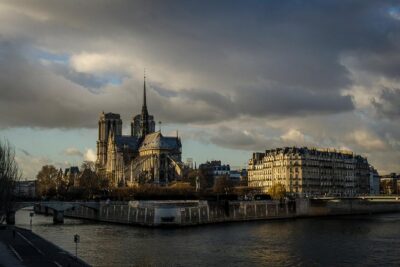
Paris Photography Masterclass – Private Photography Lesson
Read our review →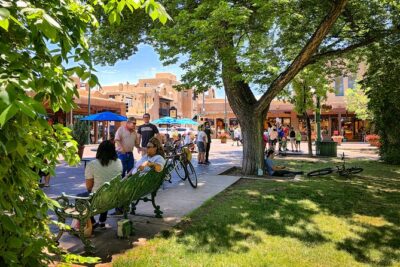
2-Hour Photography Class While Touring Downtown Santa Fe, Smart Phones Welcome!
Read our review →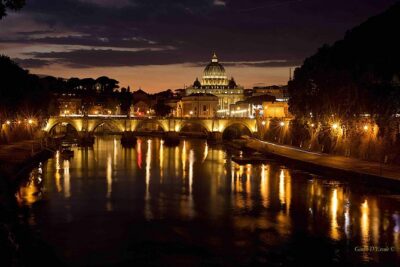
Unique Rome by Night, Photo Tour and Workshop Under the Stars
Read our review →
Elevate Your Photography – Barcelona Private Tour & Workshop
Read our review →
Rome Photography Masterclass – Private Photography Lesson
Read our review →
Private (Phone) Photography Class in Park & Old Town
Read our review →
Venice Photography Masterclass – Private Photography Lesson
Read our review →