REVIEW · ROME
Unique Rome by Night, Photo Tour and Workshop Under the Stars
Rome looks different after dark, when its fountains glow, ancient stone catches the light, and the daytime crowds thin out. This private four-hour walk with photographer Giulio D’Ercole turns famous sights into a hands-on night photography class, not just a parade of photo stops.
I especially like the personal teaching and the route itself. Giulio adjusts his advice to your camera, phone, and skill level, and he knows how to find strong angles at places such as Piazza Navona and the Colosseum. The main consideration is the pace: you cover a lot of ground on foot, finish around 1 a.m., and must bring or rent suitable equipment.
Key points to know before booking
- Night photography lesson: Practice composition, exposure, lighting, and camera settings at real Roman landmarks.
- Private four-hour outing: Only your group takes part, so Giulio can adapt the instruction to beginners, experienced photographers, or phone users.
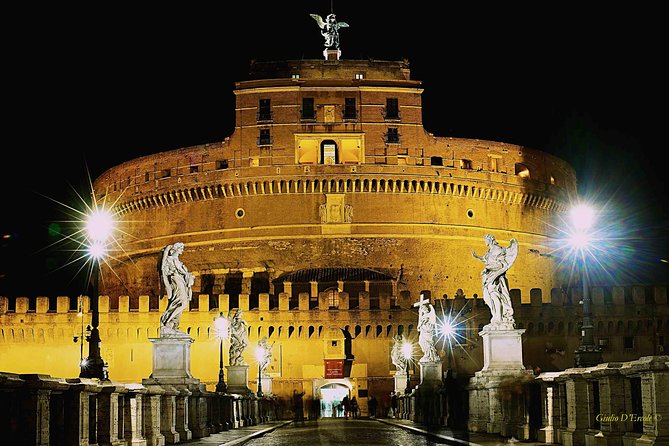
- Nine o’clock start: Meet at Ponte Sant’Angelo and finish near the Colosseum subway stop around four hours later.
- Seven major photo areas: The route includes Castel Sant’Angelo, St. Peter’s Square, Via dei Coronari, Piazza Navona, the Pantheon, the Capitoline Hill, the Roman Forum viewpoint, and the Colosseum.
- Bring your own gear: Camera equipment and tripods are not included, though a Nikon camera and tripod kit can be rented for 50 euros in cash.
- Good value for serious photographers: At $217.69 per person, the price is high for a walking tour, but it includes a private guide, photography instruction, and a carefully chosen evening route.
Why Rome works so well after dark
Rome can be tiring in daylight. The streets around the biggest sights fill with tour groups, buses, selfie sticks, and people trying to cross the same narrow patch of pavement. At night, the city is still active, but the famous monuments have more room around them.
That change is useful for photography. Artificial light gives you strong contrasts, glowing fountains, reflections, and illuminated facades. You can pay attention to framing instead of simply trying to keep strangers out of your picture.
This is not a standard sightseeing walk with a few camera tips added at the end. Giulio teaches while you shoot. He may discuss composition at one stop, exposure at the next, then help you adjust your settings before you make another attempt. That hands-on method is especially useful if you know the basics but still rely on automatic settings.
The private format matters. If you are new to photography, you can ask basic questions without slowing down a larger group. If you already shoot regularly, Giulio can spend more time on composition, difficult light, or finding less obvious angles. One participant used only an iPhone and received guidance on design and framing, so you do not need an expensive camera to benefit.
More Photography Tours in Italy
- Rome: Vespa Photo Tour with Historic City Highlights
★ 5.0 · 395 reviews - Rome: Vespa Photo Tour with City Center Pickup
★ 5.0 · 239 reviews - Rome Night Photo Tour
★ 5.0 · 109 reviews
Castel Sant’Angelo and the Bridge of Angels
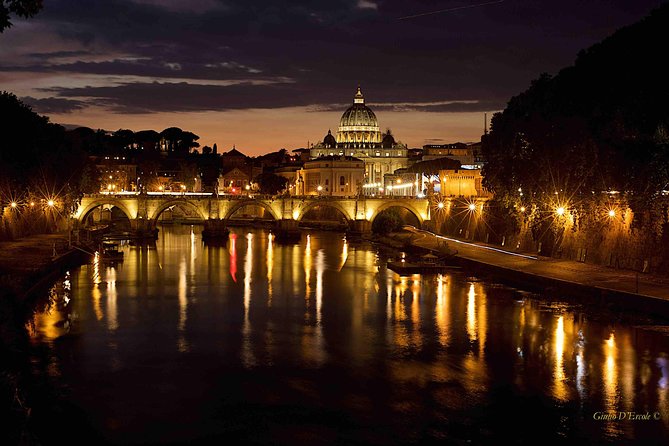
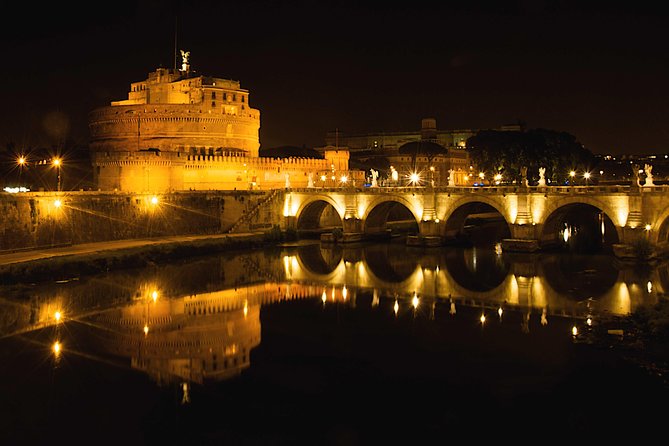
The meeting point is Ponte Sant’Angelo, directly in front of Castel Sant’Angelo. The castle was once a papal fortress, and its bulky shape rises behind the bridge crossing the Tiber. At night, the illuminated stone and water can create the first strong reflection of the evening.
You spend about 15 minutes here. It is a sensible starting point because the bridge gives you lines leading toward the castle, while the river offers a chance to work with reflections and light.
This first stop also lets Giulio see how comfortable you are with your equipment. If you are still searching through menus or unsure how to control your camera, ask for help early. The workshop works best when you treat the evening as a class rather than waiting for a formal lecture.
St. Peter’s Square under artificial light
From Castel Sant’Angelo, the route continues toward St. Peter’s Square in Vatican City. The square’s curving colonnades, fountain, and the facade of St. Peter’s Basilica give you several ways to frame the same place.
You have around 30 minutes here. That is enough time to try wider views, symmetrical compositions, and closer details of the architecture. The square is also a good lesson in balance. The basilica is enormous, while the colonnades pull your eye around the edges of the image.
The tour does not include admission tickets, and this is primarily an exterior photography stop. You should not expect a visit inside St. Peter’s Basilica during this evening walk.
Via dei Coronari and the old Roman street scene
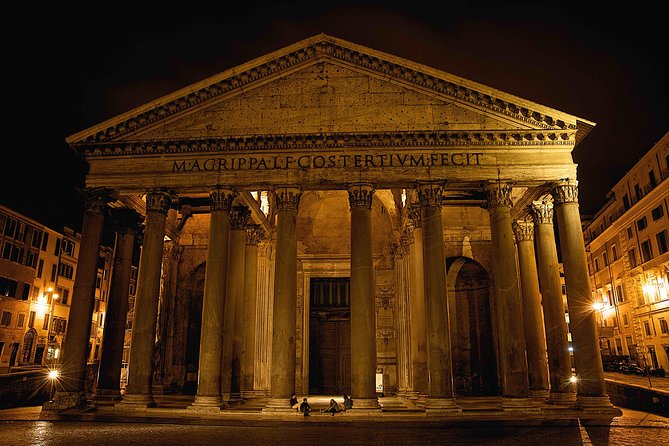
Via dei Coronari provides a welcome change from grand monuments. This elegant backstreet has historic doorways, corners, textures, and small details that are easy to miss when you rush from one major sight to another.
The stop lasts about 20 minutes. Here, Giulio can help you think beyond the obvious landmark. Look for layers in the street, changes in light, and small architectural details that suggest the age of the neighborhood.
This part of the route may appeal most to people who want to improve their general photography, not only collect postcard views. The main limitation is that the street is less predictable than a large square. You may find fewer obvious compositions, but that is also the point of the exercise.
More Photography Tours in Rome
- Vespa Rome Photography Tour by Local
★ 5.0 · 67 reviews - Rome by Day, Beauty and History Unique Photo Tour and Workshop
★ 5.0 · 36 reviews - Unique Photo Tour and Workshop in Rome Dusk to Dawn
★ 5.0 · 23 reviews - Rome in a Fiat Jolly: Exclusive Vintage Ride & Photo Tour
★ 5.0 · 20 reviews
Piazza Navona and the main photography lesson
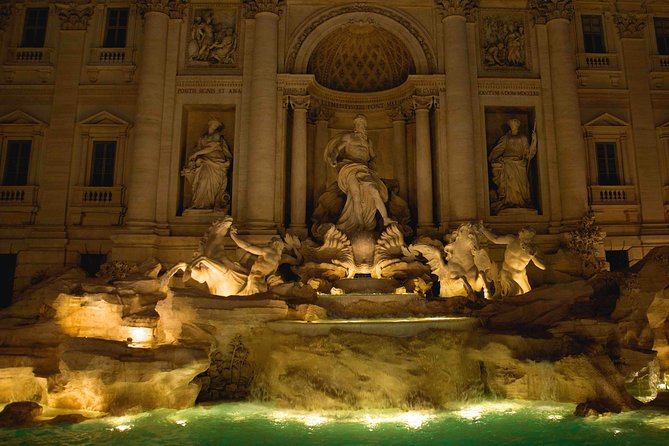
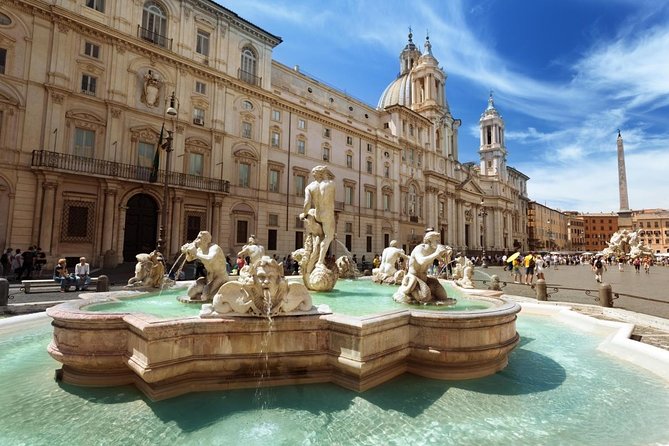
Piazza Navona is the longest stop, with about 40 minutes set aside for photography and instruction. Built over the former Stadium of Domitian, the oval piazza is lined with Baroque buildings and centered on three fountains.
Bernini’s Fountain of the Four Rivers is the star subject. Its sculpted figures, water, stone, and surrounding buildings offer plenty to work with, especially under evening illumination. The square also gives you room to step back and study how the fountain relates to the whole space.
This is where the workshop’s teaching element becomes most clear. Giulio uses the buildings and fountains to discuss composition and the reasons behind a successful image. You may work on symmetry, leading lines, balance, perspective, or the way you place a bright subject against a darker background.
Do not expect to take one picture and immediately move on. The useful part is making a frame, checking it, changing your position or settings, and trying again. One of the strongest features of this experience is that Giulio aims to help you get a good result before leaving each location.
The Pantheon and Piazza della Rotonda
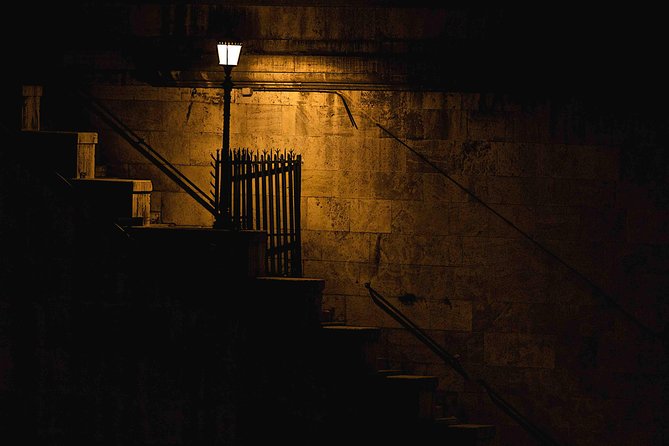
The Pantheon is one of Rome’s most complete ancient buildings, and its massive portico looks particularly dramatic against the smaller Piazza della Rotonda. You spend about 20 minutes photographing it from different angles.
The contrast between the Greek-style front and the later Roman construction gives you an interesting architectural subject. You can make a formal image of the facade, or use the surrounding square to show scale and context.
The fountain in the middle of the piazza adds smaller subjects. Its marble dolphins, sea creatures, and gargoyles provide details for a tighter composition after you have worked on the larger building.
As with the other stops, this is an exterior visit, and admission is not included. The square can still offer strong images without going inside. If your main goal is interior photography, this tour is not designed for that.
Piazza del Campidoglio and Michelangelo’s design
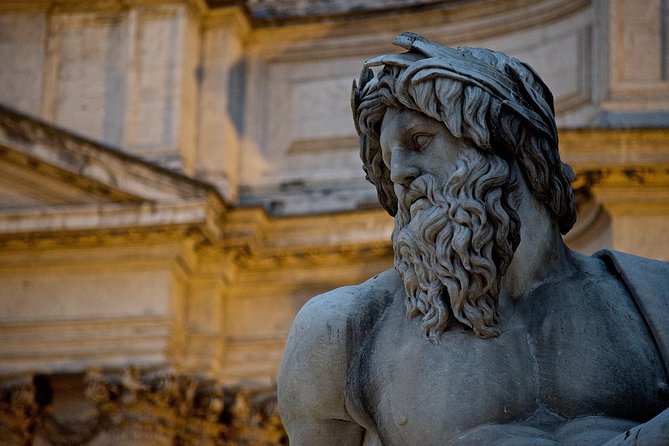
Piazza del Campidoglio sits on Capitoline Hill and was designed by Michelangelo. Its central equestrian statue of Marcus Aurelius, symmetrical paving, and three surrounding buildings create a carefully ordered setting.
You have about 20 minutes here. The square is a good place to practice symmetry and centered compositions, but you should also try moving away from the straight-on view. The facades, paving pattern, and statue can be arranged in several different ways.
This stop adds variety to the route. After fountains, narrow streets, and an ancient temple, you get a controlled Renaissance space where geometry does much of the photographic work.
The Roman Forum from above
The route then reaches a viewpoint over the Roman Forum for roughly 15 minutes. You are not spending the evening walking through the archaeological site. Instead, you photograph the ruins from above, with columns and old temples spread below and the Colosseum visible in the distance.
This is a useful lesson in layering. Ancient stone forms the foreground, the Forum fills the middle distance, and the Colosseum helps anchor the far view. At night, the lighting can make the ruins feel less like a collection of scattered remains and more like a single scene.
Keep in mind that the Forum is an archaeological attraction, and admission is not included. The value here comes from the viewpoint and the chance to make a broad city image, rather than from an interior or archaeological visit.
Finishing at the Colosseum
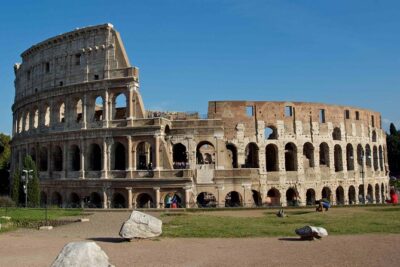
The tour ends at the Colosseum after about 45 minutes devoted to the area. This is the longest stop because the amphitheater and nearby Arch of Constantine provide several iconic subjects.
At this hour, you have a better chance of finding an unobstructed view than during the middle of the day, though Rome never becomes completely empty. Giulio can help you work with the Colosseum’s curves, arches, and repeated openings, then move toward the arch for a different composition.
The final stop is well chosen. You have spent the evening practicing on smaller details and complex squares, so you arrive at the Colosseum with a better sense of how to frame a major monument. The last photographs can feel less like hurried snapshots and more like deliberate compositions.
The tour ends at Piazza del Colosseo, near the Colosseum subway stop on Line B. If entry to the Colosseum or Roman Forum is part of your arrangements, each person must bring valid identification matching the name on the booking. Since admission tickets are not included, check the exact access arrangements before you pay.
What Giulio teaches, and who benefits most
Giulio’s background as a professional photographer and filmmaker shapes the experience. His instruction goes beyond telling you to use a tripod. He works with composition, exposure, lighting, camera settings, and the visual character of each place.
The teaching is adjusted to your level. Beginners can learn how to control basic settings and avoid common problems in low light. Intermediate photographers can work on composition, night exposure, and choosing a better viewpoint. Experienced photographers may appreciate a second set of eyes and access to locations selected by someone who knows Rome well.
You can also bring a phone. One participant specifically used an iPhone and received advice on how to make stronger images rather than ordinary snapshots. That makes the tour more flexible than a class built only around interchangeable-lens cameras.
The guide’s help can extend beyond photography. He has assisted with camera problems, carried gear for a participant with an injured ankle, and helped someone arrange a taxi after the tour. Those details suggest a personal approach, though you should still be prepared to carry your own equipment and manage a late return to your accommodation.
Price, group size, and practical value
The listed cost is $217.69 per person. That is not cheap for four hours on foot, especially since souvenir photos, admission tickets, and equipment rental are separate. Still, this is a private experience, not a large group walk, and the fee covers both guiding and individual photography instruction.
For a couple or small group, the value depends on your goals. If you only want to see Rome’s monuments at night, a regular evening walk will cost less. If you want to improve your photography while seeing major sights with a flexible guide, the private format makes the price easier to justify.
Group discounts and special arrangements are available for groups of more than two. Non-photographing spouses, partners, and children may also be included by arrangement, so contact the provider before booking if not everyone in your party plans to shoot.
If you have no camera, Giulio can rent a Nikon camera and tripod kit for 50 euros per kit, payable in cash. Ask about this before the evening rather than arriving without equipment and hoping to arrange it on the spot.
Wear comfortable casual clothing and shoes. The route covers a lot of ground, and the late finish matters. Public transportation is nearby at both the general start and end points, but you should plan your ride back before the tour begins.
The experience requires good weather. If poor weather forces cancellation, you can choose another date or receive a full refund. You may cancel for a full refund up to 24 hours before the start time, but changes or cancellations inside that window are not accepted.
How to get the most from the four hours
Tell Giulio your skill level and equipment before the tour. If you use a specific camera brand, phone, tripod, or lens, sharing that information early can help him tailor the instruction.
Bring a fully charged battery and enough storage. Night photography often involves repeated attempts, and you do not want technical limits to cut short your time at the Colosseum.
Do not judge the evening only by the number of landmarks. The real benefit is learning how to look at them. A lesson about composition at Piazza Navona may improve every photograph you make later, long after the Rome trip.
Also, pace yourself. Four hours sounds manageable, but the route is long and the finish is late. If someone in your party has an injury or limited mobility, discuss it in advance. The route includes substantial walking between stops, even though most travelers can participate.
Should you book Rome by Night?
Book it if you want more than a guided city walk. This is a strong choice for photographers at nearly any skill level, couples who want a private evening, and repeat visitors who have already seen Rome’s major sights by day.
The best reasons to choose it are Giulio’s personal instruction, the private format, and the chance to photograph Rome’s most famous places with fewer daytime crowds. You also get a useful mix of grand monuments, Baroque squares, quiet streets, and ancient ruins.
Skip it if you dislike walking late at night, need indoor sightseeing, or only want a quick collection of standard snapshots. The price is high, equipment and admission can add to it, and the route asks for four hours of attention.
For the right person, though, the evening offers something lasting: not just photographs of Rome, but a better understanding of how to make them.
FAQ
What time and where does the tour begin?
The tour begins at 9 p.m. at Ponte Sant’Angelo, in front of Castel Sant’Angelo in Rome.
Where does the tour finish?
It finishes at the Colosseum, in Piazza del Colosseo, near the Colosseum subway stop on Line B.
How long does the experience last?
The tour lasts approximately four hours.
Is this a private tour?
Yes. Only your group participates in the activity.
Is photography equipment included?
No. You should bring your own camera or phone. A Nikon camera and tripod kit can be rented for 50 euros per kit, payable in cash.
Can non-photographers join?
Arrangements can be considered for non-photographing spouses, partners, and children who come as guests. Children must be accompanied by an adult.
Are admission tickets included?
No. Admission tickets are not included. If entry to the Colosseum or Roman Forum is arranged, each person must present valid identification matching the booking name.
What happens if the weather is poor?
The experience requires good weather. If it is canceled because of poor weather, you can choose another date or receive a full refund.
More Photography Workshops in Rome
- Paris Photography Masterclass – Private Photography Lesson
★ 5.0 · 112 reviews - 2-Hour Photography Class While Touring Downtown Santa Fe, Smart Phones Welcome!
★ 5.0 · 108 reviews - Elevate Your Photography – Barcelona Private Tour & Workshop
★ 5.0 · 78 reviews - Private (Phone) Photography Class in Park & Old Town
★ 5.0 · 53 reviews
More Photography Workshops in Italy
- Rome Photography Masterclass – Private Photography Lesson
★ 5.0 · 67 reviews - Venice Photography Masterclass – Private Photography Lesson
★ 5.0 · 46 reviews
Just added around Rome
- Golf cart tour in Rome & Professional Photoshoot★ 5.0 · 2 reviews
- Rome : Golf cart tour & Professional Photoshoot★ 4.5 · 13 reviews
- Professional Photoshoot in the Eternal City Rome★ 5.0 · 19 reviews
- Rome in a Fiat Jolly: Exclusive Vintage Ride & Photo Tour★ 5.0 · 20 reviews
- Explore city on Vespa with Professional Photographer★ 5.0 · 3 reviews
- Fiat 500 Photo Experience Capture the Magic of the City★ 5.0 · 6 reviews
- Expert Photographer of Rome with Guide★ 5.0 · 7 reviews
- Electric Tuk-Tuk Photography Service of Rome★ 5.0 · 3 reviews
Photography Workshops & Lessons, compared.
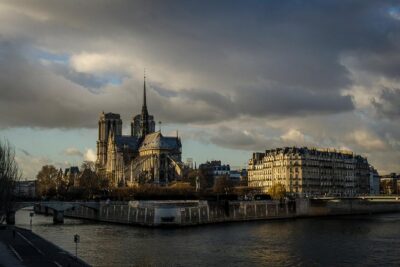
Paris Photography Masterclass – Private Photography Lesson
Read our review →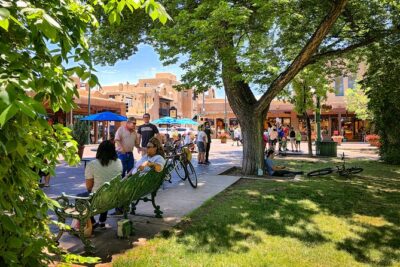
2-Hour Photography Class While Touring Downtown Santa Fe, Smart Phones Welcome!
Read our review →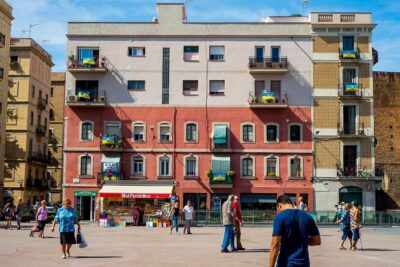
Elevate Your Photography – Barcelona Private Tour & Workshop
Read our review →
Rome Photography Masterclass – Private Photography Lesson
Read our review →
Private (Phone) Photography Class in Park & Old Town
Read our review →
Venice Photography Masterclass – Private Photography Lesson
Read our review →
Edinburgh Photography Masterclass – Private Photography Lesson
Read our review →