REVIEW · LISBON
Alfama Photo Walk – Lisbon Photography Experience Led by a Local
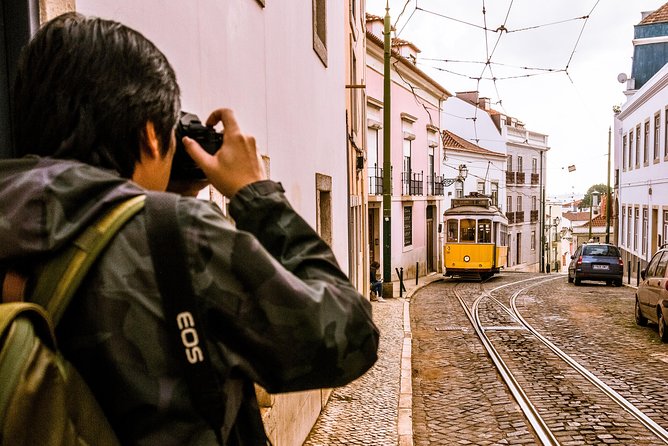
Alfama is one of Lisbon’s best places to learn street photography because the scenery changes every few steps. Narrow lanes, steep hills, bright walls, shadowy corners, trams, church facades, and daily neighborhood life give you plenty to work with. Guide Carlos Reveles helps you find practical shooting positions and shows you how to wait for the right moment.
I like two things right away: the small group size, capped at five people, and the patient pace, which gives you time to frame a picture instead of rushing from sight to sight. I also like that the instruction adapts to your camera and experience. The main drawback is the hilly walking, and the tour may not suit you if you want a relaxed sightseeing stroll with little physical effort.
Key points to know before booking
- Small groups make instruction personal: The maximum group size is five, so you can ask questions and get help with your own camera.
- Carlos teaches more than camera settings: Expect advice on angles, composition, timing, and how to read changing light.
- The route mixes street scenes and landmarks: You photograph Alfama’s lanes, moving trams, churches, rooftops, and the Tagus River.
- Bring your own equipment: Photography gear is not supplied, so pack the camera or phone you plan to use.
- Wear proper walking shoes: The route includes Lisbon’s steep and uneven streets, especially around Alfama and São Vicente.
- The tour works well early in a Lisbon stay: It can help you get your bearings while showing you places beyond the most obvious viewpoints.
Why Alfama works so well for a photo walk
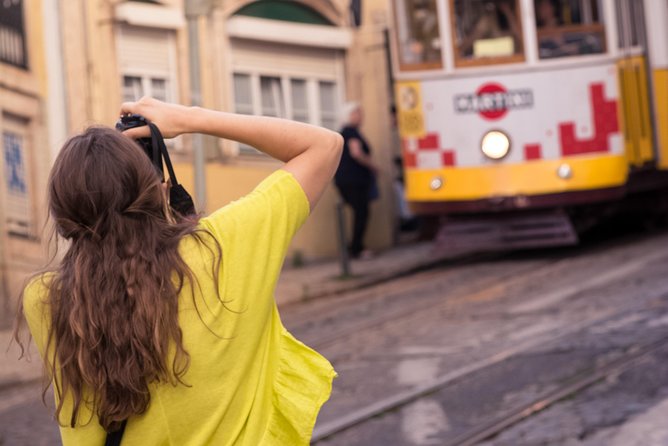
Alfama rewards slow walking. It is not a district you understand by checking off one monument and moving on. The narrow streets create layers, with balconies, tiled walls, doorways, laundry, shadows, and sudden openings toward the river.
That variety makes Alfama useful for photographers at almost any level. If you use a phone, you can work on framing and timing. If you carry a more advanced camera, Carlos can help you think about exposure, focal length, movement, and the way light falls across a scene.
The strongest part of this experience is the connection between technical advice and local context. You are not simply pointed toward a pretty street. You learn why a position works, where to stand, how to wait for a person or tram to enter the frame, and how the neighborhood’s character can shape the picture.
The route also avoids making photography feel like a classroom lecture. The walking itself creates the lesson. You move through different lighting conditions, stop when a scene offers potential, then continue when the picture has been made.
More Photography Tours in Lisbon
- Lisbon: 2-Hour Street Art Photo Tour
★ 4.9 · 43 reviews - Private Highlights Photography Tour in Lisbon
★ 3.0 · 8 reviews - Alfama Photo Walk: Lisbon Photography Tour with a Local
★ 4.8 · 6 reviews
Starting at Chafariz das Moiras
The walk begins at Chafariz das Moiras on Largo do Correio-Mor. From there, you enter the historic part of Lisbon on foot. The start and finish are in different places, with the walk ending at Largo da Sé, so you should plan to continue your day from the cathedral area rather than return to the starting point.
This is a useful arrangement for sightseeing. You finish near Lisbon Cathedral and can continue exploring on your own. The meeting point is near public transportation, but hotel pickup and drop-off are not included. You need to make your own way to the start.
At the beginning, Carlos adjusts the advice to your equipment and experience. That matters because photography tours can sometimes assume too much. Here, a beginner can focus on simple changes in angle and composition, while a more experienced photographer can ask for help with timing, movement, and difficult light.
Bring a charged camera or phone, enough storage, and comfortable shoes. Food and drinks are not included, so plan around the three-hour duration if you need a snack or water.
One hour in Alfama’s narrow streets
The first and longest portion takes place in Alfama. You spend about an hour working through its narrow streets and looking for usable compositions rather than simply collecting landmarks.
This is where Carlos’s approach appears most useful. He can point out practical places to stand and help you read the light at different times of day. A street that looks flat from one position may gain depth when you move a few steps. A doorway may work better as a frame than as the main subject. A person crossing a lane can turn an ordinary view into a sense of daily life.
You also get advice on waiting for the shot. That may mean holding your position until a subject enters the right patch of light or until the street scene has the right balance of people and architecture. This kind of guidance is valuable because many casual photographs fail not because the subject is poor, but because the photographer presses the shutter too soon.
The pace is deliberately unhurried. You have time to try a composition, check it, and make another version. That is a better setup for learning than a fast-moving sightseeing tour, though it means you will not cover every corner of Alfama.
Alfama’s hills are the obvious physical challenge. The streets can require steady walking, and one participant specifically pointed out that good walking shoes are important. You should not book this expecting level ground or a gentle roll through town.
Trams and church architecture in Graça and São Vicente
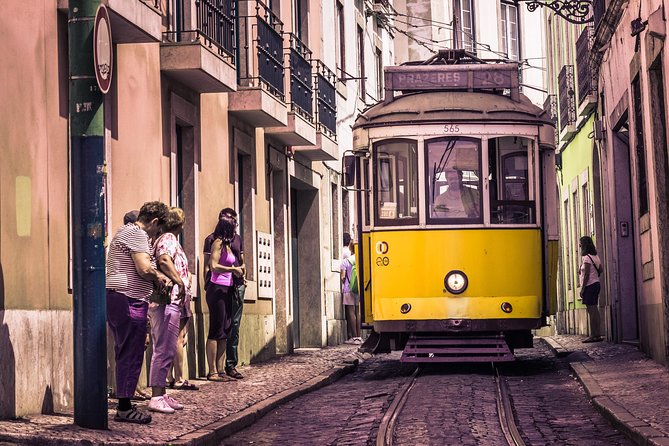
The route then moves toward Graça and São Vicente, where the focus shifts from quiet street scenes to movement and formal architecture. On Calçada de São Vicente, you work on photographing Lisbon’s trams in motion.
Moving trams give you a practical exercise. You need to balance a changing subject with fixed parts of the scene, such as the road, buildings, or church architecture. Carlos can help you think about timing and positioning, and the exercise works for different skill levels because you can approach it with a phone or a dedicated camera.
This is also a good place to learn that street photography is partly about patience. You may need to anticipate where the tram will enter the frame rather than react after it has already passed. A technically sharp picture is not enough if the tram blocks the wrong detail or leaves the frame too quickly.
At Igreja de São Vicente de Fora, the subject becomes more stable. The church gives you a chance to practice architectural photography, close details, and wider compositions. The contrast between a moving tram and a fixed church is one of the more useful design ideas in the walk.
You should keep in mind that this portion is only about 30 minutes. It offers a focused exercise, not an extended architectural visit. The tour is about making pictures of the surroundings, not touring the church interior.
More Photography Tours in Portugal
- Lisbon by Night: Golden and Blue Hour Photography Walk
★ 5.0 · 4 reviews - Porto 1/2 Day Walking Photo Tour & Portraits
★ 5.0 · 163 reviews - PHOTO TOUR (Full Day Private Tour- Sunrise to sunset)
★ 5.0 · 68 reviews - Lisbon Private Sightseeing Photography Tour with Tuk Tuk
★ 5.0 · 5 reviews
Rooftop views at Miradouro de Santo Estêvão
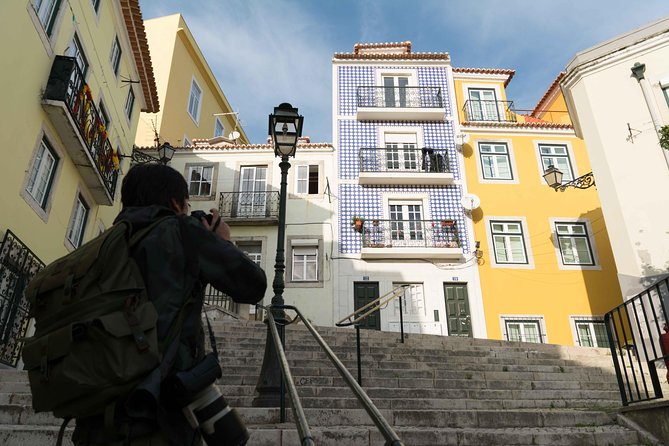
The 30-minute stop at Miradouro de Santo Estêvão provides a change of scale. Instead of working at street level, you look over Alfama’s rooftops toward the Tagus River.
Viewpoints can be tempting places to take the same wide photograph everyone else makes. Carlos’s instruction is useful here because he can help you think about composition rather than simply point your camera at the view. You might work with layers of rooftops, the river in the distance, and foreground details that give the picture depth.
This is also a good point to slow down after the uphill walking. The lookout is described as serene, and the wider view gives you a chance to practice simpler compositions. If you prefer street photography, you may find this stop less engaging than the lanes below. If you like city views, it provides a welcome break and a different kind of photographic problem.
The light will affect this stop greatly. The tour requires good weather, and poor weather can lead to a different date or a full refund. That policy is practical for a photography activity, since rain or heavy cloud can change the experience and make the hills less pleasant.
A neighborhood square at Igreja de São Miguel
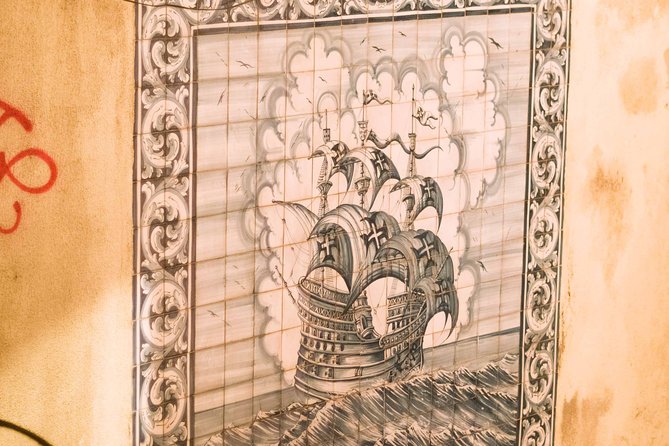
The next 30-minute stop is Igreja de São Miguel, set around a small neighborhood square. This section returns to closer views and local activity.
The appeal here is the mix of classic Lisbon details: a chapel, surrounding buildings, people using the square, and possible framing lines created by the street. You can work on finding an image within an image, using arches, corners, or doorways to guide the eye.
This stop may suit photographers who enjoy ordinary scenes more than famous monuments. A small square can tell you more about the daily shape of a neighborhood than a single grand facade. Carlos’s local knowledge adds value because he can explain what you are seeing while still leaving room for you to make your own choices.
That balance is worth noting. The guidance is active, but it is not meant to force every participant into the same picture. You receive suggestions about angles and timing, then decide how much to follow them.
Finishing at Lisbon Cathedral
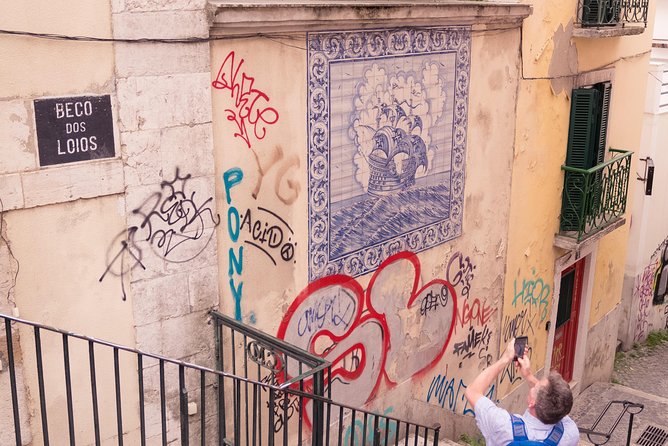
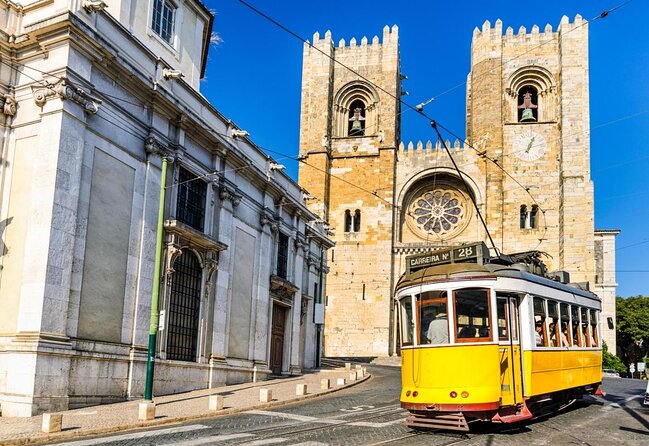
The final 30-minute stop is Lisbon Cathedral, or Sé, one of the city’s oldest churches. It gives the walk a strong architectural finish and places you near Largo da Sé at the end.
The cathedral offers several ways to work. You can look for close architectural details, use dramatic light and shadow, or frame the church within the surrounding urban setting. The area can also give you layers of old and modern Lisbon in one view, depending on where you stand.
Finishing here is convenient for a wider day of sightseeing. You are not returned to the original meeting point, so you can continue toward other central areas from Largo da Sé. The route therefore functions both as a photography lesson and as a guided introduction to a large part of Lisbon’s old center.
As with São Vicente, the emphasis is on photography rather than an interior visit. If your main goal is detailed church history or extended time inside monuments, this is not the right format. If you want to learn how to photograph historic structures in their urban setting, it fits well.
What Carlos teaches, beyond camera settings
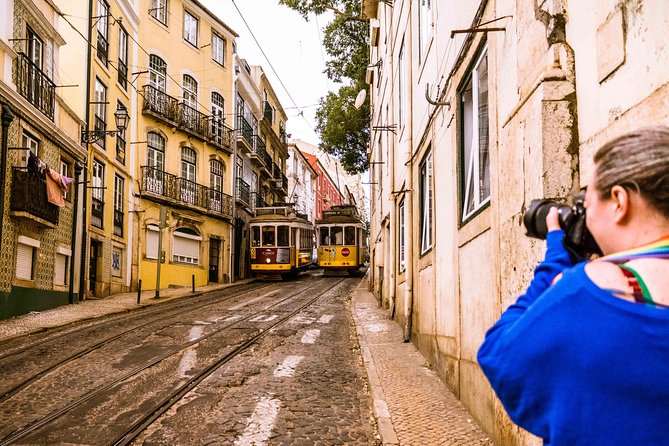
The most praised part of the experience is the guide’s personal instruction. Carlos is described as friendly, generous with his time, and willing to offer advice without taking over the creative process.
His teaching covers practical questions:
- Where should you stand?
- What angle gives the building more shape?
- How can you include movement without losing the main subject?
- When should you wait for a better moment?
- How do you use changing light?
- How can you make an ordinary backstreet feel intentional in a photograph?
These are useful lessons because they remain relevant after Lisbon. You can apply them in another city, at home, or on your next trip.
The tour also includes local stories and cultural context. That helps your pictures feel connected to the place rather than like a collection of attractive surfaces. You learn to notice how the streets function, how the architecture fits into the neighborhood, and why certain corners offer more than a postcard view.
Price, group size, and overall value
The price is $112.82 per person for about three hours. That is not a low-cost walking tour, especially since you must bring your own equipment and pay separately for any food or drink.
The value depends on what you want from the outing. If you only want a guide to point out Alfama’s sights, the price may feel high. You can walk through the district without paying for a photography lesson. But if you want personal help with composition, light, movement, and camera technique, the small group can justify the cost.
The maximum of five people is important. A larger group would make it harder to stop, ask questions, and get advice tailored to your camera. The price also includes local guidance and a deliberately slow pace, not just a route between viewpoints.
Group discounts are available, though the exact saving is not specified. The activity is offered in English and uses a mobile ticket. It is booked, on average, about 16 days ahead, so you should reserve early if your Lisbon dates are fixed.
The overall rating is 4.8 from 20 ratings, with 95 percent recommending it. There is also one serious complaint about communication and a missed meeting. The provider’s response says the guide was at the meeting point, had replied before the start, and that the booking was not cancelled under the stated policy. The practical lesson is simple: answer special-request messages, confirm the meeting details, and do not assume a late change has been accepted.
Who will enjoy this walk most
I would choose this for a photographer who wants help making better pictures, not just a list of photo stops. It suits beginners who need clear guidance and experienced amateurs who want a local eye on composition and timing.
It is also a good first activity in Lisbon if you want to get oriented in the old city. You see Alfama, São Vicente, Graça, a major lookout, a neighborhood square, and the cathedral in one outing.
You may want another type of tour if you dislike hills, need frequent food breaks, or prefer a bus or vehicle-based sightseeing experience. It is also not ideal if you are expecting camera rental, professional portraits, edited images, or a formal photography workshop in a studio. None of those are included.
Should you book the Alfama Photo Walk?
Book it if you want to slow down, look closely, and leave Lisbon with better photographs than simple snapshots. The best reasons are the five-person limit, Carlos’s practical instruction, and the route’s range of subjects, from trams and rooftops to churches and ordinary street life.
Skip it if the price feels too high for a walking tour, if steep streets are a concern, or if you want a conventional history tour with long monument visits. For the right person, this is a focused way to see Lisbon through a camera, with enough local context to make the pictures mean more.
FAQ
How long does the Alfama Photo Walk last?
The experience lasts approximately three hours.
Where does the tour begin?
It begins at Chafariz das Moiras, Largo do Correio-Mor, 1100-179 Lisboa, Portugal.
Where does the tour end?
The walk ends at Largo da Sé, 1100-401 Lisboa, Portugal, near Lisbon Cathedral.
Is photography equipment provided?
No. You must bring your own photography equipment. This can include the camera or phone you prefer to use.
What language is the tour offered in?
The experience is offered in English.
How many people can join?
The group has a maximum of five participants. Group discounts are available.
Does the tour include hotel pickup or food?
No. Hotel pickup and drop-off are not included, and snacks, food, and beverages are also excluded.
What happens if bad weather cancels the walk?
The activity requires good weather. If it is cancelled because of poor weather, you can choose another date or receive a full refund. You can also cancel up to 24 hours before the start time for a full refund. Cancellations or changes made less than 24 hours before the start are not refunded.
More Walking Tours in Lisbon
- NYC Professional Photoshoot and Walking Tour with Private Guide
★ 5.0 · 608 reviews - Tokyo: Kimono Dressing, Walking, and Photography Session
★ 4.9 · 427 reviews - Santorini: Customized Private Photoshoot Walk in Oia
★ 5.0 · 335 reviews - Paris Private Walking Tour with a Personal Photographer
★ 5.0 · 262 reviews
Just added around Lisbon
- Loving Lisbon: Capture Your Memories with a Photoshoot!★ 5.0 · 13 reviews
- Lisbon: Professional Photographer (@ivetta_photos)★ 5.0 · 2 reviews
- Lisbon TukTuk Tour – Smooth & Fun – Best Instagram Spots★ 5.0 · 6 reviews
- Lisbon: Private Photoshoot at Iconic Spots & Edited Photos★ 5.0 · 4 reviews
- Lisbon photo shoot with a highlight video★ 5.0 · 5 reviews
- Lisbon: Photo Shoot with a Private Vacation Photographer★ 4.1 · 3 reviews
- Lisbon: Private Photo Shoot with a Professional Photographer★ 5.0 · 4 reviews
- Lisbon: Instagram Hotspots Photoshoot★ 5.0 · 21 reviews
Photography Tours, compared.
Rhodes: E-bike Highlights Sunset or Morning Photo Tour
Read our review →