REVIEW · LISBON
Alfama Photo Walk: Lisbon Photography Tour with a Local
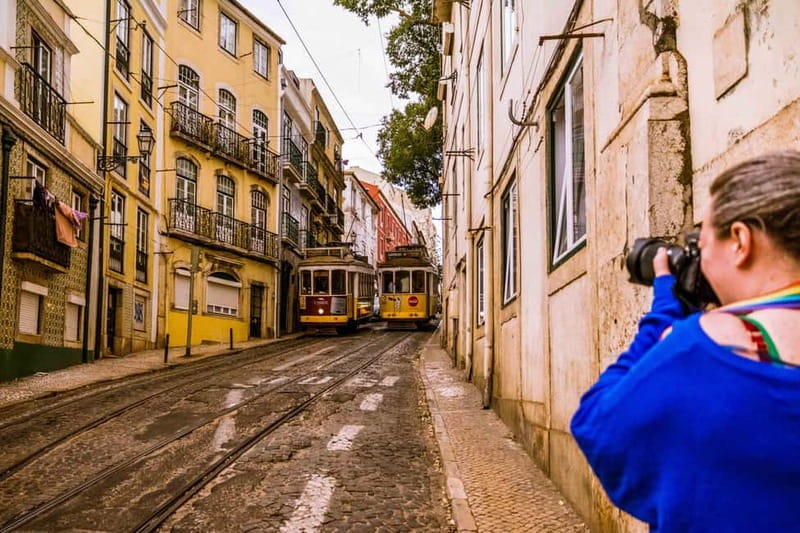
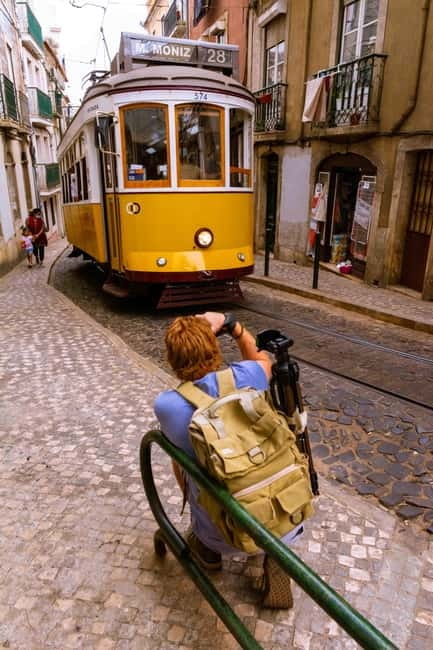
Alfama is best understood from street level, where laundry hangs above narrow lanes, tiles catch the afternoon light, and a yellow tram can turn an ordinary corner into a fine photograph. This three-hour walk with local photographer Carlos gives you time to work those scenes instead of merely pointing a camera and moving on. I like the small group, which is limited to five, and I like that the instruction works for smartphones, digital cameras, and film gear. The main catch is the terrain: expect cobbles, hills, and a fair amount of walking.
I also like the relaxed pace. You can stop, try a new framing, ask why a scene works, and get useful feedback before the group moves on. Carlos can adjust the route to suit your wishes, and his practical advice covers light, composition, and visual storytelling rather than camera jargon. This is a photography lesson first and a history walk second, so anyone wanting a detailed account of Lisbon’s past should choose a different tour.
Key points
- Local guide Carlos: A Lisbon-born professional photographer who gives hands-on advice and can adapt the walk to your interests.
- A small group of five: The group size leaves room for individual questions, photo review, and a slower creative pace.
- Alfama from street level: Photograph tiled buildings, laundry-lined alleys, yellow trams, historic facades, and broad city views.
- Works with almost any camera: Bring a smartphone, digital camera, or film camera and receive tips suited to your equipment.
- A useful route: Begin at Chafariz das Moiras and finish near Sé de Lisboa, with no hotel transport included.
- Good value for serious beginners: At $110 per person, you pay for instruction, local access, and personal attention, not just a walk through Alfama.
Why This Alfama Walk Works for Photographers
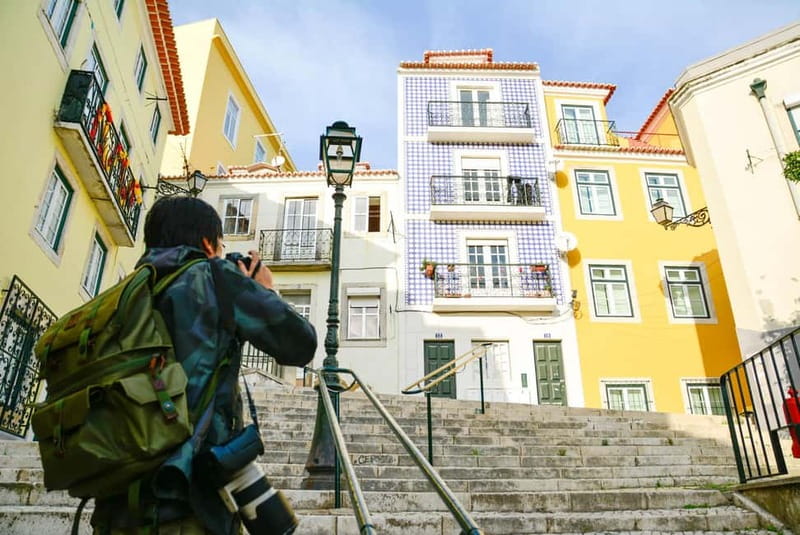
Many Lisbon sightseeing tours move at the speed of a group crossing a street. You see the view, hear a quick fact, and continue. This walk gives you a different job: notice the light, decide what belongs in the frame, and make a picture with purpose.
That distinction matters in Alfama. The neighborhood is full of obvious subjects, but the obvious subject is not always the best photograph. A tram may be colorful, yet the real picture could be the shadow beneath it, a tiled wall behind it, or a local street scene that gives the tram a sense of place.
Carlos teaches you to look for those relationships. The instruction includes framing, natural light, composition, and storytelling, with advice shaped around what you are carrying. A smartphone user does not need the same help as someone working with a manual film camera, and this walk is designed to respect that difference.
You should not expect a classroom lecture or a technical course packed with settings. The useful lessons happen while you are standing in an alley, looking at a facade, or waiting for a moving subject to enter the frame. That practical format makes the tour especially helpful if you understand basic camera controls but struggle to turn attractive scenery into strong photographs.
More Photography Tours in Lisbon
- Lisbon: 2-Hour Street Art Photo Tour
★ 4.9 · 43 reviews - Alfama Photo Walk – Lisbon Photography Experience Led by a Local
★ 5.0 · 20 reviews - Private Highlights Photography Tour in Lisbon
★ 3.0 · 8 reviews
Starting at Chafariz das Moiras
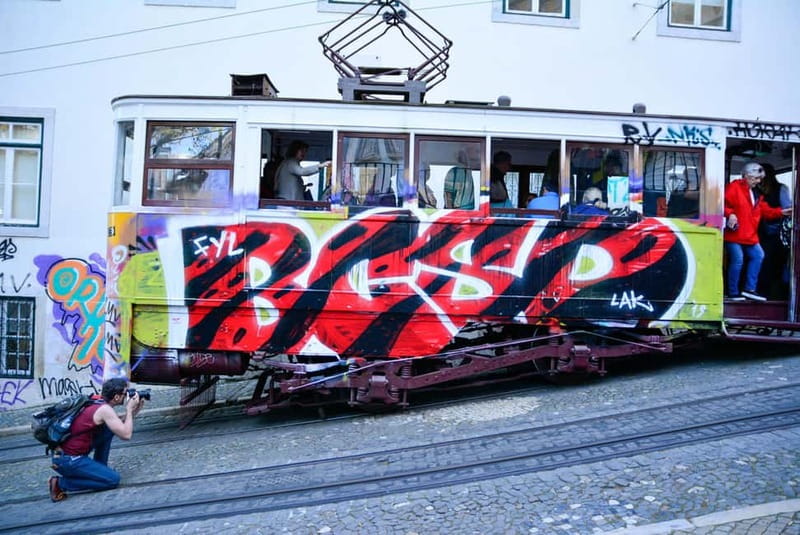
The meeting point is Chafariz das Moiras, a fountain near the CPLP Headquarters. Carlos waits by the benches with a camera, making him easy to identify. You need to arrange your own way to the fountain because hotel pickup and drop-off are not included.
The starting point sets up the tour well. Rather than beginning at a major monument with a crowd already gathered around it, you meet at a neighborhood landmark and move into Alfama on foot. This lets the photography begin with the character of the streets, not only with a famous building.
Use the meeting time to make sure your camera or phone is ready. Since the walk is only three hours, you will get more from it if you are not sorting out batteries, storage, or unfamiliar controls at the first stop. Bring your own camera gear, accessories, and tripod if you want one, though the narrow streets and hills may make a large setup less convenient.
The group is limited to five people. That is a meaningful advantage here. Alfama has tight passageways and many changing photo opportunities, so a large group would make it harder to pause without blocking the route or losing sight of the guide.
Through Alfama’s Narrow Streets
From the fountain, the walk explores Alfama’s cobblestone lanes and older facades. The neighborhood’s appeal comes from its layers: tiled walls, worn stone, laundry above the street, painted doors, and small changes in light from one passage to the next.
You will work with ordinary scenes rather than staged attractions. That is one of the best reasons to book this activity. Carlos points out lesser-known locations alongside more familiar viewpoints, helping you find pictures in places you might otherwise pass without noticing.
The route can include laundry-lined alleys and historic facades, subjects that reward patience. A good photograph may depend on waiting for a person to pass, finding a clean angle, or shifting a few steps to keep a distracting sign out of the frame. The relaxed pace gives you a chance to test those choices.
This is also where the walking conditions matter. Alfama’s cobblestones can be uneven, and the route includes moderate hills. Wear comfortable shoes with secure footing. If you prefer flat, smooth paths or find hills difficult, the physical side of the activity may outweigh its creative appeal.
Practicing Natural Light and Composition
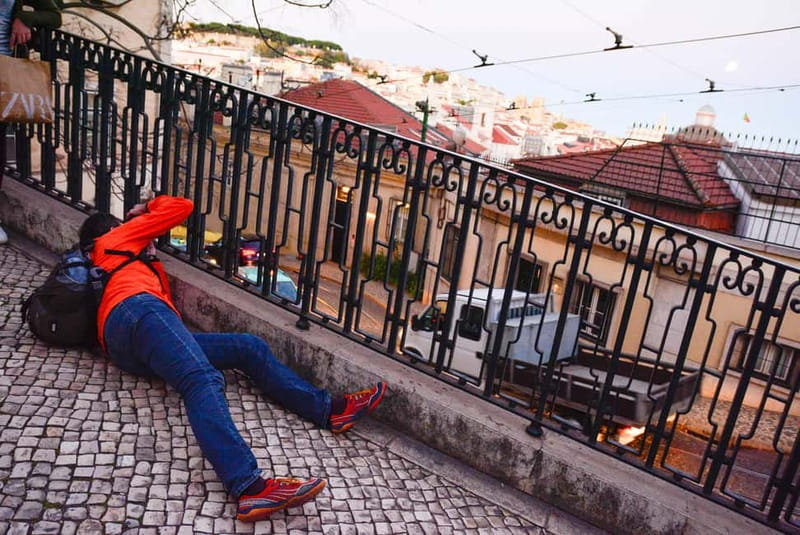
The instruction is built around the conditions Lisbon gives you on the day. Natural light changes as you turn a corner, move between a narrow lane and an open viewpoint, or photograph a pale wall beside a dark doorway.
Carlos helps you use that light rather than simply accept it. You may practice looking for direction, contrast, and the way sunlight falls across tiled surfaces. These are basic ideas, but they are much easier to understand when you can immediately make a picture, review it, and try again.
Composition is handled in the same direct way. You can learn to simplify a crowded scene, use lines in a street, frame a building, or give a moving subject enough space. The goal is not to produce the same postcard image as everyone else. It is to make a photograph that says something about the place.
The optional photo review adds value. You can receive constructive feedback during the walk, then apply it to the next scene. That quick cycle of instruction, practice, and adjustment is more useful than collecting a long list of photography rules.
If you are an experienced photographer, you may find the basic tips familiar. The benefit for you is the local eye and the access to less obvious corners, not an advanced masterclass in lighting or post-processing. The guide can also adjust his advice to your level, which keeps the walk from feeling too elementary for everyone.
More Photography Tours in Portugal
- Lisbon by Night: Golden and Blue Hour Photography Walk
★ 5.0 · 4 reviews - Porto 1/2 Day Walking Photo Tour & Portraits
★ 5.0 · 163 reviews - PHOTO TOUR (Full Day Private Tour- Sunrise to sunset)
★ 5.0 · 68 reviews - Lisbon Private Sightseeing Photography Tour with Tuk Tuk
★ 5.0 · 5 reviews
Yellow Trams, Tiles, and Everyday Street Scenes
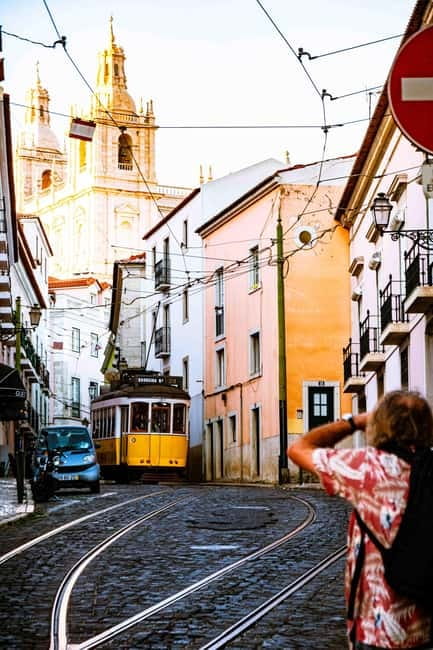
Lisbon’s yellow trams are natural photo subjects, but they can produce predictable pictures. Carlos helps you look beyond the simple front-on shot. The surrounding street, a colorful building, a passing shadow, or the relationship between tram and architecture can make the image more specific to Alfama.
Tiled buildings offer another lesson in detail. You can photograph a whole facade, isolate a pattern, or use the tiles as a backdrop for daily life. The neighborhood gives you both broad subjects and small ones, so you can vary your work throughout the morning or afternoon.
The walk also makes room for everyday life. Laundry, doorways, street corners, and local movement give your photos a human scale. You are not only collecting views of Lisbon; you are practicing how to show a place through its details.
Brief local context accompanies the photography. Carlos can share insight into Alfama’s culture and ordinary life, but this is not a full historical tour. If your main goal is dates, monuments, and long explanations about Lisbon’s past, you may want to pair this with a separate sightseeing walk.
Viewpoints and Wider City Photos
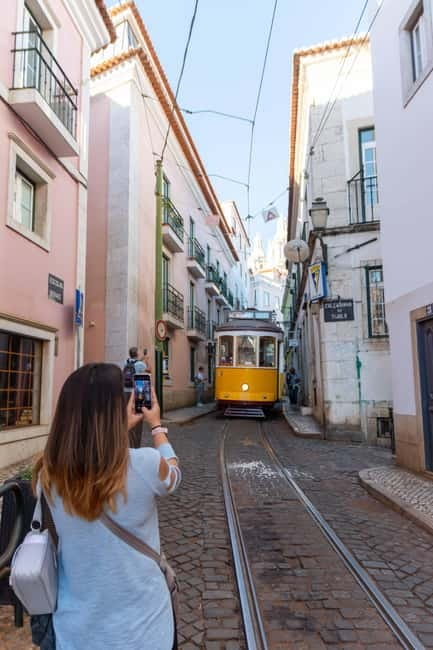
Alfama’s higher points open onto broad views of Lisbon, and the walk includes panoramic city vistas. These locations give you a welcome change from close walls and narrow lanes. They also let you practice scale, horizon placement, and the balance between foreground detail and distant scenery.
A viewpoint is not automatically a good photograph. The view may be wide, but the picture can feel empty without a strong foreground or a clear subject. This is another place where personal guidance helps. You can ask how to organize the frame instead of taking several nearly identical shots.
The route includes both well-known outlooks and quieter photo locations. That mix is useful. Familiar views give you a sense of Lisbon’s visual identity, while less expected corners help you return home with pictures that feel more personal.
Do not expect to stop at every possible lookout. Three hours sounds generous, but it passes quickly when people are making photographs and asking questions. The small group and easy pace favor quality over quantity. You should leave with a smaller set of deliberate images rather than a huge folder of rushed snapshots.
How the $110 Price Holds Up
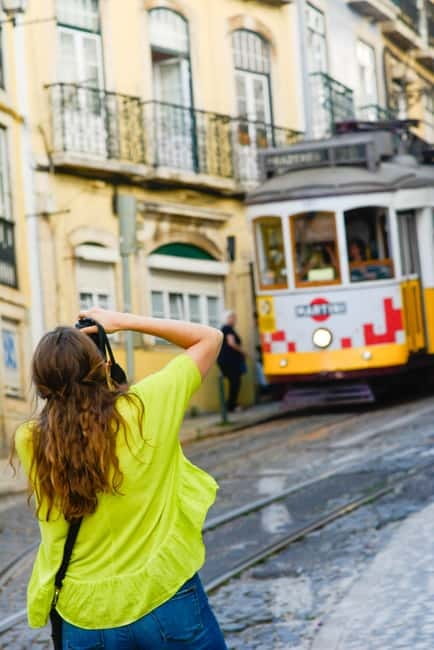
At $110 per person, this is not the cheapest way to walk through Alfama. You are paying more than you would for a general neighborhood stroll because the activity includes a professional photographer, personal instruction, a group capped at five, and time for feedback.
The price makes the most sense if you place a real value on better photographs. A local guide who can suggest less familiar spots and explain why a frame works can save you hours of trial and error. The walk also combines sightseeing with a practical skill, so you are not spending three hours on instruction in a room.
For someone who only wants to see Alfama’s main sights, the cost may feel high. You could explore the streets independently for much less. The difference is that this walk gives you a trained eye beside you, plus a reason to slow down and pay attention.
The value is strongest for beginners, couples or friends with different camera types, and returning visitors who already know Lisbon’s main sights. One person can use a phone while another carries a digital or film camera, and both can receive advice suited to their equipment.
There are no meals or drinks included, and you handle transportation to the meeting point. Those costs are modest compared with the tour price, but you should include them in your planning. A portrait session is also separate, so do not book this expecting a formal personal photo shoot.
What Past Participants Found Most Useful
Carlos receives especially strong praise for being kind, flexible, and willing to respond to individual requests. That matters because photography is personal. You may want more help with composition, while another person needs advice on using natural light or finding a better angle.
A Japanese participant described Carlos as helpful at good photo locations and appreciated the way he adjusted the walk to specific wishes. The result was described as a lasting set of personal photographs, which suggests that you can ask for an approach that fits your goals rather than simply follow a fixed script.
A participant from the United Kingdom valued the combination of technique and less familiar parts of Alfama. That is a good description of the activity’s balance: you learn a few practical methods while seeing more than the usual tourist route.
A participant from Brazil described the walk as a light but meaningful lesson in photography and the city. I think that captures the tone well. This is not an intense technical workshop. It is a friendly, useful session in which the city itself becomes your practice space.
The overall rating is 4.8 from six reviews. That is a small sample, so I would not treat the number as proof that every person will have the same experience. Still, the repeated praise is specific: Carlos, good photo spots, personal adjustments, useful technique, and an enjoyable pace.
Timing, Weather, and Physical Demands
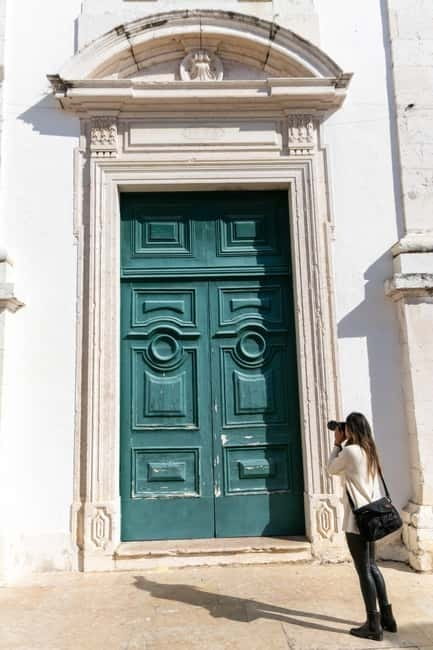
The activity lasts three hours, and starting times depend on availability. Light rain does not automatically cancel the walk, so bring weather-appropriate clothing. Severe weather can lead to a refund or rescheduled outing.
Weather can change the photographs you make. Overcast conditions may give tiled walls and narrow streets softer light, while brighter weather can create stronger shadows. You should be ready to work with the conditions rather than expect a particular kind of sky.
The tour is not wheelchair accessible because of the terrain. It is also not suitable for people with mobility impairments or visual impairments. Children under 13 cannot join, and the minimum age is 13.
English and Portuguese are available. The language used depends on the participants, so you should be comfortable receiving photography instruction in one of those languages.
Free cancellation is available up to 24 hours before the start, and you can reserve now while paying later. Those policies are useful if your Lisbon schedule is still shifting, though the main planning issue remains the physical route and the need to reach the fountain yourself.
Who Should Book This Photo Walk
I would recommend it most strongly to you if you want to improve your photos while exploring Lisbon. It suits beginners who want simple guidance without a formal classroom, and it also suits experienced photographers who want a local eye on Alfama.
Smartphone photographers are welcome. That is important because many visitors now carry a phone rather than a dedicated camera, and the walk does not treat that as second best. The same ideas of timing, framing, light, and storytelling apply.
It also works well for creative people who prefer a slower outing. You will not be rushed from one landmark to another, and the small group makes it easier to ask questions. Couples and friends can bring different kinds of equipment and still learn from the same scene.
I would skip it if your priority is a detailed historical lecture, a formal portrait session, or a completely flat route. I would also think twice if you dislike stopping to make several attempts at one photograph. The walk rewards attention, not speed.
Should You Book the Alfama Photo Walk?
Book it if you want to see Alfama through a camera and learn how to make more thoughtful pictures of Lisbon. The strongest reasons are Carlos’s personal approach, the five-person limit, the mix of famous and quieter locations, and the chance to receive feedback while you are still on the streets.
At $110, it is a specialist activity rather than a budget sightseeing tour. For a casual look at Alfama, explore independently. For practical photography help, local guidance, and three unhurried hours among tiles, trams, alleys, and city views, the price is reasonable.
Wear good shoes, bring the camera you actually use, and arrive ready to experiment. You may return with better pictures, but the more lasting gain is learning to notice why a Lisbon street catches your eye in the first place.
FAQ
Where does the Alfama photo walk begin?
The walk begins at Chafariz das Moiras fountain, near the CPLP Headquarters. Meet by the benches, where the guide will be waiting with a camera.
Where does the tour finish?
The route concludes near Sé de Lisboa, also known as Lisbon Cathedral.
How long does the photography walk last?
The activity lasts three hours.
What kind of camera can I bring?
You can bring a smartphone, digital camera, or film camera. Instruction is adapted to your equipment and experience level.
How large is the group?
The group is limited to five participants.
Is the tour suitable for beginners?
Yes. The walk welcomes all skill levels and includes practical help with composition, natural light, framing, and visual storytelling.
What should I wear and bring?
Wear comfortable walking shoes because the route includes cobblestone streets and moderate hills. Bring your own camera gear, tripod, accessories, and weather-appropriate clothing.
More Walking Tours in Lisbon
- NYC Professional Photoshoot and Walking Tour with Private Guide
★ 5.0 · 608 reviews - Tokyo: Kimono Dressing, Walking, and Photography Session
★ 4.9 · 427 reviews - Santorini: Customized Private Photoshoot Walk in Oia
★ 5.0 · 335 reviews - Paris Private Walking Tour with a Personal Photographer
★ 5.0 · 262 reviews
Just added around Lisbon
- Loving Lisbon: Capture Your Memories with a Photoshoot!★ 5.0 · 13 reviews
- Lisbon: Professional Photographer (@ivetta_photos)★ 5.0 · 2 reviews
- Lisbon TukTuk Tour – Smooth & Fun – Best Instagram Spots★ 5.0 · 6 reviews
- Lisbon: Private Photoshoot at Iconic Spots & Edited Photos★ 5.0 · 4 reviews
- Lisbon photo shoot with a highlight video★ 5.0 · 5 reviews
- Lisbon: Photo Shoot with a Private Vacation Photographer★ 4.1 · 3 reviews
- Lisbon: Private Photo Shoot with a Professional Photographer★ 5.0 · 4 reviews
- Lisbon: Instagram Hotspots Photoshoot★ 5.0 · 21 reviews
Photography Tours, compared.
Rhodes: E-bike Highlights Sunset or Morning Photo Tour
Read our review →