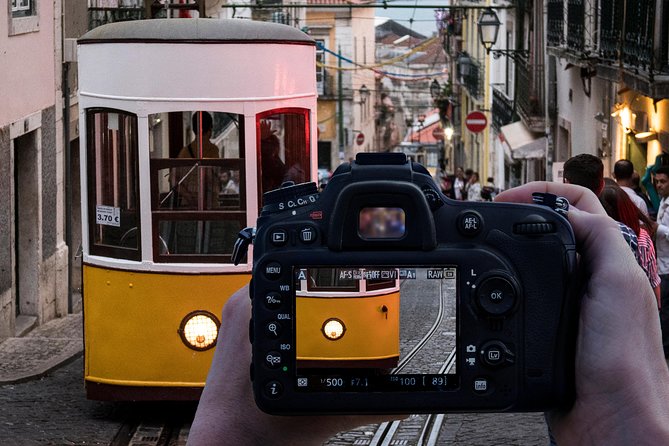
REVIEW · LISBON
Lisbon Photography Masterclass – Private Photography Lesson
Lisbon is a photographer’s playground, and this private lesson gives you more than a sightseeing walk. You’ll work with a professional photographer while moving through Alfama’s steep lanes and Lisbon’s famous viewpoints, learning how to frame streets, people, trams, and wide city views.
I like the one-on-one format, which lets the guide adjust the lesson to your camera and experience. I also like the route’s range: you get old streets, lookout points, transport scenes, and grand city views in one three-hour outing.
The main caution is equipment. A camera and tripod are not included, and a rented tripod may not work neatly with every camera bracket or strap system. If you use specialized gear, contact Aperture Tours before the tour.
Key Points at a Glance
- Private instruction: Your group has its own local guide and professional photographer.
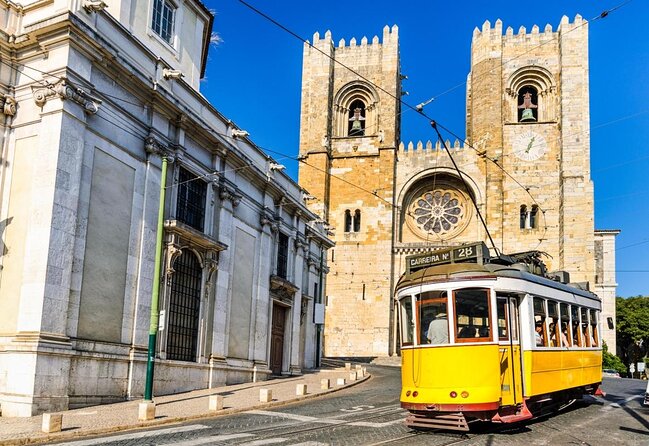
- Eight photogenic stops: The route links Alfama, Lisbon Cathedral, four major viewpoints, Bairro Alto, and the Gloria funicular.
- Bring your own camera: The lesson focuses on helping you use your own equipment.
- Tripod rental is possible: Check compatibility ahead of time if your camera uses a special plate or strap bracket.
- Three hours on Lisbon’s hills: Expect plenty of walking and changing elevations.
- Weather is not a deal breaker: The tour runs in all weather, so dress for the forecast.
Why Lisbon Works So Well for a Private Photography Lesson
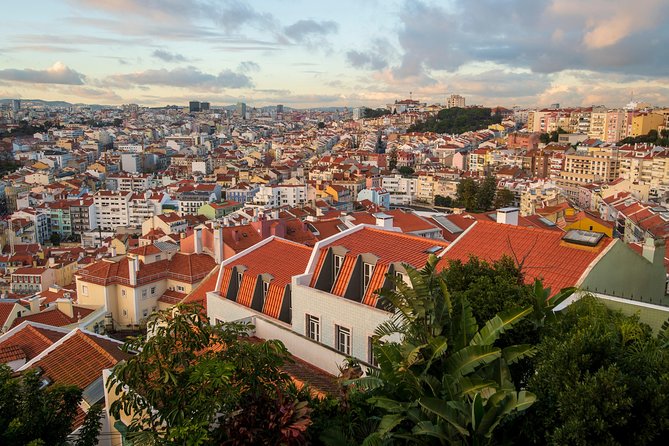
Lisbon gives you many kinds of photographs within a compact city route. Pale buildings, tiled facades, narrow lanes, hills, trams, lookout points, and changing light all appear within a short outing.
That variety matters in a lesson. You are not stuck photographing one monument from one angle. At one stop, you might work on a wide view across the city. At the next, you might practice framing a street, finding a clean background, or waiting for a tram to enter the scene.
The experience is built around your own camera. The guide can help simplify settings and explain how to capture the scene in front of you, rather than giving you a generic lecture about photography. Beginners can work on basic technique, while hobbyists can use the time to think more carefully about composition and personal style.
This is also a useful choice if you want more than standard sightseeing. The guide leads you around Lisbon, but the purpose is to help you see the city with a photographer’s eye. You will still learn about the places, yet the main goal is making better images.
More Private Photoshoots in Lisbon
- Vacation Photographer in Lisbon – Private, Professional and Fun!
★ 5.0 · 15 reviews - Private Highlights Photography Tour in Lisbon
★ 3.0 · 8 reviews - Private Professional Photoshoot at Alfama, Lisbon
★ 5.0 · 6 reviews
What a Private Three-Hour Lesson Really Gives You
A private tour costs $177.44 per person. That price deserves a closer look because the value depends heavily on your group size and your goals.
If you are alone or traveling with one other person, this is a substantial cost for three hours. You are paying for direct attention from a professional photographer, a local route, and help with your own camera. It makes the most sense if you are serious about improving your images, have recently bought a camera, or want a focused introduction to Lisbon photography.
The price works better for a small private group because group discounts are available. A family or group of friends can share the guide’s time while still keeping the private format. You should check the current group price before booking, since the value may change with the number of people joining.
The private setup is especially useful for mixed experience levels. One person might need help with shutter speed and focus, while another wants advice on composition or night photography. A public class would rarely give both people much individual time.
You also avoid the usual compromise of following a large group at someone else’s pace. If one view deserves extra attention, your group can focus there. The tradeoff is that the route covers several parts of Lisbon, so you should expect movement rather than a slow, extended session at every stop.
Alfama and Lisbon Cathedral: Strong Subjects from the Start
The meeting point is SOL Restaurante e Jardim near Portas do Sol, in the Alfama area. From there, the route begins among Lisbon’s oldest streets and steep lanes.
Alfama is a good place to start because it offers close-up subjects. You can practice photographing doorways, walls, balconies, street corners, and layered views through narrow passages. The area is also useful for learning how to handle uneven light, since bright open spaces and shaded lanes can appear within seconds of one another.
A guide can help you decide what deserves attention. Beginners often try to include too much in one frame. A private lesson gives you a chance to work on simpler choices: move closer, remove distractions, use a doorway as a frame, or wait for a person to add scale.
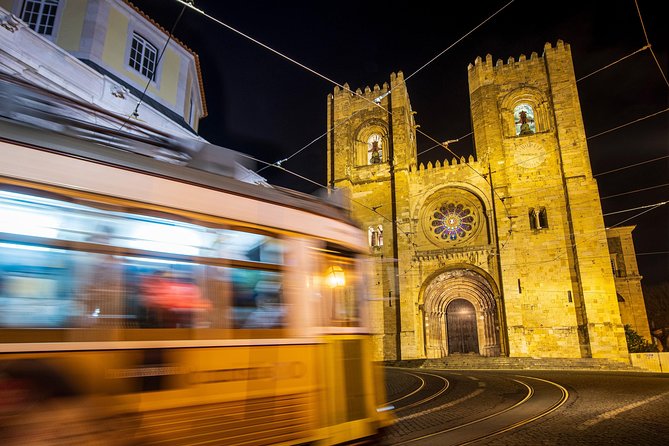
Lisbon Cathedral comes later in the route and gives you a different kind of subject. Its larger facade and formal lines require a wider view than the intimate streets of Alfama. You can compare the two approaches: tight details in the old quarter, then a more structured architectural image at the cathedral.
The walk through Alfama is hilly and can be uneven. Wear shoes that you trust on slopes, especially if you are carrying a camera bag. The tour is open to most participants, but the route’s hills are worth considering if walking uphill is difficult for you.
Portas do Sol: A First Lesson in City Views
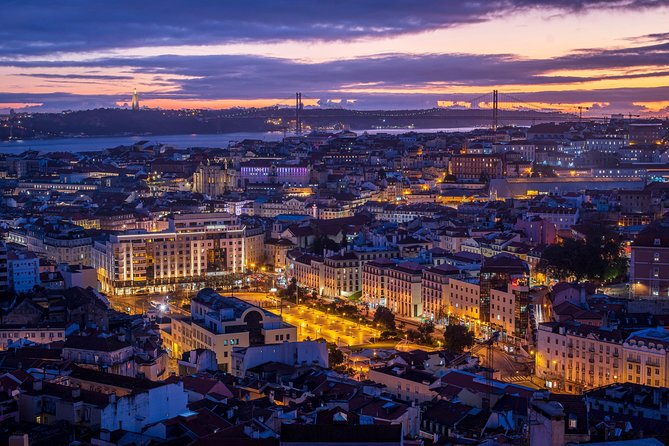
Portas do Sol is both a stop and the meeting point. It is one of the places where Lisbon opens out before you, giving the guide a natural setting for discussing wide views.
Large city scenes can be harder than they look. It is easy to point your camera at the horizon and press the shutter, only to end up with a flat image full of competing details. Your guide can help you look for a foreground, a strong line, or a clear subject that gives the view structure.
This stop may also help you understand how light affects Lisbon’s pale buildings. The city’s color can change greatly with the weather and time of day. Since the experience operates in all weather, the exact look of your photographs will depend on conditions during your session.
That uncertainty is part of the appeal, but it also means you should not expect identical postcard conditions. Gray skies, bright sun, or softer light can each produce a different result. Dress for the forecast and treat the conditions as part of the lesson.
More Private Photoshoots in Portugal
- Private Photo Session in Portugal with a Local Photographer
★ 5.0 · 5 reviews - Private Vacation Photography Session with Local Photographer in Lisbon
★ 5.0 · 5 reviews - Lisbon: Private Photoshoot at Iconic Spots & Edited Photos
★ 5.0 · 4 reviews - Lisbon: Private Photo Shoot with a Professional Photographer
★ 5.0 · 4 reviews
Three Viewpoints, Three Ways to Frame Lisbon
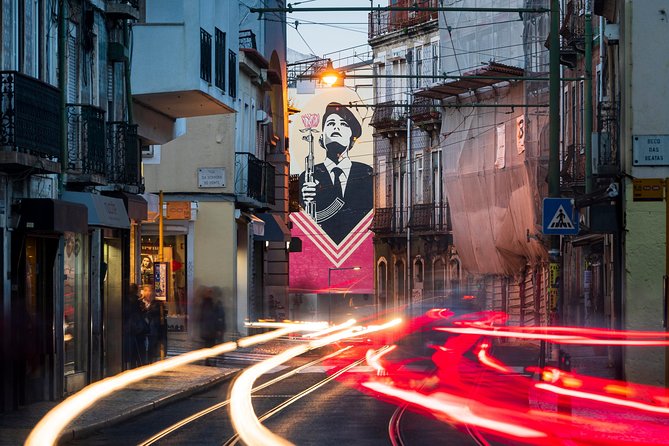
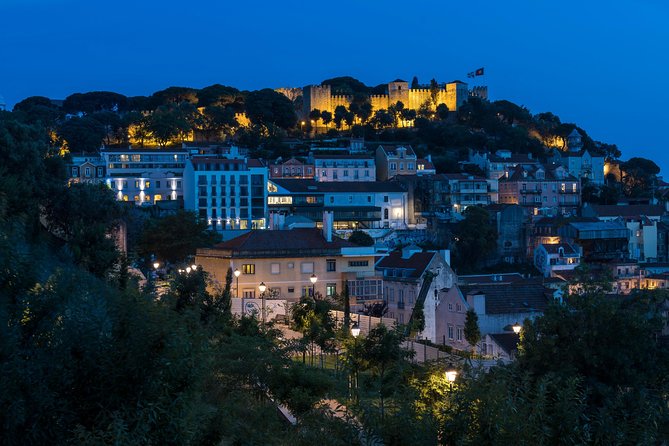
The route includes Miradouro da Graça, also called Sophia de Mello Breyner Andresen, Miradouro da Senhora do Monte, and Miradouro de São Pedro de Alcântara.
The three viewpoints give you repeated chances to work on city photography without repeating the same exact picture. At a high lookout, you can consider how much sky, rooftops, and distant city to include. You can also test portrait orientation against a wider horizontal frame.
Miradouro da Graça is a strong place to think about layers. Lisbon’s rooftops, hills, and distant views can create depth if you arrange them carefully. A guide can point out the difference between recording everything in front of you and building a deliberate composition.
Miradouro da Senhora do Monte is another high point, and the climb is part of the practical side of the tour. You should not treat these viewpoints as effortless photo stops. Lisbon is famously hilly, and moving between them can be tiring, particularly with camera equipment.
Miradouro de São Pedro de Alcântara changes the feel again, giving you a different angle over the city. It is a useful place to compare viewpoint photography. Instead of taking the same broad city shot three times, you can look for changes in foreground, distance, and direction of light.
The exact photographic opportunities will depend on the day. Still, the route is well suited to learning how to make a city view more personal. You are not limited to one famous lookout and one hurried picture.
The Gloria Funicular and Bairro Alto
The Elevador da Glória adds movement and local character to the lesson. Lisbon’s funiculars and trams are among the city’s most recognizable subjects, but they also create a timing challenge.
A moving vehicle asks you to think about shutter speed, focus, and anticipation. The guide can help you decide how to freeze movement or show a sense of motion. You may also work on placing the vehicle within the surrounding street rather than treating it as an isolated object.
The Gloria route is a good reminder that travel photography is not only about monuments. Transport, street scenes, and ordinary city activity can make a stronger record of your time in Lisbon than another formal building photograph.
Bairro Alto continues that street photography theme. The neighborhood offers streets and viewpoints where you can work on people watching, signs, facades, and changing angles. The private format helps here because you can ask questions as scenes appear instead of waiting for a scheduled classroom explanation.
Be respectful when photographing people. The supplied details do not promise a dedicated portrait session, so you should think of people as part of the street scene unless you have permission for a closer image. Your guide can help you find a thoughtful way to photograph public life.
Learning on Your Own Camera
The most useful part of this experience is its focus on your own equipment. You do not need to learn an unfamiliar camera during the lesson, and the guide can explain settings in the context of the camera you already use.
The tour suits beginners who find camera controls confusing. You can ask about basic techniques and immediately test them on real streets and views. Instead of learning shutter speed, aperture, or focus in theory, you can see how a setting changes the photograph in front of you.
It also suits experienced hobbyists. You may want help with a particular type of city image, better ways to use available light, or a second opinion on composition. The description allows for different interests, including landmarks, people watching, hidden streets, and city views.
The lesson is not a camera rental. You must bring your own camera, and the price does not include a camera or tripod. If you prefer to use a phone, the supplied information does not confirm that phone instruction is included, so ask Aperture Tours before booking.
Tripod rental is available, but you should check your setup in advance. One participant rented a Manfrotto Befree tripod for longer exposure night photography and found that the plate did not fit smoothly with a specialized Swiss-type camera bracket and strap arrangement. The photographer offered alternatives, but the setup issue reduced the usefulness of the tripod.
That is practical advice for anyone with a custom camera plate, quick-release system, or strap bracket. Tell the company before the tour what you use. A small equipment check can prevent a frustrating pause on the street.
Timing, Walking, and Weather
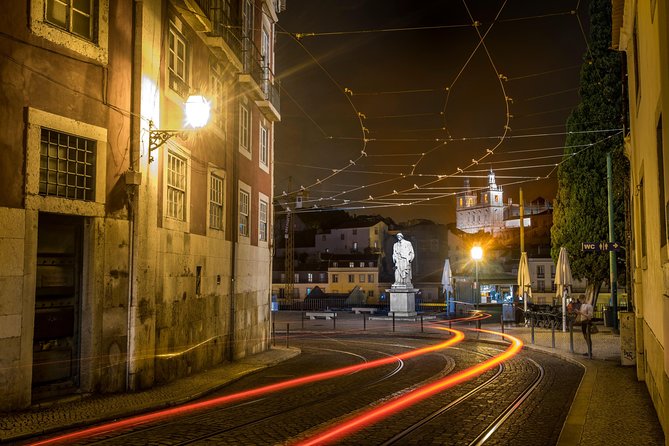
The lesson lasts about three hours and ends back at the starting point. You should plan to spend that time walking between stops, often on Lisbon’s hills.
Public transportation is nearby, which makes the meeting point fairly practical. The activity is offered in English, though a multilingual guide may operate the tour. The experience is private, so only your group takes part.
The tour runs in all weather. That matters for photography because Lisbon will not look the same under bright sun, cloud, or rain. It also means you should bring suitable clothing and protect your camera as needed.
Do not schedule this as a low-effort introduction to the city. It is a walking photography lesson across several neighborhoods and viewpoints. You will get more from it if you arrive ready to carry your equipment and stop often to make adjustments.
Service animals are allowed, and the activity is near public transportation. Most people can participate, but the steep streets and lookout points remain important considerations for anyone with mobility concerns.
Who Will Get the Most from This Experience
I would recommend this tour to you if you meet one or more of these descriptions:
- You own a camera but still rely on automatic settings.
- You want a private lesson instead of a large group class.
- You are visiting Lisbon and want photographs beyond standard landmark snapshots.
- You are a hobbyist looking for help with composition and city scenes.
- You want a local guide to connect several viewpoints and historic neighborhoods.
- You are traveling with a small group and can use the available group discount.
I would be more cautious if you want a relaxed sightseeing walk with little instruction. The route has many stops, but the purpose is photography. You will need to pay attention, adjust settings, and make decisions about what to photograph.
I would also ask questions before booking if you plan to shoot long exposures at night, use a special tripod plate, or carry a complex strap system. The guide can often help, but compatibility should not be left to chance.
Should You Book the Lisbon Photography Masterclass?
Book it if you want direct help with your own camera and value a private route through Lisbon’s best-known photographic areas. The combination of Alfama, several viewpoints, the Gloria funicular, Bairro Alto, and Lisbon Cathedral gives you plenty of subject matter in three hours.
The price is easiest to justify for a small group or for someone who truly wants to improve. You are paying for personal attention, not simply transport between sightseeing stops. The 4.6 rating from five recorded reviews suggests a strong overall reception, though the small number of ratings means you should not treat that figure as a final verdict.
Before you go, confirm the guide’s language, explain your camera setup, and ask about the tripod if you need one. If you do that, this should be a useful and focused way to turn a Lisbon walk into a real photography lesson.
FAQ
How long does the Lisbon Photography Masterclass last?
The lesson lasts approximately three hours.
What language is the tour offered in?
The tour is offered in English. A multilingual guide may operate the activity.
Is this a private tour?
Yes. Only your group participates in the private tour or activity.
What camera equipment is included?
A camera is not included. You need to bring your own camera.
Can I rent a tripod?
Yes. A tripod is available to rent, but you should check that it works with your camera bracket and strap system before the tour.
Where does the tour begin?
It begins at SOL Restaurante e Jardim, Largo das Portas do Sol, Beco de Santa Helena, 1100-411 Lisboa, Portugal.
Where does the tour end?
The activity ends back at the meeting point.
Does the tour operate in bad weather?
Yes. It operates in all weather conditions, so you should dress appropriately.
Can I cancel for a full refund?
Yes. You can cancel up to 24 hours before the experience for a full refund. Cancellations or changes made less than 24 hours before the start time are not accepted for a refund.
More Photography Workshops in Lisbon
- Photography Workshop-Tour in Alfama – Lisbon
★ 5.0 · 16 reviews - Paris Photography Masterclass – Private Photography Lesson
★ 5.0 · 112 reviews - 2-Hour Photography Class While Touring Downtown Santa Fe, Smart Phones Welcome!
★ 5.0 · 108 reviews - Unique Rome by Night, Photo Tour and Workshop Under the Stars
★ 5.0 · 96 reviews
Just added around Lisbon
- Holiday Photo Shoot with Lisbon Photographer★ 5.0 · 26 reviews
- Surf Experience with Photo Session★ 5.0 · 2 reviews
- Private Photo Session in Portugal with a Local Photographer★ 5.0 · 5 reviews
- Authentic Photo Experience in Lisbon with a Local Photographer★ 5.0 · 27 reviews
- Photographer in Lisbon★ 4.5 · 4 reviews
- Private Photography from Lisbon★ 5.0 · 2 reviews
- Photoshoot with a professional photographer in Lisbon★ 5.0 · 8 reviews
- Lisbon by Night: Golden and Blue Hour Photography Walk★ 5.0 · 4 reviews
Photography Workshops & Lessons, compared.
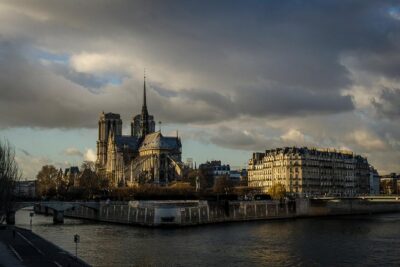
Paris Photography Masterclass – Private Photography Lesson
Read our review →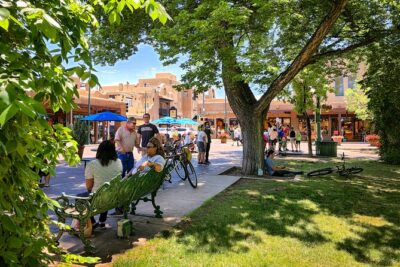
2-Hour Photography Class While Touring Downtown Santa Fe, Smart Phones Welcome!
Read our review →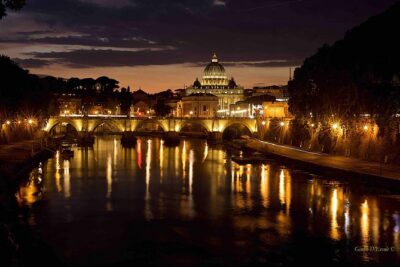
Unique Rome by Night, Photo Tour and Workshop Under the Stars
Read our review →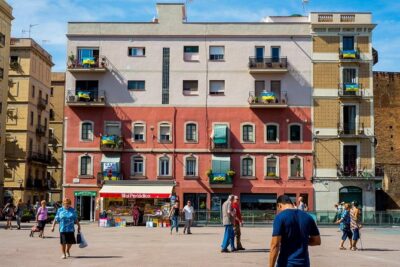
Elevate Your Photography – Barcelona Private Tour & Workshop
Read our review →
Rome Photography Masterclass – Private Photography Lesson
Read our review →
Private (Phone) Photography Class in Park & Old Town
Read our review →
Venice Photography Masterclass – Private Photography Lesson
Read our review →