
REVIEW · USA
Beacon Hill Boston History + Photo Walking Tour (SMALL Group)
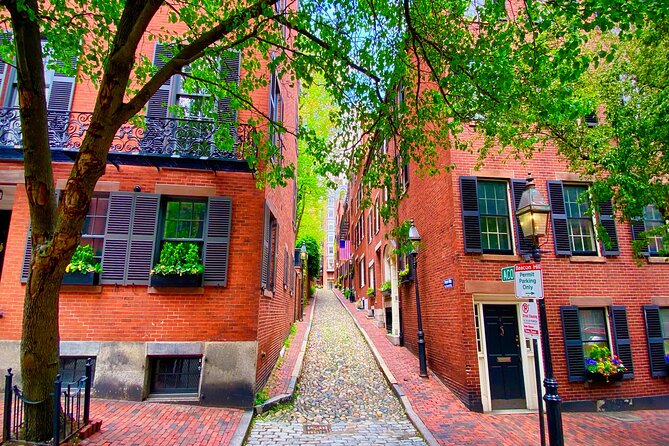
Beacon Hill’s narrow brick lanes, gas lamps, flower boxes, and Federal-style townhouses make this one of Boston’s best neighborhoods for a camera walk. The appealing twist is that Saba Alhadi points out details you might pass without noticing, then shows you how to frame them with a phone or camera.
I like the small-group setting, which leaves room for questions and photo stops. I also like the mix of neighborhood stories, architecture, and practical advice on angles and positioning. You may even get help taking a group photo on your own phone.
The main thing to understand is that this is not a technical photography workshop. If you want a detailed lesson on shutter speed, lenses, or advanced camera settings, this walk may feel light. It is a history walk with creative photo guidance, best suited to casual photographers.
Key points to know before you book
- Saba Alhadi leads the walk: She has guided Beacon Hill tours for about 20 years and brings stories about both past residents and the people who live in the neighborhood today.
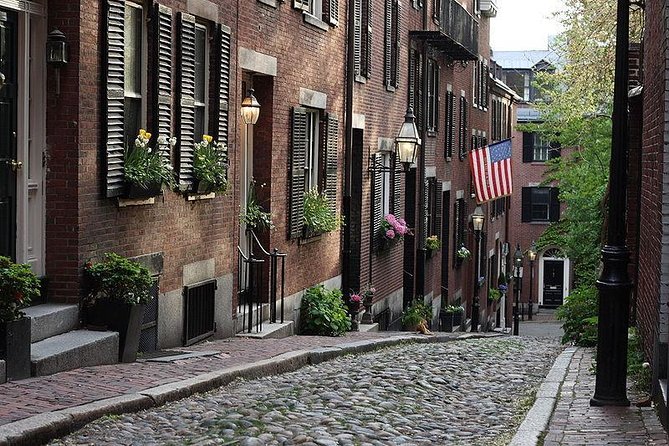
- Acorn Street is a featured stop: You’ll see Boston’s most photographed street, with narrow paving, gas lamps, brick row houses, and flower boxes.
- The photo advice is practical: Expect help with composition, framing, angles, positioning, and using your phone or camera more creatively.
- The group is limited to 15 people: That is small enough for questions and individual help, though the experience may feel more personal when fewer people book.
- The walk covers major sights and side details: The route includes Louisburg Square, the Massachusetts State House, Boston Common, and the Public Garden area.
- Plan for outdoor walking: There are no restroom stops, and hot weather can make the brick and concrete streets tiring.
Why Beacon Hill works so well for a photo walk
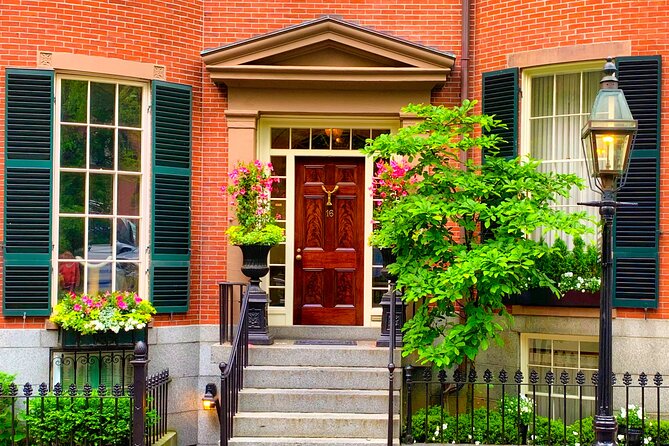
Beacon Hill gives you a lot to photograph in a compact area. The neighborhood’s appeal is not just one famous street. It is the repeated pattern of brick facades, narrow lanes, painted doors, black shutters, old lanterns, iron railings, and flower boxes.
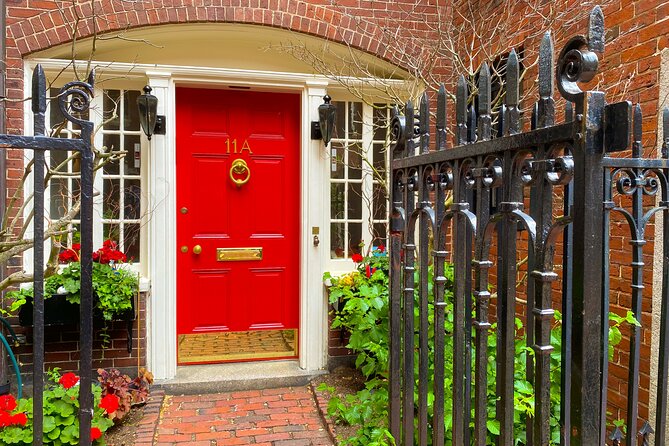
That makes this tour useful for anyone who tends to point a camera at the obvious subject and move on. Saba’s approach encourages you to stop and study small features, such as a door knocker, a doorway, a window arrangement, or the way a street narrows in the distance.
The history also gives your pictures more meaning. You are not simply photographing pretty houses. You are learning how Beacon Hill changed from pastureland into an exclusive residential district, how Acorn Street changed over time, and how preservation efforts helped retain its brick sidewalks.
The pace is deliberately easy. You have time to listen, ask questions, and take several attempts at a picture. That is a better match for a neighborhood walk than a fast-moving city tour that leaves you snapping while you hurry to keep up.
More Photography Tours in the USA
- From Waikiki: Best of Oahu Photo Tour with Pickup
★ 4.9 · 274 reviews - The Ultimate LA and Hollywood Photo Tour
★ 5.0 · 233 reviews - Beautiful Colors of Hawaii Photo Tour
★ 5.0 · 165 reviews
Starting at 34 Beacon Street
The meeting point is at 34 Beacon St., near the southern edge of Beacon Hill and close to Boston Common and the Massachusetts State House. Arrive about 10 minutes early. The tour is offered in English and uses a mobile ticket.
Saba begins by setting the neighborhood in context. Beacon Hill can look like a polished collection of expensive homes, but its story includes working-class residents, Black history, education, politics, literature, and major changes in land value.
You may hear about John Hancock, Louisa May Alcott, and Nathaniel Hawthorne, along with other notable people connected with the area. Saba has also used photographs of former homes and older views of streets to show how the neighborhood looked in earlier periods.
This use of visual material is especially helpful. A story about an old house can feel abstract when you see only the current facade. An older photograph lets you compare the building and street with what is in front of you now.
The tour also brings attention to Beacon Hill’s less polished stories. You may learn about the first resident of the hill, the oldest house in the neighborhood, the first kindergarten in America, and the first racially integrated elementary school in the area. These details help balance the familiar image of Beacon Hill as a row of handsome townhouses.
Brick sidewalks, gas lamps, and overlooked details
The main walking portion lasts about 1 hour and 15 minutes, with shorter stops built into it. You will walk along brick sidewalks and narrow streets where the visual details come quickly.
The advice here is generally simple and useful. Saba may suggest changing your position, waiting for a stronger angle, looking for repeated lines, or placing a doorway and street view together in one frame. These are composition ideas you can use long after the tour, even if you are carrying only a phone.
The tour works with both phones and traditional cameras. Several people have found the phone tips useful, while more experienced photographers have appreciated being shown locations they had not photographed before. If you use an Android phone rather than an iPhone, the composition advice still applies, though some device-specific suggestions may not.
Expect the photography to remain casual. The goal is not to study manual settings or spend the full walk on camera theory. You are learning how to notice a scene and make a more thoughtful picture while also hearing the neighborhood story.
Saba may also take pictures of your group using your phones. That is a small but worthwhile benefit for couples, families, and friends who usually have to choose between appearing in a picture and taking it.
Acorn Street, Boston’s famous picture stop
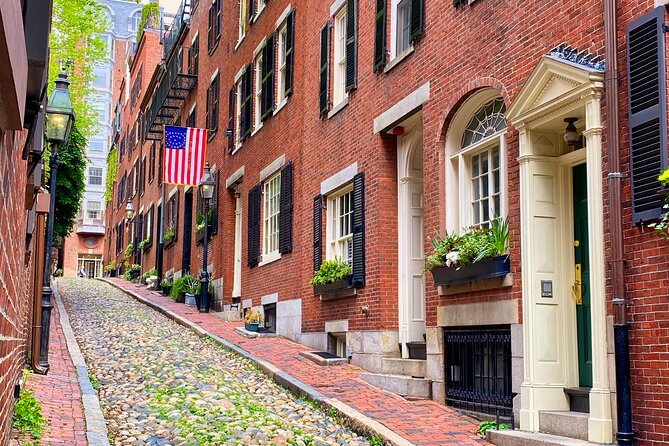
Acorn Street gets about five minutes as a named stop, but you should expect the area around it to receive attention during the wider Beacon Hill walk as well. It is famous for its narrow paving, brick row houses, gas lanterns, and flower boxes.
The street is often treated as a quick photo opportunity. Saba’s guidance helps you look beyond the standard straight-on shot. Try paying attention to the repeating facades, the texture underfoot, the curve of the lane, and the contrast between dark lanterns and bright flowers.
Acorn Street also has a useful story behind its current appearance. It was once associated with working-class homes and later became one of the most sought-after residential streets in the city. Seeing it as a changing neighborhood rather than a frozen postcard makes the stop more interesting.
Because it is a famous location, you may not have complete freedom to stand wherever you like. Be respectful of residents and keep the way clear. The narrow setting is part of the charm, but it also means the group needs to stay organized.
Same place, a different kind of shoot:
- The ‘OG’ Manatee Snorkel Tour with In-Water Guide/Photographer
★ 5.0 · 2,539 reviews - Manatee Swim Tour with In Water Photographer
★ 5.0 · 2,300 reviews - Guided Small Group Manatee Snorkeling Tour with In-Water Photographer
★ 5.0 · 1,336 reviews - Murals of Nashville Instagram Tour by Golf Cart
★ 5.0 · 950 reviews
Louisburg Square and Beacon Hill’s grander side
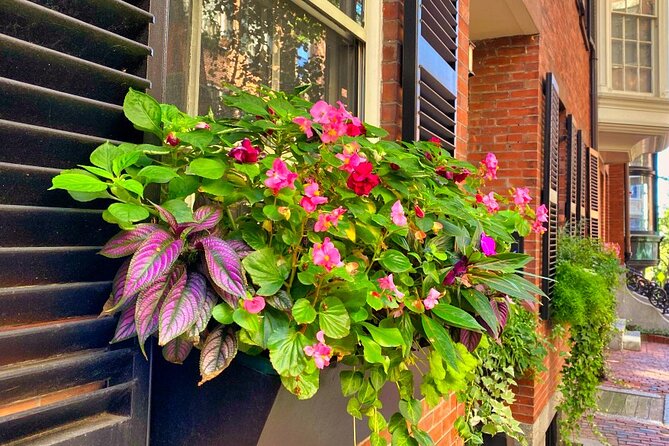
Louisburg Square offers a different view of Beacon Hill. Its larger townhouses, formal entrances, decorative ironwork, and brick fronts reflect the district’s more exclusive side.
The square is associated with Greek Revival and Federal-style architecture. Saba points out design features that are easy to miss if you only walk through looking for a general street scene. Grand doorways, iron details, window proportions, and repeating facades give you several ways to frame a picture.
This is also where the tour’s discussion of real estate may come up. Beacon Hill property prices and the shift from ordinary homes to highly prized residences are part of the neighborhood’s present story. If you prefer a tour focused only on famous residents or major political events, this emphasis may feel less appealing.
That balance is worth considering before booking. The walk pays attention to homes, design, current residents, and neighborhood character. It is not a conventional lecture about Boston’s most famous figures.
The Massachusetts State House and Boston’s oldest park
The route includes the Massachusetts State House, built in 1795 on land once owned by John Hancock. The building gives the walk a clear connection to state politics and Boston’s early civic life.
The State House stop is listed at about five minutes. That is enough for a concise explanation and a few photographs, but not a full interior visit or government tour. You should not expect an extended architectural study.
The route also includes Boston’s oldest public park, founded in 1630. This is Boston Common, a useful change of pace after the tighter streets of Beacon Hill. Open space gives you different angles and a broader sense of how the neighborhood fits into the city.
The tour also reaches the public botanical garden founded in 1837, the Boston Public Garden. Its paths and plantings provide a softer setting for pictures than the brick lanes. The exact amount of time spent at each outdoor area may depend on the group, weather, and pace.
What the history feels like on the ground
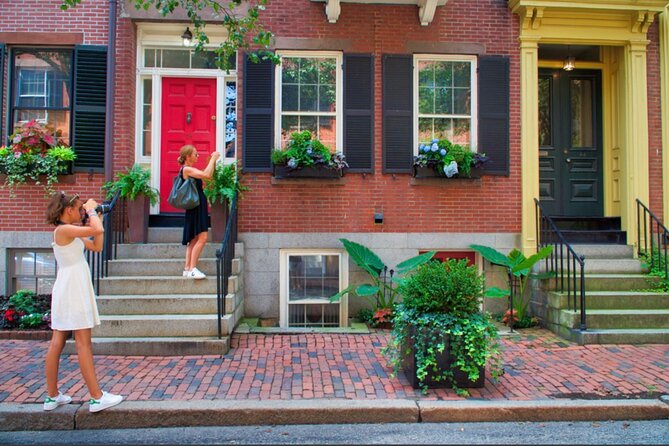
The strongest part of this experience is the way history is tied to physical places. Instead of receiving a string of dates, you can connect a story to a doorway, a house, a square, or a surviving sidewalk.
Saba has shared stories about Black residents and the area’s diversity, including the story of a couple who fled north in disguise. She has also discussed Black builders connected with one of the first homes on Beacon Hill. These subjects give the neighborhood a fuller identity than its polished architecture alone suggests.
Preservation is another useful theme. The brick sidewalks that define Beacon Hill did not simply survive by accident. The neighborhood’s character has been defended over time, including a 1947 protest connected with preserving those sidewalks.
You may also encounter an unexpected personal detail, such as a homeowner sharing part of a residence that was once a horse stable. This sort of moment cannot be guaranteed, but it shows the kind of local access and neighborhood curiosity the tour aims to encourage.
Some people will want more formal history. One less satisfied experience focused on wanting more detail about famous residents. If that is your priority, ask Saba questions as you walk. The format allows questions, and she has information about notable residents, buildings, and events.
How much photography instruction should you expect?
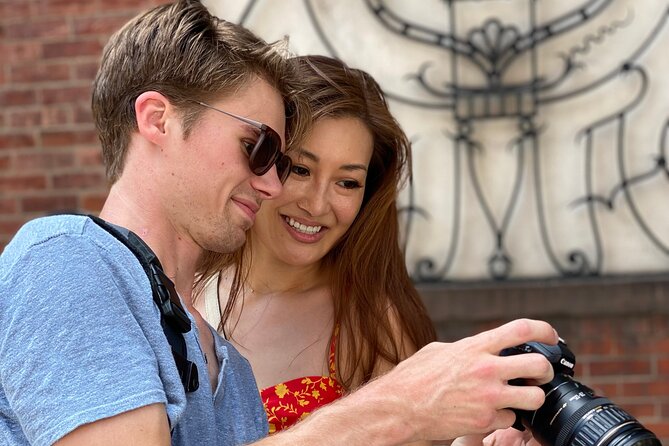
Set your expectations correctly and you are more likely to enjoy the walk. You will get suggestions about composition, angles, framing, and positioning. You may learn how to use a familiar street or doorway in a more visually interesting way.
You should not book this as a substitute for a dedicated photography class. There is no promise of advanced instruction on exposure, lenses, editing, or camera controls. The tour description and the actual experience are aimed at people who want to take better pictures while seeing Beacon Hill.
That makes it a good fit for:
- Phone photographers who want more than quick snapshots
- Couples who want attractive pictures of each other
- Families who want a few group photos
- Beginners who like guidance without a formal classroom
- Experienced photographers looking for fresh locations and local context
The small group helps here. With a maximum of 15 people, Saba can answer questions and give suggestions without the walk becoming a large crowd. If the booking is especially light, the experience may feel almost private, though you should not book on the assumption that it will be private.
Price, timing, and comfort
The price is $45 per person for about 90 minutes. I consider that fair if you want two things at once: a guided introduction to Beacon Hill and practical help making better pictures.
The value is less clear if you only want a basic orientation walk. You can walk through Beacon Hill on your own, photograph Acorn Street, and see the State House without paying an admission fee. The reason to spend the $45 is the commentary, the neighborhood details, the photo advice, and the chance to ask questions as you go.
The listed timing adds up to roughly 85 minutes, with the main Beacon Hill portion taking about 75 minutes and Acorn Street and Louisburg Square receiving short dedicated stops. The actual pace may vary. A group that asks many questions or takes more pictures may spend longer at certain spots.
Wear comfortable shoes and watch your footing. The brick sidewalks are generally flat, but some surfaces can be uneven, and attention naturally shifts between the guide and your camera. The streets offer limited shade, and one especially hot walk became difficult in 90-degree weather with high humidity.
There are no restroom stops. Use facilities before arriving, especially if you are touring with children. Children must be accompanied by an adult, and service animals are allowed.
The tour requires good weather. If poor conditions cancel it, you will be offered another date or a full refund. You can cancel for a full refund up to 24 hours before the start time. A reconfirmation by email or text at least 48 hours before the tour is also requested.
Who should book the Beacon Hill photo walk?
Book this if you want a relaxed neighborhood tour with a creative angle. It suits first-time Boston visitors who want Beacon Hill explained rather than simply photographed, and it also works for local residents who have walked the district but never stopped to study its details.
It is particularly good for couples and families. The guide can help you find attractive viewpoints and may take pictures of your group, which solves the usual problem of having no one behind the camera.
Experienced photographers can enjoy it too, especially if they want local stories and locations beyond the most obvious street views. One experienced local photographer found places he had not previously photographed, which is a good sign for anyone who already knows Boston well.
Skip it if you want a long academic lecture, a full camera course, indoor access to historic buildings, or a tour centered only on famous residents. Also think twice during very hot weather, since the route has little shade and no restroom stop.
My verdict on this Beacon Hill experience
I would book this tour if your ideal Boston morning includes brick lanes, architecture, local stories, and time to make pictures. Saba Alhadi’s strength is her enthusiasm for small details, from door hardware and old photographs to the people and events that shaped Beacon Hill.
The best reason to go is the combination of place and perspective. You see Acorn Street, Louisburg Square, the State House, Boston Common, and the Public Garden, but you also learn how to look at them more carefully.
Just bring the right expectations. This is a history-focused photo walk, not a technical workshop. At $45, it offers good value for a personal, small-group introduction to one of Boston’s most photogenic neighborhoods, especially if you want to leave with both better pictures and a clearer sense of the people and changes behind the scenery.
FAQ
How long does the Beacon Hill photo walking tour last?
The tour lasts about 1 hour and 30 minutes. The main Beacon Hill portion is listed at about 1 hour and 15 minutes, with short stops at Acorn Street, Louisburg Square, and the Massachusetts State House.
Where does the tour begin?
The meeting point is 34 Beacon St., Boston, Massachusetts 02108. You should arrive about 10 minutes before the scheduled start time.
Where does the tour end?
The tour ends on Charles Street in Boston.
Who leads the tour?
Saba Alhadi leads the experience. She has been giving tours for about 20 years and shares Beacon Hill stories along with photo suggestions.
Do I need a professional camera?
No. You can use a phone or a camera. The photo guidance focuses on composition, angles, framing, and positioning rather than requiring specialized equipment.
Is this a photography class?
No. It is a walking tour about Beacon Hill’s history and architecture with casual photography tips. It does not focus on advanced camera settings or technical instruction.
How many people can join the tour?
The maximum group size is 15 people.
Are there restroom stops?
No. There are no restroom stops during the tour, so plan ahead before arriving.
More Walking Tours in the USA
- NYC Professional Photoshoot and Walking Tour with Private Guide
★ 5.0 · 608 reviews - Hollywood: Make Your Own Star Walk of Fame Photo Experience
★ 4.5 · 157 reviews - Private Guided Photography & Walking Tour of Zion National Park
★ 5.0 · 75 reviews - New Orleans: French Quarter Photo Shoot and Walking Tour
★ 5.0 · 74 reviews
More Heritage Tours in the USA
- Private Photo Session in Historic Charleston
★ 5.0 · 123 reviews - Boston’s Architecture, History + Photo Walking Tour (SMALL Group)
★ 5.0 · 91 reviews - Beacon Hill + Back Bay History + Photo Walking Tour(SMALL Group)
★ 5.0 · 60 reviews - Rome: Vespa Photo Tour with Historic City Highlights
★ 5.0 · 395 reviews
Just added around the USA
- Los Angeles: Private Professional Vacation Photoshoot★ 5.0 · 2 reviews
- Louisville: Photoshoot Walking Tour with Pictures★ 4.8 · 3 reviews
- Las Vegas: VIP Guided Photography & Hiking Tour of Zion NP★ 5.0 · 2 reviews
- Las Vegas: Wedding Chapel Photography Session★ 5.0 · 2 reviews
- Las Vegas: Cosmic Space Wedding + Spectacular Photography★ 5.0 · 3 reviews
- Las Vegas: Personal Travel & Vacation Photographer★ 4.8 · 38 reviews
- Ketchikan Photo Safari★ 5.0 · 5 reviews
- Juneau: Rainforest Photo Safari on a Segway★ 4.6 · 11 reviews
Photography Tours, compared.




Rhodes: E-bike Highlights Sunset or Morning Photo Tour
Read our review →

Browse the lists this tour appears in