
REVIEW · USA
Day of Photography in Moab, Arches & Canyonlands
A full day with Colin of Rock Light Photo Tours gives you something a standard sightseeing bus cannot: time to make photographs, not just snap a few pictures from a roadside stop. You’ll work through composition, camera settings, timing, tripod use, and light at Dead Horse Point, Canyonlands, and Arches, with a possible petroglyph stop along Potash Road.
I like the small maximum group of six, which makes it easier to ask for help without losing half the day. I also like the mix of famous views and quieter corners of Arches, plus the practical coaching that suits beginners and more experienced photographers. The main drawback is the length and pace: this is a nine-to-eleven-hour day with short hikes, not a relaxed visit built around long trails.
Key points to know before booking
- Sunrise may begin at Mesa Arch: If the timing and conditions line up, you can start with one of Canyonlands’ most famous photography locations.
- Colin teaches beyond basic exposure: Expect help with aperture, shutter speed, ISO, shooting mode, timing, framing, and tripod use.
- Three major park areas fit into one day: Dead Horse Point, Canyonlands, and Arches give you a broad taste of the Moab region.
- The group is capped at six: The first four people booked can ride with the guide, while additional participants follow in their own vehicle.
- You need only moderate fitness: Some locations involve short hikes of less than one mile, but this is not a strenuous hiking tour.
- Park admission is separate: A timed entry permit for Arches is provided, but you still need a national parks pass or admission payment.
A photography day built around Moab’s best light
Moab is easy to appreciate with your eyes and surprisingly hard to photograph well. The red rock is dramatic, but strong images still depend on framing, light, timing, and patience. That is where this experience earns its keep.
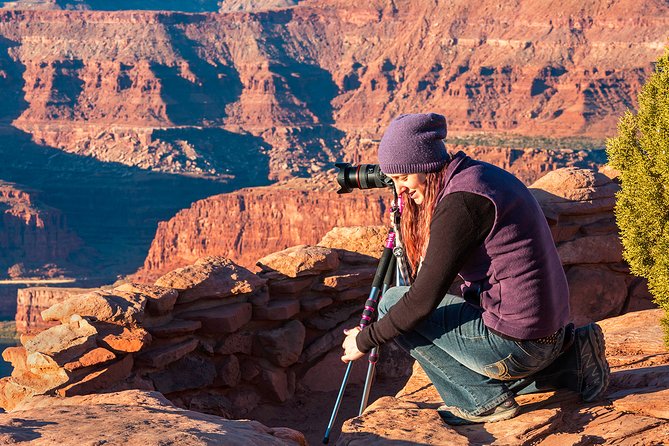
Instead of simply driving to a viewpoint, you’ll get field instruction from Colin while working with the scenery in front of you. He can help you decide where to place the horizon, how to use rock formations within a frame, and how to make better use of your camera’s controls.
I especially like that the teaching is practical. You are not sitting in a classroom hearing a long explanation about photography theory. You are standing in front of arches, cliffs, and distant mountains, then adjusting your settings and trying again.
The day is suitable for a range of abilities. If you mainly use a point-and-shoot camera, you can get help making the move toward manual adjustments. If you already understand aperture, shutter speed, and ISO, you can spend more time on location scouting, composition, timing, and finding a stronger angle.
One useful piece of preparation is to learn the basic purpose of aperture, shutter speed, and ISO before you arrive. You do not need to be an expert, but knowing what each setting does will give you more time to work on the creative side of photography.
A few more photo experiences around the USA worth a look
- The ‘OG’ Manatee Snorkel Tour with In-Water Guide/Photographer
★ 5.0 · 2,539 reviews - Manatee Swim Tour with In Water Photographer
★ 5.0 · 2,300 reviews - Guided Small Group Manatee Snorkeling Tour with In-Water Photographer
★ 5.0 · 1,336 reviews
Dead Horse Point starts with a wide-open view
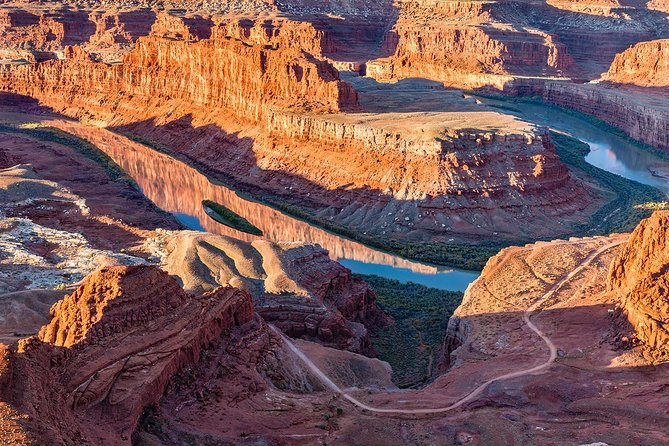
The first stop is Dead Horse Point State Park, with about an hour and a half set aside for photography. This is a strong opening because the park gives you a broad view of the Colorado River and the carved red-rock country around Moab.
You’ll photograph from several viewpoints rather than making a single quick stop. That matters because a small change in position can alter the shape of the cliffs, the amount of sky, and the way the river fits into your frame.
The wide views also make this a useful place to begin learning from Colin. You can work on simple composition choices, such as placing the main curve of the river off-center or using nearby rock as a foreground element. The area offers room to try several versions of the same scene without needing a long hike.
Dead Horse Point is also a good reminder that photography is often about restraint. The view is already dramatic, so adding too much to the frame can weaken the image. Colin’s role is to help you see what belongs in the picture and what can be left out.
The stop lasts long enough to try different angles, but it is still only about 90 minutes. If you want a slow walk along every overlook or time for a detailed sketch of the park, this schedule may feel quick.
Canyonlands and the chance to photograph Mesa Arch
Canyonlands National Park receives about two hours of the day. The plan is to photograph two or three locations, with the exact choices shaped by weather and available time.
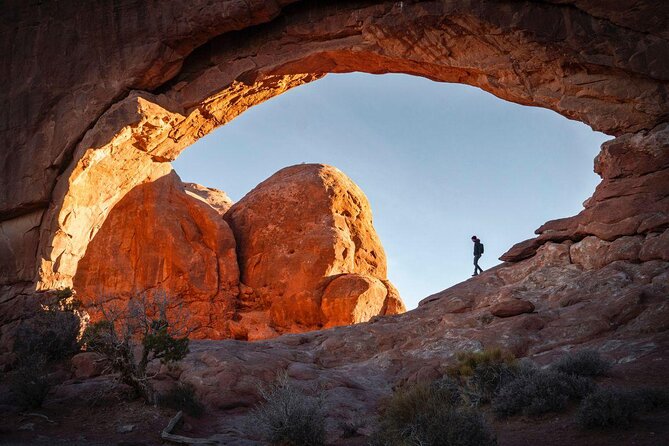
A particularly appealing possibility is sunrise at Mesa Arch. One of the strongest experiences described from this tour begins there, and the early light can give the underside of the arch a warm glow while the canyon opens beyond it. Sunrise timing depends on the day’s schedule and conditions, so you should treat it as a possibility rather than a guarantee.
Canyonlands is useful for photographers because the park offers more than one type of view. You may work with an arch, a canyon rim, or a broad arrangement of layered rock. That variety lets you practice both close compositions and more spacious images.
Two hours is enough for focused photography at two or three selected sites. It is not enough to cover a large portion of the park or complete an extended trail. I see that as a fair trade for this tour’s purpose. The day is designed to help you make better photographs at selected locations, not to check every viewpoint off a map.
Weather can shape this part of the day. Clouds, clear skies, haze, and changing light all affect the images you make. The flexibility to adjust the stops based on conditions is useful, though it also means you should not expect a fixed list of exact viewpoints.
Potash Road adds a short cultural stop
If time permits, the return toward Moab after the Canyonlands portion includes a roughly 20-minute stop along Potash Road at an ancient petroglyph site.
This is a brief addition, but it gives the day a different subject. After working with huge canyon views and arches, you can turn your attention to rock art and a more intimate section of the Moab area.
Because the stop depends on time, it should not be the reason you book the experience. Think of it as a welcome extra if the schedule and conditions allow. A 20-minute visit is enough for a quick look and a few photographs, but not an extended study of the site.
Same place, a different kind of shoot:
- Murals of Nashville Instagram Tour by Golf Cart
★ 5.0 · 950 reviews - Off the Beaten Path Ketchikan Photo Safari – 3 hr.
★ 5.0 · 901 reviews - Small group Manatee Tour with In-Water Divemaster/Photographer
★ 5.0 · 751 reviews - Lake Tahoe Small-Group Photography Scenic Half-Day Tour
★ 5.0 · 649 reviews
Arches brings the iconic red-rock photographs
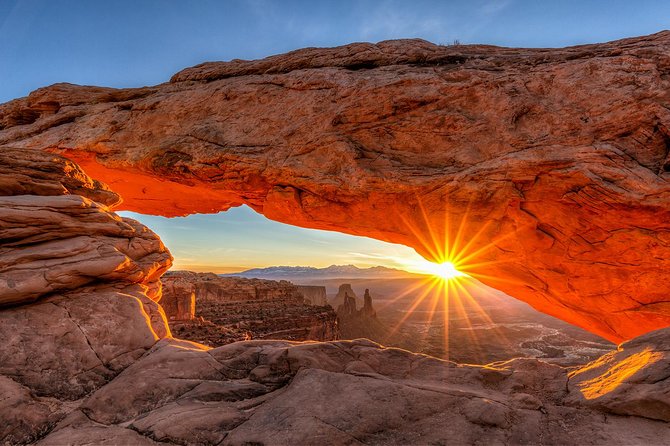
Arches National Park gets about four hours, the longest portion of the day. That makes sense. Arches has a high concentration of famous formations, but it is also a busy park, so moving efficiently matters.
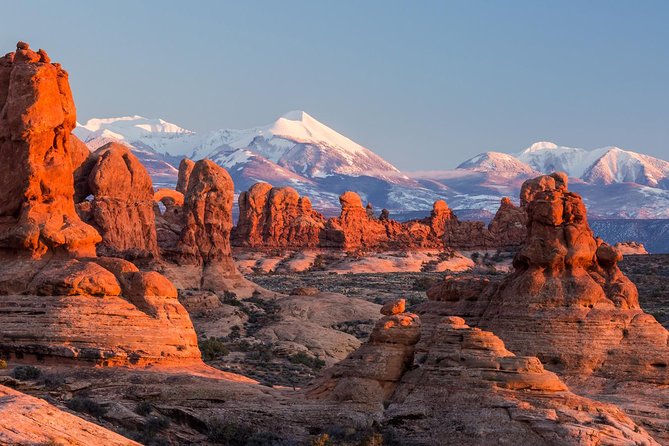
The experience aims to include well-known arches and rock formations, along with less crowded locations when possible. That balance is one of the best reasons to book a guide. You get a chance to photograph recognizable Moab subjects, but you are not limited to standing in the most crowded viewing area for every shot.
The La Sal Mountains may appear behind the red rock, sometimes with snow on their peaks. That contrast gives you a strong sense of scale and color: warm sandstone in the foreground, cool mountain tones in the distance.
Four hours allows more room to work. You can try a wide view, then move closer for a tighter composition. You can change your camera settings as the light shifts, test a vertical frame, and use a tripod if you brought one.
Colin can also help with timing and positioning. One playful technique used during the day is arranging people so they appear to hold up an arch or rock formation. It is a lighthearted break from serious composition work, and it gives you a fun way to include people in the scene.
Arches is likely to be the busiest part of the day. The effort to visit less crowded spots is helpful, but you should not expect solitude at every stop. The timed entry permit for Arches is included, which helps with access planning, but park admission itself is not included.
What Colin’s instruction covers
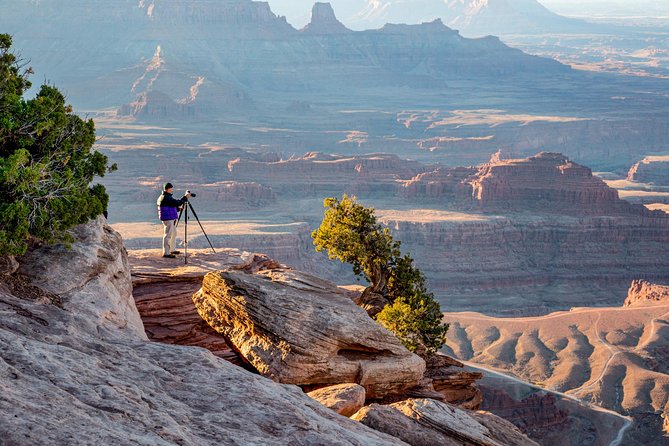
The strongest part of this experience is the one-on-one help available within a small group. Colin can explain a setting, show you how to use it, and then give you time to try it yourself.
The instruction includes:
- Aperture, shutter speed, and ISO
- Shooting mode and basic camera control
- Composition and framing
- Timing for changing light
- Tripod use
- Choosing angles and locations
- Working with people in a photograph
- Adjusting an image idea to suit the conditions
You should feel comfortable asking questions. The small group size means the day can include personal guidance, but you still need to speak up if there is a setting or technique you do not understand.
I would not book this solely for a lecture on camera theory. The value comes from applying advice outdoors, in front of real scenes, with time to try several photographs. The instructor’s location knowledge is just as important as the technical coaching.
Group size, vehicles, and the long day
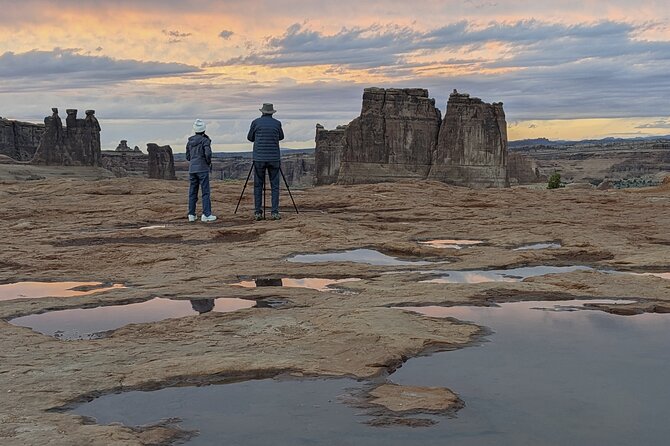
The group maximum is six. That is a useful limit for a photography outing, since a larger group would make it harder to stop, reposition, and receive individual help.
There is one important transport detail. Colin’s vehicle has comfortable room for four passengers plus camera gear. The first four people booked can ride with him. Additional participants need to drive their own vehicle and follow the guide.
Pickup can be arranged at a hotel or campground in Moab, excluding Castle Valley, or at the Moab Visitor Center on Main Street. The listed meeting point is the Moab Information Center at 25 East Center Street.
The day lasts about nine to eleven hours. Add the driving between the parks, short walks, photography stops, and time spent adjusting equipment, and you have a full day outdoors. Bring comfortable shoes and be ready to stay focused for many hours.
The required walking is limited to short hikes of less than one mile at some locations. You should have a moderate level of fitness, but the experience does not call for long backcountry hikes.
Water and snack bars are provided. That is convenient, though I would still pay attention to your own food needs during such a long day.
What the $395 price really buys
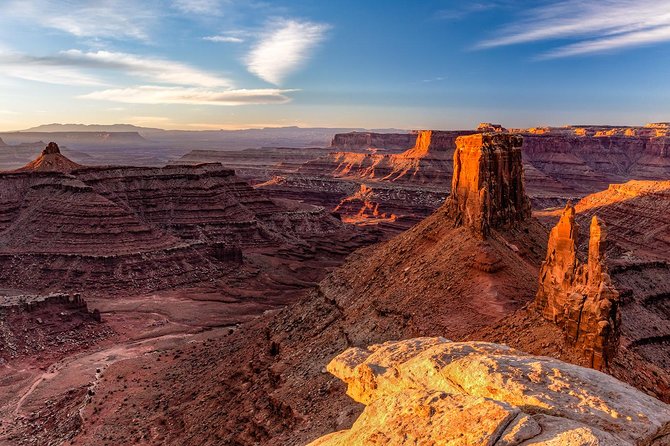
The price is $395 per person, which is not a bargain sightseeing shuttle. The value depends on what you want from Moab.
If your goal is simply to see the parks from a few overlooks, you can spend less by driving yourself. A self-guided day also gives you complete control over how long you stay at each stop.
If you want help with your camera, access to a local guide’s preferred locations, and a way to fit three major areas into one day, the price becomes easier to justify. You are paying for instruction, transportation for the first four participants, planning, park knowledge, and the chance to photograph rather than rush through a checklist.
The small group is important to that calculation. With up to six people, the experience has a personal feel that would be hard to provide in a large vehicle. More experienced photographers may value Colin’s location scouting, while beginners may get the most from his help with camera controls and framing.
Admission costs are separate. Bring your national parks pass if you have one, or plan to buy admission at the entry booth when you enter. The Arches timed entry permit is included, but that does not replace the park entrance fee.
Who will get the most from this experience
I would recommend this day to you if you:
- Want practical help using a digital camera
- Enjoy photographing natural scenery
- Have limited time in Moab and want a broad first look
- Prefer a small group to a large sightseeing vehicle
- Want to learn composition in real outdoor settings
- Are comfortable with short walks and a long day
- Like the idea of photographing at selected spots instead of planning every stop yourself
It can work for beginners, but you will get more from it if you understand basic camera terms before arrival. It also suits more seasoned photographers who want help finding good locations and making better choices about timing and framing.
I would be more cautious if your main goal is hiking. The day includes short walks, but it does not leave room for major trails such as the walk to Delicate Arch. You can use the tour as an overview, then return on your own for longer hikes.
The experience is also not ideal if you want complete control over your schedule. Weather, park conditions, group needs, and driving time all shape the day.
Practical details before you go
The experience is offered in English and includes mobile ticketing. Confirmation is sent within 48 hours of booking, subject to availability.
Wear shoes suitable for short uneven walks and bring the camera equipment you know how to use. A tripod can be useful, since tripod technique is part of the instruction, but the provided information does not require one.
Bring or purchase the required park admission. The tour includes a timed entry permit for Arches, but national park entrance fees are not included.
The cancellation policy is forgiving if your plans change: you can cancel at least 24 hours before the start time for a full refund. Changes or cancellations within 24 hours are not accepted for a refund. The experience depends on good weather, and if poor conditions force a cancellation, you can receive a different date or a full refund.
Should you book the Moab photography day?
Book it if you want to improve your photographs while seeing a wide range of Moab scenery in one long day. Colin’s instruction covers the useful details, from aperture and ISO to framing, timing, and tripod use. The small group, supplied water and snacks, and mix of famous and quieter locations add real value.
Skip it if your priority is long hikes, a slow visit to one park, or the lowest possible cost. The schedule is full, admission is extra, and additional participants may need to drive their own vehicles.
For a first visit with limited time, I think this is a strong choice. You get a broad look at Dead Horse Point, Canyonlands, Arches, and possibly Potash Road, while learning skills you can keep using after you leave Moab. A separate night session is also worth considering if available, since the area’s low light pollution can provide excellent conditions for photographing stars.
FAQ
How long does the photography day last?
The experience lasts approximately nine to eleven hours.
Which places does the tour visit?
The planned stops are Dead Horse Point State Park, Canyonlands National Park, and Arches National Park. If time permits, the group may also visit an ancient petroglyph site along Potash Road.
Is park admission included?
No. You need to bring a national parks pass or buy admission at the entry booth. A timed entry permit for Arches is included, but the park entrance fee is separate.
How many people can join the tour?
The maximum group size is six participants.
Can I be picked up at my Moab hotel?
Yes. Pickup can be arranged at a hotel or campground in Moab, except in Castle Valley. You can also meet at the Moab Visitor Center on Main Street or the Moab Information Center at 25 East Center Street.
Do I need to drive my own vehicle?
The guide has room for four passengers plus gear. The first four people booked can ride in the guide’s vehicle. Additional participants need to drive their own vehicle and follow the guide.
How much walking is involved?
Some locations require short hikes of less than one mile. You should have a moderate level of physical fitness.
What happens if the weather is poor?
The experience requires good weather. If it is canceled because of poor conditions, you will be offered a different date or a full refund.
Just added around the USA
- Milky Way Photography in Arches National Park★ 4.0 · 4 reviews
- Sunset and Night Photography in Arches National Park★ 5.0 · 23 reviews
- Sunrise photography in Dead Horse Point and Canyonlands National Park★ 5.0 · 8 reviews
- Kenosha Downtown Urban Art and Photography Walking Tour★ 5.0 · 11 reviews
- Private Sunset and Night Photo Tour★ 5.0 · 3 reviews
- Private Wynwood Miami Photoshoot★ 3.0 · 2 reviews
- Private Vacation Photoshoot with Photographer in Miami Beach★ 5.0 · 4 reviews
- Private Vacation Photography Session with Local Photographer in Miami★ 3.0 · 2 reviews
USA Photo Tours & Photoshoots, compared.


Murals of Nashville Instagram Tour by Golf Cart
Read our review →
Lake Tahoe Small-Group Photography Scenic Half-Day Tour
Read our review →
NYC Professional Photoshoot and Walking Tour with Private Guide
Read our review →
Small Group Manatee Snorkel Tour with In-Water Guide and Photographer
Read our review →
Northern Lights Aurora Tour with FREE Photography
Read our review →
Northern Lights (Aurora Borealis Viewing) Chasing with Photography in Fairbanks
Read our review →
Browse the lists this tour appears in