
REVIEW · USA
Off the Beaten Path Ketchikan Photo Safari – 3 hr.
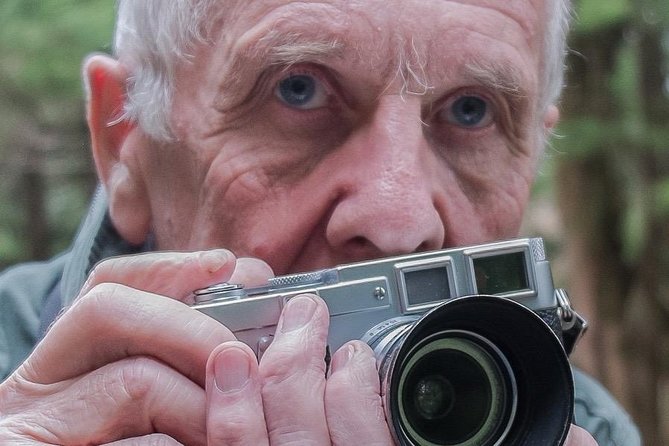
Ketchikan’s best photo opportunities are not all lined up beside the cruise docks. This three-hour safari uses a small van to reach Creek Street, salmon-viewing spots, totem parks, working waterfronts, and broad views toward Danger Island. Guides such as Angela, Tori, Gatlin, and Brock also help you make better pictures with the camera you already own.
I like the personal instruction, especially for phone photographers, and the mix of local stories with actual time outside the van. I also like the small maximum of nine people, which gives the guide room to stop for a bald eagle, bear, whale, seal, or especially good view. The main consideration is that the tour gives substantial time to totem parks, and some people may want more wild nature and less organized sightseeing.
Key points to know before booking
- Your camera does not need to be fancy: Guides offer tips for iPhones, point-and-shoot cameras, and DSLRs, including composition, exposure, framing, and phone settings.
- The group stays small: A maximum of nine people makes it easier to ask questions and request help with a particular photo.
- You see more than downtown: The route includes Creek Street, Harris Street Bridge, Thomas Basin, Potlatch Totem Park, the Totem Heritage Center, and a final view toward Danger Island.
- Wildlife sightings are possible: Depending on season and conditions, you might see salmon, bald eagles, harbor seals, whales, or even a black bear.
- The route can change: Weather, light, and the interests of the group can affect the exact stops.
- Pickup depends on your ship: Ships at the downtown berths meet beside The Rock near Berth 2, while Ward Cove ships can arrange pickup near the ship’s greeting area.
Why this Ketchikan photo safari works
This is not a specialist workshop aimed only at serious photographers. It is a sightseeing tour with a camera lesson built into it. That distinction matters.
If you use an iPhone, you can learn how to change settings, control the frame, and make better use of features you may have ignored. If you carry a DSLR, you can ask about foregrounds, backgrounds, exposure, and how to frame a scene quickly when the light changes. Guides have helped people with both kinds of cameras, and the small group makes one-on-one advice possible.
I especially like the way the tour links photography to place. At Harris Street Bridge, the guide discusses foreground and background while salmon may be moving through the water. At the docks, you are not simply told to point your camera at a boat. You also hear about commercial fishing and the working life of Ketchikan.
The tour has earned a 4.9 rating from 901 ratings, with 97 percent recommending it. That strong record fits the experience’s main strength: capable guides who combine driving, local commentary, wildlife spotting, and practical photo coaching.
Still, you should set your expectations correctly. This is not a remote wilderness expedition. Ketchikan is a cruise port, and several stops are cultural attractions or scenic parts of town. If you want a fast lesson in making better vacation pictures while seeing several parts of the area, the format makes sense. If you want three hours of untouched forest and empty shoreline, it may feel too focused on established sites.
More Photo Safaris in the USA:
- Sunset Photo Safari
★ 5.0 · 53 reviews - Private Wild Horse Photo Safari from Tooele
★ 5.0 · 52 reviews - Juneau: Rainforest Photo Safari on a Segway
★ 4.6 · 11 reviews
Meeting the guide and getting beyond the docks
For ships at Berths 1, 2, 3, or 4, you meet at Berth 2 beside the statue known as The Rock, next to the Ketchikan Visitor Center. This is a useful detail because cruise-port meeting points can be confusing, especially when several excursions gather in the same area.
Ships docked at Ward Cove are about 10 miles from downtown, roughly a 20-minute drive. Pickup is offered near the ship’s greeting area in the Welcoming Center, unless other arrangements are made. You need to provide your ship information and desired departure time when booking, then email [email protected] for confirmation.
The van is important here. It lets you move between downtown sites and outlying viewpoints without spending your short port visit arranging taxis or figuring out local transportation. The vehicle also gives you a dry place to reset your camera during rainy weather, which is no small benefit in Ketchikan.
The tour lasts about three hours and allows no more than nine people. That is small enough for the guide to look at your phone screen or camera settings without turning the activity into a lecture for a crowd.
Creek Street: salmon, wooden buildings, and local stories
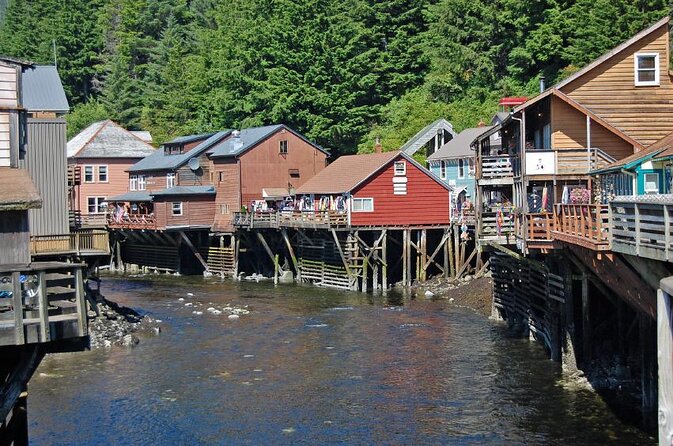
Creek Street is one of Ketchikan’s most recognizable places. Once known as the town’s red-light district, it now has shops, attractions, wooden buildings, and plenty of angles for photography. The guide also explains the local economy, culture, and daily life as you move between stops.
The photographic appeal is easy to understand. Water, raised walkways, old buildings, and passing people give you several layers to work with. You can practice using a foreground object to frame the scene or look for reflections and repeating lines.
During salmon season, Creek Street becomes more than a historic stop. Salmon moving upstream add action and color, and the guide can help you watch for the right moment. One guide also helped a group spot a black bear across the river near the creek, though wildlife is never guaranteed.
You get about 35 minutes here. That is enough for a careful walk and several compositions, but not enough to explore every shop. I would keep your camera ready and listen for the guide’s timing advice, especially if salmon or wildlife appear.
Harris Street Bridge and the value of a foreground
The Harris Street Bridge is a short stop, about 20 minutes, but it serves a clear teaching purpose. Here, you discuss foregrounds and backgrounds, two simple ideas that can make a vacation picture look far more deliberate.
A foreground gives the viewer a sense of depth. A railing, branch, boat, or person close to the camera can lead the eye toward the water or buildings beyond. The guide can also point out how to avoid a messy background that competes with your subject.
When salmon are spawning, the bridge offers a close look at nature in action. The timing of the salmon run can change the feel of the stop, so you may see anything from active fish to a quieter waterway. This is a good example of why the tour adjusts for season, weather, and light.
More Safaris in the USA:
- Everglades National Park: Private 2.5-Hour Photo Safari
★ 4.9 · 9 reviews - Ketchikan Photo Safari
★ 5.0 · 5 reviews - Anchorage: Sunset Photo Safari
★ 5.0 · 2 reviews - Selous Luxury Day Safari with Photographer
★ 5.0 · 211 reviews
Totem Heritage Center and the story of Fog Woman
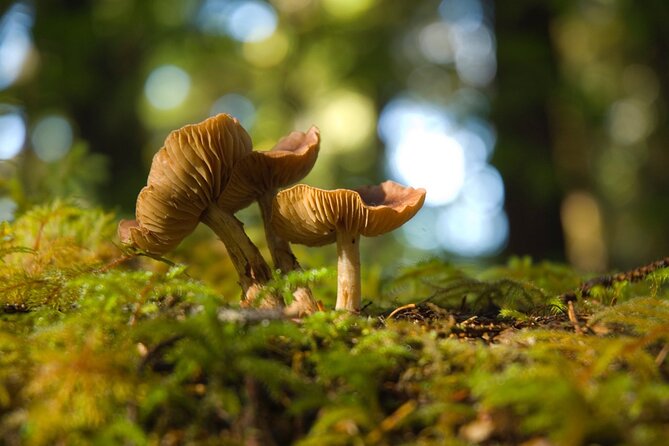
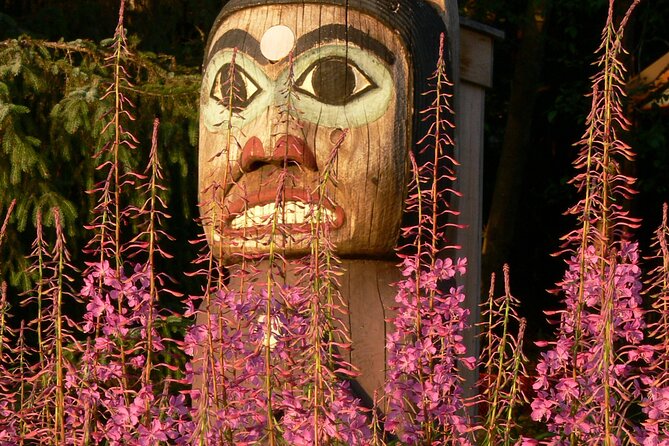
The Totem Heritage Center offers carved poles, Native artwork, old pieces, information kiosks, and the chance to hear the legend of Fog Woman. The stop lasts about 20 minutes.
This is a useful pause from outdoor shooting. You can study the shapes and details of the carvings, then apply the same attention to your own photography. Close-up pictures of carved surfaces often work better when you focus on texture and simplify the background.
The cultural material deserves more than a quick snapshot. Listen to the guide’s explanation rather than treating the poles as decoration. The tour connects the center to the people, stories, and traditions of the region, giving you context that a quick walk through downtown may not provide.
The short time means you will not examine everything in depth. If cultural sites are a major reason you are visiting Ketchikan, you may want a longer dedicated visit on another day. Here, the center is one part of a moving photo route.
Thomas Basin and Ketchikan’s working waterfront

At Thomas Basin, the group travels down East Street for views over the basin and some of Ketchikan’s last wooden dock structures. You have about 20 minutes to photograph the harbor and talk about commercial fishing and the town’s working past.
This is one of the better places to slow down and look for a broad view rather than a single object. Boats, pilings, water, and weather can create a strong picture even when the sky is gray. The guide may suggest a wide composition, but you can also look for small details in the docks.
This stop shows why a photo guide can add value to ordinary scenery. Without help, you might take one quick harbor picture and move on. With a little instruction, you may try a lower viewpoint, use a dock as a leading line, or wait for a boat to enter the frame.
Weather matters here. Rain and clouds may soften distant views, while a break in the weather can open up a more expansive scene. The guide may adjust the visit based on light and what the group wants to photograph.
Potlatch Totem Park and the coffee break
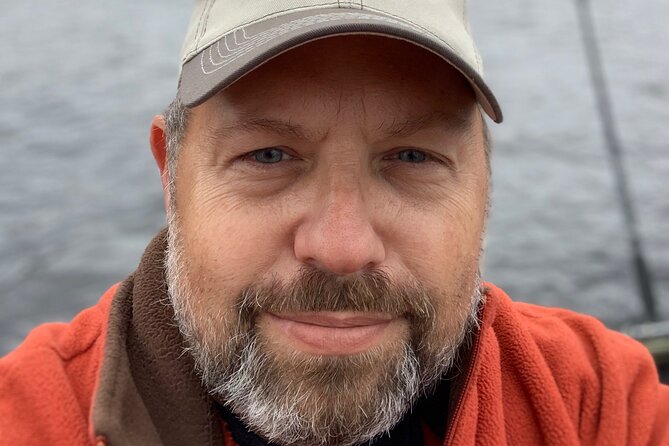
Potlatch Totem Park receives about 40 minutes, making it the longest stop. It includes a totem carving building, a traditional Native clan house, a dugout canoe, a gift shop, antique cars, and a Russian Museum. You also receive fresh-roasted coffee and a gourmet cookie.
There is plenty to photograph. The carving building lets you look at tools and work in progress, while the clan house and canoe offer large subjects with strong shapes. The antique cars and Russian Museum add variety, so the stop is not limited to poles.
This is also the point where opinions may differ. I can see why many people like the range of displays and the chance to hear more local stories. I can also see why someone expecting wild scenery might find 40 minutes at a developed attraction too long, particularly after visiting the Totem Heritage Center.
Use the time according to your interests. If you enjoy cultural displays, stay with the guide and ask questions. If you mainly want photos, look for details, patterns, and close views instead of taking the same full shot as everyone else. The coffee and cookie make a welcome break, especially on a wet or cool day.
The final view toward Danger Island
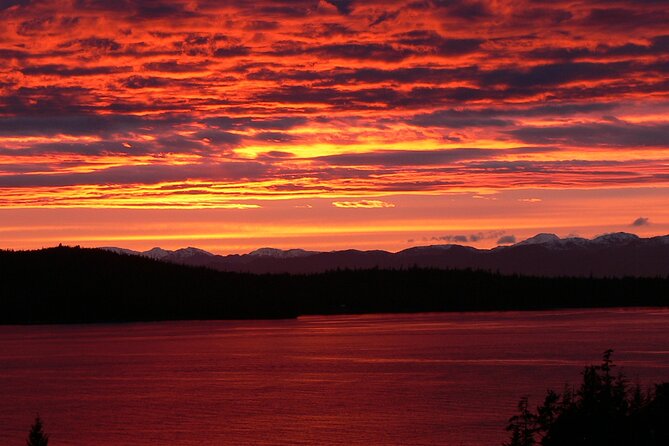
The last major photo stop offers a wide view toward Danger Island and a floatplane area. You have about 15 minutes, followed by a short conclusion to the tour.
Floatplanes are part of daily transportation in Southeast Alaska, so this view gives you a look at more than postcard scenery. Water, aircraft, shoreline, and distant islands can create a strong final frame if the weather cooperates.
The view will change with light. A gray day can produce muted colors and a quiet mood, while clearer conditions may give you more separation between the water and distant land. The guide can help you decide whether to use a wide phone setting, a tighter crop, or a horizontal frame.
The final 10-minute segment is flexible. The exact order or location may change because of weather, lighting, and group interests. That flexibility is useful for photography, since the best stop is often the one with the best light at that moment.
Wildlife, weather, and the limits of a guarantee
The most exciting moments may come between the scheduled stops. Guides have pointed out bald eagles, whales, harbor seals, salmon, and bears. One guide stopped the van when wildlife appeared so the group could get out and photograph it.
You should treat wildlife as a bonus, not the central promise. The tour includes natural areas and good lookout points, but no sighting can be assured. Bring the longest lens you have, but do not assume a phone will produce a close wildlife portrait.
Rain is also part of the Ketchikan experience. The tour can operate in wet conditions, and guides have continued offering photo help during heavy rain. Bring weather-ready clothing and protect your camera or phone. The operator requires good weather for the experience to run and offers another date or a full refund if poor weather causes cancellation.
Is $134.03 a fair price?
At $134.03 per person, this costs more than simply walking around Creek Street. The price pays for a three-hour van tour, pickup options, a group capped at nine, local commentary, access to several sites, and instruction tailored to your equipment.
The value is strongest if you are visiting Ketchikan from a cruise ship and want to cover several areas without losing time to transport. It is also strong if you want better pictures but do not know how to use your phone or camera beyond automatic mode.
The value is weaker if you already know photography well and mainly want remote nature. One professional photographer found the instruction below the level expected for advanced work, while another person felt the tour spent too much time at a totem park. Those concerns are fair. The guides focus on practical vacation photography, not advanced studio technique or a specialist wildlife workshop.
I would judge the price by your goals. For a couple or family that wants local stories, easy transportation, and better vacation photos, it is reasonable. For someone happy to walk downtown and already confident with a camera, the cost may be harder to justify.
Who should book this tour?
I would choose this safari for:
- First-time visitors who want a quick overview of Ketchikan
- Cruise passengers with only a few hours in port
- Phone photographers who want specific tips
- Couples or families who want photos of themselves as well as scenery
- People who enjoy local history, Native carvings, docks, and wildlife
- Photographers who appreciate a guide willing to adjust stops to the group
I would think twice if you want a long, quiet nature walk, a dedicated bear tour, or advanced instruction on professional camera technique. The experience is broad rather than specialized.
Book at least 24 hours ahead if your plans may change, since cancellations made less than 24 hours before the start are not refunded. Service animals are allowed, and you should expect a moderate level of physical activity.
Should you book the Ketchikan Photo Safari?
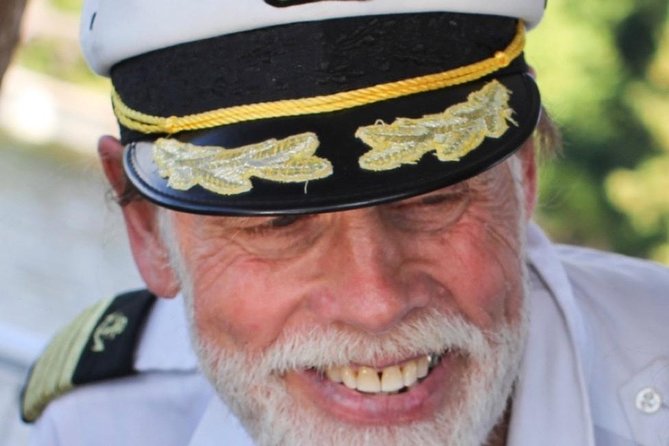
I would book it if you want to see more of Ketchikan than the cruise-dock streets and want help making better pictures along the way. The strongest feature is the guide. Angela, Tori, Gatlin, Brock, Kay, and other guides are described as friendly, flexible, patient, and able to adjust their advice for everything from an unfamiliar camera to an iPhone.
Choose it with the right picture in mind: this is a small-group sightseeing route with useful photography coaching. You may photograph salmon, eagles, bears, or a fine harbor view, but you will also spend time at established cultural sites. For most cruise passengers, that mix offers a practical and enjoyable look at Ketchikan in a short window.
FAQ
How long is the Ketchikan Photo Safari?
The experience lasts approximately three hours.
How much does the tour cost?
The listed price is $134.03 per person.
How many people can join the tour?
The tour has a maximum of nine participants.
What camera should I bring?
You can bring a DSLR, point-and-shoot camera, or cell phone. The guides provide advice for all of these camera types.
Where do ships at the downtown berths meet the guide?
If your ship docks at Berths 1, 2, 3, or 4, meet beside The Rock near the Ketchikan Visitor Center at Berth 2.
Where do Ward Cove passengers meet?
Ward Cove passengers meet the guide near their ship’s greeting area in the Welcoming Center, unless different pickup arrangements are made.
Does the tour provide pickup?
Pickup is offered. You need to provide your ship information so the operator knows where to meet you.
What places does the tour visit?
Stops can include Creek Street, Harris Street Bridge, the Totem Heritage Center, Thomas Basin, Potlatch Totem Park, and a final view toward Danger Island and the floatplane area.
Are wildlife sightings guaranteed?
No. You might see salmon, bald eagles, whales, harbor seals, or bears, but sightings depend on conditions and timing.
Can the itinerary change?
Yes. Weather, lighting, and the interests of the group can affect the exact itinerary.
Is the tour suitable for people with limited fitness?
Participants should have a moderate level of physical fitness.
Are service animals allowed?
Yes, service animals are allowed.
What happens if bad weather cancels the tour?
If the operator cancels because of poor weather, you will be offered a different date or a full refund.
Can I cancel for a full refund?
Yes. You must cancel at least 24 hours before the experience starts to receive a full refund.
Just added around the USA
- Los Angeles: Private Professional Vacation Photoshoot★ 5.0 · 2 reviews
- Louisville: Photoshoot Walking Tour with Pictures★ 4.8 · 3 reviews
- Las Vegas: VIP Guided Photography & Hiking Tour of Zion NP★ 5.0 · 2 reviews
- Las Vegas: Wedding Chapel Photography Session★ 5.0 · 2 reviews
- Las Vegas: Cosmic Space Wedding + Spectacular Photography★ 5.0 · 3 reviews
- Las Vegas: Personal Travel & Vacation Photographer★ 4.8 · 38 reviews
- Ketchikan Photo Safari★ 5.0 · 5 reviews
- Juneau: Rainforest Photo Safari on a Segway★ 4.6 · 11 reviews
Photo Safaris, compared.
Browse the lists this tour appears in