
REVIEW · SPAIN
Photo workshop in the port of Porto Cristo
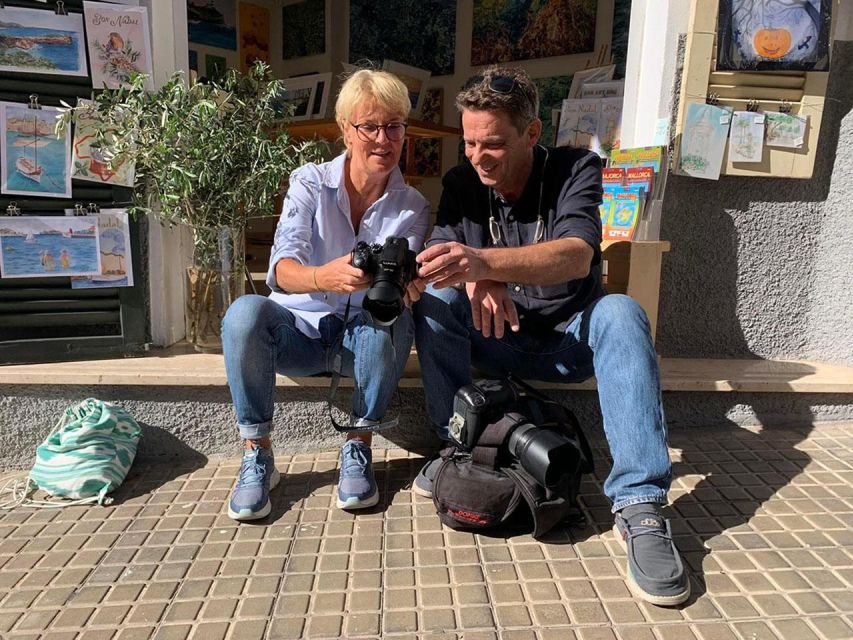
Porto Cristo’s harbour becomes your outdoor classroom in this small, hands-on workshop with photographer Marcos Gittis. You will photograph the waterfront and old town streets while learning how composition, depth of field, and camera settings change the way a scene feels.
I like the close coaching and the chance to review images on the spot, rather than waiting until you get home. I also like the mix of photography and gentle town exploration, since Marcos shares some local context along the way. The main limitation is that this is not a full technical camera course: detailed individual setting lessons, computer-based review, and image editing are not included.
Key points to know before booking
- A four-person maximum keeps the coaching personal: You should have room to ask questions and get direct help while shooting.
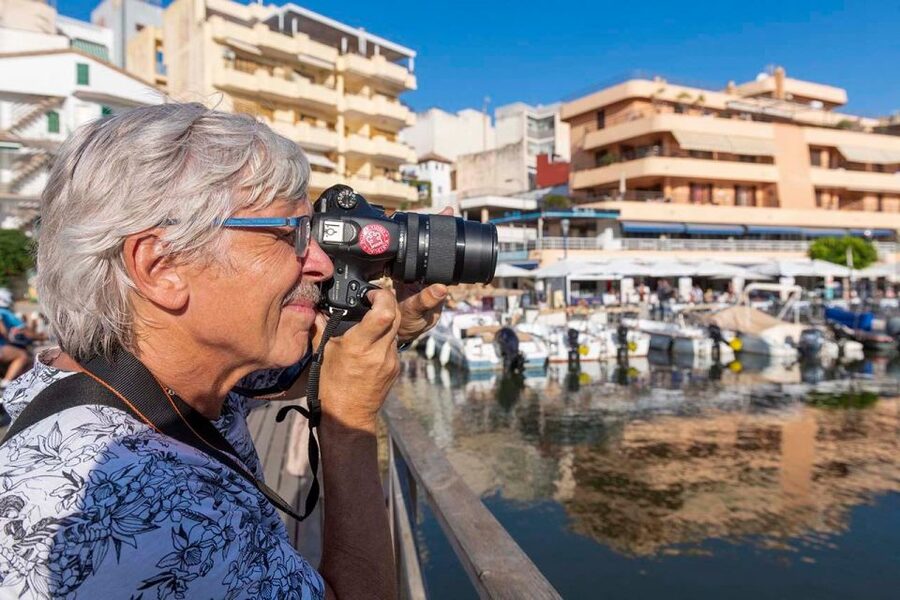
- Porto Cristo’s harbour and lanes provide the subjects: You will work with town views, the bay, streets, and everyday details instead of sitting in a classroom.
- Marcos Gittis teaches through practice: Theory is followed by a shared photo walk, coaching, and image assessment.
- A coffee stop adds useful breathing room: Early photos can be discussed with a view over the bay before the final review.
- The workshop suits beginners and improving photographers: It is aimed at helping you move beyond auto mode, but it does not cover every camera setting in detail.
- The $77 price buys focused instruction: For three hours of professional guidance in a group of no more than four, the value is strongest if you want feedback, not just sightseeing.
Starting with the photographic gaze in Porto Cristo
The most useful part of this workshop is not simply learning which button to press. It is learning to decide what deserves a photograph and how to show it clearly.
Marcos begins with basic ideas about the photographic gaze, composition, and depth of field. In plain terms, you consider why one view feels balanced, why another looks flat, and how sharpness can guide attention through an image. These questions matter on holiday, when it is easy to point a camera at a pretty bay and end up with a picture that says very little.
The setting helps. Porto Cristo’s harbour gives you open views, boats, water, and changing lines, while the town streets offer tighter spaces and smaller details. I like this contrast because you can see how the same rules work in different surroundings. A wide harbour scene asks you to think about the horizon and layers. A narrow street asks you to look at framing, shape, and the position of your subject.
You should not expect a lecture followed by a test. The theory leads into practice, with Marcos helping you find subjects and make choices while you photograph. That approach is especially useful if you understand photography terms in theory but still return from a holiday with too many similar shots.
More Photography Workshops in Spain
- Elevate Your Photography – Barcelona Private Tour & Workshop
★ 5.0 · 78 reviews - Private (Phone) Photography Class in Park & Old Town
★ 5.0 · 53 reviews - Málaga: Creative Urban Photography Workshop
★ 5.0 · 22 reviews
Walking the harbour, streets, and bay
The photo walk takes place around Porto Cristo, beginning from its picturesque harbour area and continuing through attractive town streets. The route is not described as a formal sightseeing tour with a fixed list of monuments. Think of it instead as a guided search for good images.
That distinction is important. You are not only being shown what to see. You are being encouraged to notice how a scene can be framed. Marcos can help you find motifs, adjust your position, and decide what belongs in the picture. Sometimes the change may be simple: move closer, wait for a cleaner background, or place the main subject away from the center.
The harbour is a practical place to learn because it gives you room to compare different compositions. You might work with the curve of the waterfront, the open view across the bay, or details close to the water. I would bring patience here. The strongest image may not appear at the first viewpoint, and a short workshop is a good chance to practice looking before pressing the shutter.
The town’s lanes add another layer. Their smaller scale can help you understand depth and visual order. Instead of photographing an entire street without a clear subject, you can look for a doorway, a line of buildings, a patch of light, or a person-sized detail. The supplied information does not promise a particular route or set of landmarks, so you should treat the walk as flexible rather than a checklist.
Marcos also shares information about Porto Cristo during the outing. That makes the session useful for someone who wants photography tied to a sense of place, not a lesson held in isolation. Still, the main focus remains the camera and the images you create.
A coffee pause with the first photo check
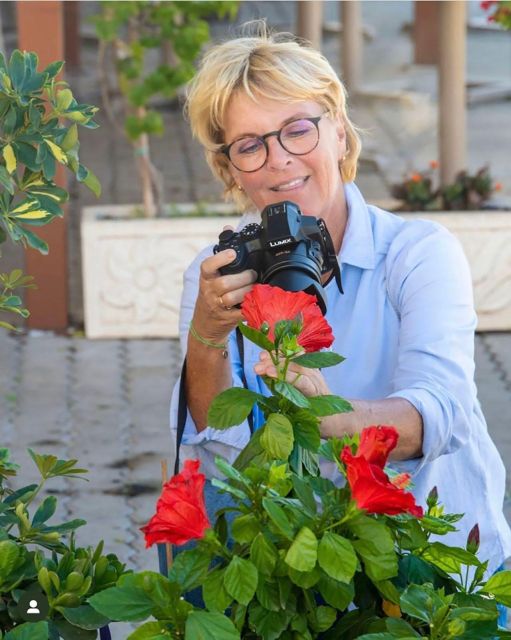
A short coffee break with a view over the bay gives the workshop a welcome pause. More important, it is used to look at the first images and discuss what is working.
This early check can be more valuable than it sounds. You still have time to return to the camera and try a different approach. If a composition feels crowded, you can simplify it. If the subject is not clear, you can change your angle or distance. Many photo courses leave all criticism until the end, when the chance to retake the picture has gone.
The break also keeps the three-hour session from feeling like a continuous technical lesson. You have a chance to talk, ask questions, and consider the advice before continuing. The coffee itself is not described as included, so you should not assume the cost of refreshments is covered.
Learning camera settings without getting lost in menus
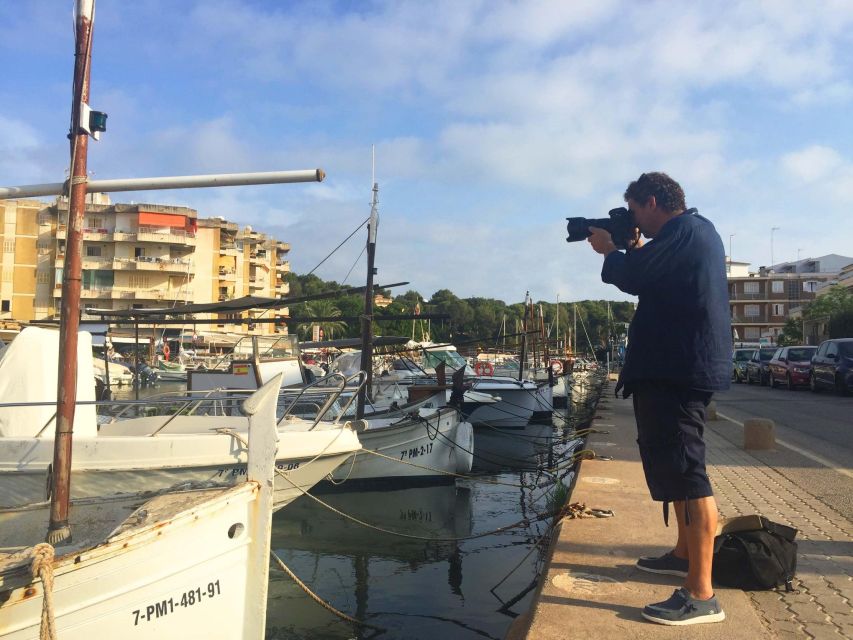
The workshop includes explanations of camera settings, along with coaching during the shoot. That should help you understand how your camera can respond to the scene instead of relying on auto mode for every picture.
The boundaries are clear. You will not receive a detailed explanation of every individual setting, and the session is not a computer lesson. There is no image editing included either. If your main goal is a complete technical course covering every menu, button, and post-processing step, this may feel limited.
For a holiday photographer, that limit can be sensible. Three hours passes quickly, and too much menu-by-menu instruction can bury the more useful habit of seeing well. I would use the workshop to ask about the settings that affect the photographs you are making that day, then continue learning with your camera manual later.
You can expect help with practical choices such as how to place a subject, how to use depth of field, and how to make a scene feel less flat. The exact camera settings will depend on your equipment and the conditions. Bring the camera you plan to use on holiday, not a device that is unfamiliar to you.
Same place, a different kind of shoot:
- IKONO: a Unique Sensory and Photographic Experience
★ 4.5 · 1,916 reviews - Barcelona E-Bike Photography Tour
★ 5.0 · 843 reviews - Barcelona: Instagram Tour of the Most Scenic Spots
★ 4.9 · 332 reviews - MENORCA: Kayak cave route + photo session.
★ 4.8 · 300 reviews
The final review at Gallery Margarita
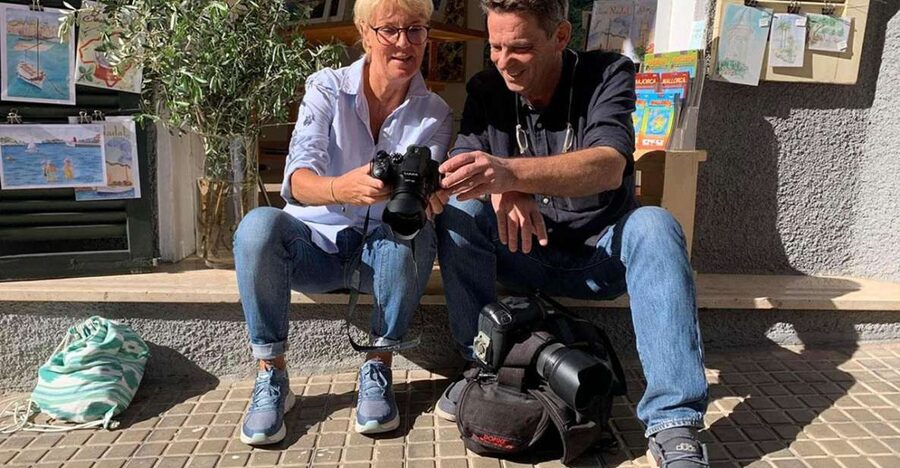
The workshop ends with a broader assessment of the photographs in the gallery connected with the experience, Gallery Margarita, Colectivo de Arte. This gives you a chance to look at the full set rather than judging each picture in isolation.
The review covers the placement of motifs, camera settings, and possible editing ideas. It is not the same as having your photographs edited for you. You receive suggestions about what could be improved, but the actual editing work is not part of the experience.
I like this final stage because it turns the walk into a complete learning cycle. You see a scene, make a choice, receive guidance, and then examine the result. That process is more useful than collecting a list of rules. It also helps you spot patterns in your own work, such as placing every subject in the middle or including too much empty space.
The gallery setting provides a more settled finish than ending on a street corner. You can discuss the images in one place and leave with specific ideas to try on the rest of your holiday.
What the small group changes
The group is limited to four participants. That is one of the strongest practical features of the workshop.
Photography coaching works best when the instructor can see what you are doing and answer questions without rushing. In a group of four, you have a better chance of receiving direct help with finding a subject, changing your viewpoint, or understanding a setting. You can also see how other participants approach the same scene, which may give you ideas without turning the session into a competition.
The small size does not mean the workshop will be a private lesson. Other people will be taking part, and time is shared. If you want one-to-one instruction for an entire three hours, confirm the arrangement before booking. The advertised format is a small group, not a guaranteed private session.
The workshop is offered in English, German, and Spanish. That makes it easier to ask detailed questions in a language you handle comfortably. It is also suitable for a companion who does not think of themselves as a photographer. One useful detail from the feedback is that a non-photographer companion found the session interesting, so you do not need to arrive with advanced skills.
Who will get the most from the $77 price
At $77 per person, this is priced as a focused activity rather than a casual walk around Porto Cristo. The value depends on how much you want personal instruction.
I think the price is reasonable for someone who owns a camera, wants to improve holiday photos, and benefits from a professional eye. Three hours includes theory, shooting help, camera guidance, photo selection, and an on-site review. The four-person limit makes the cost easier to justify because you are paying for access to an instructor, not just a route through town.
The value is weaker if you only want scenic views or a standard sightseeing tour. You will spend part of the session talking about photographic choices and reviewing images. Someone who has no interest in composition or camera controls may prefer a simple harbour visit.
It is also not the best choice for advanced photographers seeking a specialist course in studio lighting, professional editing, or detailed equipment technique. The session is built around seeing, composing, and improving your images in the moment.
The three-hour length works well alongside a holiday itinerary. You get enough time to practice without giving up a full day. Starting times vary, so you will need to check availability for your chosen date.
Practical limits and preparation
Bring a camera. That is the only item specifically required, but you should arrive ready to use the equipment you bring. Since detailed individual instruction on every setting is not included, knowing the basic controls of your own camera will help you make better use of the session.
The activity is not suitable for children under 16 or for people with mobility impairments. The format involves walking through town and the harbour area, although no precise route or distance is provided. If mobility is a concern, ask for current route details before booking rather than assuming the walk will be adapted.
The cancellation terms are flexible: you can cancel up to 24 hours in advance for a full refund. A reserve-now, pay-later option is also available, which can help if your schedule around Porto Cristo is still changing.
Two verified bookings gave the workshop a 5 out of 5 rating. The strongest praise centers on Marcos’s friendly manner, his ability to answer questions, the amount of new photographic understanding he shares, and the way he combines photography with a little town guidance. One participant also highlighted advice on motif placement, camera settings, and possible editing. Those are exactly the areas to focus on if you want to judge the workshop’s fit for you.
Should you book this Porto Cristo photo workshop?
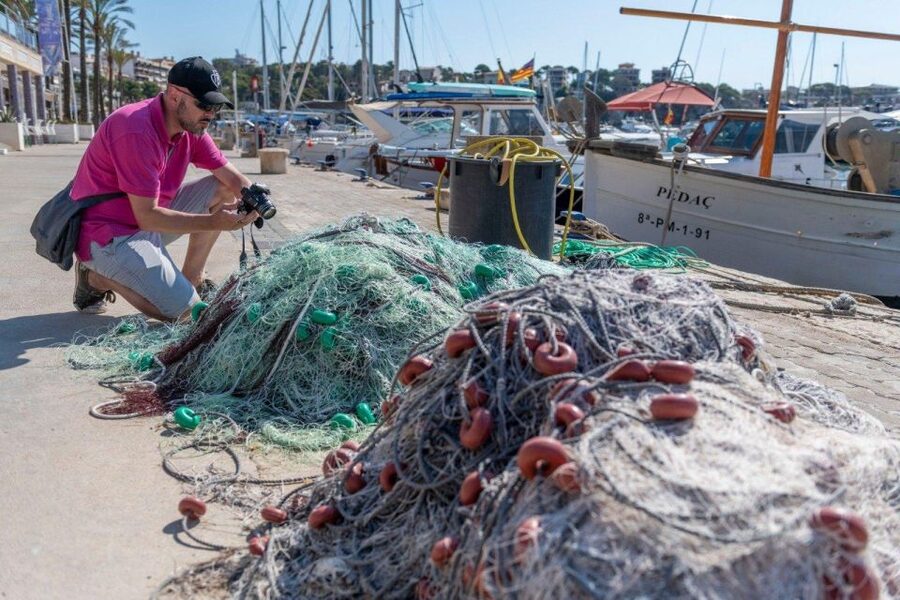
Book it if you want to return from Mallorca with better photographs, not just more photographs. Marcos Gittis offers a practical session that moves from basic ideas to real shooting, then gives you time to assess the results. The harbour, bay, and streets provide enough variety to practice several ways of seeing, while the four-person limit keeps the advice personal.
Skip it if you want a fast sightseeing tour, a full technical course, or professional image editing. The workshop does not promise an exhaustive lesson on every camera setting, and refreshments and computer-based review are not included.
For beginners, improving hobby photographers, and companions who want an easy three-hour activity with a creative focus, the $77 cost looks fair. Bring your camera, arrive ready to ask questions, and treat the session as a chance to build habits you can use throughout the rest of your trip.
FAQ
Where does the photo workshop take place?
The workshop takes place around the port and town of Porto Cristo in the Balearic Islands, with photography in the harbour, town streets, and views around the bay.
How long does the workshop last?
The activity lasts three hours. Starting times depend on availability.
How much does the workshop cost?
The listed price is $77 per person.
Who leads the workshop?
The workshop is led by photographer Marcos Gittis.
What languages are available?
Instruction is offered in English, German, and Spanish.
How many people can join?
The workshop is limited to four participants.
What is included?
The price includes theory, practical photography, coaching during the photo session, explanations of camera settings, help finding subjects, and photo review on site.
Is photo editing included?
No. The activity does not include image editing, computer-based evaluation, or a detailed explanation of every individual camera setting.
What should I bring, and are there age or access limits?
Bring a camera. The activity is not suitable for children under 16 or people with mobility impairments. You can cancel up to 24 hours in advance for a full refund, and a reserve-now, pay-later option is available.
Just added around Spain
- Photographer, Professional Photo Shoot – Palma De Mallorca★ 5.0 · 2 reviews
- Private Photo Session with a Local Photographer in Marbella★ 5.0 · 2 reviews
- Private Mallorca Photoshoot – Palma & North Beaches options★ 5.0 · 11 reviews
- Private Professional Vacation Photoshoot in Mallorca★ 5.0 · 2 reviews
- Photoshooting in Malaga – Photo session by OhMyGoodGuide★ 5.0 · 10 reviews
- Professional Photo Session in Malaga★ 5.0 · 5 reviews
- Madrid Photo Tour with Pro Photographer Lifestyle and Portrait★ 5.0 · 6 reviews
- Creative Photo Workshop in Malaga – by OhMyGoodGuide★ 5.0 · 2 reviews
Photography Workshops & Lessons, compared.
Paris Photography Masterclass – Private Photography Lesson
Read our review →
2-Hour Photography Class While Touring Downtown Santa Fe, Smart Phones Welcome!
Read our review →
Unique Rome by Night, Photo Tour and Workshop Under the Stars
Read our review →
Elevate Your Photography – Barcelona Private Tour & Workshop
Read our review →
Rome Photography Masterclass – Private Photography Lesson
Read our review →
Private (Phone) Photography Class in Park & Old Town
Read our review →
Venice Photography Masterclass – Private Photography Lesson
Read our review →
Custom Half-Day Photo Tour with Photography Lessons from Asheville
Read our review →Browse the lists this tour appears in