REVIEW · LONDON
Private London Night Photography Workshop – Trafalgar Square and South Bank
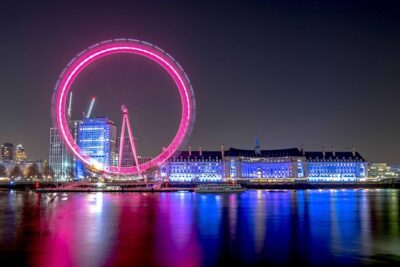
London looks most dramatic after dark, when Trafalgar Square fountains catch the light and the London Eye glows across the Thames. This private three-hour workshop puts you behind the camera with a Fine Art photographer who can adjust the lesson to your equipment and skill level.
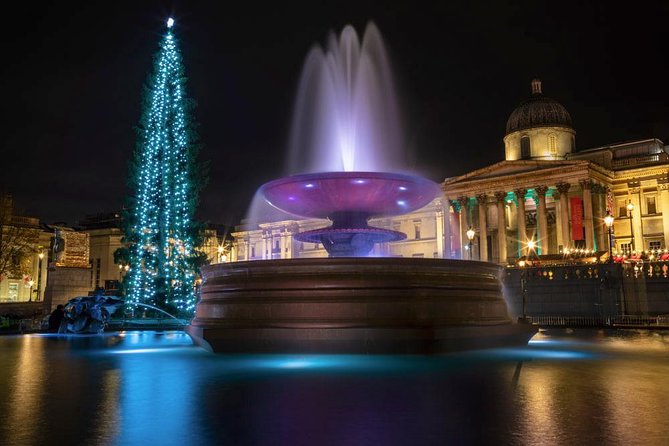
I like the hands-on teaching and the range of locations. You learn how to steady a camera for long exposures, frame famous sights with more care, and use reflections, light trails, and moving water instead of simply pointing at a landmark. Photographer Lou is also happy to shape the session around special requests, such as Christmas lights.
The main consideration is the price: $353.53 per person is a serious spend for three hours. It makes the most sense if you want personal instruction, have a camera you intend to use, and value leaving with skills you can repeat long after your London visit.
Key points before you book
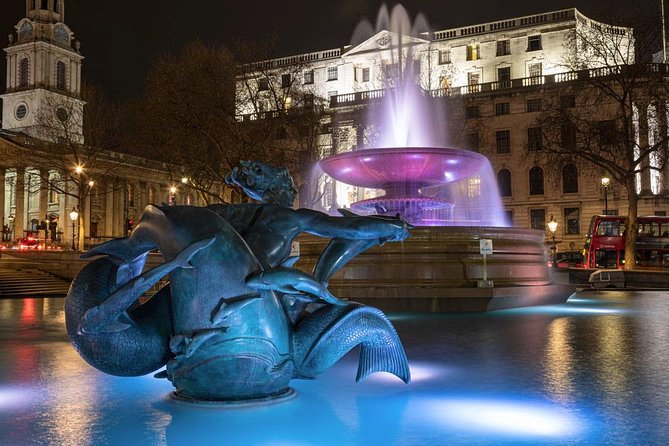
- Trafalgar Square after dark: Practice long exposures with the fountains, colourful reflections, and sharply focused sculpture details.
- One-to-one camera help: Lou can guide you through camera and tripod setup, settings, framing, and creative night techniques.
- London’s classic river views: Photograph the London Eye, Big Ben, the Houses of Parliament, and Westminster Bridge from several viewpoints.
- A genuinely private format: Only your group takes part, so the pace and advice can match your experience.
- Tripod planning matters: Bring your own tripod for the clearest results, or ask about hiring one after booking.
- A practical three-hour route: Meet at Charing Cross and finish back at the meeting point after working around central London and the South Bank.
What this London night photography workshop is really like
This is not a sightseeing walk with a few camera tips added on. The purpose is to teach you how to make night photographs work.
You bring your own camera and a fully charged battery. The photographer then helps you set up for dark conditions, explains what your camera is doing, and shows you how to make deliberate choices about shutter speed, composition, focus, and light.
That distinction matters. Night photography can look simple from the outside, but a bright building, dark sky, moving water, and passing traffic all affect an image in different ways. The session gives you time to test settings on location rather than trying to remember a quick explanation from a guidebook.
The private format is a strong advantage. If you already understand the basics, you can spend more time on creative framing and longer exposures. If you are still learning how to use your camera and tripod, you can slow down and ask questions without holding up a larger group.
The teaching is built around practical results. You will review the work completed and receive advice on how to develop your skills, so the session aims to remain useful after the final photograph is taken.
More Photography Workshops in London
- London Street Photo workshop
★ 5.0 · 10 reviews - Beginners Photography Course – Small Group Workshop
★ 5.0 · 8 reviews - London Photography Masterclass – Private Photography Lesson
★ 5.0 · 6 reviews
Starting at Trafalgar Square with fountains and reflections
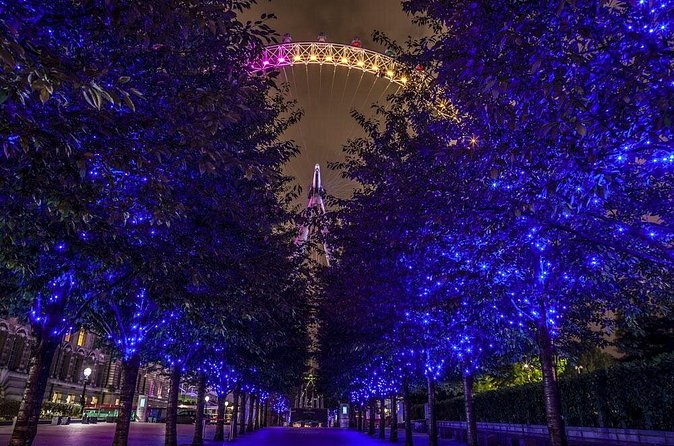
The meeting point is on Charing Cross, close to Trafalgar Square. The first stop gives you a good introduction to the basic demands of night photography because the square offers bright lights, dark areas, water, stone, and sculpture in one compact setting.
The fountains are especially useful for learning long exposure techniques. A slower shutter speed can turn moving water into a smooth, soft surface, while a faster setting can freeze more detail. Your photographer can help you compare these effects and decide which one better suits the image you want.
Reflections add another tool. Colour from the surrounding lights can appear in the water, giving you a way to frame the square without relying only on the buildings around it. You can also work on keeping the sculptures pin sharp while managing the lower light.
This is where composition and framing become more important than camera settings alone. A technically clear photograph can still feel flat if the main subject is centered without purpose or if too much empty space distracts from the scene. The session encourages you to look for angles, balance, and lines before pressing the shutter.
Trafalgar Square is also a useful place for a beginner to gain confidence. You can make small changes to your position and see how they alter the image. If you are more experienced, you can experiment with movement, reflections, and different ways to show the familiar square at night.
The drawback is that famous public places can offer plenty of visual information at once. You may need to work carefully to avoid clutter in the frame. That is part of the lesson, though, and the photographer can help you decide what to include and what to leave out.
Victoria Embankment and the London Eye from across the Thames
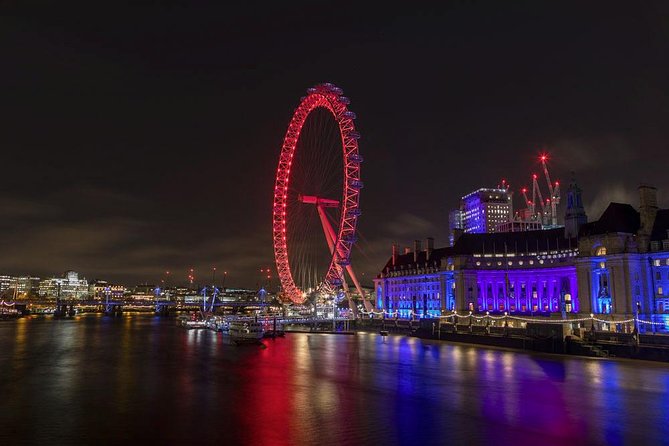
The route continues toward Victoria Embankment, where you photograph the London Eye from across the river. This section shifts the lesson from fountains and sculpture to distance, scale, and water.
The Thames gives you room to use long exposures in a different way. Instead of softening a fountain, you can create a smoother surface on the river and allow reflected lights to stretch across the frame. The London Eye gives the composition a clear focal point, while the water provides lines and texture leading toward it.
This is a good place to learn how light behaves at night. A bright landmark may require different exposure choices from the darker river or sky. You will work with those contrasts rather than treating the whole scene as evenly lit.
You might also try different viewpoints and framing choices. A wide composition can show the river and surrounding lights, while a tighter view can give the London Eye more attention. The photographer’s role is to help you test these options and understand why one version works better than another.
Long exposures are not only about making water look smooth. They can also change the mood of a photograph. A still landmark beside softened water can feel calm and polished, while brighter reflections and passing movement can create a more energetic image.
Bring warm, weather-appropriate clothing. This is an outdoor session, and night conditions can change quickly. You should also expect to spend time standing while your camera is set up, so practical shoes and a fully charged battery are sensible choices.
Westminster Bridge, Big Ben, and light trails
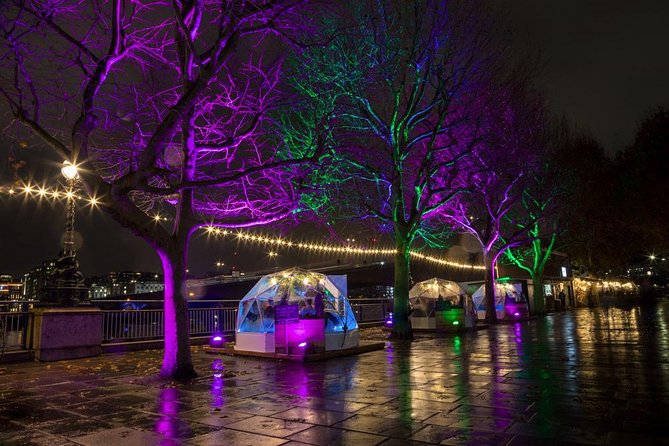
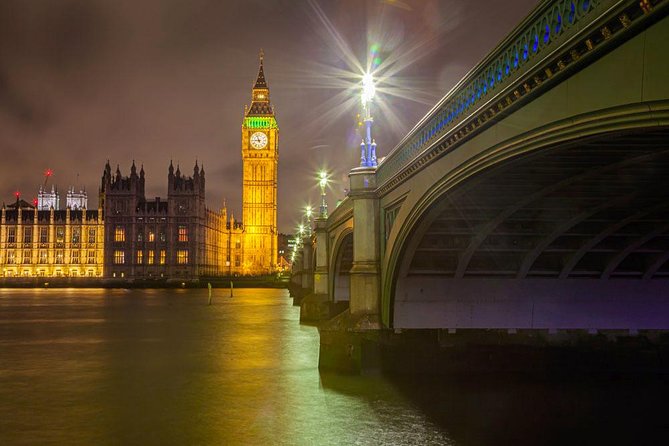
The Westminster section brings some of London’s most recognisable architecture into the workshop. You photograph Big Ben and the Houses of Parliament, with Westminster Bridge offering the chance to capture night trails from passing traffic.
Light trails are a classic night photography effect, but the useful part is learning how to control them. The timing of the exposure affects how far the trails run through the frame. Your photographer can help you decide how to position the bridge, the buildings, and the moving lights so the traffic supports the composition rather than cutting across it at random.
This stop combines several technical problems. The buildings are bright and detailed, the bridge has strong lines, and moving vehicles create changing light. You need to think about focus, stability, exposure, and timing together.
It is also a good reminder that a landmark photograph does not need to show only the landmark. Westminster Bridge can become a leading line, the traffic can add movement, and the lit architecture can provide a strong background. These choices make the picture feel more intentional.
You should not expect a guaranteed perfect result on the first attempt. Night photography often involves taking several versions while adjusting the shutter speed, composition, and timing. The benefit of a private lesson is that you can make those changes with direct help instead of guessing.
The supplied route information highlights Trafalgar Square, Victoria Embankment, and South Bank as the main stops, while the practical photography plan also includes Westminster views. Exact timing at each location may depend on conditions and the pace of your group.
More Photography Workshops in the UK
- Wildlife Photography Workshop in Richmond Park in London
★ 4.5 · 5 reviews - London Smartphone Photography workshop and tour
★ 5.0 · 5 reviews - Private Shoreditch Street Photography Workshop
★ 4.5 · 4 reviews - Private London Street Photography Workshop
★ 5.0 · 4 reviews
South Bank and a fresh view of familiar London
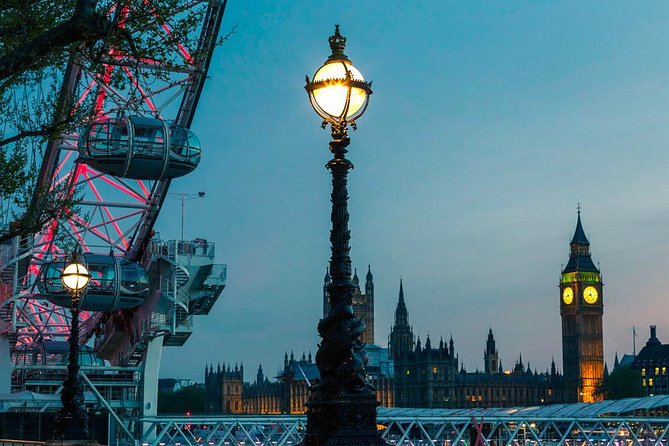
South Bank provides the final major setting. Here, the emphasis shifts toward looking for less obvious angles of familiar architecture and making a personal image rather than a standard postcard.
The area offers a broad mix of riverside views, illuminated buildings, and major landmarks. You can work on finding a foreground, changing your viewpoint, and using the surrounding light to shape the photograph. Even a well-known subject can look different when you alter your height, position, or lens choice.
I like this part of the workshop because it supports the creative side of photography. The lesson is not limited to getting a sharp picture of the London Eye or Big Ben. You are encouraged to ask what makes your frame different and how you can use light in a way that reflects the Fine Art approach of the photographer.
That does not mean you need an advanced camera or years of experience. It means you get help making choices instead of simply following a fixed set of settings. A beginner can learn how to see the scene, while a more experienced photographer can seek out stronger lines, reflections, and unusual viewpoints.
The South Bank portion can also be useful if you want images suitable for printing. A photograph made with care, stable technique, and a clear composition has more lasting value than a quick phone snapshot. Still, you should bring realistic expectations. The workshop teaches you how to make better images, but the final results will depend on your camera, weather, light, and willingness to experiment.
How personal is the tuition?
The experience is private, so only your group takes part. That is the feature that most clearly separates it from a standard London photo walk.
The photographer can tailor advice to your camera and experience. If you need help setting up a tripod and understanding the basic controls, the session can begin there. If you already know how to operate your camera, you can spend more time on composition, creative effects, and refining your night technique.
Lou is the photographer named in the available feedback, and her teaching style is described as patient and approachable. Specific praise focuses on her ability to guide someone through camera and tripod setup, then move beyond the basics into framing and creative shots.
That progression is important. Some workshops give you settings to copy but do not explain why they work. Here, you can ask about the choices behind the image and apply the advice to your own equipment.
A parent and daughter also completed the course together, improving their camera skills and learning new tricks as a pair. The format can therefore work for two people with similar interests, provided everyone understands that each participant pays a course fee.
What to bring for better results
Your own camera is required, along with a fully charged battery. You should know how to attach your camera to your tripod if possible, though the photographer can help with setup.
A tripod is strongly recommended for the clearest night photographs. The provider has tripods available for hire, but you need to ask about this after booking. Do not assume one will automatically be waiting at the meeting point.
A spare battery may be useful if you have one, but only the fully charged battery is specifically required. Dress for the weather because the entire activity takes place outside.
You do not need to bring refreshments, as light refreshments are not included. Gratuities are optional and left to your discretion.
The tour is offered in English. Service animals are allowed, the route is near public transportation, and most people can participate. Anyone aged 16 to under 18 must attend with a responsible adult, and that adult also pays a course fee.
Is $353.53 per person fair value?
At $353.53 per person, this is not a budget photo walk. The price is easier to justify if you compare it with private instruction rather than with a regular sightseeing tour.
You are paying for a private group, an experienced Fine Art photographer, local knowledge of central London photo locations, hands-on help with many types of cameras, and a review of the work completed. The value rises if you are serious about improving your night photography and plan to use the techniques again.
The price is harder to justify if you mainly want a guided evening stroll or a few snapshots of London landmarks. You may see many of the same sights during a normal evening in London without paying for specialist tuition.
Group discounts are available, which may make the cost more manageable for some bookings. Since the session is private, a small group of people who already know one another can share the experience while still receiving direct instruction.
I would think of the cost as paying for a concentrated lesson in real conditions. You are not just buying three hours of views. You are buying help with the problems that make night photography difficult: stability, light, movement, reflections, and composition.
Who will get the most from this experience?
This workshop suits you best if you already own a camera and want to understand it better. It is especially useful for anyone who has tried night photography and ended up with blurred, too-dark, or overly bright images.
It also works well for a beginner who wants patient help with the camera and tripod. You do not need to arrive as an expert. You do need enough interest to take part actively, test settings, and think about the image rather than simply point and shoot.
The private format is a good match for couples, families with older children, or friends who want a shared activity with a clear practical goal. The minimum age information makes it suitable for participants aged 16 and older, with a responsible adult required for those under 18.
You may want to choose something else if you dislike outdoor activities, do not own a camera, or prefer a relaxed sightseeing tour with little technical instruction. The route includes plenty of practical work, and you should expect to spend time adjusting equipment and repeating photographs.
Final verdict: book it for tuition, not just sightseeing
I would recommend this workshop if your main goal is to improve your night photography while seeing central London in a new way. Trafalgar Square, the London Eye, Westminster, and South Bank give you varied subjects, from fountains and sculptures to river reflections and traffic trails.
The strongest reasons to book are the private format, Lou’s patient camera instruction, and the chance to practice techniques at the exact locations where you want to use them. Ask about tripod hire after booking, charge your battery, and dress for the weather.
Skip it if you only want a quick evening tour or if the price feels too high for three hours. But if you want photographs you can share or print, and skills that continue to help after London, this is a focused and worthwhile lesson.
FAQ
How long does the London night photography workshop last?
The workshop lasts approximately three hours.
Where does the activity begin?
It begins at Charing Cross, Strand, London WC2N 5HF, UK.
Where does the workshop end?
The activity ends back at the meeting point.
Do I need to bring my own camera?
Yes. You should bring your own camera and a fully charged battery.
Should I bring a tripod?
A tripod is recommended for the clearest night photographs. Tripods are available for hire, but you need to enquire after booking.
Can someone under 18 take part?
Yes. Participants aged 16 to under 18 must attend with a responsible adult, and the adult must also pay a course fee.
More Private Photoshoots in the UK
- London: Private travel vacation photoshoot -Romantic Special
★ 4.7 · 50 reviews - Private Tour: Night Photography Tour in London
★ 5.0 · 48 reviews - Professional Private Couple Photoshoot
★ 5.0 · 35 reviews - London: Private Landmarks with a Professional Photographer
★ 5.0 · 30 reviews
More Private Photoshoots in London
- London: Private Photoshoot with Video Clip Option
★ 4.8 · 182 reviews - Private landmarks photoshoot for families and couples
★ 5.0 · 92 reviews - London: Private Landmark Tour with Professional Photographer
★ 4.7 · 91 reviews - Professional Private Photoshoot in London
★ 5.0 · 63 reviews
Just added around London
- Wildlife Photography Workshop in Richmond Park in London★ 4.5 · 5 reviews
- Private Tour: Photography Walking Tour from Trafalgar Square to Covent Garden★ 5.0 · 5 reviews
- Street Photography Workshops in London★ 5.0 · 6 reviews
- Shoreditch Street Art Private Photography Tour including Brick Lane★ 5.0 · 5 reviews
- South Bank Photography Tour – Small Group★ 5.0 · 2 reviews
- Ultimate introduction to photography in Central London★ 5.0 · 19 reviews
- Private Landmark Photoshoot★ 5.0 · 27 reviews
- PRIVATE PHOTOSHOOT in London★ 5.0 · 6 reviews
Night & Astro Photography, compared.
Tokyo by Night Photography Tour (Private Option Available)
Read our review →
Night Photo Session in a Fiat 500 with Aperol Spritz
Read our review →
Private Guided Night Photography Tours on Cape Cod (for one photographer.)
Read our review →
Moab: The Windows Astro-Photography and Stargazing Hike
Read our review →