REVIEW · TOKYO
Tokyo Photography Masterclass – Private Photography Lesson
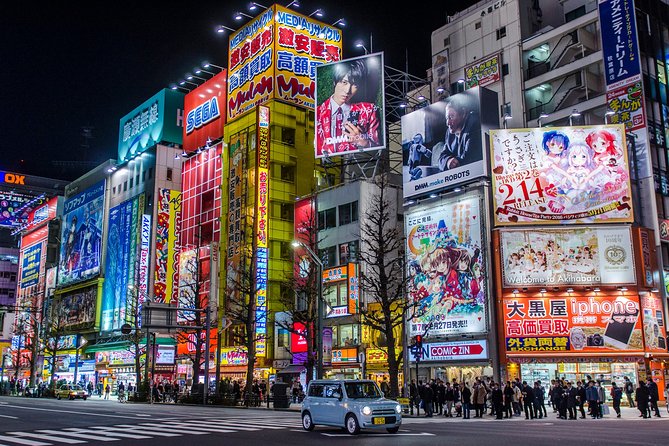
Tokyo is a superb classroom for photography because the city gives you neon, crowds, temples, fashion, and sudden quiet within a short walk. This private three-hour lesson begins at the Hachiko Statue and can focus on Shibuya and Harajuku street scenes, futuristic Shinjuku after dark, or the calmer paths around Senso-ji.
I like the one-on-one format, since you can spend time on the subjects that interest you instead of keeping pace with a large group. I also like that the guide teaches both camera controls and the harder skill of seeing good composition. The main consideration is price: at $190 per person, this makes the most sense if you want real instruction, not simply a guided walk with photo stops.
Key points to know before you book
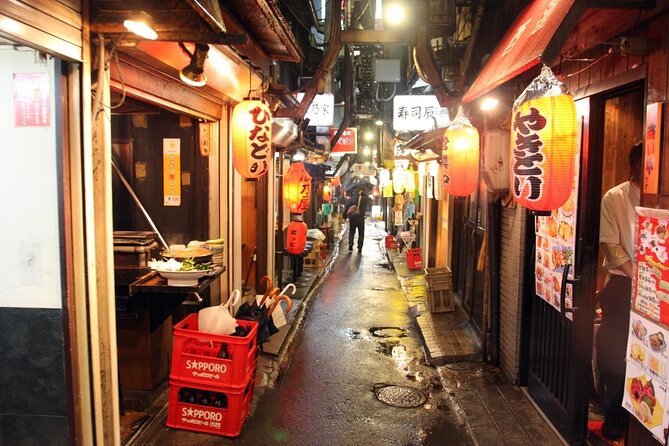
- Private instruction from a professional photographer: Your guide can adjust the lesson for a first-time camera user, an enthusiast, or a semi-professional.
- Hachiko is the starting point: The meeting spot puts you in the middle of Shibuya’s famous crossing and back streets.
- Several photography styles are possible: Work on street scenes, youth fashion, car trails, neon, temples, or low-light photography.
- The lesson covers the basics that matter: Aperture, shutter speed, ISO, focus, lighting, and composition are all part of the session.
- Three hours is enough for focused practice: You can learn a technique, use it in the streets, and review your results before the tour ends.
- Bring your own camera: A camera is not included, and a tripod is available to rent if you need one.
Starting at Hachiko and finding your photographic subject
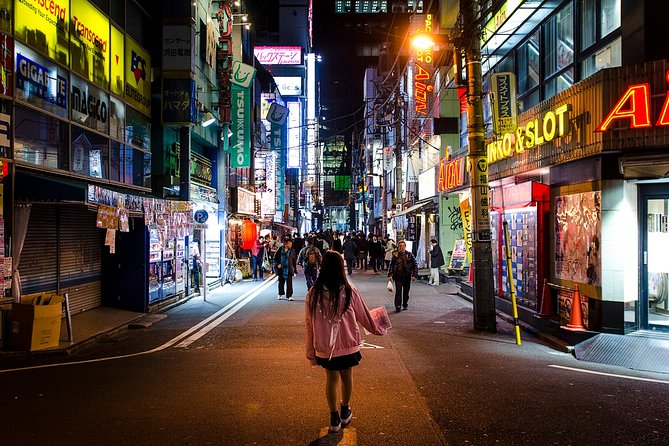
The tour starts at the Hachiko Statue, at 2 Chome-1 Dogenzaka in Shibuya. This is a practical meeting point because it places you beside one of Tokyo’s most recognizable public spaces, Hachiko Crossing.
The crossing offers an immediate lesson in timing. People move in several directions, the scene changes every few seconds, and the background is packed with signs, buildings, and traffic. You can work on shutter speed, framing, and choosing a clear subject instead of simply pointing your camera at the crowd.
This is also where the private format begins to earn its keep. If you want the classic crossing image, your guide can help you wait for a useful arrangement of people and lines. If the crossing feels too familiar, you can move into the back streets of Shibuya and look for smaller scenes with more texture and character.
The tour ends back at the meeting point, so you do not need to arrange a separate return point. The activity is near public transportation, which helps if you are fitting it between other Tokyo plans.
More Photography Workshops in Japan
- Blade Runner photo workshop in Shibuya with Laurence Bouchard
★ 5.0 · 15 reviews - Tokyo: Photography Masterclass – Private Photo Lesson
★ 5.0 · 7 reviews - Kyoto Photography Masterclass – Private Photography Lesson
★ 5.0 · 11 reviews
Shibuya and Harajuku for street photography
The street option moves through Shibuya and toward Harajuku. These neighborhoods give you a strong mix of public spectacle and everyday detail. Shibuya offers the famous crossing, crowded sidewalks, and dense city framing. Harajuku adds youth fashion and a more eclectic mix of street scenes.
Your guide can use these areas to explain composition in practical terms. You may work with leading lines, repeated shapes, texture, angles, and layers within a busy frame. These are not just technical terms. They help you decide what belongs in the picture and what distracts from the subject.
The lesson also focuses on sharpening your eye. You learn to notice how the subject, light, and background work together before you press the shutter. That skill is likely to stay useful after the three hours are over, since it applies to temples, markets, landscapes, and family photos as well as street scenes.
Harajuku is a good choice if you want people and fashion in your pictures. It is less suited to someone seeking quiet architecture or polished night images. You can discuss your priorities with the guide because this is a private tour, not a fixed group route.
One important tip is to schedule the lesson early enough in your trip if you can. The instruction covers skills you may use throughout the rest of your time in Japan. Booking near the end still gives you pictures to take home, but an earlier session lets you apply the advice elsewhere.
Shinjuku after dark and the challenge of low light
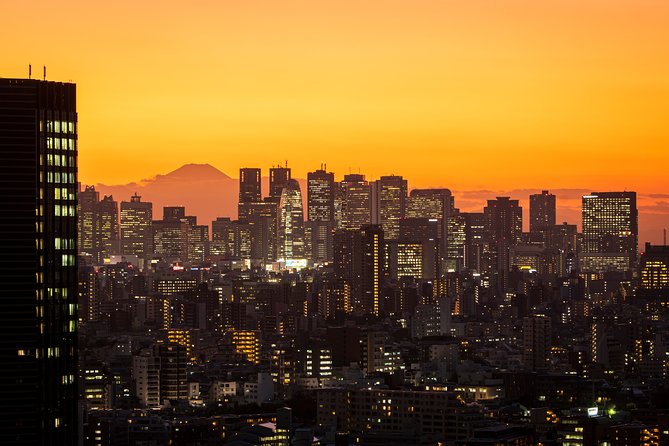
The night option can take you into Shinjuku, where neon signs, tall buildings, and late-night streets create a very different photography lesson. Night scenes are attractive, but they are not always easy. Bright signs can fool your exposure, moving subjects can blur, and focusing becomes less certain as the light drops.
That makes Shinjuku a useful place to practice aperture, shutter speed, ISO, and focusing together. You can see how a small change in one setting affects the whole picture. Your guide can also help you decide when to hold the camera steady, when to accept motion, and when to look for streaking car trails.
Car trails are one of the more distinctive subjects offered on this route. They turn moving traffic into lines of light against Tokyo’s futuristic city setting. The result depends on timing and exposure, so this part of the lesson gives you a clear reason to understand your camera instead of relying on automatic settings.
Shinjuku is not the quiet choice. You will be working with bright signs and crowded streets, and the visual clutter can make composition difficult. That is also the point. You learn how to simplify a busy scene and find one strong image inside it.
A tripod is not included, but one is available to rent. That may matter if you want to concentrate on long exposures or car trails. If you already own a small tripod, confirm the practical arrangements before booking, since the provided details do not specify rental cost or equipment type.
Asakusa and Senso-ji after dark
If you prefer a slower pace, the night tour can take you around Asakusa and Senso-ji. The Buddhist temple and nearby quiet paths offer a calmer setting than Shinjuku, with opportunities to work on architecture, symmetry, atmosphere, and low-light detail.
Senso-ji gives you a different kind of photographic problem. Instead of chasing movement, you may be deciding how to frame a large structure, how much space to leave around it, and how to balance artificial light with darker areas. Repetition, angles, and texture can be especially useful around temple details and surrounding paths.
This option suits you if crowded city scenes feel tiring or if you want a more considered image. It is still a photography lesson, not a standard temple tour, so the guide’s role is to help you make stronger pictures rather than provide a full cultural visit.
The available information does not promise a fixed sequence of stops or a guaranteed choice between Shinjuku and Asakusa. Treat the night route as a plan shaped around your interests. If neon and motion appeal to you, ask for Shinjuku. If you want architecture and a calmer setting, ask about Asakusa.
More Private Photoshoots in Japan
- Tokyo by Night Photography Tour (Private Option Available)
★ 5.0 · 151 reviews - Tokyo: Photo Shoot with a Private Vacation Photographer
★ 5.0 · 53 reviews - Tokyo 6hr Instagram Highlights Private Tour with Licensed Guide
★ 5.0 · 38 reviews - Kyoto: Private Photoshoot Service
★ 5.0 · 158 reviews
What you actually learn in three hours
The lesson is designed for all levels. If you are picking up a camera for the first time, the guide can explain the core controls without assuming you already know the terms. If you are more experienced, the private format lets you work on composition, timing, or low-light technique instead of repeating basic camera instructions.
The technical topics include:
- Aperture and how it affects the look of the image
- Shutter speed for still subjects, movement, and light trails
- ISO for working in darker conditions
- Focusing and selecting a clear subject
- Composition using lines, repetition, texture, and angles
- Reading the subject and available light
- Reviewing your photography during the session
The last point matters. Taking pictures is only half the job. Reviewing them helps you identify why one frame works better than another. A guide can point out problems that are hard to see while you are concentrating on settings and the excitement of the street.
The lesson is also useful because it connects camera controls to real situations. You are not only hearing about shutter speed in a room. You can test it at a crossing, with moving traffic, or beside a temple at night. That immediate practice makes the advice easier to remember.
The private format and the role of the guide
Only your group takes part, which gives the lesson a personal feel. You can ask questions as they arise, pause at a scene that interests you, or change the balance between technical instruction and picture-making.
The guide is both a local guide and a professional photographer. That combination matters in Tokyo, where knowing where to look can save time. The route can include famous places such as Hachiko Crossing, but it can also move into the Shibuya back streets or quieter areas around Asakusa.
One named guide is Karl. His approach has been praised for clear teaching, friendliness, and extensive experience, with particular emphasis on how much participants learned and how much their photography improved. That is the kind of feedback I would consider most useful here, since the value of this tour depends more on teaching skill than on simply reaching a famous location.
Still, guide assignments can vary, so Karl should not be assumed for every booking. If working with a particular instructor matters to you, ask the operator before you confirm.
Is $190 per person a fair price?
The cost is $190 per person. For a normal sightseeing walk, that would be high. For a private lesson with a professional photographer, it can be reasonable if you want instruction tailored to your camera and goals.
The value improves for people who are serious about making better pictures. A beginner can avoid hours of confusion over aperture, shutter speed, ISO, and focus. An experienced photographer can use the time to refine composition or night shooting with direct feedback.
The price is harder to justify if you mainly want someone to lead you to attractive locations. The tour does include local guidance and access to good photo settings, but the core product is teaching. You should arrive ready to practice, ask questions, and review your images.
Group discounts are available, which may help if you are booking with companions. Since the activity is private, a group can still receive a shared lesson, though the information provided does not state the discount amount or group size limit.
A camera is not included. Bring the camera you want to learn, since instruction is most useful when you use your own controls and menus. A tripod can be rented, but the rental price is not provided.
Who will get the most from this Tokyo lesson?
I would recommend it most strongly to four types of people:
- A first-time camera owner who wants a quick, practical foundation
- A hobby photographer who struggles with composition or low-light settings
- A semi-professional seeking fresh ideas for street photography
- A visitor who wants photographs of Tokyo and also wants to understand how to make them
It is suitable for most participants and is near public transportation. The supplied details say most people can take part, but they do not describe specific mobility arrangements, so you should ask the operator about any personal access needs.
This is less suitable if you want a large social group, a fixed sightseeing itinerary, or a simple photo session where someone else takes your portrait. You will be expected to use your camera and take part in the learning.
The tour has a 4.8 rating from 25 reviews, with 96 percent recommending it. Those numbers point to a strong overall response, while the most useful praise focuses on teaching quality and improved photography. The lesson is not just about seeing Tokyo. It is about leaving with better habits.
Booking timing, cancellation, and practical details
The tour is commonly booked about 24 days ahead, so I would not leave it until the last minute if your Tokyo dates are fixed. Confirmation is provided at booking, and the experience uses a mobile ticket.
You can cancel for a full refund up to 24 hours before the start time. Changes made less than 24 hours before the start are not accepted, and the cut-off follows Tokyo local time.
Because the tour ends at its starting point, it is easy to pair with nearby plans. Allow extra time before the start to reach the Hachiko Statue, since Shibuya is a major transport area and the meeting point itself can be busy.
Should you book the Tokyo Photography Masterclass?
Book this if you want a real photography lesson in Tokyo, not just a walk past famous sights. The private format, flexible subject choices, and hands-on work with exposure and composition make the $190 cost easier to justify for anyone who wants lasting improvement.
Choose the Shibuya and Harajuku route for people, fashion, and street scenes. Ask about Shinjuku for neon and car trails, or Asakusa for Senso-ji and a calmer night session. Bring your own camera, book early in your trip if possible, and treat the three hours as practice time rather than passive sightseeing.
FAQ
Where does the Tokyo Photography Masterclass start?
It starts at the Hachiko Statue, 2 Chome-1 Dogenzaka, Shibuya, Tokyo 150-0043, Japan.
Where does the tour end?
The activity ends back at the meeting point at the Hachiko Statue.
How long does the photography lesson last?
The lesson lasts approximately three hours.
Is this a private tour?
Yes. Only your group participates in the private activity.
Is the tour suitable for beginners?
Yes. It is designed for all levels, including people using a camera for the first time, as well as semi-professional photographers.
What photography skills are covered?
The lesson covers aperture, shutter speed, ISO, focusing, composition, lighting, subject choice, lines, repetition, texture, angles, and photography review.
Can I choose the photography location?
The tour can be tailored to your interests. Options include Hachiko Crossing and Shibuya back streets, Harajuku street scenes, Shinjuku at night, and Senso-ji in Asakusa after dark.
Is a camera included?
No. You need to bring your own camera. A tripod is not included, but one is available to rent.
What is the cancellation policy?
You can cancel at least 24 hours before the start time for a full refund. Cancellations or changes made less than 24 hours before the start time are not accepted.
More Private Photoshoots in Tokyo
- ️ Bali Instagram Tour: The Most Famous Spots (Private & All-Inclusive)
★ 5.0 · 2,857 reviews - Paris: Private Photoshoot at the Eiffel Tower
★ 4.7 · 2,636 reviews - ️ Phuket Private Instagram Tour: All-Inclusive
★ 5.0 · 659 reviews - NYC Professional Photoshoot and Walking Tour with Private Guide
★ 5.0 · 608 reviews
More Photography Workshops in Tokyo
- Paris Photography Masterclass – Private Photography Lesson
★ 5.0 · 112 reviews - 2-Hour Photography Class While Touring Downtown Santa Fe, Smart Phones Welcome!
★ 5.0 · 108 reviews - Unique Rome by Night, Photo Tour and Workshop Under the Stars
★ 5.0 · 96 reviews - Elevate Your Photography – Barcelona Private Tour & Workshop
★ 5.0 · 78 reviews
Just added around Tokyo
- Tokyo: Shinjuku & Shibuya historical guided photoshoot Tour★ 5.0 · 2 reviews
- Asakusa Kimono/Yukata Rental & Photography_Tsutsuji★ 5.0 · 12 reviews
- Asakusa Kimono Photography Tour★ 5.0 · 8 reviews
- Personal Travel and Vacation Photographer Tour in Tokyo★ 5.0 · 19 reviews
- Tokyo: Photo Shoot with a Private Vacation Photographer★ 5.0 · 53 reviews
- Travel Tokyo with Your Own Personal Photographer★ 5.0 · 43 reviews
- Tokyo: Photography Masterclass – Private Photo Lesson★ 5.0 · 7 reviews
- Blade Runner photo workshop in Shibuya with Laurence Bouchard★ 5.0 · 15 reviews
Photography Workshops & Lessons, compared.
Paris Photography Masterclass – Private Photography Lesson
Read our review →
2-Hour Photography Class While Touring Downtown Santa Fe, Smart Phones Welcome!
Read our review →
Unique Rome by Night, Photo Tour and Workshop Under the Stars
Read our review →
Elevate Your Photography – Barcelona Private Tour & Workshop
Read our review →
Rome Photography Masterclass – Private Photography Lesson
Read our review →
Private (Phone) Photography Class in Park & Old Town
Read our review →
Venice Photography Masterclass – Private Photography Lesson
Read our review →