REVIEW · LISBON
Lisbon by Night: Golden and Blue Hour Photography Walk
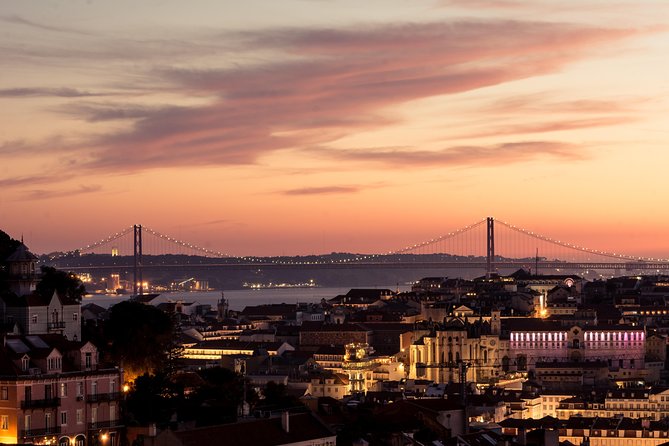
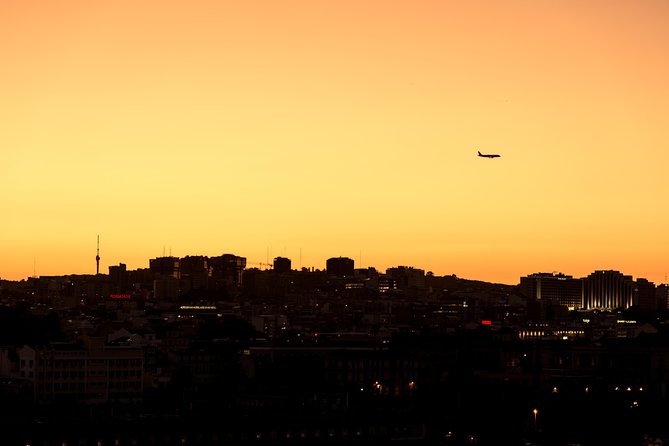
Lisbon looks especially good when daylight fades. This private walk starts at Miradouro da Senhora do Monte, then follows the glow into Alfama, where yellow trams, tiled buildings, and narrow lanes take on a softer mood. I like the expert help with changing camera settings and the freedom to use anything from a film camera to an iPhone. I also like that the guide knows where to pause instead of simply marching between famous sights.
The main drawback is the short two-hour length. You will cover uphill streets and uneven cobblestones, so the walk may feel brisk if you want long stops for both photography and history. Bring comfortable shoes, and remember that camera gear, a tripod, drinks, and hotel transport are not included.
Key points at a glance
- Sunset from Senhora do Monte: Begin at one of Lisbon’s best high viewpoints as the sky changes color.
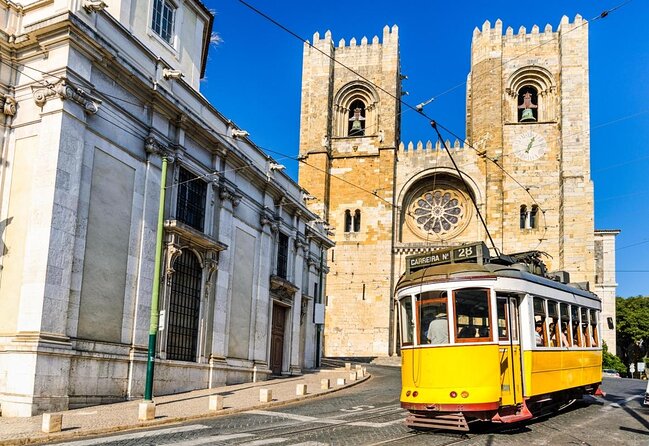
- Alfama after dark: Photograph glowing lanes, old buildings, and passing yellow trams.
- Private instruction: Get advice shaped around your skill level and your own camera or phone.
- Useful night techniques: Work on low-light settings, composition, and motion capture.
- Local knowledge: Your English- or Portuguese-speaking photographer guide knows when and where to shoot.
- Two-hour format: A focused evening activity that fits neatly into a Lisbon sightseeing day.
Starting above Lisbon at Senhora do Monte
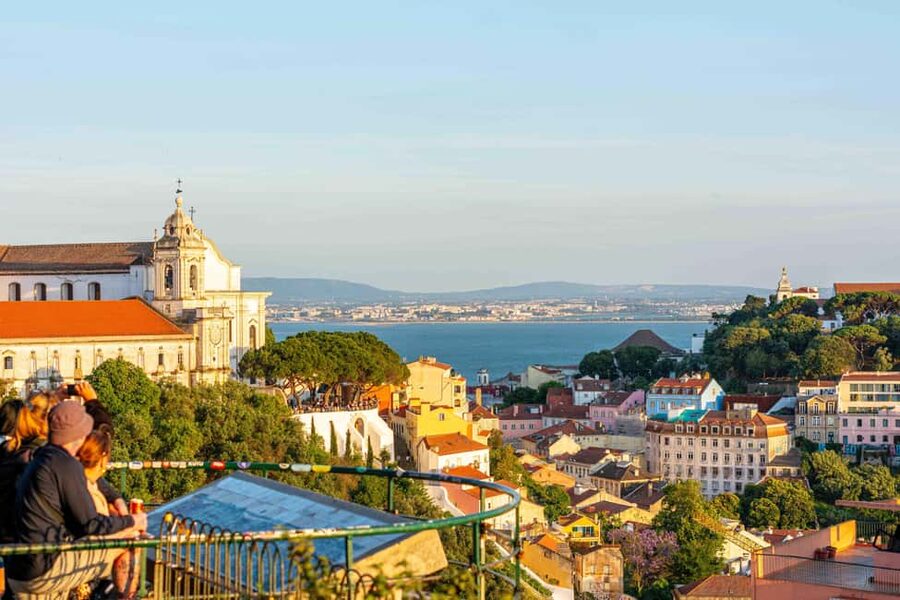
The meeting point is the entrance to the chapel at Miradouro da Senhora do Monte. You will find your guide holding a camera. This is a sensible starting place because the view gives you time to get comfortable with the controls before the streets become darker.
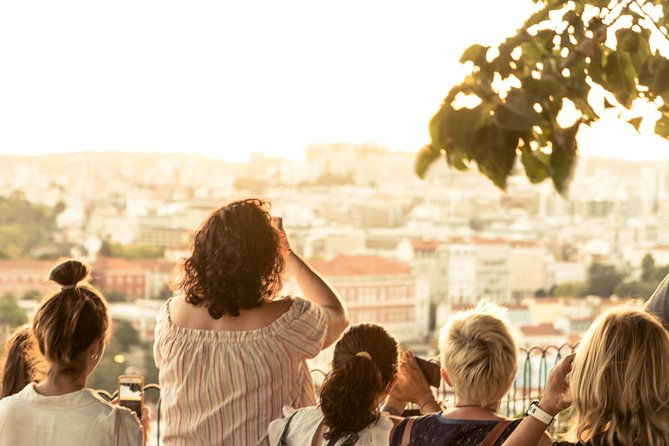
From this high point, you can work on the basics of golden-hour photography: where to place the horizon, how to frame Lisbon’s rooftops, and how to adjust as the bright sky loses strength. Your guide helps with camera settings as the light changes, which is more useful than receiving a fixed list of technical rules.
The instruction is adapted to your equipment and experience. A digital camera user may work on exposure and focus, while a film photographer may need to think more carefully before pressing the shutter. If you use a smartphone, you are not treated as an afterthought. One recent participant learned new iPhone tricks during the walk, so phone photography is clearly part of the plan.
The viewpoint is also a practical test of your expectations. You are not getting a formal portrait session or a long photography workshop. You are getting guided practice in a real city setting, with a local photographer helping you make better choices quickly.
More Photography Tours in Lisbon
- Lisbon: 2-Hour Street Art Photo Tour
★ 4.9 · 43 reviews - Alfama Photo Walk – Lisbon Photography Experience Led by a Local
★ 5.0 · 20 reviews - Private Highlights Photography Tour in Lisbon
★ 3.0 · 8 reviews
Catching the last warm light
Golden hour is short in Lisbon, and the exact starting time changes with the season. Check the available times when booking, since the value of the first stop depends on reaching the viewpoint while the light is still changing.
I like this part because it gives the tour a clear purpose. You are not just standing at a viewpoint and taking the same wide shot as everyone else. You are learning to notice how color, shadow, and direction change from one minute to the next.
Your guide can help you decide when to use a broad view and when to tighten the frame. You may also get advice on keeping the image simple, especially when rooftops, sky, church details, and distant views compete for attention. The information provided does not promise a set of specific camera settings, which is a good thing. The right choice depends on your camera, lens, and comfort level.
The viewpoint can be busy at popular times, but this experience is intended to take you away from the usual evening crowd once the walk moves into Alfama. At the starting point, expect an open public lookout rather than a private photo location.
Walking down into Alfama
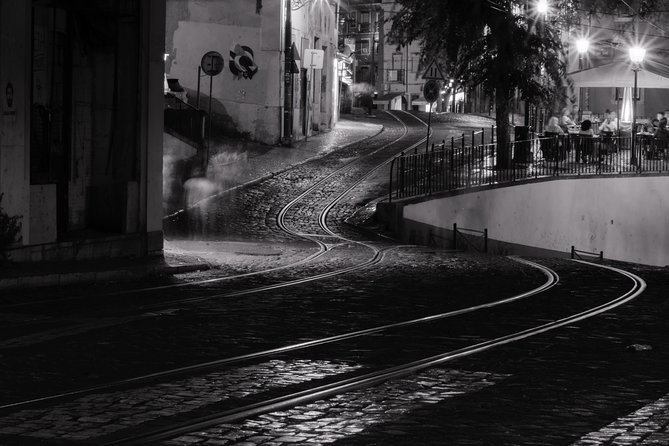
From Senhora do Monte, the route continues through Alfama, Lisbon’s oldest neighborhood. The change from open viewpoint to enclosed lanes is the heart of the experience. You move from broad city views to smaller subjects that reward patience: a tram rounding a corner, a lit doorway, a wall catching warm light, or an alley fading into blue shadow.
Alfama is especially well suited to a sunset-to-night walk because the streets change character as the sky darkens. The guide shares local history and cultural context while pointing out places that work well for photography. This adds value for anyone who wants more than technical instruction.
Expect uneven cobblestones and some uphill sections. The route is not presented as a demanding hike, but it is not a flat pavement stroll either. Wear shoes with a firm sole, and carry water. A small camera bag is easier to manage than a large pack when you are stopping often and moving through narrow streets.
The private-group format helps here. You can ask to spend more time on street photography, architecture, or night technique rather than following a fixed group schedule. The pace also adapts to your interests and abilities. That matters if one person in your party is an experienced photographer and another is still learning the basics.
Photographing trams, alleys, and lit buildings
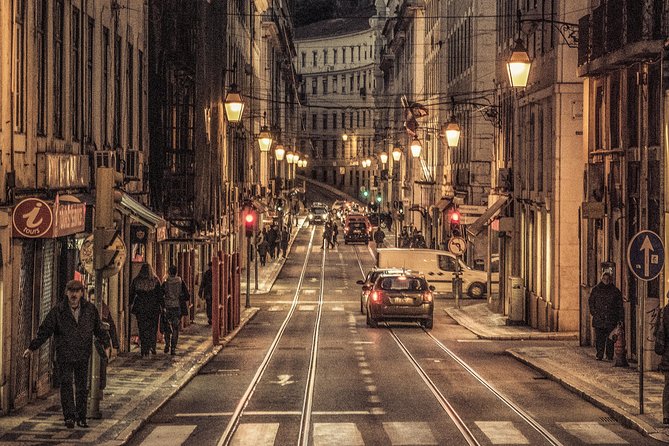
The yellow trams are among Alfama’s most recognizable subjects, but photographing them well takes more than pointing and waiting. Your guide can help you think about timing, framing, and motion. A moving tram can be shown sharply, or you can use a slower shutter speed to suggest movement. The tour specifically covers motion capture, so this is a chance to practice rather than simply collect a standard souvenir image.
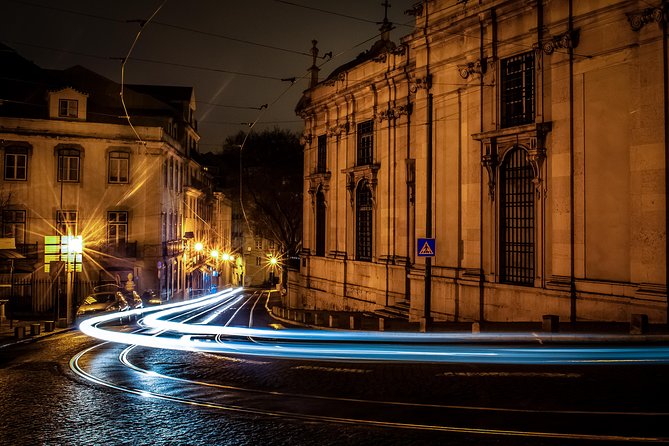
The narrow alleys create a different problem. Low light can produce blur, heavy shadows, or a washed-out bright area around a lamp. You will work on night photography as the available light falls, with advice adjusted to your equipment.
This is where a tripod may help. It is useful for steadier night shots, but it is not required. If you bring one, remember that Alfama’s paths can be tight and uneven. If you do not bring one, the guide can still help you work with your camera or phone as it is.
A smartphone can handle more of this than many people expect. The iPhone feedback noted in the tour information suggests that the guide can show you ways to make better use of phone controls rather than assuming you have a full camera kit. Still, do not expect the same result from every phone or camera. The benefit is learning how to make thoughtful choices with the tool you already carry.
More Photography Tours in Portugal
- Alfama Photo Walk: Lisbon Photography Tour with a Local
★ 4.8 · 6 reviews - Porto 1/2 Day Walking Photo Tour & Portraits
★ 5.0 · 163 reviews - PHOTO TOUR (Full Day Private Tour- Sunrise to sunset)
★ 5.0 · 68 reviews - Lisbon Private Sightseeing Photography Tour with Tuk Tuk
★ 5.0 · 5 reviews
Ending at Largo da Madalena
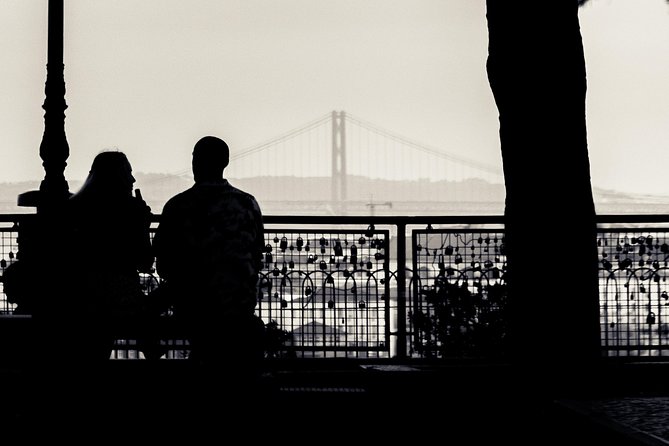
The walk finishes at Largo da Madalena, where you practice framing night images. This gives the tour a clear endpoint and lets you apply the earlier advice after the light has fully changed.
The final stop is not described as a large attraction or a formal class wrap-up. Think of it as a last working area where you can test composition, steadiness, and exposure. You may also receive optional feedback on your images during the walk. That is useful if you want a second opinion on what worked and what needs changing.
Because the tour lasts only two hours, you should keep your goal realistic. You can learn practical techniques and come away with several strong images, but you will not master night photography in one evening. The best result is a better understanding of how to approach low light, plus enough confidence to keep practicing on your own.
What the $170 price means
At $170 per person, this is not a low-cost sightseeing walk. The price makes more sense if you want private instruction rather than a general group tour. You are paying for a professional local photographer, a private group, route knowledge, and advice that changes with your equipment and interests.
The value is strongest for someone who would otherwise book a separate viewpoint visit and then try to work out camera settings alone. The guide combines the view, the neighborhood walk, and the photography lesson in one evening. You also avoid spending time searching for suitable locations in unfamiliar streets.
The value is weaker if you only want to see Alfama after dark or collect a few quick snapshots. You could explore the area without a photographer, and the two-hour format may feel expensive for a simple walk.
No camera, lens, tripod, or other accessory is supplied. Meals and drinks are also not included, and there is no hotel pickup or drop-off. A portrait session is available only as a paid extra, so do not book this expecting a personal photo shoot.
Who will get the most from this walk
This experience suits several kinds of visitors:
- Beginners: You get direct help with settings, framing, and working in changing light.
- Phone photographers: You can learn new ways to use an iPhone or another smartphone.
- Experienced hobbyists: A local guide can point you toward better timing and less obvious angles.
- Film photographers: The slower pace of composing each frame fits the setting, though you should bring the film and equipment you need.
- Creative couples or friends: The private format lets you set the pace and focus on shared interests.
- First-time Lisbon visitors: You see Alfama at night while learning where to return for your own photos.
It is less suitable if you dislike hills, cobblestones, or stopping repeatedly to adjust equipment. It is also not ideal for someone who wants a packed sightseeing tour with many historical sites and a guide speaking continuously. The photography is the main event.
Practical details before you go
The guide speaks English and Portuguese. The walk runs in light rain, so a small rain layer is sensible. In severe weather, you will be offered a rescheduled date or a full refund.
Bring your own camera or phone, comfortable walking shoes, and water. A tripod can help with night shots, but you can take part without one. Keep your kit light, since you will be moving through narrow streets and dealing with steps, slopes, and uneven stones.
The activity offers free cancellation up to 24 hours before the start time, and you can reserve now and pay later. Those terms are useful if your Lisbon plans are still shifting, but you should still check the available start time because sunset changes through the year.
Should you book the Lisbon night photo walk?
Book it if you want to come home with more than a few ordinary Lisbon snapshots. The strongest reasons are the private guidance, the shift from golden hour to night, and the local knowledge of where to pause in Alfama. The iPhone-friendly instruction also makes this a good choice if your only camera is your phone.
Think twice if $170 feels high for a two-hour activity, or if you want a long historical walk without much technical discussion. The route includes hills and cobblestones, and the short duration requires a focused pace.
For photographers, creative couples, and first-time visitors who want to see Lisbon through a camera, I would book it. Bring modest expectations, a charged device, and comfortable shoes. The point is not to become a night-photography expert in one evening. It is to learn enough from a local guide to notice better light, choose stronger frames, and keep exploring after the walk ends.
FAQ
Where does the Lisbon night photography walk begin?
It begins at the entrance of the chapel at Miradouro da Senhora do Monte. Look for the guide holding a camera.
Where does the walk finish?
The tour ends at Largo da Madalena, where you practice framing night photographs.
How long does the experience last?
The walk lasts two hours.
Can I join with a smartphone instead of a camera?
Yes. The guidance is adapted to your equipment, and smartphones are welcome. The tour information specifically includes advice for smartphone photography.
Is a tripod required?
No. A tripod can help with night shots, but it is not required.
What languages does the guide speak?
The guide provides instruction in English and Portuguese.
More Evening Experiences in Lisbon
- Lisbon lights: A Cinematic Photoshoot at night
★ 5.0 · 4 reviews - Rhodes: E-bike Highlights Sunset or Morning Photo Tour
★ 4.9 · 351 reviews - Cappadocia Sunrise & Sunset Horse Tour with Photography
★ 4.9 · 348 reviews - Mediaeval Rhodes E-bike Highlights Photo Tour Morning/Sunset
★ 5.0 · 164 reviews
More Walking Tours in Lisbon
- NYC Professional Photoshoot and Walking Tour with Private Guide
★ 5.0 · 608 reviews - Tokyo: Kimono Dressing, Walking, and Photography Session
★ 4.9 · 427 reviews - Santorini: Customized Private Photoshoot Walk in Oia
★ 5.0 · 335 reviews - Paris Private Walking Tour with a Personal Photographer
★ 5.0 · 262 reviews
Just added around Lisbon
- Loving Lisbon: Capture Your Memories with a Photoshoot!★ 5.0 · 13 reviews
- Lisbon: Professional Photographer (@ivetta_photos)★ 5.0 · 2 reviews
- Lisbon TukTuk Tour – Smooth & Fun – Best Instagram Spots★ 5.0 · 6 reviews
- Lisbon: Private Photoshoot at Iconic Spots & Edited Photos★ 5.0 · 4 reviews
- Lisbon photo shoot with a highlight video★ 5.0 · 5 reviews
- Lisbon: Photo Shoot with a Private Vacation Photographer★ 4.1 · 3 reviews
- Lisbon: Private Photo Shoot with a Professional Photographer★ 5.0 · 4 reviews
- Lisbon: Instagram Hotspots Photoshoot★ 5.0 · 21 reviews
Photography Tours, compared.

Rhodes: E-bike Highlights Sunset or Morning Photo Tour
Read our review →