REVIEW · LONDON
Wildlife Photography Workshop in Richmond Park in London
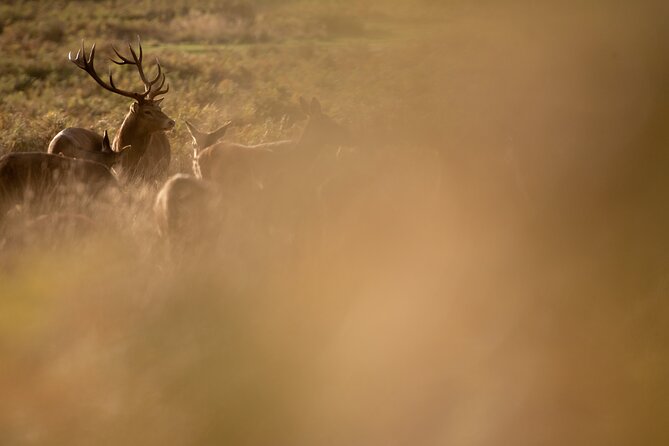
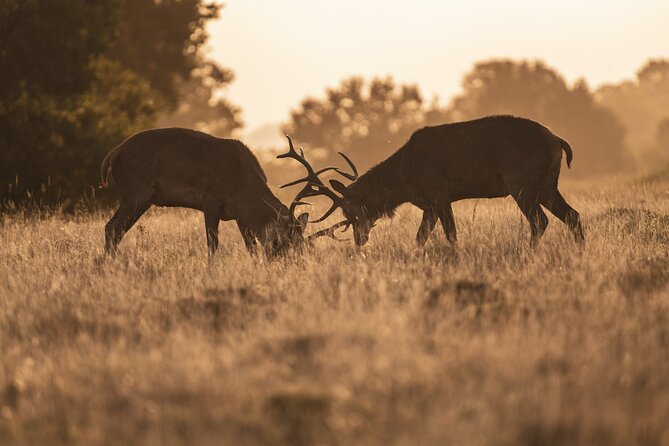
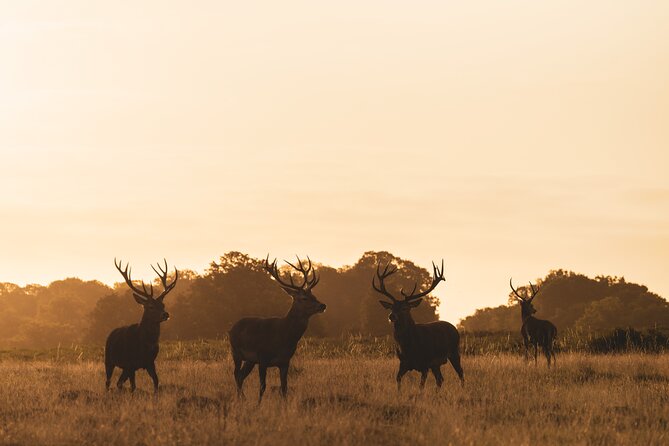
Richmond Park gives this three-hour workshop a fine setting: you learn photography outdoors, with red and fallow deer, lakes, oak trees, birch groves, and evening light all in play. Matthew Williams-Ellis teaches beside the wildlife, so the lesson feels practical rather than classroom-bound. You’ll work on both camera settings and the harder skill of deciding what makes a good picture.
I like the small maximum group of eight, which gives Matthew room to help people at different levels. I also like the focus on making photos, not just taking them: framing, light, and timing matter as much as pressing the shutter. The main caution is that wildlife is unpredictable, and one person had trouble finding an open gate when leaving the park, so plan your exit carefully.
Key points to know
- Evening light: The workshop is scheduled for the softer light that can make wildlife and trees look more appealing.
- Real field practice: You learn near Richmond Park’s red and fallow deer, with possible bird subjects such as kestrels, woodpeckers, and a little owl.
- Broad photography teaching: Matthew covers manual settings, birds in flight, lighting, framing, composition, and the thinking behind a strong image.
- Small group size: A maximum of eight people keeps the session personal and workable for mixed abilities.
- Easy London escape: You make your own way to Queen’s Road in Richmond, then return to the same meeting point at the end.
- Weather matters: Poor conditions can lead to a new date or a full refund.
Three hours with Richmond Park’s deer
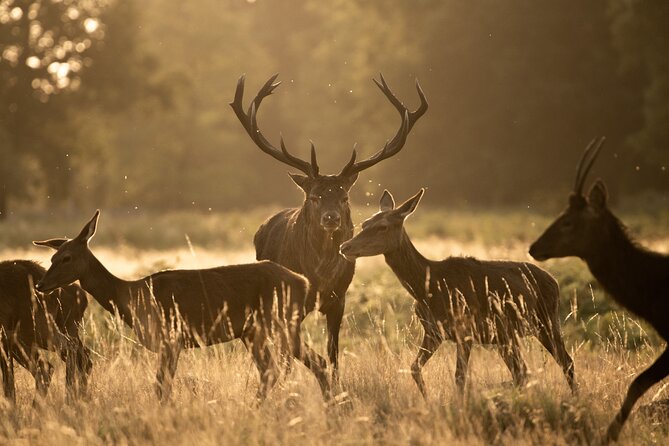
The appeal here is simple. You leave central London behind without committing to a full day out, then spend an evening photographing wildlife in one of the capital’s large Royal Parks.
The workshop is based at Richmond Park, with the start and finish at Queen’s Road, Richmond, TW10 6JJ. You make your own way there, so the outing does not include a guided transfer from another part of London. That keeps the format simple, but you need to allow time to reach the meeting point and get oriented before the session begins.
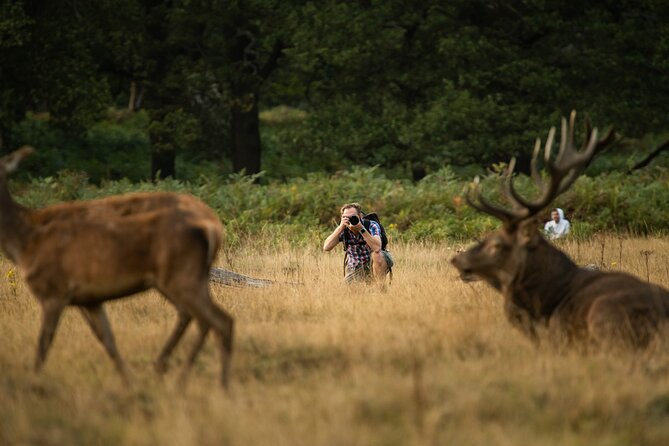
Once the group sets off, the teaching takes place in the field. Rather than hearing a long talk before taking pictures, you work with the conditions in front of you. A deer may give you a chance to practise focus and shutter speed. A tree, lake, or patch of ferns may offer a lesson in framing. The changing light helps you understand why the same subject can look very different from one minute to the next.
You should not expect a tightly scripted route with a fixed list of animals. The park is a living setting, and wildlife does not follow a timetable. The value is in learning how to respond when something appears, moves, or disappears.
More Photography Workshops in London
- London Street Photo workshop
★ 5.0 · 10 reviews - Beginners Photography Course – Small Group Workshop
★ 5.0 · 8 reviews - London Photography Masterclass – Private Photography Lesson
★ 5.0 · 6 reviews
Why the evening timing matters
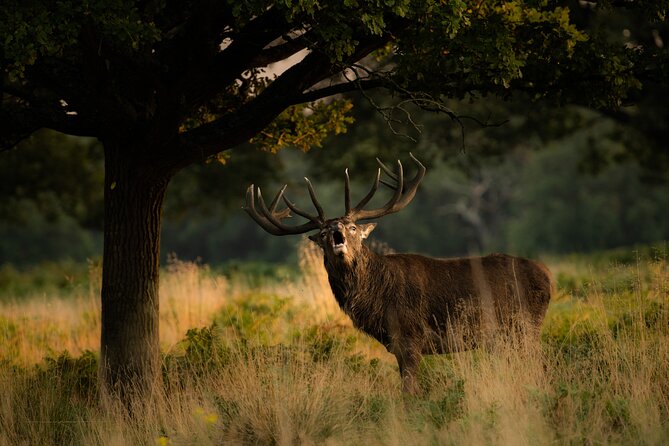
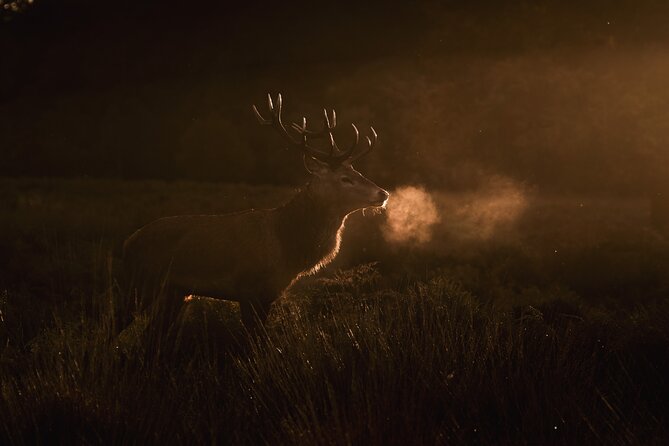
The workshop is held in the evening because late light is often kinder to outdoor subjects than harsh midday sun. It can give trees, deer, and open views more shape and warmth, while reducing the flat look that strong overhead light can produce.
That timing also suits the way this lesson is taught. You are not only told which buttons to press. You are encouraged to think about the picture before taking it. Where should the subject sit in the frame? Is the background helping or distracting? Is the light falling on the animal, or leaving its face in shadow?
These choices apply far beyond Richmond Park. A person who learns only a set of camera settings may struggle when the light changes. A person who learns to read light and composition can use the same ideas in a garden, on a coast, or in another park.
There is one practical limit: the session requires good weather. If poor weather causes a cancellation, you are offered a different date or a full refund. That protects you from spending three hours outside in conditions that work against both comfort and photography, though it does mean your plans could change.
From basic camera control to birds in flight
This is not limited to complete beginners. The teaching covers photography basics, but it also reaches more advanced problems.
You might work on manual settings for birds in flight, as one participant did with Matthew’s help. That sort of lesson is useful because wildlife photography often demands quick decisions. A slow shutter speed may blur a moving bird. A poor focus choice may leave the background sharp while the animal is soft. The right answer depends on the subject, the light, and the effect you want.
You can also expect help with:
- Exposure and manual camera settings
- Focus and movement
- Lighting
- Framing
- Composition
- Developing a more proactive photographic mindset
- Choosing when to take a picture, rather than reacting too late
The range of ability in the group can be wide, but the format is built to handle that. Matthew has taught sessions where beginners and more experienced photographers worked together, adjusting the technical advice to each person. A maximum of eight people is important here. With a larger crowd, individual help would be harder to get, especially when several subjects appear at once.
If you are new to wildlife photography, you may find the combination of instruction and immediate practice especially useful. If you already understand your camera, the creative side may be the stronger reason to book. The workshop asks you to think about why an image works, not simply how to expose it.
Finding subjects among trees, lakes, and open parkland
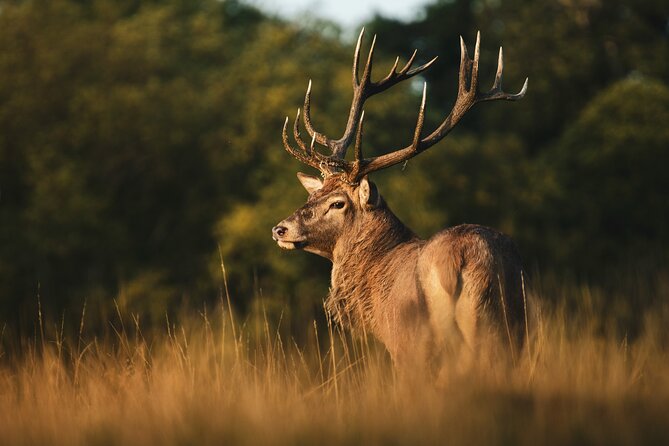
Richmond Park provides more than deer. The possible subjects include birds, lone oak trees, silver birch groves, ferns, and lakes. Each setting encourages a different kind of photograph.
A deer in the open gives you a chance to work on the animal itself and the space around it. A lone oak can become a study in shape and balance. Birch trees may create repeated lines and lighter textures. Ferns can help frame a subject from a lower viewpoint. A lake can provide a calmer background or reflection, depending on the conditions.
The exact route is not provided, and the park’s wildlife changes from day to day. That is worth understanding before you book. You may see a good range of subjects, but no responsible wildlife guide can promise a particular animal or perfect photo.
Birdlife can be a rewarding bonus. Past sessions have included sightings of kestrels, woodpeckers, and a little owl. Those animals are not guaranteed, but their presence shows the session can extend well beyond the park’s larger mammals. If you are hoping to photograph birds, ask Matthew for advice on settings and be ready to adjust quickly.
The park’s size is also part of the experience. You should have a moderate level of physical fitness, since the workshop involves moving around outdoors rather than remaining at one fixed viewpoint. Wear clothing and footwear suited to a walk, though the supplied information does not specify a required kit list.
More Photography Workshops in the UK
- London Smartphone Photography workshop and tour
★ 5.0 · 5 reviews - Private Shoreditch Street Photography Workshop
★ 4.5 · 4 reviews - Private London Street Photography Workshop
★ 5.0 · 4 reviews - Private Course – Beginners Photography Workshop
★ 5.0 · 2 reviews
A guide who teaches the eye, not just the camera
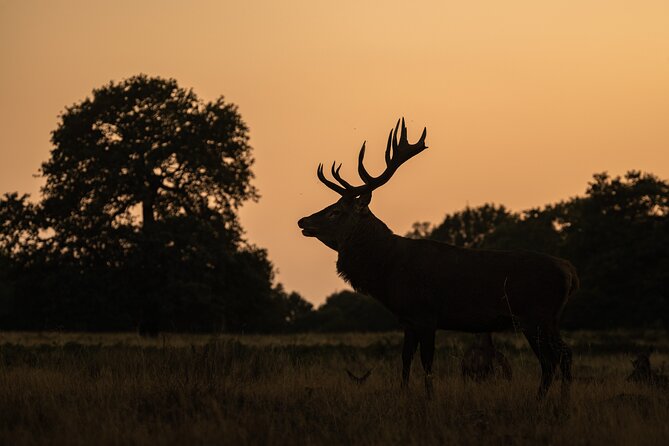
Matthew Williams-Ellis brings two useful strands to the session: an understanding of the park and a clear interest in helping people form their own photographic judgment.
His instruction covers the animals and their setting, but also the decisions behind a photograph. That distinction matters. You can own a capable camera and still produce dull images if the subject is poorly placed, the background is messy, or the light is wrong.
The teaching also appears to work for mixed levels. Beginners can ask about the basics, while more experienced photographers can focus on composition, changing light, or fast-moving birds. Matthew has even helped people programme manual settings for birds in flight, which suggests the lesson can become quite hands-on when the opportunity arises.
I would treat the session as guided coaching rather than a formal photography course. You are unlikely to cover every camera function in three hours. You can, however, leave with practical ideas that transfer to future wildlife and nature photography.
That includes the habit of looking ahead. Watch the light. Notice the background. Anticipate movement. Think about the picture before the animal reaches the position you want. Those habits are more useful over time than memorising one set of numbers.
Is $161.56 fair for three hours?
At $161.56 per person, this is not a cheap park walk. The price makes the most sense if you want direct photography instruction, rather than simply hoping to see deer.
You are paying for a small group, a specialist guide, and field teaching in a setting that offers several types of subject. The maximum group size of eight improves the value because Matthew can respond to individual questions and camera problems. If you already own a camera and want to improve your wildlife work, three focused hours may be worthwhile.
The value is weaker if your main goal is a general visit to Richmond Park. You can enjoy the park without booking a workshop, and wildlife sightings are never certain. You are also paying for instruction during a set period, so the outing suits someone ready to concentrate on photography rather than stroll at an entirely relaxed pace.
A useful way to judge the price is to ask what you want to bring home. If you want a simple evening in nature, this may be more than you need. If you want better control of manual settings, stronger composition, and a clearer way to approach wildlife subjects, the fee is easier to justify.
Meeting at Queen’s Road and getting back out
The start point is Queen’s Road, Richmond, TW10 6JJ, and the activity ends back at that meeting point. The location is near public transportation, but you are responsible for reaching the entrance yourself.
Pay close attention to the park’s gate arrangements. One person had difficulty leaving because several gates were locked, despite asking about closing times. I would confirm the exit plan with the guide before the workshop begins and avoid assuming that every gate will remain open late.
This is especially important because the workshop runs in the evening. The same timing that gives you better light may bring you closer to park closing procedures. The experience information does not provide a detailed gate schedule, so checking directly is the sensible move.
The mobile ticket is convenient, and confirmation is sent within 48 hours of booking, subject to availability. Service animals are allowed. Free cancellation is available if you cancel at least 24 hours before the start time. Changes or cancellations inside that window are not accepted for a refund.
Who will get the most from this workshop?
This session suits you if you:
- Want to improve wildlife photography in a real outdoor setting
- Are learning your camera and need help applying the controls
- Already take pictures but want better composition and timing
- Enjoy nature and can manage a moderate amount of walking
- Prefer a small group to a large photography class
- Like the idea of an evening activity close to London
It is less suitable if you need guaranteed sightings, a fully accessible route, or a fixed indoor plan in case of rain. The supplied details confirm a moderate fitness level and a weather requirement, but they do not provide a detailed accessibility assessment.
It also may not suit someone carrying no camera interest at all. The park is the setting, but photography is the reason for the booking. You should arrive ready to practise, ask questions, and change your approach as conditions shift.
Should you book the Richmond Park workshop?
Book it if you want a focused, small-group photography lesson with real wildlife nearby and you value guidance on both camera control and creative decisions. The strongest reasons are Matthew’s practical teaching, the range of possible subjects, and the chance to work in evening light without leaving London for a distant rural area.
Think twice if you mainly want a guaranteed animal encounter or an easy sightseeing walk. The wildlife is unpredictable, the weather can cancel the session, and you need to manage your own arrival and departure from the park.
For an aspiring wildlife photographer, this is a useful half-day investment. For everyone else, Richmond Park itself may be enough.
FAQ
Where does the workshop start?
The meeting point is at Queen’s Road, Richmond, TW10 6JJ, United Kingdom.
Where does the workshop finish?
The activity ends back at the meeting point.
How long does the workshop last?
The workshop lasts approximately three hours.
Is the workshop held in the evening?
Yes. The evening timing is intended to provide better lighting for photography.
What wildlife might I photograph?
The workshop takes place near Richmond Park’s red and fallow deer. Bird sightings may include kestrels, woodpeckers, and a little owl, though specific sightings are not guaranteed.
How many people can join?
The maximum group size is eight people.
Is the workshop suitable for beginners?
Yes. It covers photography basics while also offering advice on manual settings, lighting, framing, composition, and birds in flight.
What happens if the weather is poor?
If the experience is canceled because of poor weather, you will be offered a different date or a full refund.
More Wildlife in London
- Plettenberg Bay: Private Guided Wildlife Photography Tour
★ 4.9 · 49 reviews - Everglades: Birding, Wildlife, and Photography Expedition
★ 4.6 · 38 reviews - Sunset Wildlife Tour (Wildside 4×4 Tours)
★ 5.0 · 36 reviews - Kos Wildlife Walks: birdwatching and animal photography
★ 5.0 · 31 reviews
Just added around London
- Private Tour: Photography Walking Tour from Trafalgar Square to Covent Garden★ 5.0 · 5 reviews
- Street Photography Workshops in London★ 5.0 · 6 reviews
- Shoreditch Street Art Private Photography Tour including Brick Lane★ 5.0 · 5 reviews
- South Bank Photography Tour – Small Group★ 5.0 · 2 reviews
- Ultimate introduction to photography in Central London★ 5.0 · 19 reviews
- Private Landmark Photoshoot★ 5.0 · 27 reviews
- PRIVATE PHOTOSHOOT in London★ 5.0 · 6 reviews
- Private Tour: Personal Travel Photographer Tour in London★ 4.5 · 27 reviews
Photography Workshops & Lessons, compared.
Paris Photography Masterclass – Private Photography Lesson
Read our review →
2-Hour Photography Class While Touring Downtown Santa Fe, Smart Phones Welcome!
Read our review →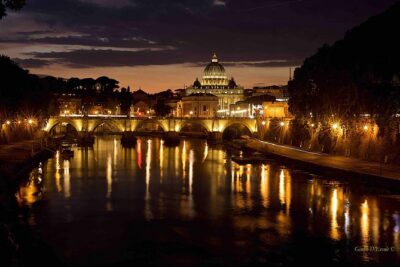
Unique Rome by Night, Photo Tour and Workshop Under the Stars
Read our review →
Elevate Your Photography – Barcelona Private Tour & Workshop
Read our review →
Rome Photography Masterclass – Private Photography Lesson
Read our review →
Private (Phone) Photography Class in Park & Old Town
Read our review →
Venice Photography Masterclass – Private Photography Lesson
Read our review →